

If you asked a room full of professionals to name their least favorite part of the workweek, "meetings" would win by a landslide.
That's unfortunate because meetings are one of the primary ways a team communicates, makes decisions, and executes together. But in a world where anyone can call a meeting and anyone can run a meeting, the sad truth is most of them are run poorly.
Bad meetings waste everyone’s time, but the bigger issue is what repeated bad meetings do to a team. When people don't feel heard, commitments aren’t clear, or accountability is inconsistent, trust breaks down.
Well-run meetings have the opposite effect. They give people a consistent way to share information, make decisions, work through problems, and follow through on commitments. And when done right, that structure helps teams build trust in one another and in the way the organization operates.
In this article, I’ll use a weekly leadership team meeting to show what that looks like in practice. But keep in mind these same principles can also improve departmental, cross-functional, and even Quarterly and Annual Planning meetings.
How Do Bad Meetings Affect Team Trust?
Beyond the agenda, meetings create a secondary outcome that’s easy to overlook: They shape the informal dynamics of a team, for better or worse. What happens in your meetings says more about your organization’s culture than any mission statement on the wall.
When meetings are run poorly, they can reinforce hierarchy in unhealthy ways. For example, senior team members may dominate the discussion while newer team members settle into the role of observer, speaking only when directly addressed. This usually isn’t intentional, but it can happen when assumptions about authority and responsibility shape how people participate.
Another problem arises when the discussion is driven by personality rather than purpose. The loudest voices dominate whether or not their input advances the meeting’s objective, while other team members contribute less. Everyone loses in this scenario because the organization isn’t benefiting from the full range of skills, knowledge, and experience across the team.
Perhaps most damaging, bad meetings tend to be light on accountability. Underperformance gets buried in vague updates, and people aren’t held to clear commitments. More forceful team members may talk their way past missed objectives, while others avoid discussing their misses because the meeting runs out of time. Eventually, the team loses trust in the value of the meeting and in one another. And when that happens, there’s less honesty, and more time gets spent talking around the issues.
The end result is predictable: Meetings become the grueling, monotonous time-suck everyone dreads.
How Well-Run Meetings Build Trust
Well-run meetings actively strengthen a team. People start to understand each other's contributions, strengths, and the value each person brings to the organization. And accountability becomes a lived experience rather than an abstract value because actual performance data gets discussed routinely and openly.
That consistency helps build trust. When performance metrics are discussed openly, people can see whether commitments are being met and whether the team is working toward the same priorities. A well-designed meeting format also gives everyone an opportunity to contribute. Team members are expected to be open and honest, consider each other’s input, stay receptive to feedback, and say what needs to be said.
Healthy conflict is part of that process because good ideas should be challenged and discussed. Once a decision is made, team members commit to it, even if they argued for a different approach during the discussion. People should also be able to disagree without worrying that their point of view will be held against them afterward.
Trust grows as participation increases, people take responsibility for their commitments, and performance misses are discussed openly. That's when team members become more accountable to one another and more focused on what’s best for the company. Good meetings create the conditions for that to happen.
How to Run a Better Meeting
So what makes a meeting build trust instead of undermine it? A few things need to be in place: open and honest discussion, healthy conflict, a focus on team and organizational success over individual wins, and respect for everyone participating. That means no bullying, talking down to people, or ignoring their input. A designated meeting facilitator also needs to keep the group on track and enforce those agreements.
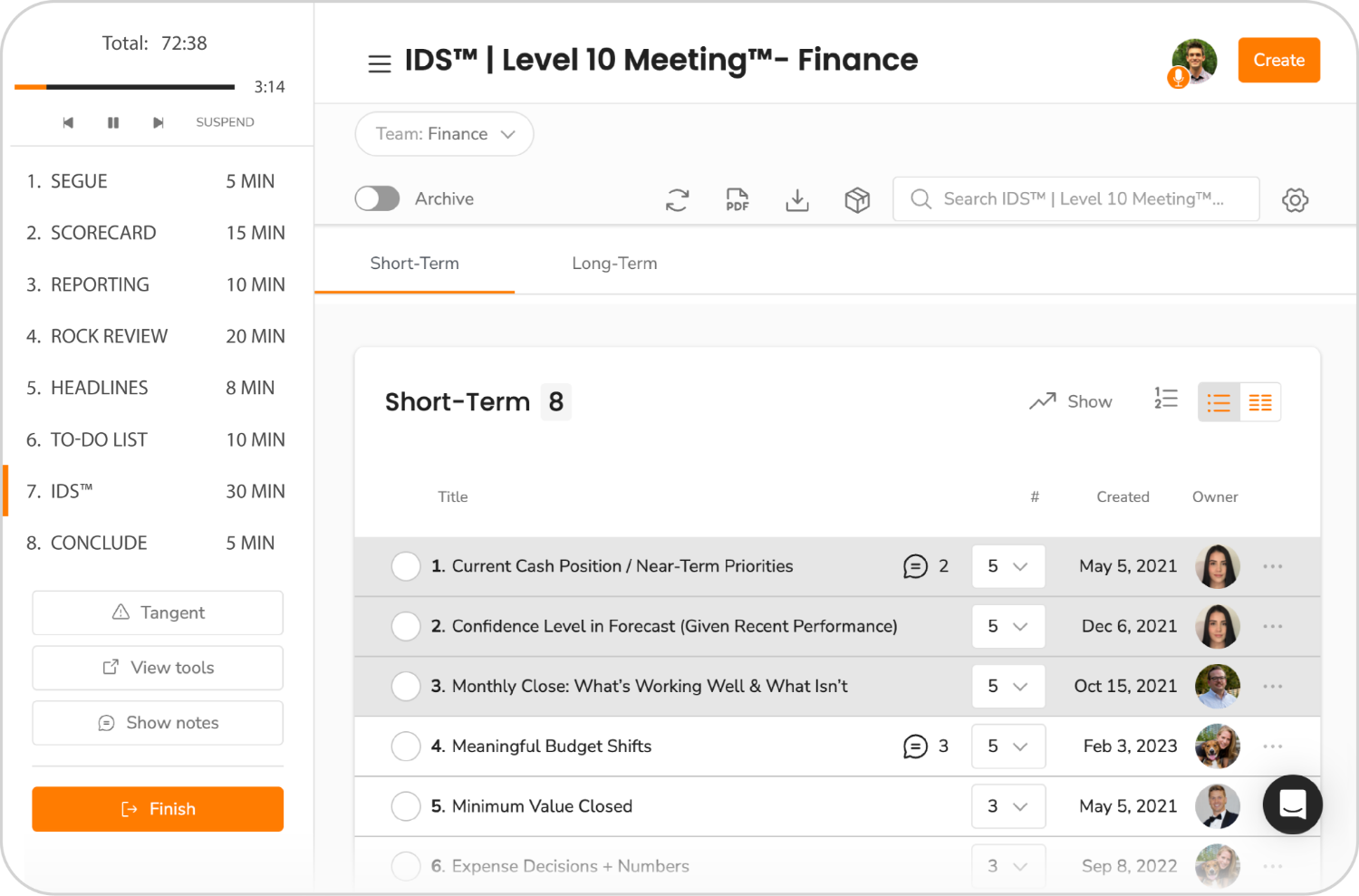
Most importantly, the meeting needs a clear agenda, and the team needs to stick to it. For a weekly 90-minute Level 10 Meeting® for a leadership team, that agenda might look like this:
- Start with good news: Spend about five minutes having each person share something positive from the past week, personally and professionally. It sets a constructive tone, gets everyone participating early, and helps team members connect beyond their individual roles.
- Report on performance: Each team member briefly shares an update on their Scorecard measurables, reviews their Rock status, and reports whether To-Dos from the previous meeting are done or not done. This section is for reporting, not discussion. Anything that needs more attention gets added to the Issues List for later. Consistent reporting creates shared expectations and makes accountability part of how the team works.
- Work through the Issues List: The team confirms the list, adds any new issues, and selects the three most important ones to tackle first. They work through each one by identifying the cause, discussing it directly, agreeing on a solution, and assigning any follow-up actions. If there’s time left, the team selects the next three issues based on importance and continues. This gives the team a structured way to disagree, hear different perspectives, and leave with a decision everyone can support.
- Conclude the meeting: With about five minutes left, the team reviews the updated To-Do list, agrees on any communication that needs to go out to the rest of the organization, and rates the meeting. Everyone leaves knowing what was decided and who owns the follow-up.
A dedicated cloud application like Ninety that supports your business operating system makes it easier to run better meetings by keeping the agenda, notes, issues, and follow-up work connected. That structure reinforces the accountability and follow-through teams need to build trust.
Better Meetings Build Stronger Teams
Trust isn’t built through trust falls or team happy hours. Teams build trust when people report openly, work through disagreements, hold one another accountable, and solve the issues most important to the business. Better meetings give you a consistent place to practice those behaviors, strengthening trust and helping your team work better together.


