


A CEO said to me after a leadership team meeting, “I don't understand why my team keeps holding back. I know they have thoughts and concerns, but they rarely say what they're really thinking.”
I had just seen why.
During the meeting, a member of the leadership team raised a concern that priorities across the organization seemed unclear. Teams were pulling in different directions, which was creating confusion, conflict, and wasted effort throughout the company.
It was exactly the kind of issue the leadership team should have been discussing. But instead of becoming curious, the CEO became defensive.
"Are you saying I haven't clarified our direction?" he responded. "What do you think we've been doing in all these planning sessions?"
The tone in the room changed immediately. The discussion was no longer about whether priorities were clear. It was about whether the CEO had done a good job communicating them.
Nobody challenged him. Nobody explored the issue further. The conversation quickly moved on.
When the meeting ended, the CEO left believing the team was holding back, and the team left believing honesty wasn't safe. That gap is at the heart of why so many leadership teams struggle to identify and solve their most important issues.
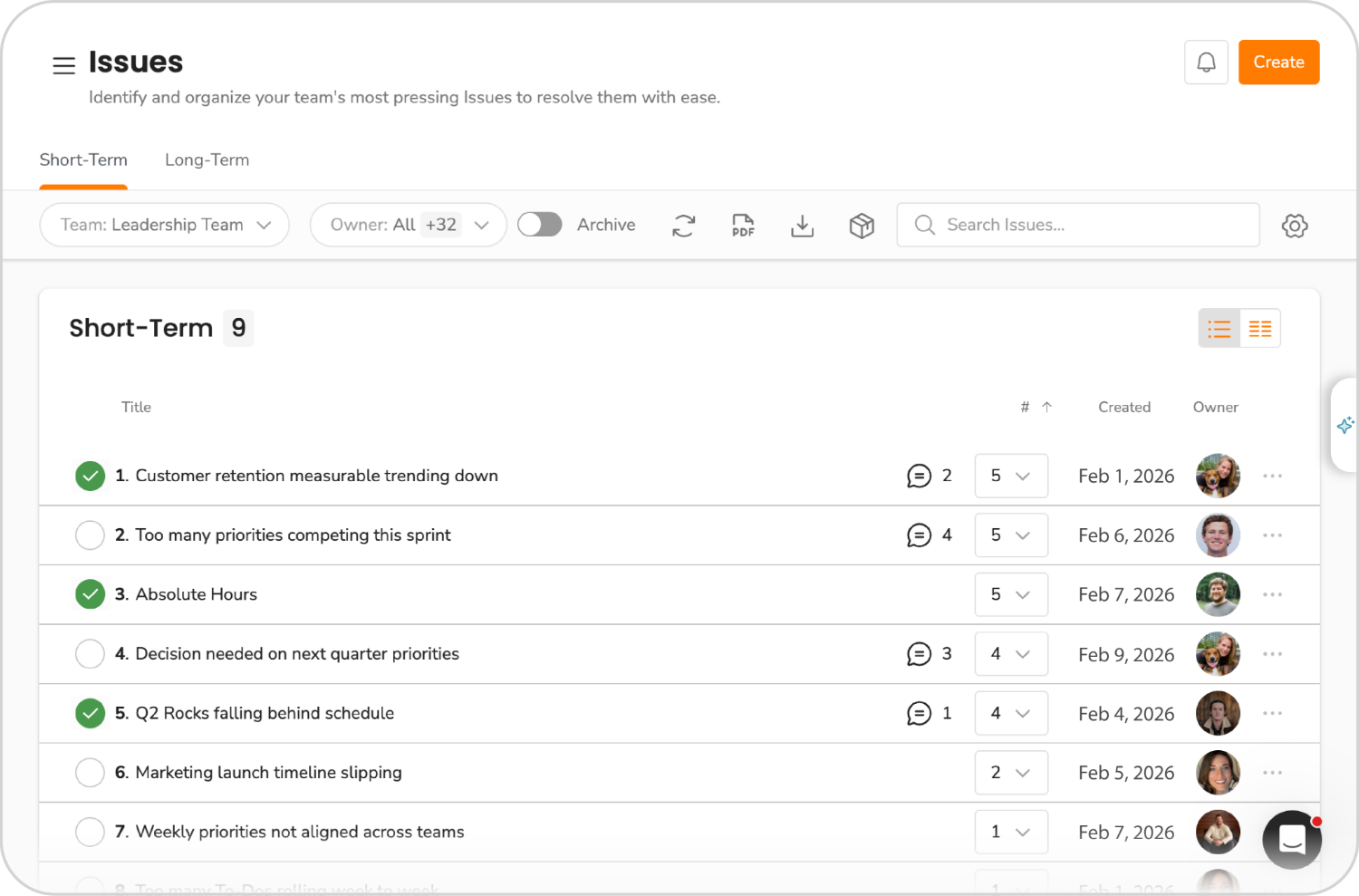
In EOS®, this is where the Issues Component® gets tested. It’s one thing to have an Issues List. It’s another thing for people to trust that hard things can go on it. If people are deciding what feels safe to share before the discussion even starts, they're already filtering the truth.
Why People Stop Speaking Up
Leaders may believe their team members are withholding information because they're afraid of conflict, unwilling to be vulnerable, or not committed to solving difficult issues.
Sometimes that's true. But often, people stop speaking up because experience has taught them that challenging the leader isn't worth the risk.
They've watched what happens when someone raises a concern, whether that’s a leader getting defensive, dismissing the issue too quickly, or shifting the conversation toward who's at fault instead of what needs to be solved. They've learned that speaking honestly can create more pain than progress. So they hold back.
That means avoiding disagreement and choosing their words carefully. They wait for someone else to say the hard thing. And eventually, they stop bringing up the issues leaders need to hear most.
When that happens, the Issues List may look lighter, but the business isn't healthier. The issues didn't disappear. They're just being discussed after the meeting, in side conversations, or not at all.
How to Build Trust With Your Team
Every leader has triggers. Some react when they feel challenged. Others react when they hear bad news or realize they may be contributing to a problem.
Those moments reveal a leader’s habits. Some leaders get curious. Others explain, defend, correct, or shut the conversation down without realizing the message they’re sending.
That’s where self-awareness becomes essential.
Self-awareness is one of a leader's most important tools. Before entering a difficult discussion, you need to slow down and ask yourself:
-
How do I typically react when challenged?
-
What message do my reactions send to the team?
-
Am I trying to understand the issue or defend my position?
When leaders become defensive, dismissive, impatient, or overly controlling, people begin filtering the information they share. They soften feedback, do whatever they can to avoid disagreement, and stop raising issues until the problems become too large to ignore.
That's exactly how an organization loses access to it's best thinking.
Rebuilding trust starts with how leaders respond in those moments. Stay curious. Ask another question before reacting. Thank the person for raising the issue. Keep the team focused on what needs to be solved, not who needs to be blamed.
Healthy leadership teams need honest dialogue and productive conflict. But neither can exist unless people trust they can speak openly and be heard.
In that meeting, the CEO left believing the team was holding back. The team left believing honesty was unsafe. Both walked away frustrated, but for very different reasons.
This is where structure and a strong meeting rhythm help. Level 10 Meetings give teams a consistent place to surface issues, prioritize what matters most, and IDS® the problems that need to be solved instead of talking around them.
When leaders make honesty safe, teams get stronger. When they don’t, teams eventually stop telling the truth.


.jpg?width=500&name=large-Solve_the_Issue_Afraid_EOS_Blog_Header_1920_x_1080%20(1).jpg)