
.jpg)
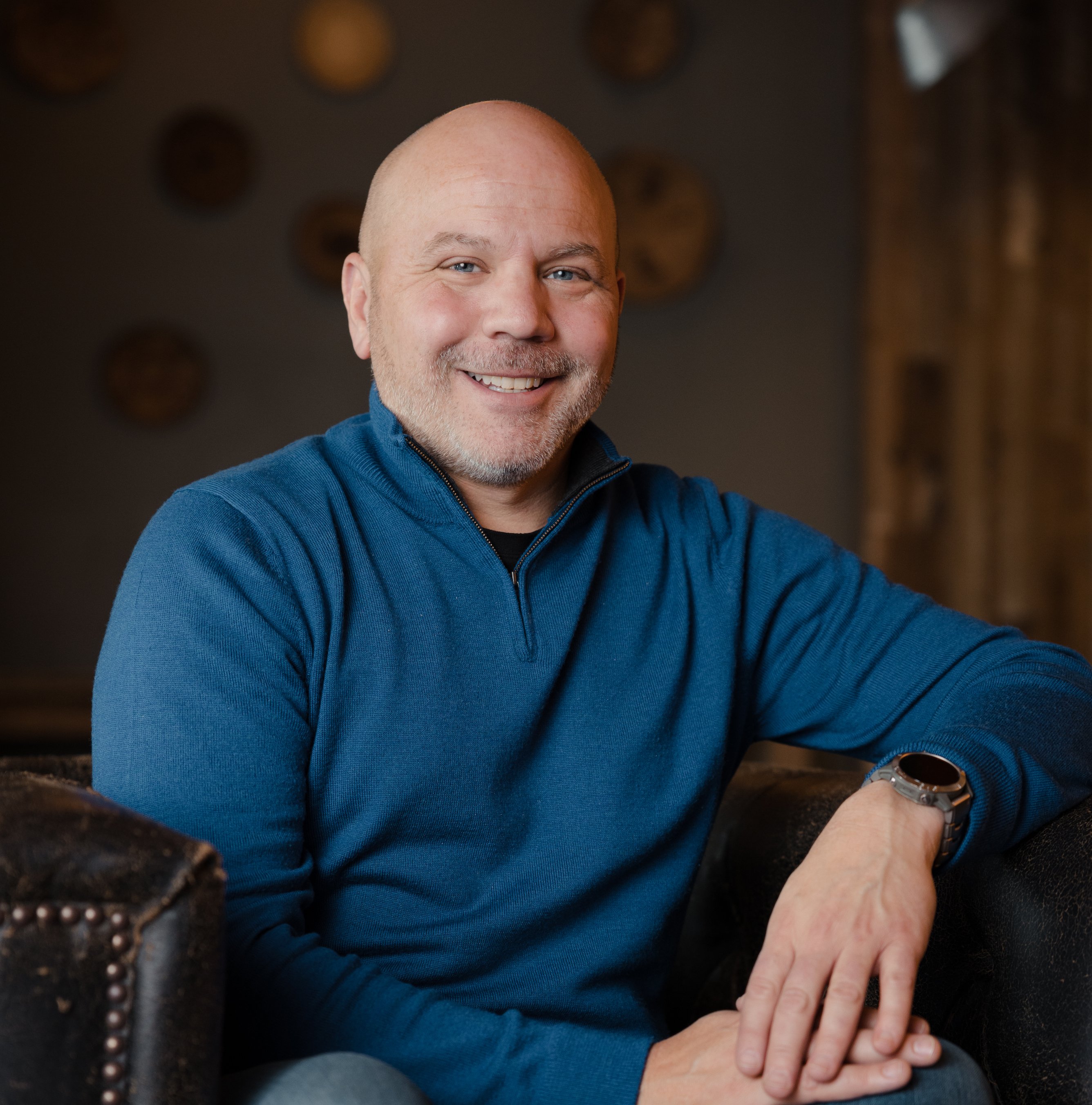
In one Quarterly Session, CEO Kevin von Keyserling’s leadership team sat around the table reviewing the last 90 days. All the EOS® tools were in place: Level 10 Meetings®, Rocks, a Scorecard with clear targets, The Accountability Chart®. Technically, they were “running on EOS.” But the numbers told a different story. Revenue was off, key measurables were in the red, and Rock completion was poor.
It wasn’t a surprise. Everyone knew the quarter had fallen short, but as they walked through the review, people tried to soften the reality. Maybe it wasn’t that bad. Maybe external factors were to blame. Maybe they could round the grade up.
Then Kevin had the courage to say what everyone was thinking. Instead of negotiating the grade, he called the quarter what it was: an F. Not a rough C, not a disappointing B-minus. A failing quarter by the standards they had set for themselves. As Kevin put it on episode 4 of the Impact Moments podcast, “It was a moment of truth and transparency… virtually every metric and objective that we’d set out for the quarter we missed.”
That simple act did more than label a result. It reset the conversation. The team stopped debating the story and started dealing with the facts. They looked at whether they truly had the right people in the right seats. They clarified what each leader owned in the go-to-market motion. They shifted from “sales missed” to “we missed.”
Over the next few weeks, several leaders chose to leave, roles were redefined, and accountability was reset around shared goals. Eighteen months later, the company had a sustainable SaaS go-to-market and was growing more than 50% a year. How? The EOS tools didn’t change. The team just got healthier.
This wasn’t Kevin’s first time using EOS and Ninety to drive that kind of change. Kevin’s previous company ran on Ninety as it grew into a multi-unicorn. Kevin said in that role, Ninety “was really pivotal in helping us transform the culture of the company from a consulting business into a SaaS company culture.” When he took the CEO role at ReadySet Surgical, his reaction was simple: “I want to do the EOS thing again.” This time, that meant cascading Ninety through the whole business from the start.
For a lot of organizations that don't get the results they expect when they start running EOS, it’s usually not the tools that are the issue. It’s the health of the team using them: how much people trust each other, how honest they are with one another, and how consistently they create Traction® together. This article breaks down what team health really means and how you can use EOS and Ninety to build it into the way you run your business every day.
What Team Health Really Means in an EOS® Company
Team health can sound broad, but in an EOS® company, it’s both practical and measurable. It’s not about whether people get along or enjoy the company retreat. Yes, those are great, but the real focus is on whether every individual team can see reality clearly, make good decisions, and keep commitments together.
Kevin describes this as moving from “tribal knowledge to systemic knowledge throughout the business,” and he credits EOS and Ninety with giving everyone “a common language and framework” to do that.
Team health shows up across teams in three distinct ways:
-
Trust: People believe their teammates live out the Core Values every day and have the competency to do their jobs well. They assume positive intent across functions, not just within their own group. It’s acceptable for anyone, from the leadership team to individual contributors, to say, “I missed,” or, “I need help,” because the focus is on solving issues and moving the business forward, not protecting egos.
-
Truth: The real issues get captured and worked through, no matter where they show up. Leaders put strategic, uncomfortable topics on the Issues List. Department heads bring forward cross-functional problems instead of avoiding or working around them. Team members at every level of The Accountability Chart are encouraged to raise concerns, knowing they’ll be heard and taken seriously. Feedback is direct and timely in Quarterly Conversations and 1-on-1s. Truth becomes part of how the entire organization communicates.
-
Traction: Commitments are made and kept at every level. That means at least 80% of Rocks are completed across the entire organization. Scorecards exist for every team, with measurables that are owned, reviewed weekly, and acted on when they’re off track. To-Dos are done on time. When Traction is strong, you can see a pattern of “say it, own it, do it” throughout the company.
When Trust, Truth, and Traction® are strong across teams, the familiar frustrations start to ease. Leaders feel more in control because the business runs on clear processes and shared agreements instead of last-minute rescues. People issues get resolved faster because behavior and performance are discussed openly. Hitting the ceiling is easier to break through because more teams can diagnose and solve their own issues instead of waiting for everything to be fixed at the top.
How Team Health Shows Up in Your EOS® Tools
If you want to know how healthy your teams really are, start by looking at how they use the EOS® tools week in and week out.
In strong Level 10 Meetings®, the Scorecard is honest, even when measurables are off track. Rock updates are clear, with “done” defined the same way for everyone. The Issues List includes real, sometimes uncomfortable topics, and the team actually solves them through IDS® instead of circling around them. You should see that same pattern not only in the leadership L10, but in departmental and frontline L10s across the organization.
A healthy Issues List pulls items from everywhere in the business. Leaders and individual contributors raise cross-functional problems, customer concerns, and process breakdowns because they trust the team will address them. When Issues stay light, vague, or always come from the same few people, it’s a clue that Truth isn’t fully baked into the system yet.
Your Scorecards make Traction® visible. Healthy teams treat their measurables as early-warning tools. When a number is off, they talk about it, create To-Dos, and close those To-Dos before the next meeting. Less healthy teams review the data but rarely change behavior because of it.
Quarterly Conversations and regular 1-on-1s show whether team health has reached how you coach and develop people. In healthy EOS companies, leaders use those conversations to talk specifically about Core Values, GWC®, and results, using real examples from Rocks, measurables, and To-Dos.
If you’re using Ninety to run EOS, you’ll see improved team health reflected in stronger L10 ratings, higher Rock and To-Do completion, and Scorecards that actually drive action. Kevin talks about how ReadySet Surgical now runs not just leadership meetings, but all-hands and Lunch & Learn sessions inside Ninety. Team members add headlines to recognize peers and suggest deep-dive topics for learning. Over time, he says, “it became an accountability tool for the whole company.”.png?width=7085&height=4042&name=1_on_1_EOS_Screens%20(1).png)
6 Ways to Strengthen Team Health Throughout the Company
Once you identify team health as an issue for your organization to improve, you don’t need to overhaul your entire system. You can make small changes to how you use the EOS® tools you already have.
Here are a few ways you can get started:
-
Start by making team health an issue in your leadership L10: Add “Team Health: Trust / Truth / Traction®” as an issue on the Leadership team’s next Level 10 Meeting®. Ask each leader to rate, on a 1–10 scale, how strong they believe the organization is in those three areas. Capture the numbers in Ninety so you have a baseline and a way to see trends over time.
-
Put one Trust, one Truth, and one Traction issue on the list: As a leadership team, decide on one concrete issue in each area that’s holding the company back. It might be a relationship that needs repair (Trust), a pattern of side conversations (Truth), or chronic Rock misses (Traction). Add those three issues to your leadership Issues List in Ninety, written in plain language so everyone understands them.
-
IDS® at least one team health issue to the root cause: Take at least one of those three issues all the way through IDS. Stay with it until you hit the real cause, even if that means talking about roles, habits, or leadership behavior. Make a clear decision and assign To-Dos with owners and dates in Ninety so there’s visible accountability for what will change.
-
Strengthen Quarterly Conversations and 1-on-1s: Commit as a leadership team to use Quarterly Conversations and regular 1-on-1s to talk specifically about Core Values, GWC, and results. Prepare with real examples from Ninety: Rocks, measurables, and To-Dos. Capture key points and agreements in Ninety so you can see patterns over time. When the same performance or behavior pattern shows up for someone over a couple of quarters and nothing changes, use that data to make the people or seat decision you’ve been avoiding.
-
Cascade the same team health questions to every team: After the leadership team has gone first, ask each department head to run a simple version of the same discussion with their team: quick 1–10 ratings for Trust, Truth, and Traction, plus one issue in each area on their own Issues List. That keeps the language consistent and makes it clear that team health is an expectation for every team, not just at the top.
-
Review team health deliberately every 90 days: At each Quarterly, revisit the Trust, Truth, and Traction ratings for the leadership team and look at what’s changed: Rock completion, To-Do follow-through, Scorecard trends, and people decisions. Use that review to decide where you need to coach, where you need to change behavior, and where you may need to adjust Seats so the team can keep getting healthier.
The key is consistency. You don’t need perfect language and you don’t need to fix everything in one quarter. You need a shared way to talk about team health, a visible place to capture commitments, and the discipline to keep coming back to how the team is operating together, not just what the team is working on.
What’s Your Next Move for Team Health?
Kevin von Keyserling’s story isn’t about a dramatic turnaround driven by a new tool. It’s about a team that was willing to face the truth about an F quarter, make hard calls about people and roles, and then use EOS® and Ninety to run the business differently from that point forward.
That’s what healthy EOS companies do. They use Trust to own results together, Truth to name what’s really happening, and Traction to keep their promises to each other. They run the same basic tools everyone else running on EOS uses, but they use them with more honesty and more follow-through.
If EOS isn’t delivering what you expected, resist the urge to add complexity. Start by asking how healthy your teams really are. Look at the conversations in your L10s, the issues that make it onto your lists, the To-Dos and Rocks that sit in Ninety. Then make one clear decision about how you will strengthen Trust, Truth, and Traction over the next 90 days.
Kevin’s team is already seeing that play out. He describes how 18 months after that F quarter, “we now have a sustainable go-to-market for the business… growing at over 50% a year,” with gross margins where they should be and the whole team aligned around the same KPIs.
Do that quarter after quarter, across more and more teams, and you won’t just be running on EOS. You’ll be building a healthier company, one day at a time.
If you’re ready to strengthen team health, use Ninety to run your EOS® tools in one place and make it easier to see and improve how your team works together. Try it free now.


.jpg?width=500&name=large_Do_Your_Job_EOS_Blog_Header_1920_x_1080%20(1).jpg)
.jpg?width=500&name=large_Traction%C2%AE_Gap_EOS_Blog_Header_1920x1080%20(1).jpg)