
.jpg)

I started working with a team that was doing everything right, or at least it looked that way from the outside.
It was a $150M company with 120 employees and years of running on EOS®. The leadership team knew the language, had the V/TO® dialed in, and could run an L10™ in their sleep. Anyone would think this was a mature EOS company firing on all cylinders.
But when I looked closer, something was off. Most of their Rocks were off track. The same issues kept coming back meeting after meeting. And in the leadership L10, there was a lack of engagement that experienced Implementers learn to recognize. This was a team that stopped believing the meeting will change anything.
Then I saw what was missing. It wasn't the vision or the people. It was the To-Dos, or more specifically, the fact that no one was following through on them.
One Weak Seat Affects the Whole Team
The company's current Integrator was talented, but she wasn't a dedicated Integrator. She was also sitting in several other Seats, covering gaps, managing fires, and doing the work of three people. With her attention pulled in so many directions, weekly To-Do follow-up kept falling by the wayside.
No one thought much of it. To-Dos feel small. But when they’re missed or ignored week after week, people stop taking them seriously.
That's what happened here. And by the time anyone noticed, the team had already lost trust in the process.
When the company finally hired a dedicated Integrator, the L10 started working the way it was supposed to. To-Dos were assigned clearly, followed up on, and completed. And as the team began keeping its weekly commitments, people started believing in the meeting again.
That's the power of To-Dos done right. And that's what most companies underestimate.
What Are To-Dos?
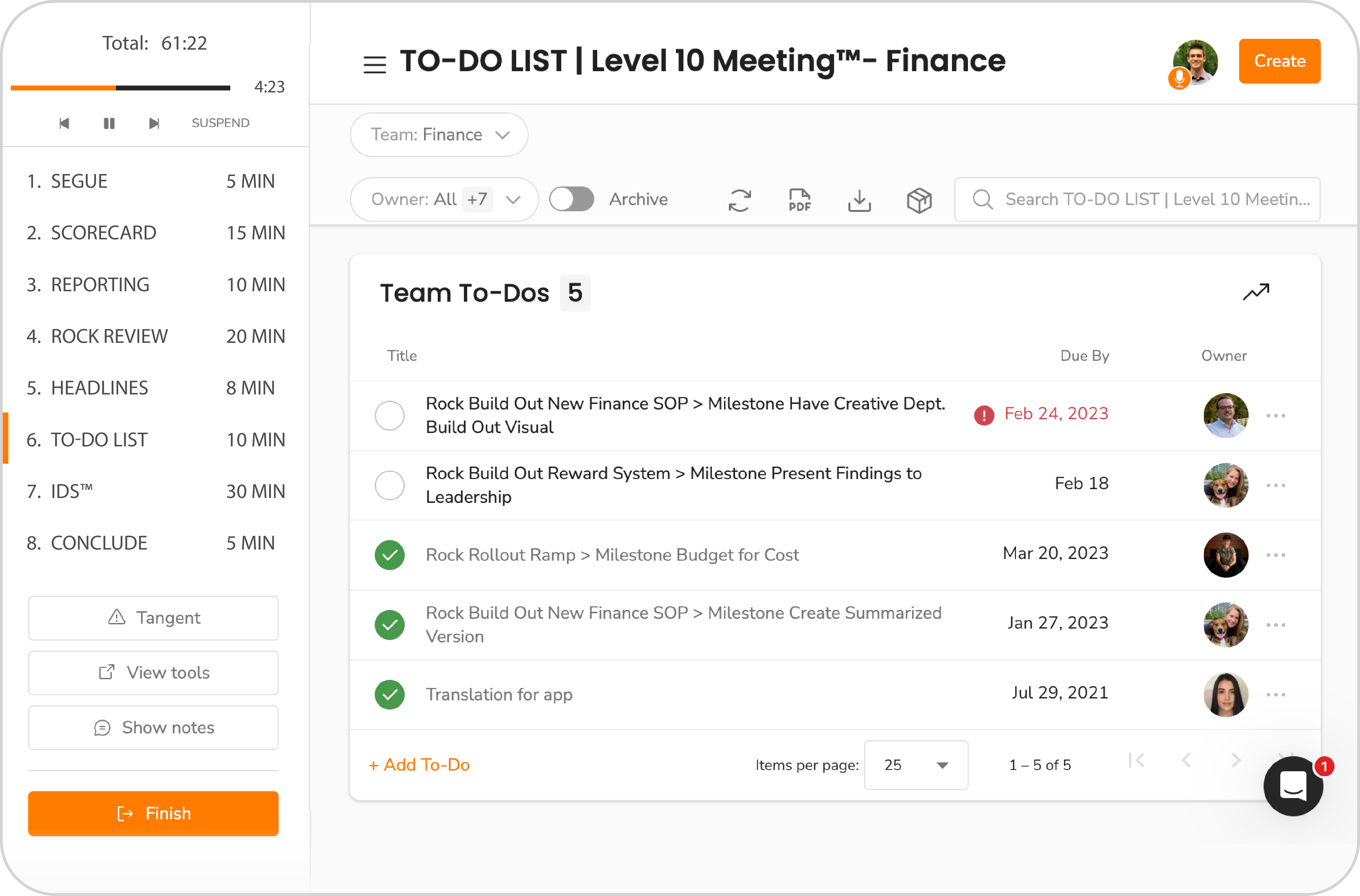
In EOS, To-Dos are the smallest unit of accountability. They're the seven-day commitments that come out of every Level 10 Meeting®. Every To-Do needs to be specific, owned by one person, and due by the following week. That means there's no ambiguity about who's responsible and no two-week runway to forget about it.
Most teams understand this mechanically. What they miss is what consistent follow-through does for the team.
Every completed To-Do builds confidence that people will do what they said they will do. Every missed one (especially when it goes unaddressed) is a broken promise. And your people are keeping score, whether they realize it or not.
The Trust Math Nobody Talks About
Susan Scott, founder of Fierce Conversations, makes the point that the conversation is the relationship. I'd extend that to EOS where the follow-through is the culture.
Trust isn't built in vision sessions or team offsites. It's built in the ordinary, repetitive moments where someone says they'll do something and then does it, week after week, To-Do after To-Do.
When a leadership team completes its To-Dos consistently, it demonstrates something more important than productivity. It shows that people mean what they say, that commitments aren’t suggestions, and that decisions made in the L10 lead to action.
The $150M company I described didn't lose faith in EOS. They lost faith in each other. And it happened because nobody was watching the smallest commitments, the ones that seem too minor to matter until you realize they're the entire foundation.
Accountability Starts with the Integrator
Here's what this company's story makes clear: The Integrator is more than an operational role. It's also an accountability role. That means they are responsible for making sure commitments don’t get lost after the meeting.
When the Integrator is stretched too thin or the Seat is empty, no one is consistently holding the team accountable. The team may talk through issues, makes decisions, and assigns To-Dos, but no one makes sure they get done.
In this case, the new Integrator didn't come in and overhaul the vision or restructure the team. She came in and did one thing with consistency: She followed up. Every week, on every To-Do, without exception and without apology.
How to Strengthen Your To-Do Culture This Week
If your To-Do completion rate is low or your team treats the weekly check-in as a formality, here's how to reset:
-
Check your completion rate: Ninety tracks To-Do completion automatically. If your team is consistently below 80–90%, it's time to take a closer look at how seriously people are treating their commitments.
-
Identify missed To-Dos: In the L10, when you see a To-Do hasn't been completed, call it out: "What happened, and when will it be done?" Keep the conversation direct, then make sure the new commitment is clear.
-
Audit the Integrator Seat: If the person running your operating system is sitting in too many Seats, To-Do follow-up is usually one of the first things to get missed. The Seat may simply be carrying too much. Revisit your Accountability Chart so the Integrator has the capacity to do the job right.
-
Move repeated To-Dos to IDS®: If the same To-Do carries over for three weeks, there's likely a problem with capacity, priority, or clarity. Add it to the Issues List and use IDS to solve it.
-
Model it from the top: When the Integrator or Visionary leaves their own To-Dos unfinished, everyone else notices. The standard is set by the people leading the meeting.
Trust Is Built in To-Dos
A $150M growing company nearly lost its Traction® because the smallest unit of accountability wasn't being held. No one was following up, so no one was following through.
Fixing the problem wasn't complicated. It came down to bringing in a dedicated Integrator who showed up every week and did the unglamorous work of making sure commitments were clear, tracked, and completed.
That's how they were able to rebuild trust in their L10. They didn't need a brand new initiative or a team retreat. All they needed was consistent follow-through on their weekly commitments until the team remembered what it felt like to believe in each other again.
To-Dos aren't administrative busywork. They show teams whether they can count on each other. That’s what makes them so important.
What's your To-Do completion rate telling you about your team?


.jpg?width=500&name=large_EOS_Check-in_EOS_Blog_Header_1920_x_1080%20(1).jpg)

.jpg?width=500&name=large_Employee_Performance_Goals_EOS_Blog_Header_1920_x_1080%20(1).jpg)