

I've watched dozens of teams run strong Level 10 Meetings and then lose discipline in the last few minutes. It usually looks something like this: The Scorecard scan is fast, and any off-track items get dropped down to the Issues List. They review their Rocks, catch up on To-Dos, and work through a couple of important issues and solve them. Then the clock gets down to the last five minutes, and someone says some version of, "Okay, great meeting. See everyone next week." And everybody peaces out.
By Thursday, half of what they decided is sitting in what I like to call "the blurry zone." People remember the discussion, but they aren't completely clear on what was decided, who's responsible, or what they committed to do. The team did the hard work of solving the issues but skipped the part that makes those decisions stick.
That's the strange thing about the last five minutes of a meeting. It feels like the throwaway part, the "we're basically done" part. But a lot of teams don't realize that the last few minutes decide whether the first 85 mattered at all. Don't rush to finish. The Conclude part of the agenda is where a good Level 10 Meeting® either turns into clear action or a nice conversation you'll repeat again next week.
What Happens When You Rush to Conclude
Conclude is the final step of the Level 10 Meeting® agenda. It has three jobs:
-
Recap the To-Dos.
-
Identify your cascading messages.
-
Rate the meeting.
When teams rush it or skip it, a few things tend to happen:
-
To-Dos don't get captured: You solved the issue, but the next steps live in someone's memory. That's not a great place to build accountability.
-
Decisions don't get communicated: The leadership team agreed on something that affects a department, but no one clarified who needs to hear about it or how it will be shared.
-
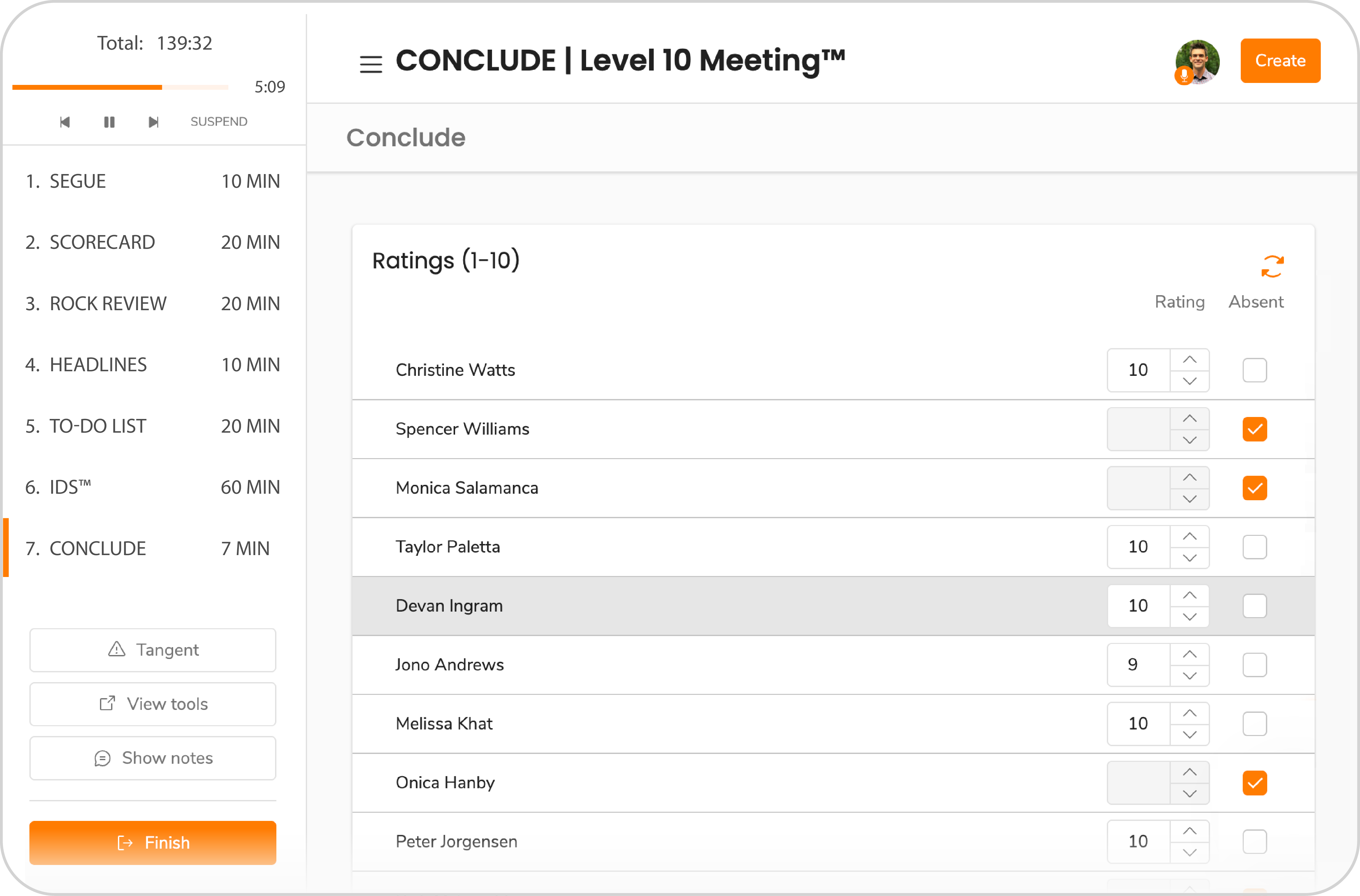
The meeting rating becomes a formality: Maybe the team rates the meeting out of habit, but no one ever scores the meeting below a 9. Or, people give the same rating every week without much thought. This one really bugs me.
None of these usually create an immediate problem. The trouble shows up later when the same issues come back again because the follow-up wasn't clear. When people outside the leadership team don't know about decisions that affect their work. And when the meeting rating stops helping the team get better because it's not honest.
That's what makes a weak Conclude frustrating. The team may have made good decisions during the meeting. They just didn't finish the work needed to put those decisions into action.
Why Teams Struggle With Conclude
In my opinion, the main reason is energy. By minute 85, the hard thinking is mostly done. You've reviewed the numbers, worked through the issues, and made the decisions. Conclude can feel like paperwork at the end of the meeting, so teams compress it into, "Great, we're out of time."
But that framing has it backward. Conclude isn't the cleanup after the meeting. It's the step where accountability gets assigned and the loose ends get tied up. Rush through it and you haven't saved five minutes, you've undone the value of the hard work that came before it.
The good news is Conclude is the easiest part of the meeting to improve. It comes down to building a few consistent habits and following them every week. When you build that discipline, Conclude stops feeling like a formality and starts doing the job it was designed to do.
3 Habits to End Your Level 10 Meeting Strong
Teams get the most out of Conclude when they are consistent and intentional with the last 5 minutes of every L10™. Try working on these three habits with your team to strengthen follow-through after the meeting.
Habit #1: Recap every To-Do, with an owner and a due date.
Before anyone closes a laptop, say the To-Dos back. Not, "We'll handle the onboarding thing." Say, "Dana owns rewriting the onboarding checklist, due next Friday." Owner, action, date, said out loud and written down. It may feel redundant, but that's part of the discipline. Saying each To-Do out loud confirms the owner agreed to it and gives the team a shared record of who committed to what. Next week, there should be no debate about what people thought they heard.
Habit #2: Identify your cascading messages.
Before you close, ask: "Who outside this meeting needs to know what we decided, and who's going to tell them?" Teams skip this one a lot. Then leadership makes a decision that affects other people, but no one communicates it clearly. The people doing the work end up hearing about it late, secondhand, or not at all. For each decision that needs to be shared, get clear on what needs to be communicated, to whom, and by when. You don't need to cascade everything. You have to decide what should be cascaded instead of assuming people will hear about it on their own.
Habit #3: Rate the meeting honestly and use the rating to help your team improve.
Close by rating the meeting from 1–10. That's where the Level 10 Meeting gets its name. If you're bringing some of the highest-paid people in the business together for 90 minutes every week, that time should be well used. The number matters, but what you do with it matters more. If someone gives the meeting a low rating, ask why. What would have made it better? Maybe the meeting started late. Maybe an issue went on too long without getting solved. Maybe someone didn't feel heard. Those are things the team can improve on. If your meetings are consistently scoring 7 or below, take a closer look at how you're running them.
Finish With Discipline
The last five minutes are where a team turns the meeting into commitments. Recap the To-Dos, identify the cascading messages, rate the meeting honestly, and do it the same way every single week.
A strong Level 10 Meeting® deserves a strong finish. Protect those five minutes, stay disciplined through Conclude, and give the work you just did a real chance to show up in the week ahead.
FAQ
What happens during Conclude in a Level 10 Meeting? Three things: You recap every To-Do confirming an owner and a due date, identify cascading messages, and rate the meeting.
What is a cascading message in EOS? It's a decision or update from your meeting that needs to be communicated to people who weren't in attendance. Naming cascading messages on purpose is how you keep the rest of the organization from feeling like leadership decisions happen behind closed doors.
Why should we rate our meetings? Because the rating gives the team a chance to improve how it uses the 90 minutes. If someone gives the meeting a low score, ask why and talk about what could be better next week. The score only helps if the team does something with it.
How do we make sure To-Dos get done? Say them out loud during Conclude with a clear owner and due date, capture them where the team can see them, and review them at the next meeting. Tip: You can sync your To-Dos with Google Calendar or Microsoft Outlook when you run your meetings in Ninety.
How long should Conclude take? About five minutes. It’s short by design, but it still deserves its place on the agenda. If the team regularly runs out of time before Conclude, take a look at how much time is being spent in the other parts of your meeting.