
.jpg)

A team I worked with recently came into their EOS® Quarterly Planning Session with the same problem I’ve seen over and over again in the years I’ve spent coaching leadership teams: They had a lot of information, but they weren’t aligned on what it all meant.
At the start of the session, the financials were still being finalized, a few Rocks didn’t have a clear status, and the leaders ended up spending time comparing notes on what had happened during the quarter instead of using the information they had to decide what should happen next.
If your team spends half of your Quarterly Planning day trying to piece together what happened last quarter, that’s time you’re not spending building a plan for the next one.
Yes, it’s important to look back and understand how you performed. You want to know what worked, where you missed, and what you can learn from both. But that review should help your team make decisions, not take over the entire day.
That’s one of the benefits of working in a 90-Day World®. Every quarter gives you a chance to look at what happened, get back on the same page around your vision, work through the issues that are in your way, and decide what deserves your team’s focus for the next 90 days.
After facilitating more than 400 session days as a Professional EOS Implementer®, I’ve seen how easy it is for teams to spend too much of that day looking backward. Reviewing the previous quarter is important, but it needs to lead somewhere.
What You’ll Learn
-
What an effective EOS Quarterly Planning session should accomplish
-
How to review the previous quarter without spending the day buried in data
-
How to evaluate complete and incomplete Rocks
-
How to choose stronger priorities for the next 90 days
-
How Ninety can support the connection between quarterly results and execution
What Should an EOS Quarterly Planning Session Accomplish?
EOS Quarterly Planning is part of The Meeting Pulse®, and it gives your leadership team a full day every 90 days to get out of the day-to-day and work on the business.
By the end of the session, your entire team should be able to answer these questions clearly:
-
How did we perform?
-
What did we accomplish with our Rocks?
-
What issues do we need to focus on now?
-
What are the most important things we need to accomplish next?
-
What lessons did we learn?
That’s really the bridge from one quarter to the next. You look back at the quarter so you have the right context. You come back to the Vision/Traction Organizer® (V/TO®) so the decisions you make still line up with where the company is going. You set Rocks so everyone knows what needs to get done over the next 90 days. And you use IDS® to Identify, Discuss, and Solve the issues that could get in the way.
It’s important to not let updates or reviews take over the day. If you spend too much time reporting or rehashing what happened, you won’t have enough time to talk about what it means or decide what you’re going to do next.
How Can You Review the Previous Quarter Without Getting Lost in Data?
The easiest way to get lost in the quarter-end review is to bring too much data into it. You don’t need to walk through every number the business produced over the last 90 days. You need enough information to understand where you ended up, what drove those results, and what your team should learn from them.
When I’m reviewing the quarter with a leadership team, I want us looking at three things: lagging indicators, leading indicators, and Rocks.
Start with the lagging indicators, especially revenue and profit. These tell us where we ended up. One challenge is that the books aren’t always fully closed by the time Quarterly Planning happens. That’s okay. Get the best financial picture you can and come ready to talk about what it’s telling you.
Then move to the leading indicators. This is where your Scorecard becomes valuable because you’ve been tracking these numbers throughout the quarter. You can look at the activities that were supposed to drive the business and compare them with the results you ultimately got.
Then we get to Rocks. By Quarterly Planning, your leadership team should already know where your Rocks stand. You’ve been reviewing them every week in your Level 10 Meeting®, so this shouldn’t be the first conversation about whether a Rock is on track, off track, or likely to get done.
Quarterly Planning gives you the chance to go deeper. As a team, you should be asking: What did we accomplish? What did we learn? Did the Rock have the impact we expected? If it didn’t get done, does it still deserve our attention next quarter?
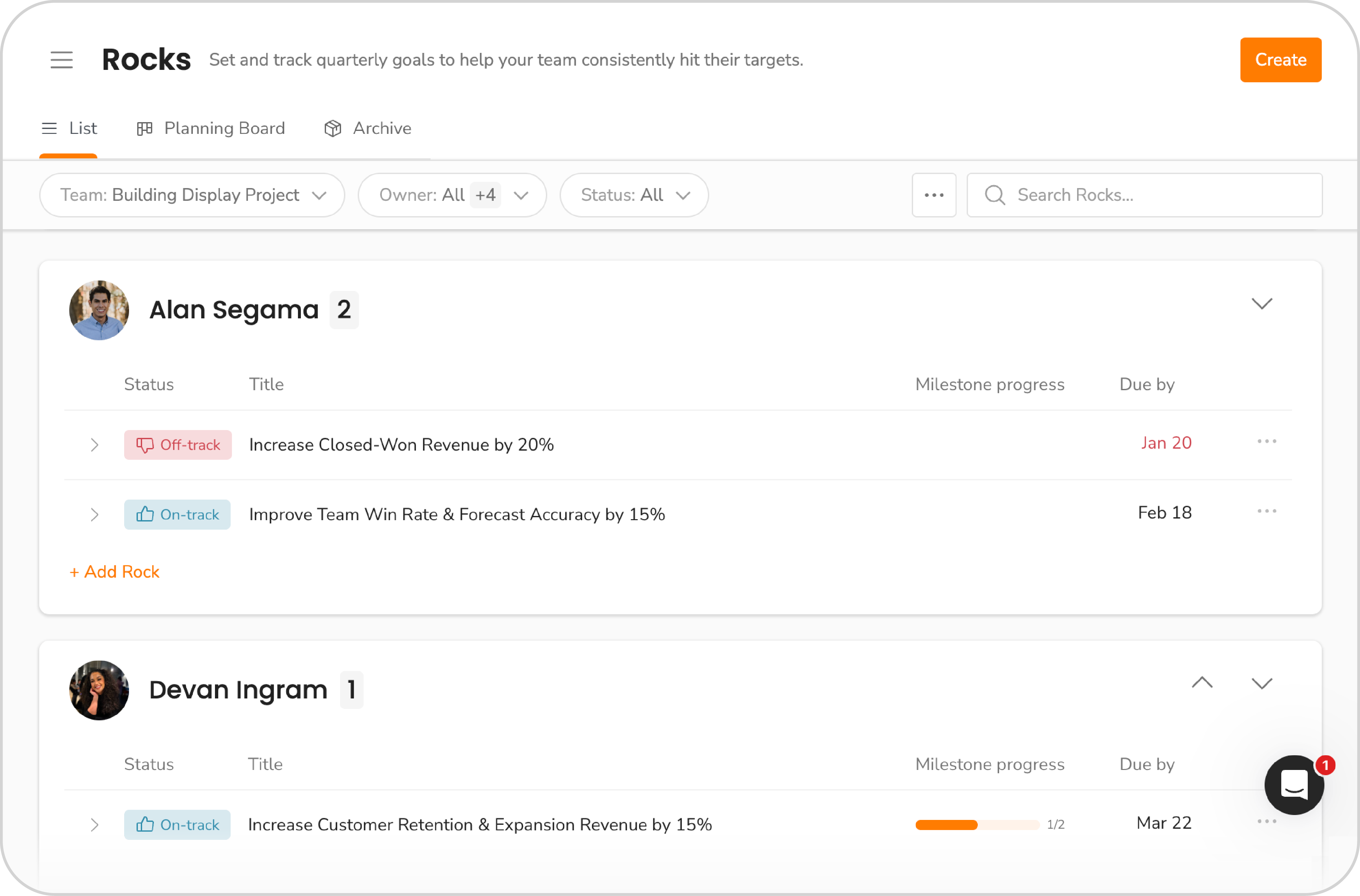
This is also where running EOS on a business operating system like Ninety makes a big difference. Instead of piecing together the quarter from spreadsheets, notes, and different documents, your team can see the Scorecard, Rocks, V/TO®, and other company information in one place.
That shared visibility saves time. Everyone is looking at the same information before and during Quarterly Planning, so you don’t have to spend part of the day getting people caught up or figuring out whose version of the numbers is right. You can get through the review faster and spend more of the session talking about what the information means and what you’re going to do next.
That’s what data should be doing for your team: giving you clarity about what happened so your team can make better decisions for the quarter ahead.
How Should You Evaluate Last Quarter’s Rocks?
When you review Rocks during Quarterly Planning, start with the EOS standard: Is the Rock Done or Not Done? That gives you a clear accountability check. From there, the better conversation is about the result.
If the Rock is done, your team should ask: Did it create the outcome you expected? What did the team learn from completing it?
If the Rock is not done, now you have a decision to make: Does the remaining work become a To-Do? Is it still important enough to earn another quarter of focus? Does it belong on the Issues List so the team can IDS® it? Or has the business moved on enough that you should let it go?
What I wouldn’t do is carry a Rock forward automatically just because it was already on the list. Every quarter, you have to decide as a team where you will put your time and energy. Your next set of Rocks should reflect what the business needs now, not simply what was left unfinished last quarter.
How Do You Set Better Rocks for the Next 90 Days?
By the time you get to Rock setting, your leadership team should have a solid picture of the last quarter, where you’re headed on the V/TO, and the issues that could shape what comes next.
Now comes the hard part: deciding what deserves focus for the next 90 days. There are always more good ideas than there is capacity to execute them well. That’s why Rock setting is less about building a list and more about making choices.
A lot of your potential Rock candidates should already be sitting on the Long-Term Issues List. Some may have come up during Level 10 Meetings, others during a Clarity Break™, and some may have been waiting for the right quarter.
With Ninety’s Planning Board, you can see your current Rocks alongside the priorities you’re considering for the next three quarters. Inside the Planning Board, your team can draft future Rocks, connect them to annual goals, and turn long-term issues into upcoming initiatives before deciding what belongs in the next 90 days.
During Quarterly Planning, everyone can work from that same view. You can compare Rock candidates, talk through capacity, connect Rocks back to longer-term goals, and decide which priorities should make the cut for the next quarter.
That shared visibility helps the team make better choices with less overlap and capture those decisions as they happen, instead of leaving the session without any clear accountability or plan to execute.
When it comes to Rocks, your team should be selective. A good idea doesn’t automatically deserve a Rock this quarter. Your next set of Rocks should reflect what the business needs most over the next 90 days while still moving you toward the longer-term vision.
How Should an EOS Quarterly Planning Session End?
By the end of Quarterly Planning, your leadership team should know exactly what you’ve committed to for the next 90 days.
You’ve set the Rocks and you’ve used IDS® to work through the highest-priority issues. Now it’s time to make sure the To-Dos are clear, ownership is assigned, and everyone knows what needs to be communicated back to the rest of the organization. Nobody should leave wondering what was decided or what they’re responsible for next.
From there, the work moves right back into your weekly operating rhythm: The Rocks you set become part of your Level 10 Meeting, your Scorecard keeps giving the team visibility into performance, and new issues get captured and worked through as the quarter unfolds.
That’s why I don’t think of Quarterly Planning as a one-day event. The decisions happen that day, but the results come from what the team does with them over the next 90 days.
Run that quarter well, and you’ll come into the next Quarterly Planning session with better information, fewer surprises, and a much clearer sense of where to go next.
That’s the discipline behind working in a 90-Day World®. And that’s how you build real Traction®.
FAQ
What is EOS Quarterly Planning?
EOS Quarterly Planning is a full-day leadership team session held every 90 days as part of the EOS Meeting Pulse. The team reviews the previous quarter, reconnects with its vision, establishes Rocks for the next 90 days, solves key issues, and confirms next steps.
How long is an EOS Quarterly Planning session?
An EOS Quarterly Planning session is generally a full-day session. It gives the leadership team dedicated time away from normal day-to-day operations to work on the business.
What should you review during EOS Quarterly Planning?
Leadership teams should review quarter-end performance, including financial results, relevant Scorecard measurables, and Rocks. The team can then use that information to understand what happened and make decisions about the next 90 days.
How many Rocks should a company set each quarter?
EOS recommends setting 3–7 Company Rocks each quarter. Leaders may also have individual Rocks based on their responsibilities and the priorities of the organization.
How does Ninety support EOS Quarterly Planning?
Ninety brings tools such as the Scorecard, Rocks, Issues, V/TO, Meetings, and planning capabilities into one connected platform. This helps leadership teams review performance, establish priorities, capture decisions, and carry those priorities into weekly execution.


