


A CEO I work with once told me he couldn't figure out where the money was going. Revenue was solid, the team was lean, and from the outside, nothing looked obviously wrong. But at the end of every quarter, the margin was thinner than expected.
When we took a closer look at what was actually happening, we didn't find one big problem. We found dozens of small ones.
A software subscription renewed without review. Overtime crept up because project scoping kept expanding. A vendor rate increased six months earlier, and no one had renegotiated it. A pricing discount meant to close just one deal became the standard. None of these felt significant on their own, but together, they were costing the business hundreds of thousands of dollars a year.
This same pattern affects almost every growing company. The big decisions get the attention, things like hiring plans, capital expenditures, and product launches. Leadership teams debate those choices carefully. But the small, daily decisions fly under the radar. And when those decisions are made too quickly without financial context, they have the power to shape the actual financial outcome of the business.
Why Do Small Decisions Create Big Financial Problems?
No one sets out to lose margin. It happens gradually. A team lead approves a rush shipment to keep a client happy. A sales rep offers a discount to close before month- end. A department head renews a contract because canceling it feels like more effort than keeping it. Each decision is small. Each one is defensible. But together, they compound.
The danger isn't any single choice. It is the absence of a framework for making those choices well. When day-to-day decisions happen without visibility into their financial impact, small tradeoffs start to accumulate. By the time the quarter closes, the numbers reveal a pattern no one intended but everyone now has to explain.
I've worked with company leaders who were surprised to discover their actual cost of delivery was 15 to 20 percent higher than what their pricing assumed. And it wasn't because their strategy was bad. It was because a thousand small execution decisions were never connected back to the financial plan.
When teams don't understand how their daily work connects to financial outcomes, they default to what feels right instead of what actually is right. They prioritize speed over margin, volume over value, and saying yes instead of asking whether the yes is worth the cost.
Over time, the culture starts to reinforce the pattern. Teams learn that speed and volume are rewarded. No one asks about the cost of that rush delivery or the margin on that discounted deal. And the financial consequences go unnoticed until they're too large to ignore.
The turning point for most leaders is the moment they realize the problem isn't one they can solve with a single decision. It's a pattern. It requires a change in how the team thinks about money at the operational level, not just the strategic one.
One company I worked with had a project management team that was consistently running over scope. Not by a lot. Five percent here, ten percent there. But across 40 active projects, the impact was significant. When we gave the team visibility into project-level margin in real time, behavior changed almost immediately. Not because anyone was doing something wrong. It was because they finally had the information to do something better.
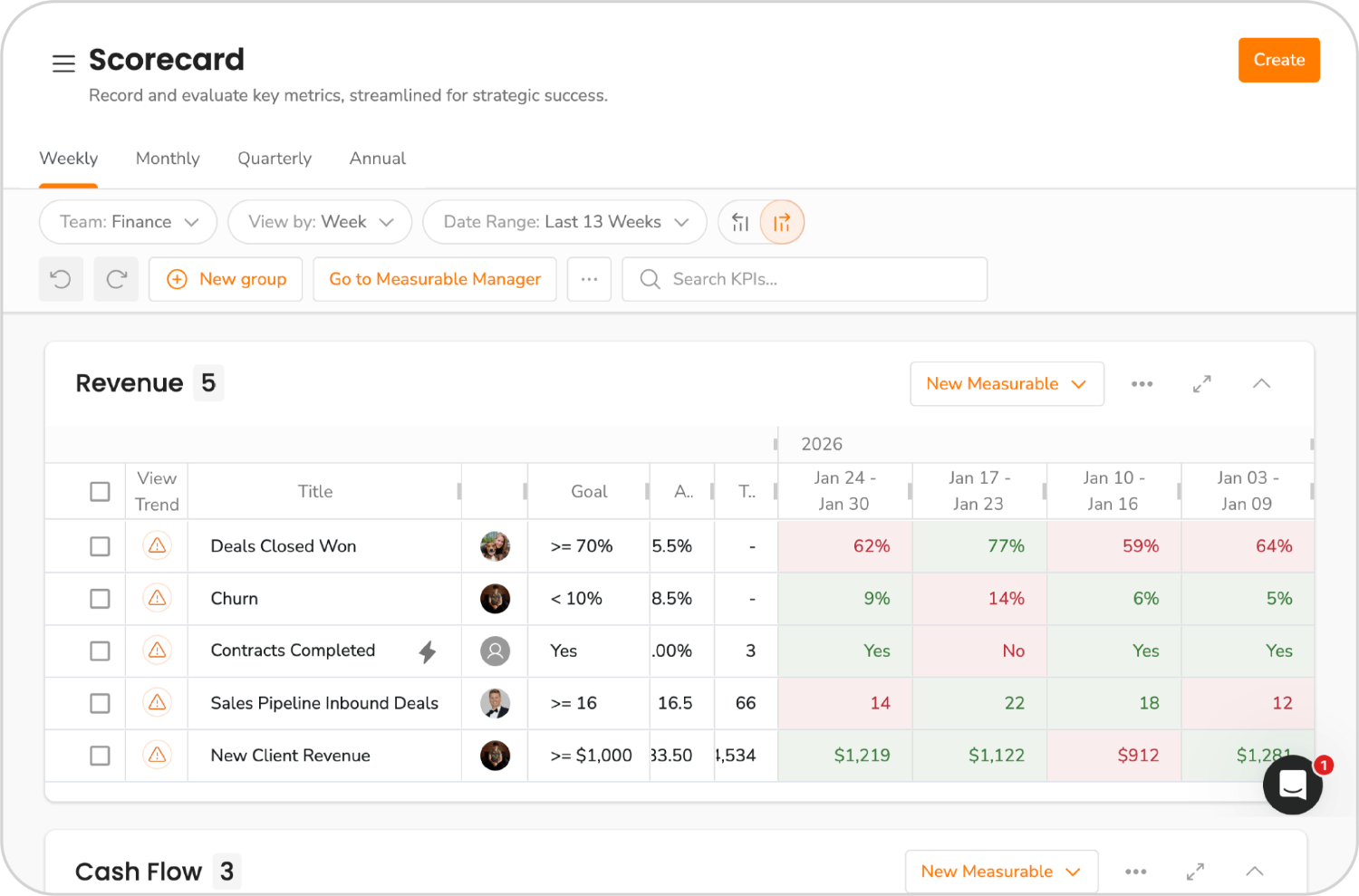
Small misses are easier to fix when you can see them early. Use Ninety’s Scorecard tool to track the weekly numbers that help your team spot issues, stay accountable, and make better decisions before the quarter closes.
3 Financial Disciplines to Start This Week
1. Connect daily decisions to financial outcomes.
Most teams operate without a clear line between what they do each day and how it affects the bottom line. Change that. Whether it's project margin, cost per delivery, or client profitability, give teams a number they can see and influence. When people understand the financial impact of their choices and own the Scorecard measurables tied to their Seat, they make better decisions.
2. Build a rhythm of financial review into operations.
Financial review should not live exclusively in the finance department. It should show up in The Meeting Pulse®. Use your weekly Level 10 Meeting® to review the right numbers, raise financial issues, and solve what needs to be solved. Check on key margin indicators and where costs are trending versus the plan. This doesn't need to be complex. It just needs to be consistent. The goal is to catch issues early. When teams review financial performance regularly, small issues get addressed while they're still small. And if you find something that's off, add it to the Issues List, IDS® it, and assign a clear To-Do.
3. Audit the small commitments.
Pick one category this week: software subscriptions, vendor contracts, discount practices, overtime patterns. Look at what the business has committed to through small, incremental decisions and ask whether each one still makes sense. Most companies that do this exercise for the first time find savings they didn't know were available.
Small Decisions Create Financial Traction®
Profit isn't won or lost in the boardroom. It's won or lost in the daily rhythm of the business. In the scope that gets approved, the discount that gets offered, the contract that gets renewed, and the cost that goes unquestioned.
The leaders who build profitable companies aren't the ones who make one brilliant financial decision a year. They're the ones who make hundreds of good ones, every week, at every level of the organization. This is the difference between working in the business and working on the business.
Leaders need a regular rhythm to step back, inspect the numbers, and solve the patterns. That starts with visibility, accountability, and a commitment to treating every decision as a financial one.
Small decisions shape financial outcomes every week. Ninety helps teams make those decisions visible by connecting Scorecards, issues, Rocks, To-Dos, and meetings in one place. Try Ninety today and start building a stronger operating rhythm for your business.
Need financial leadership support? ProCFO Partners helps companies strengthen financial clarity, improve decision-making, and build the discipline needed to scale profitably.