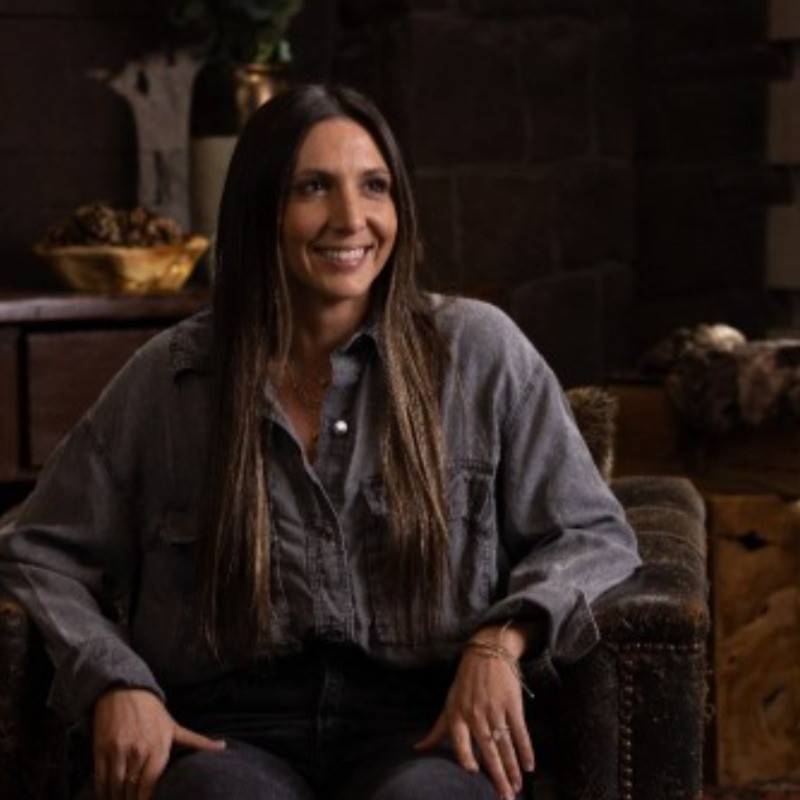
When I answered a Craigslist ad in 2015, I never imagined the 10-year journey in front of me. I was just looking for flexible work. My daughter was little, and I needed something that fit my life at the time.
Mark Abbott, who was in the very early stages of starting Ninety, needed a part-time assistant for his coaching practice, and the job description was unlike any Craigslist ad I’d seen before. There were detailed questions, specific criteria, and a personality assessment. I wanted the job, so I did all of it.
What’s funny now is that I don’t think I really knew what I was getting myself into. At first, I was
helping Mark. But as Ninety started getting off the ground, the work kept expanding. Soon, I was helping other leaders on the team, supporting EOS Implementers, answering chats, doing demos, and helping early customers onboard. Everyone on our small team was sitting in more than one Seat. I remember changing our titles on business cards depending on the event we were going to because we all wore so many hats.
I don’t say that to sound dramatic.  That’s just what it was. We were building something, and everyone had to jump in and help as things came up. A lot of my 10 years at Ninety have been like that. Ninety keeps growing, the needs keep changing, and my role keeps changing with them.
There were definitely times in those first few years when it felt chaotic. I just tried to help wherever I could and figure it out as I went. But looking back, I realize the work was about learning what the company needed next and being willing to step in wherever I was needed.
If you’re leading a growing company running on EOS®, you’ve probably lived some version of
that too. After years spent working closely with so many founders, Visionaries, and Integrators, I’ve seen firsthand that as a business evolves, the work evolves with it. That means your people have to keep adjusting.
Structure is important because it gives everyone clarity around what they own. But early on, roles and responsibilities can change a lot, sometimes every day. The people who have been able to keep growing with Ninety are the ones who not only take ownership of their role, but also genuinely care about the bigger picture. They’re fully invested in where we’re going and who we’re serving, and they're willing to jump in wherever they’re needed.
That’s what this 10-year reflection is really about: how great teams keep building through change without losing sight of the mission that brought them here.
Keep Building Toward the Mission
At Ninety’s Annual Summit last year, the team surprised me with a yearbook to celebrate my 10 years at the company. I didn’t see it coming, and it was such a special gift. Looking back through all that time, I remember saying something like, “We’re a different company every six months.” I still think that’s true.
Ninety’s overall vision and mission have stayed consistent. But the strategy, structure, priorities, team, and day-to-day work have changed again and again. And I’ve learned that’s part of growing.
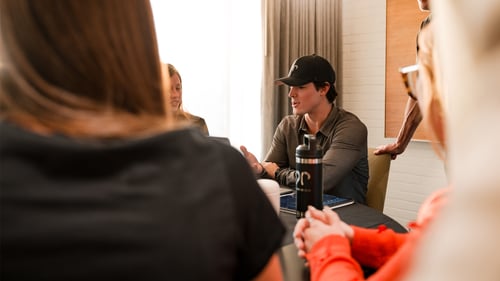
In the early days, we had a lot of fractional leaders, and the team seemed to change a little every time we got together. I remember being at the farm outside Atlanta for Quarterly and Annual Planning, and there was a stretch where it finally felt like the same people were coming back. That felt big to me. It felt like we found the people who believed in what we were building and wanted to keep building it with us.
Those farm sessions are still some of my favorite memories. We’d work hard all day, then sit around the fire after dinner. There were cook-offs, big ideas, and a lot of figuring things out together.
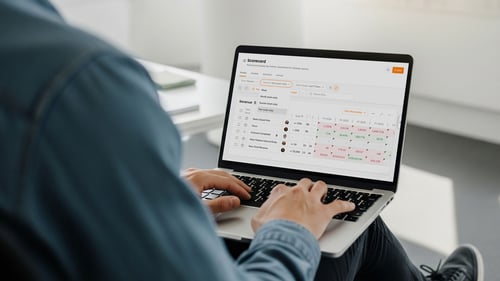
It was simpler then in some ways. The platform didn’t need to do as much as it does today, and the market looked a lot different from the one we serve now. We were still learning what Ninety needed to become.
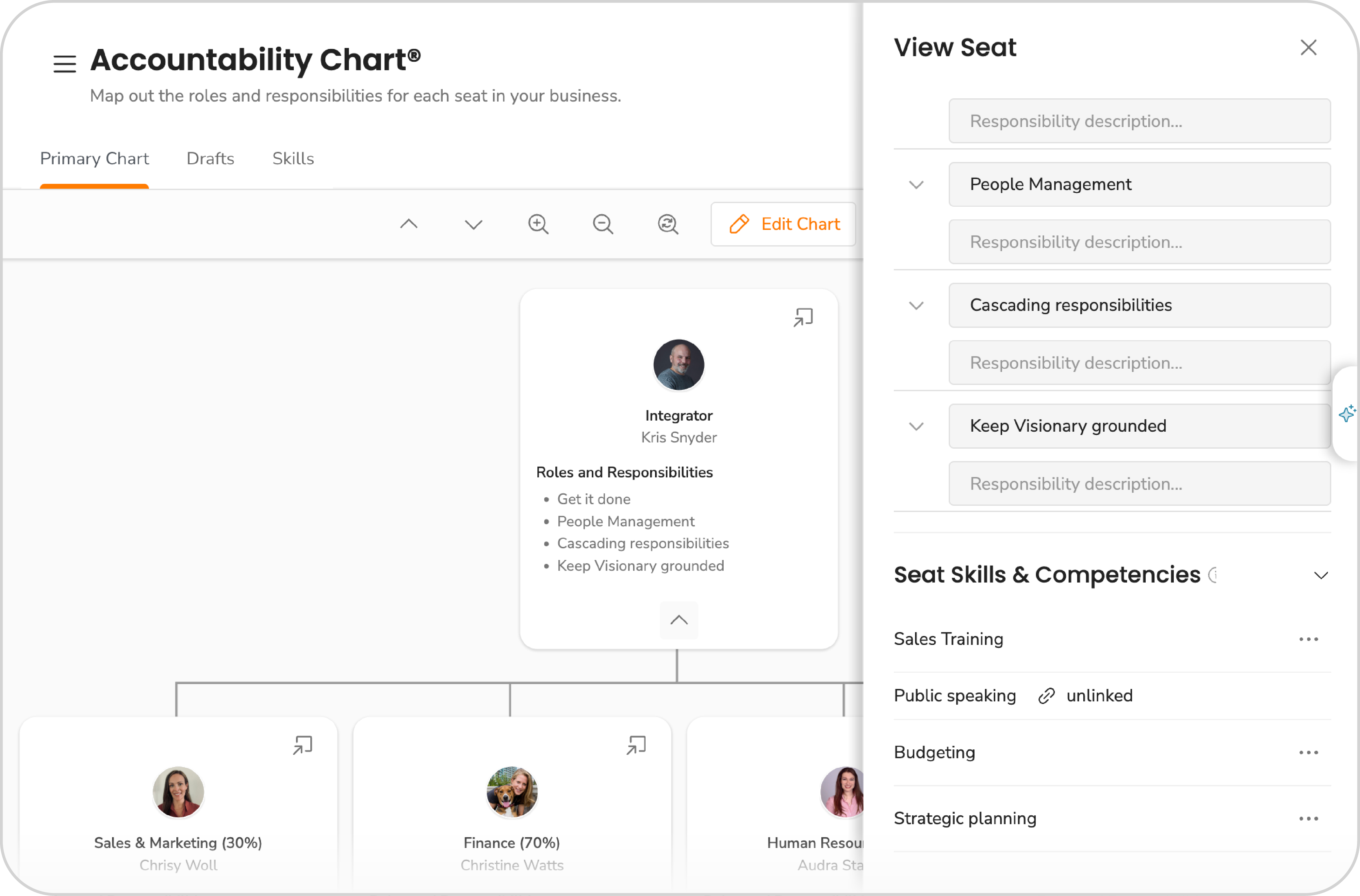
EOS helps leadership teams work through that kind of growth. It gives them a way to step back and ask whether the structure still fits the business they’re becoming. As a company evolves, The Accountability Chart® that worked last year may need to adjust the next year. A Seat that made sense in one stage may need to look different in the next.
The people who stayed with Ninety understood their Seats, but they also understood that the company was still being built. They were okay with some unknowns and willing to learn as the business grew because our North Star hadn’t changed. Even if the work started to look different, they cared about where we were going, who we were serving, and what the company needed next.
That’s a big part of how great teams keep building through change. The work may take on a new shape over time, but the right people will keep moving in the same direction when they understand the mission they’re building toward.
Stay Close to the People You Serve
Ninety’s vision gave us something to keep coming back to, and service was one of the ways we kept building toward it. I don’t remember us ever sitting down and saying, “Service is going to be part of our culture.” It was just what we did.
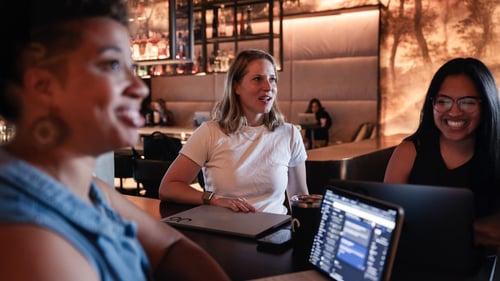
Initially, we were all doing a little bit of everything: talking with people who reached out through chat, doing demos, onboarding clients, or talking with EOS Implementers. A lot of the work was just trying to understand what people needed from us and how we could help. Some days it felt like we knew what we were doing, but most days we were figuring it out as we went.
I remember how much I learned from Christine Watts during those years. She was one of Ninety’s earliest team members and currently serves as Ninety’s Head of Professional Services. She was always open to feedback in a way that stood out to me. I’d been in other software conversations where feedback made people defensive, but Christine wasn’t like that. She wanted to know what wasn’t working because she wanted to make it better. And that shaped how I thought about service.
Service is about so much more than responding quickly and answering simple questions. It’s listening without getting defensive. It’s asking another question so you can understand why they needed help in the first place. It’s realizing that sometimes that first question a customer has is only part of what they’re trying to solve.
That became even more important as Ninety grew. Our product got better, but our clients also needed more from us. EOS Implementers were coming to us with real questions from real client sessions, and a lot of times those questions helped us see the issues people were actually trying to work through.
I think that’s why it was so helpful to be close to those conversations. You start to hear the same kinds of things come up, and you realize people aren’t just asking about a button or a feature. They’re trying to run a better meeting. They’re trying to get their team on the same page. They’re trying to help a client leave a session with more clarity than they came in with.
That kind of feedback helped us build better. It helped us understand where people were getting stuck and where Ninety needed to be easier, clearer, or more useful.
I think that’s true for any team trying to build through change. You can’t get too far away from the people you serve. You have to keep listening, keep asking questions, and stay open when someone tells you something isn’t working the way they need it to. That’s how you keep getting better without losing sight of who you’re building for.
Know Your Seat, But Play to Win
One thing Mark has said for years is that your job isn’t just to do your job. It’s to help the team win. I love that because I’ve lived it.
A Seat gives you clarity around what you own, but it doesn’t mean you stop paying attention to the rest of the business. As your company grows, you have to keep learning what it needs next. Clients will need different things, priorities will be different every quarter, and what your team needed from you six months ago likely isn’t what it needs now.
That’s the mindset I’ve seen make a real difference at Ninety. People take their responsibilities seriously, but they’re also thinking about the team. They ask what the business needs, help when a teammate needs support, and stay willing to adapt when the business needs something new from them.
That’s not about doing everyone else’s job. It’s about understanding how the work connects to the whole team. When people can see that connection, they work differently. They don’t wait until everything is perfectly defined before they try to help. They notice when they can do something to help a teammate, make the work better, or give a customer a better experience.
That’s such a big part of building through change. Everyone still needs a Seat. Everyone still needs accountability. But the people who really help the company win the long game are thinking about the whole team, not just their own position.
How to Keep Building When Your Business Keeps Changing
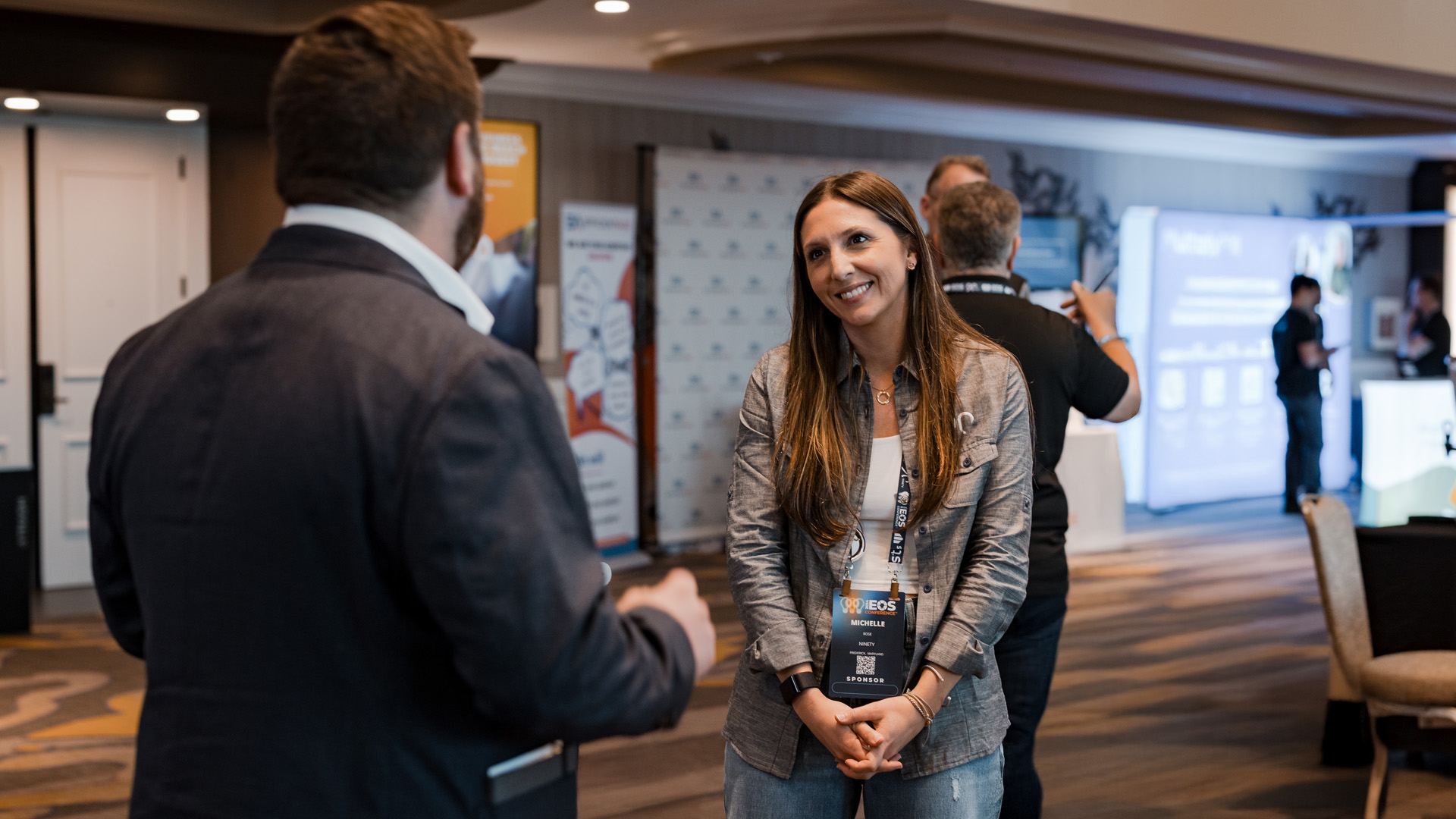
When I look back on my 10+ years at Ninety, I think about the Craigslist ad, the first demos, the planning sessions at the farm, and all of the teammates, Implementers, and clients who helped shape the company along the way. I also think about how much Ninety has changed since those early days.
My job has never really stayed the same. That used to be hard to explain. Now, I see it as one of the best parts of the journey. I’ve been able to learn different parts of the business, build relationships across the EOS community, and contribute in ways I never could’ve predicted when I first answered that ad.
If you’re building with a team through change, here’s what I’d share:
-
Keep coming back to the vision: Growth will keep asking new things from you. Your strategy, structure, and priorities may change a lot, but the vision gives people something to come back to when the day-to-day work starts looking different. For us, our North Star stayed the same even when almost everything around it kept changing.
-
Revisit The Accountability Chart® as the business grows: The Seat someone sat in a year ago may not be the Seat the business needs now. As the company grows, responsibilities can stretch, overlap, or outgrow the way they were originally defined. The Accountability Chart gives your team a way to have that conversation instead of letting confusion build around who owns what.
-
Bring in people who care about the mission, not just the role: Skills and experience are important, but growing companies need people who care enough to understand why the work is important. They want to know how their Seat helps the team, how the team helps the customer, and how all of that connects back to where the company is going. Those are the people who can keep growing with the business as the work changes.
-
Use Core Values to protect the culture: As a company grows, so much changes: the work, the team, the structure, and sometimes even the way people spend their days. That’s why finding the right people for your team is so important. People who don’t just know the Core Values, but live them in the way they work with clients, take feedback, handle pressure, and treat one another.
-
Build trust by caring about the team beyond your own work: Trust gets built in all the small ways people work together. It’s how they follow through, how they communicate when something changes, how they ask for help, and how they step in when someone else needs support. The strongest teams I’ve been part of have people who care about what they own, but also care about how the whole team is doing. That’s what helps people keep moving forward together when the work is changing.
I’ve seen how much a growing company can evolve and how important each and every person becomes in the middle of all that change. When a team is made up of people who truly care about the same mission and trust one another enough to keep adjusting together, change doesn’t have to pull the company apart. It can become part of how the company keeps getting better.
The Work Ahead
When I started at Ninety, I had no idea how long I’d be there, or how many different Seats I’d sit in. I didn’t know how many parts of the business I’d get to learn, or how many people would shape the way I think about service, teamwork, and growth. I didn’t know that the same company could feel new again and again while still building toward the same North Star.
But that’s what the last 10 years have taught me. Great teams don’t keep building because everything stays the same. They keep building because the mission is clear, because they genuinely care, and because they want to keep learning together.
That’s what I’ve seen at Ninety. And that’s why I’ve stayed so long.
After 10 years, I’m still grateful to be building what comes next. Stay tuned. We’re just getting started.
Want to hear more on Michelle’s journey with Ninety? Listen to her conversation with Ninety founder Mark Abbott on the Founder’s Framework podcast.