

I've been in love with the World Cup since the summer of '74.
I was 13, and West Germany was hosting the tournament. A Dutch team came out of the sky playing a game I'd never seen before. They called it Total Football. Everyone attacked, everyone defended. The shape kept dissolving and reforming like water, and at the center of it was a thin man named Cruyff who moved as if he already knew where the ball would be a second before it arrived. He gave the world a turn that summer: a feint one way, a drag of the ball the other, a defender left facing a corner flag. I've spent fifty years watching people try to copy it.
The Dutch lost that final. Of course they did. The most beautiful team anyone had ever seen scored before the Germans had even touched the ball, then ended up losing to a side that was simply harder, more certain, and more willing to win ugly. I learned something that summer I didn't have words for yet:
Beauty and winning are two different mountains.
The World Cup is one of the few places on earth where you get to watch people try to climb both at once, mostly fail, and break your heart doing it.
What Keeps Me Watching
I should confess the conflict in me because it's how I watch.
I'm an old rugby player. My sporting soul wears black. I love the All Blacks the way other people love a religion and for much the same reasons. Rugby taught me a code before I had a name for it: You take the ball into contact and you get up without a word. You call the referee "Sir." You don’t just shake the hand of the man who tried to remove your head from your shoulders, you have a laugh and a drink with him after the game is over. And, you never, ever go down looking for something you didn't earn.
There's an old line we've always used to explain ourselves: "Rugby is a hooligan's game played by gentlemen. Football is a gentleman's game played by hooligans." We say it with love and with a raised, slightly cocky eyebrow, and we mean every word.
So I watch football divided. Seduced by the beauty because no game on earth produces moments like it, and quietly offended by the theatre. The rolling. The clutched face when the contact was to the shin (Can we please see if there’s actually even a scratch?). The gentleman's game, played too often by men looking for a penalty instead of an honest foul.
And then, every so often, the whole thing flips on its head and reminds me why I keep watching.
I felt the old line again a couple of weeks ago, watching France play Paraguay. If you didn't see it you won't know who did what to whom, but those of us who watched and understand the issue will likely never forget it: a football match that stood up midway through and turned into a mockery of decent play.
Paraguay didn't come to dance. They came to provoke, to piss France off. There were shoves in the back, cheap shots, a forward hunted around the field, a goalkeeper flinging a ball at a man's spine after the whistle had gone. And Mbappé, one of the most gifted footballers alive, looked into it and said the thing that made me appreciate him so much more: “They thought we'd turn up in tuxedos.” France knows how to play the game well. My rugby heart stood up and applauded that game of football. The conflict in me resolved for 90 minutes into pure joy.
.png?width=1371&height=760&name=In_Thin_Air_World_Cup%20(1).png)
Winning at Altitude
That brings me to another night, to the Azteca, when England played Mexico. When I returned to being 13 again.
There are few more haunted cathedrals in the sport. It's where Maradona, 40 years ago, beat England twice in a single afternoon — once with the “hand of God” (it still pisses me off), and once with the goal of the century. Cheating and genius inside four minutes of each other, the whole maddening truth of the game compressed into one man on one field. England hadn’t played there since. Forty years. And there they were again, back at the scene, and the thing that struck me wasn’t the history. It was the altitude.
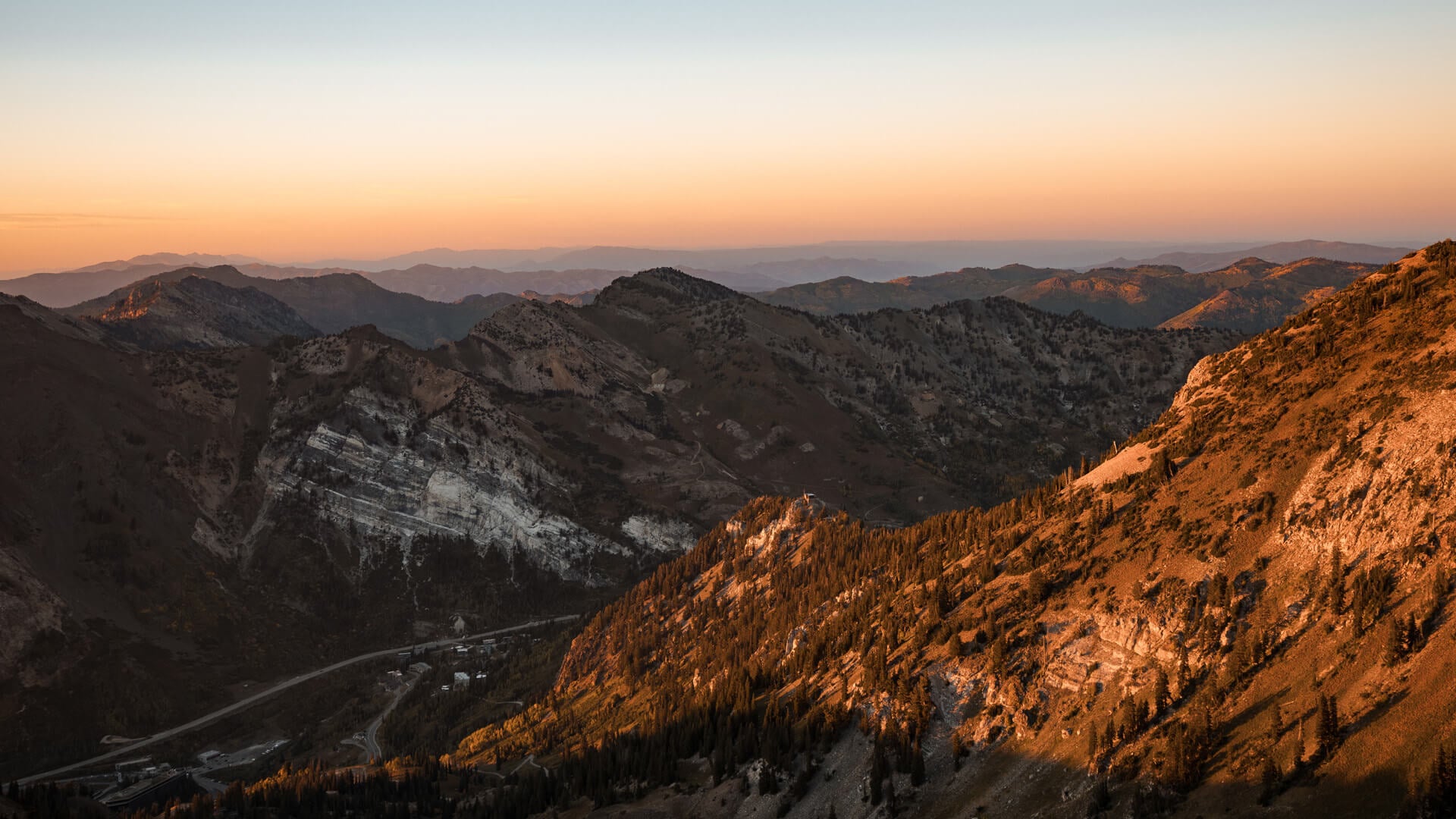
The Azteca sits over 7,000 feet above the sea. The air up there is thin, really thin. Thin enough that lungs trained at sea level often find that it's hard to play at your best. Mexico lives up there. They breathe it. The game, like the previous games, was a game where they floated, a sea of green. They were four games into a tournament without conceding a goal, playing like a team that knows exactly how much oxygen is in the room. And England, a team that's bigger, richer, deeper, a giant by every measure that can be counted.
England labored. You saw it. The giant gasping. But they scored. And then again. And then again. And, then they hung on, down a man, and won.
I’ve watched games like that one my whole life, not only in football and not only in sport.
Altitude is the great uncoverer. It doesn't care what you're worth at sea level. It doesn't care about your budget or your reputation or the names on the backs of your shirts. It only asks one question:
Can you persevere at altitude?
It asks everyone the same way, and there's no faking the answer. This is the thing rugby taught me and the All Blacks made into an art: You cannot claim altitude. You can only earn it, over years, in the thin cold air where shortcuts don't work. No dive wins you a lineout. No clutched face survives the next ruck. The black jersey has stayed at the summit longer than any team in any sport not because they're the most gifted every year, but because long ago, they learned to live where the air is thin, and they never once mistook wanting it for having done the work.
That, in the end, is the reconciliation of the two loves that pull at me. Football gives me the beauty and, sometimes, breaks my heart with the theatre. Rugby gives me the code and, sometimes, tries my patience with the grind. But both games, at their summit, are asking the same single question the Azteca asked England. Not who is bigger. Not who is richer. Who has learned to play well at altitude.

I have learned that the biggest stars and the greatest players are the most humble ones, the ones who respect people the most.

The Art of Winning Well
Then, if you've conquered the altitude, the game asks a second question, more subtle than the first but far harder:
Can you win well?
Because attitude was never only the desire to win. That part is cheap. Everyone at the summit wants to win. Attitude, the real thing, the thing that took me decades to understand, is the desire to win in a way you're proud to own: in front of your children and, if you let yourself look that far down the line, in front of theirs. It's the difference between the goal and the dive that bought it. Between the honest hit and the cheap shot from behind. Between a team that lifts the cup and a team you'd want your grandchildren to have watched.
This is the thing the black jersey has always understood. You don't own it. You sweep the floor, you wear the jersey for a while, and you leave it better than you found it for the people who come after you — people you will never meet, who will never know your name, and for whom you are trying to be worthy anyway. That's the highest form of wanting. Not to win. To be worth remembering by those who haven't been born yet.
And it's why, fifty years later, I still ache for a Dutch team that lost. They didn't lift the cup that summer. But they won something that outlasts the cup. They prevailed so beautifully, so completely on their own terms, that a boy fell in love and an older man still hasn't gotten over it.
Altitude is real, and earned, and the biggest name in the room isn't always the one who can breathe up there. But attitude is the higher climb. Not the wanting to win. The wanting to win well, in front of the ones who come after.
Worthy of the Win
I keep watching, year after year. A rugby man in love with football, a black jersey on my chest and a Dutch ghost in my memory, still hoping the beautiful thing finds a way to win and to win well.
And here's where I land, because it's where I always land. It was never altitude or attitude. It's both. The air you've earned the right to breathe, and the person you choose to be once you're up there. Capacity and character. The climb, and the way you climb it.
Ask me to choose between two things that are both true and I'll refuse every time. Both is almost always my favorite answer, and it's the only honest one here.
Some loves you never climb down from.


.jpg?width=500&name=large_AI_Leadership_Series_4_Founders_Blog_Header_1920_x_1080%20(1).jpg)

.jpg?width=500&name=large_Old_Truck_Founders_Blog_Header_1920_x_1080_3%20(1).jpg)