

As the go-to person in the EOS® community for family business, I hear the same version of this story a lot. The families and industries may be different, but the story is the same: Every year, without fail, the holidays go sideways. It's not on purpose. Nobody sits down and says, "Let's ruin another family event." It just happens, like clockwork. It's predictable and painful.
It starts when someone brings up the business. Maybe it's margins, who's getting promoted, or that one contract that never should have been signed. It doesn't matter what it is. Once it starts, it doesn't stop. Voices get louder, old wounds get poked, and the kids sit frozen in their seats watching their family have a poorly run staff meeting over the good dishes.
That kind of fight doesn’t end when the gathering’s over. The tension stays with everyone. Before you know it, the next generation starts dreading these gatherings, and why wouldn't they? Nobody wants to be part of a business that turns every family event into a debate about pricing. They start wondering whether they want any part of the business at all. And it isn't because they don't love the business. It's because they love their sanity more.
The spouses stop wanting to come too. Who could blame them? Nobody marries into a family thinking, "I can't wait to watch my in-laws argue about EBITDA over dessert," so they start finding reasons to be somewhere else that night.
And here's the wildest part. For all that fighting, the family never talks about anything real. All that noise, and they still never get to the conversations they should be having. The ones about who wants to lead next, what happens when Mom and Dad step back, whether everyone even wants to keep the business at all. They're too busy fighting about the wrong things at the wrong time to ever get to the right things.
Massively complicated problem. Wildly common story.
If any of this sounds like your family, take a breath. You're not the only one this happens to, and it's not a sign your family is broken or your business is doomed. It's one of the most predictable patterns in family business, but the good news is it's fixable.
The Three Tables of Family Business
I wrote about the Three Circle Model of Family Business in a recent article on annual planning. It came out of Harvard in the late '70s, and divides family businesses into three different systems, each with its own needs: the family, the business, and the ownership.
I ask my clients to picture each circle as its own table. The family circle is the dining room table. This is where you talk about who's hosting next year, whose dish is making a comeback on the menu, and how you want to spend time together. This table is for connection, not cash flow.
The business circle is the conference room table, where the day-to-day stuff lives: strategy, staffing, whether the new hire is working out. This is where your Level 10 Meetings, your Quarterlies, and your Annuals happen.
The ownership circle is the boardroom table, and this is where the big structural questions live: who owns what, what you want from the business, whether you're willing to keep investing in it.
Three different tables, three different conversations, and three different sets of ground rules for what belongs where.
Not every family member belongs in every business conversation. For companies running on EOS, The Accountability Chart® makes the business table easier to define. If you’re an owner but you’re not on the leadership team, that doesn’t mean you jump into leadership-team issues. If you work in the business, you join the conversations that belong to your Seat. And when you’re together as a family, you get to be a family.
What Changes When You Get This Right
Once a family gets clear about which table they're at, when someone starts talking business over family dinner, someone can call it out without it turning into a big thing: "That's a conference room conversation." It isn't a gotcha. It's a relief. Nobody has to carry the business to the table anymore. They can just eat.
And when that happens, the gatherings turn back into gatherings. The spouses start showing up again without dreading it. The next generation starts sticking around instead of planning their exit.
And this is the part that surprises most families: They get better at the hard conversations, not worse. When the dining room table stops absorbing every unresolved business issue, the conference room and boardroom finally have space for the conversations that need to happen. The ones about succession, ownership, and what everyone wants. On purpose, with the right people, at the right table.
What to Do Before Your Next Holiday Gathering
Before the holidays, take a few minutes to get everyone on the same page. These three steps can help keep business issues from following you to the family table.
-
Share this article: Sit down with your family and talk about the Three Circle Model of Family Business so everyone understands that the holidays are not a place to discuss business issues.
-
Decide how you’ll stop the business talk: As a family, come up with a plan for how you’ll handle it when the conversation turns to work. It can be as simple as, “Let’s put that in Ninety,” so no one gets stuck being the family killjoy.
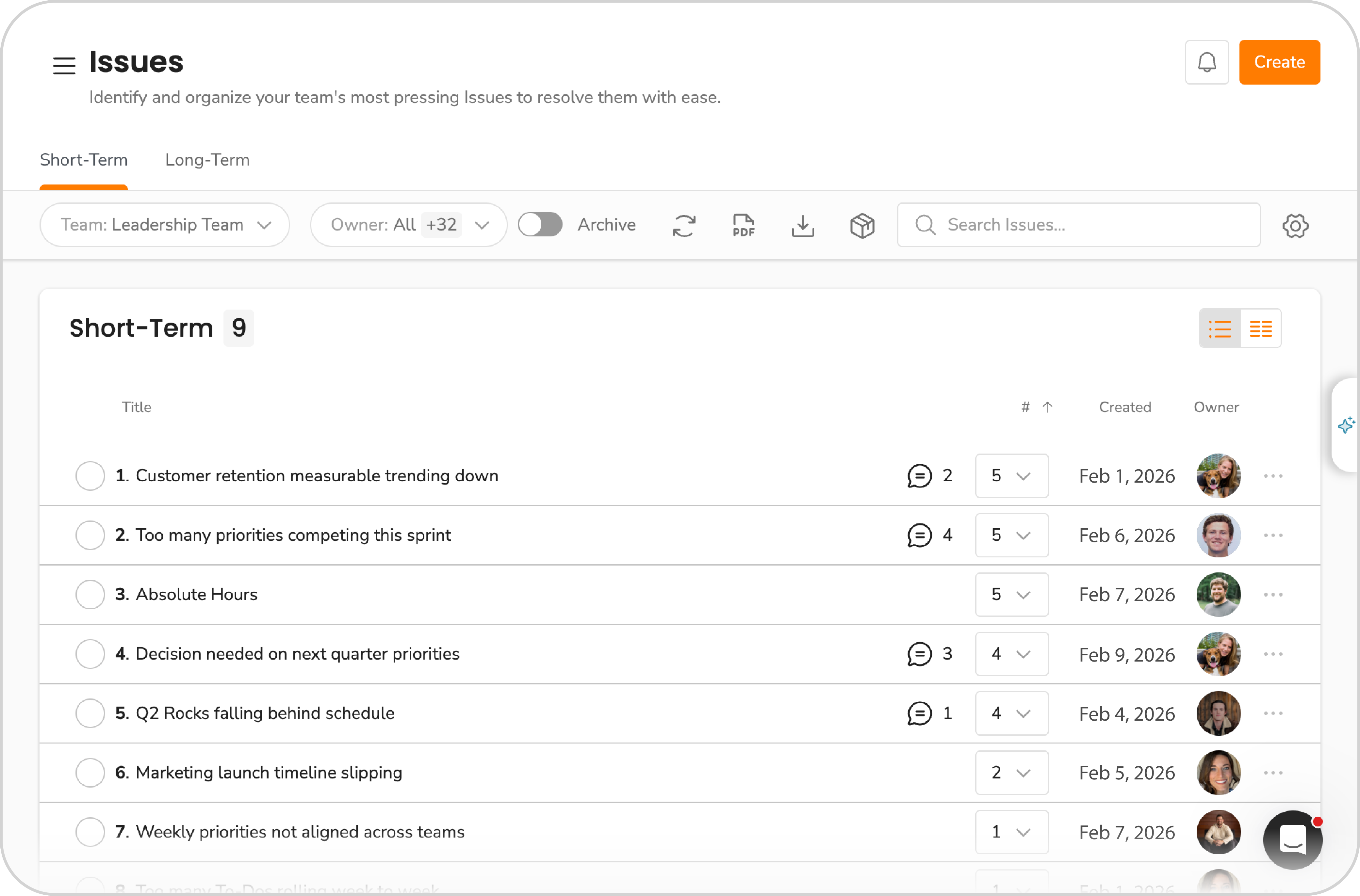
- Put issues in the right place: When an issue comes up at the wrong table, put it where it belongs. Is it something for your Issues List? Your next Level 10 Meeting®? Or a longer-term issue that needs more time and the right people in the room?
You're not trying to eliminate conflict. Families have conflict, businesses have conflict, that's not the problem. The problem is having the wrong conflict at the wrong table, over and over, until nobody wants to come to the table at all.
Your family deserves a gathering that's just a gathering. Your business deserves conversations that go somewhere. And everyone deserves to enjoy their time together as a family.
Have more questions about this or other family business topics? Join me for the Family Business Office Hour at www.sarabstern.com.


