


A leadership team I work with had a strong quarter. Their revenue was up and the pipeline looked healthy. Everyone on the team felt good about the direction of the business. Then I asked a simple question: "Do you know which of your service lines is actually profitable?"
No one had a clear answer.
It wasn't that the information didn't exist. It did. It was just buried in a report that no one had opened in weeks. They'd been running hard, hitting targets, celebrating wins. But no one stopped to ask whether the work they were winning was even worth doing.
I see this pattern play out all the time. Leaders avoid having the profit conversation. It's not because they don't care about profitability. It's because the conversation feels harder than the work itself. It's easier to keep chasing another deal or solving the next problem than to actually sit down and ask: Where is our margin? Where are the profit leaks? And what are we going to do about it?
For companies that are running on EOS®, this is exactly why the Data Component® matters. The right numbers need to be visible, reviewed, and connected to real decisions. Otherwise, your team may feel like they're winning while the business is actively losing margin.
What Happens When Leaders Avoid the Profit Conversation?
Most of the time, leaders aren't intentionally avoiding profit conversations. They're keeping busy, moving from one issue to the next without stopping to identify a pattern underneath. They're prioritizing growth and trusting that revenue will sort everything out eventually.
But when profit conversations get postponed, the team keeps working as they always have. Pricing holds steady even though costs have shifted. Resources get allocated based on volume, not value. Low-margin work crowds out high-margin opportunity. Everyone keeps working while the business becomes less and less efficient.
The irony is that avoiding the conversation doesn't eliminate the work. It just creates more of it. Without profit clarity, teams chase revenue that doesn't contribute to the bottom line. They overstaff projects that should have been repriced. They commit to clients or channels that consume disproportionate resources.
Here's the hard truth: The operational cost of not knowing is always greater than the discomfort of finding out.
I've watched leadership teams spend months trying to solve execution problems that were actually pricing problems. I've seen businesses add headcount to manage workload that should never have been accepted at that margin. I've seen founders burn through cash reserves to support revenue growth that wasn't actually profitable.
Every one of those situations could have been avoided, or at least addressed earlier, if the team had built profit into their weekly leadership conversations instead of treating it as something to review once a year.
When Profit Becomes Visible, Decisions Get Easier
The turning point usually comes when something breaks. A key project loses money. A quarter comes in under expectation despite strong revenue. A team member asks why everyone is working harder and they're earning less. That's the moment a leader realizes the profit conversation is long overdue.
One leadership team I advise had exactly this experience. They were growing at 20% year over year, hiring aggressively, and still feeling squeezed. When we finally sat down and analyzed margin by service line, two of their five offerings were running at break-even or worse. They weren't underperforming. They were over-delivering on unprofitable work.
Once the team could see it clearly, the path forward was obvious. They restructured pricing on one line and sunset the other entirely. Within two quarters, overall margin improved meaningfully, and the team felt less stretched. No one was working less. They were just finally working on the right things.
3 Ways to Bring Profit Into Your Operating Rhythm
1. Put profit on the agenda.
Profit isn't something you look at once a year in your annual review. It should be a part of your weekly Level 10 Meeting®. Why? Because profit isn't a finance issue. It's a leadership issue. Teams that talk about it regularly make better decisions faster. Even ten minutes of focused discussion on where margin is trending can shift priorities in ways that save weeks of misdirected effort.
2. Add profit visibility to your Scorecard.
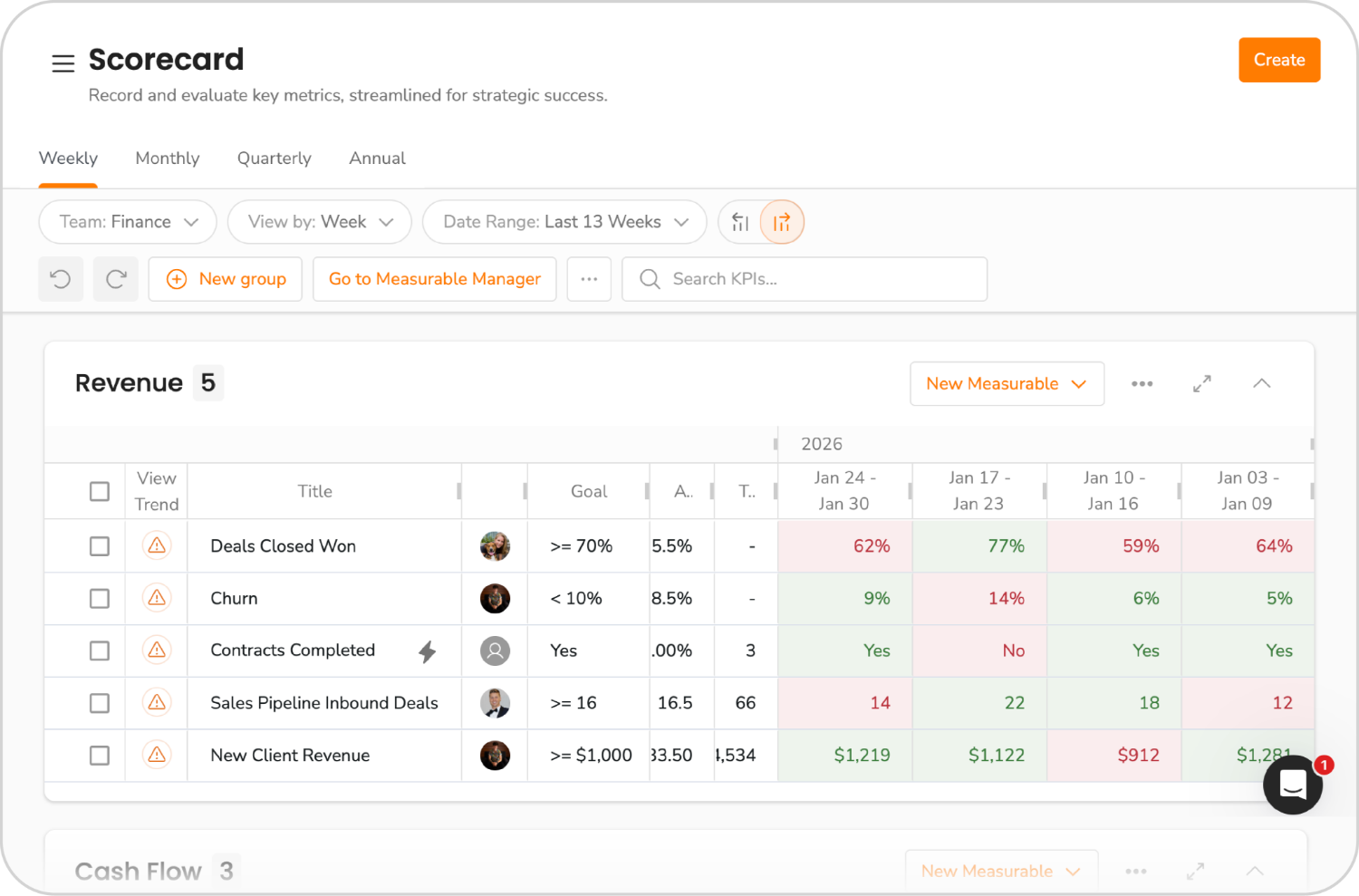
Total revenue and total expenses aren't enough. Leaders need to see profitability at the level where decisions actually happen: by product, by service, by client segment. This doesn't require a massive overhaul. It requires the discipline to look at what is already there, turn the right numbers into measurables, and review them consistently on your Scorecard.
3. IDS® what isn't working.
Not everything your company does should continue at the current price. Some offerings
need to be restructured. Some need to be repriced. Some need to be sunset entirely. That doesn't mean you're failing. It's part of leadership. When the data shows something isn't contributing to the health of the business, add it to the Issues List, IDS® it, and decide what needs to change.
Profit Belongs in the Weekly Rhythm
Profit isn't a topic that belongs at the end of the year or the bottom of the P&L. It belongs in the leadership Level 10 Meeting where decisions are made every week.
Because when you build profit conversations into your weekly rhythm, you stop treating profit like a backward-looking report and start using it as a decision-making tool. You see what's working and what needs to change. You catch small problems before they turn into bigger ones. The leaders who build that discipline don't just run more profitable companies. They run clearer, faster, less chaotic ones.
The profit conversation you're avoiding is the one creating the most work. Have the conversation now before the numbers force you to.
Need deeper financial guidance? ProCFO Partners helps companies strengthen financial visibility, improve decision-making, and build the discipline needed to grow profitably. Learn more about ProCFO Partners.




.jpg?width=500&name=large_IDS%C2%AE_Is_Harder_for_Family_Businesses_EOS_Blog_Header_1920_x_1080_V2%20(1).jpg)