

When Mike Minard stepped back into the day-to-day of running Delta Media Group at the beginning of 2024, the company looked strong on paper. Revenue had more than doubled in about two years. They were serving roughly 40,000 active users. The leadership team was meeting weekly. From the outside, it looked like a business with a solid structure.
But once he was back in the room consistently, Mike saw something different. Sitting in a quarterly, he listened to the explanation for why the company was going to miss a critical annual goal and felt a clear disconnect.
That's when he knew he needed to step back into his role. “I had to come back in and kind of blow it up again,” he said in episode 3 of the Impact Moments podcast.
The business had outgrown some of its leaders and systems. Support had slipped from “best in the industry” to something he no longer recognized. Issues were surfacing later and larger than they needed to be. The pace of change inside the business didn’t match the pace of the meetings meant to run it.
Mike had stepped away from the day-to-day for understandable reasons. After two decades of building Delta, a demanding partner buyout, and years of high growth, “I got burned out… I pretty much walked away.” He stayed on as CEO, put a president in place, and pulled back from the metrics and details. In hindsight, he admits there were signs in quarterlies and weekly Level 10 Meetings® that things were off-track, and he didn’t act on them soon enough.
When he returned, he didn’t try to solve that disconnect with one strategic offsite. Instead, he rebuilt the rhythm of the business by adding a daily standup on top of strong quarterlies and weekly L10s, tightening metrics, and making some very hard people decisions so Delta could keep up with growth instead of getting run over by it.
This article will break down the specific meeting rhythm behind that reset and show you how to use EOS® and Ninety to align annual, quarterly, weekly, and daily meetings so issues surface sooner, priorities stay clear, and you create real Traction® without burning out your team.
Why Weekly Meetings Aren’t Always Enough
There’s no doubt that weekly Level 10 Meetings are powerful when they’re done well. They create a shared Scorecard that’s reviewed and updated often, keep Rocks visible, and force the team to IDS® real issues. In a stable or moderately growing company, that weekly rhythm often works. But in a business that’s doubling in size over a short period, a week can be a long time.
That was the situation at Delta. Growth was happening fast, and decisions, handoffs, and customer problems were moving faster than the team’s ability to align once a week. As Mike puts it, “When I was running the company in high growth, I did a daily standup every morning, and we’re back to that now. The team loves it… things move so quick that you can’t wait a week.”
Before the daily meetings, people were walking into their L10s with issues that had been stuck for days instead of hours. By the time something reached the agenda, it was larger, costlier, and more emotional than it needed to be.
A lot of teams would misdiagnose that as a performance problem. But in reality, it often comes down to rhythm. The structure of the week needs to match the volume and speed of the work. When growth is happening fast, teams need to have enough intentional touchpoints to keep everything moving the way it needs to.
What Does a Healthy EOS® Meeting Rhythm Look Like in Practice?
A healthy meeting rhythm stacks a few simple layers instead of asking one meeting to carry the whole load. Mike’s reset gives a clear pattern other teams can copy and adapt, but keep in mind that every company is different, and not every team or department will need every layer in the exact same way.
At the top, there’s the annual and quarterly planning rhythm. That’s where vision, Core Values, long-term goals, and Rocks get clarified. Without that, everything else turns into random activity. These give everyone a clear picture of where the company is headed.
Next comes the weekly Level 10 Meeting®. At the company level, the leadership team L10 is where the most important numbers get reviewed, Rocks are checked, and cross-functional issues get solved. From there, the same structure cascades down into departmental L10s, where teams look at their own Scorecards, Rocks, and issues that roll up to the company priorities. When done well, these create a consistent way for everyone to see how their work connects to the bigger picture. Mike didn’t change this weekly rhythm. If anything, he leaned on it more once he reengaged.
What Mike did change was the addition of a consistent daily standup. For a high-growth business, waiting seven days for teams to realign was too long. A short, focused daily check-in lets leaders and teams quickly identify work that’s stuck, clarify and adjust priorities, and support each other before issues become even bigger problems.
Mike shared that his team responded positively and didn’t experience it as just “another meeting,” because it actually helped them move their work forward. “We were doing a weekly cycle without a daily standup,” he says. “Things move so quick that 24 hours is like a week. You just can’t wait that long.”
Not every EOS team needs a daily standup. In a more stable environment, strong quarterlies and weekly Level 10 Meetings might be enough. Daily (or every-other-day) touchpoints become essential when the pace of change is high and issues are waiting too long to be resolved between L10s.
A simple way to picture the full stack:
- Annual: Set the direction and major priorities.
- Quarterly: Confirm the vision, set Rocks, and clean up open issues.
- Weekly (L10): Run the business with data, Rocks, and cross-team IDS®.
- Daily (standups, when needed): Keep tasks flowing, share quick updates, and clear immediate obstacles.
When those layers work together at the right intensity for your business, leaders can see what matters, act on it quickly, and keep execution on track.
How to Design Meetings People Actually Value
The moment you mention adding a meeting, most teams brace for more time on calendars with limited payoff. The design matters as much as the idea. Done poorly, daily and weekly rhythms feel like wasted time and micromanagement. But when designed well, they become a valuable method to move better work, faster.
If you’re thinking of executing daily standups, aim to keep them short, structured, and close to the work. A simple pattern that works in many EOS companies looks like this:
- Each person shares their top 1–3 priorities for the day.
- Anyone who’s blocked says where they’re stuck and who they need help from.
- The team confirms any changes to deadlines or dependencies.
Everything else moves outside of the meeting to follow-up conversations with the right people so you aren’t taking up the time of anyone who isn’t involved with a particular issue. The standup isn’t meant to be a problem-solving workshop. It’s a fast alignment tool that helps the team get on the same page.
For Level 10 Meetings®, discipline is the differentiator. EOS gives you the agenda for a reason. Teams that get the most out of L10s show up on time, come prepared with Scorecard and Rock updates, and reserve most of the meeting for IDS® on the most important issues. Leaders don’t spend 20 minutes explaining background or defending their areas. They focus on solving what matters for the company.
If you want both rhythms to be valuable instead of draining, commit to these steps:
- Clarify the purpose of each meeting: Everyone should know why the daily exists and why the weekly exists, and what belongs in each.
- Set firm time limits: Keep standups short and L10s on time. When people see their time is respected, they’re more willing to lean into the rhythm.
- Protect the IDS portion of L10s: Don’t let the meeting stall in reporting. Solving issues is what moves the business forward and should be the priority.
- Review and adjust monthly: Daily standups don’t need to last indefinitely. Ask the team what’s working and what feels pointless, then refine the structure instead of abandoning it.
When people see that meetings help them move faster instead of slower, they’re much more willing to engage.
How Can You Reset Your Meeting Rhythm Without Overwhelming Your Team?
Resetting your rhythm can feel risky, especially when people already feel stretched. The goal isn’t “more meetings.” It’s a better pattern that makes the work easier to run.
- Be honest about how your week actually works today: Look back at the last 30–90 days and notice how often important issues sat for days without real attention, how many meetings ended with no clear decisions, and where leaders were surprised by problems that “came out of nowhere.” Share your findings with your team. Most of the time, they’ll recognize the same patterns.
- Start with the smallest change that will really matter: You don’t need to roll out everything at once. If your Level 10 Meeting isn’t strong, fix that first. Only after that should you add daily or every-other-day standups in high-change areas like support, product, or sales.
- Treat new rhythms like a pilot, not a forever decision: When you introduce a standup or adjust your L10s, set a clear review point in 30–60 days and define what success looks like: fewer surprises, faster decisions, fewer emergencies. Tell the team you’ll change or stop the meeting if it’s not helping. When people can see how the cadence makes their work simpler and more predictable, they’re much more willing to lean into it.
Next Steps for Your EOS Meeting Rhythm
For Mike Minard and his team at Delta Media Group, the shift in rhythm showed up in very real ways. When metrics and Core Values work exposed serious issues in their support team, Mike made what he calls one of his hardest decisions: “We fired everybody... the entire department.” He and his leadership team personally stepped into support until they rebuilt the team the right way, aligned with their Core Values and backed by better measurables.
Key people who were restless stayed because they saw the problems being addressed instead of ignored. Sales, which Mike was willing to halt for a season, restarted once operations were healthy enough to keep the company’s promises. Issues now surface earlier, with daily standups and strong Level 10 Meetings keeping everyone closer to the work.
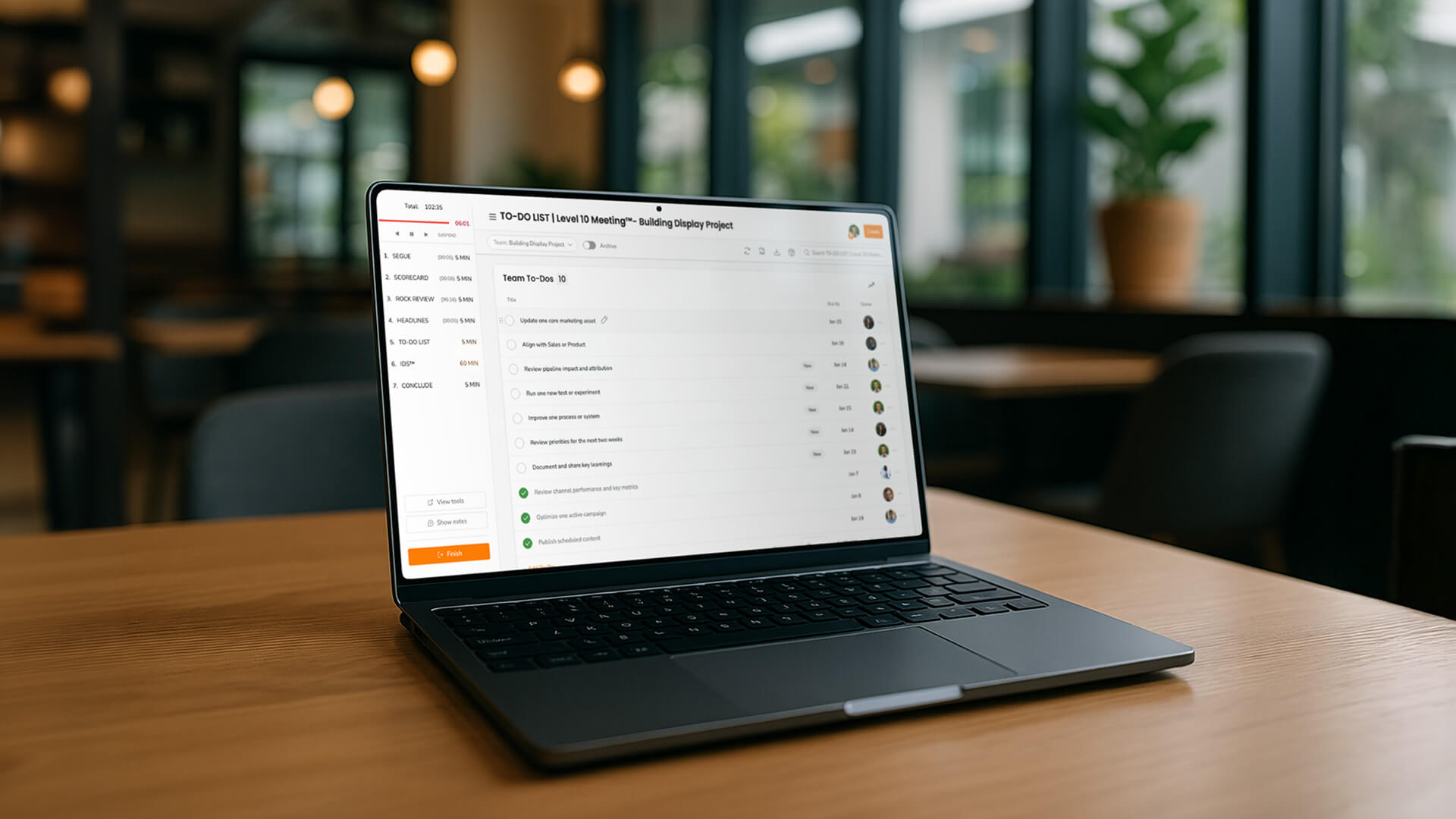
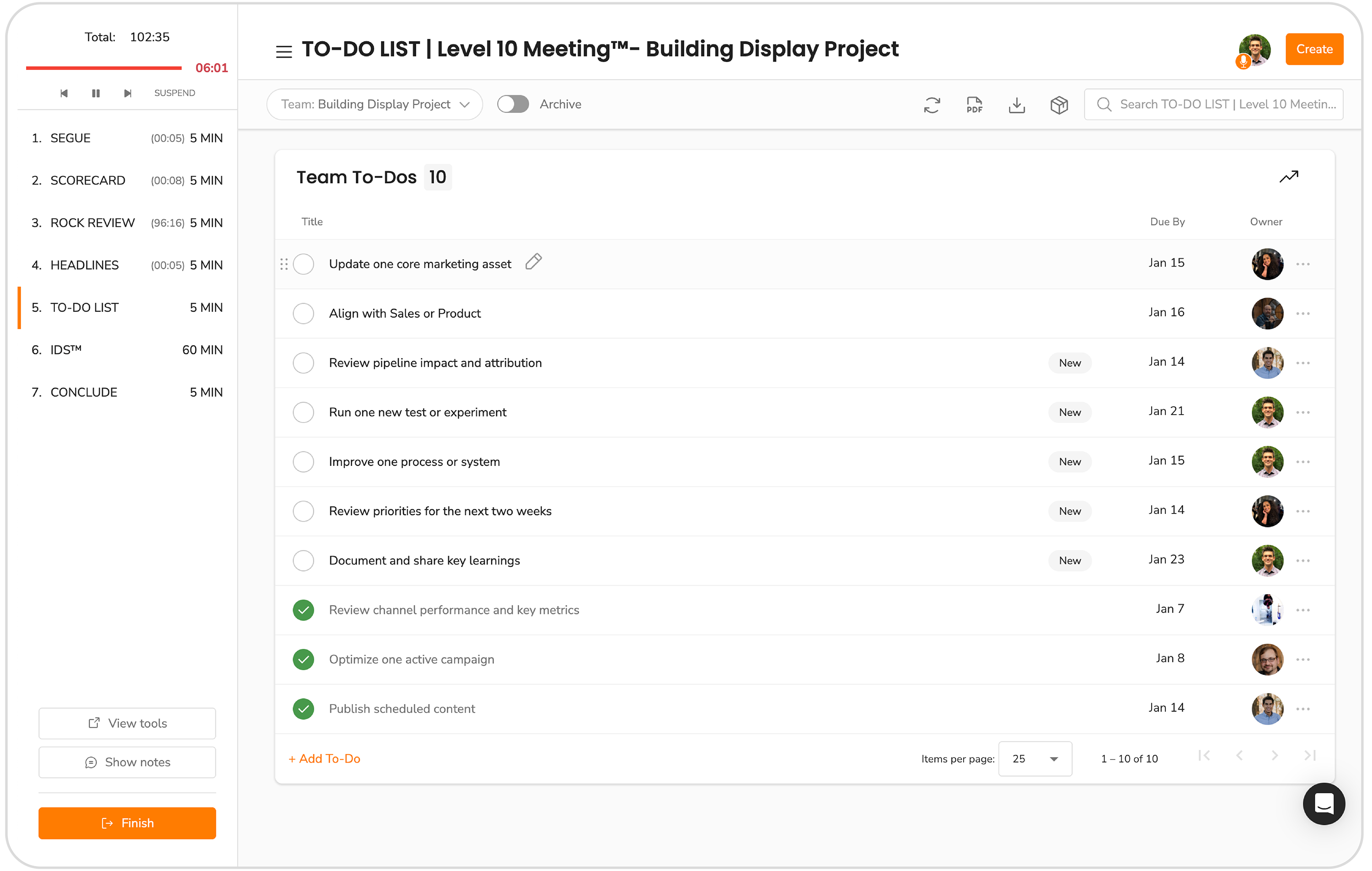
At Delta, that rhythm lives inside Ninety. Mike and his entire team run their L10s, track Rocks and To-Dos, and manage Scorecards in one place. It keeps the annual, quarterly, weekly, and daily conversations tied to the same numbers and priorities.
If your world feels more like the messy middle of Mike’s story (missed goals, unresolved issues, and lackluster customer experience) start with the same moves he did. Strengthen your leadership team L10. Cascade that structure into the departments so your entire team is all in. Add daily or every-other-day standups where the pace of change is highest, and treat each change like a pilot you’ll review in 30–60 days. Over time, you’ll feel the difference: less firefighting, more intentional progress, and the steady confidence that you’re back in control of the business.
Ready to bring all your meetings and data together in one place? Try Ninety free now to run your Level 10 Meetings, track Rocks and Scorecards, and support daily standups so your team can execute with more clarity and less chaos.




.jpg?width=500&name=large_Employee_Performance_Goals_EOS_Blog_Header_1920_x_1080%20(1).jpg)