
Every year, by the second or third week of March, I usually get a familiar call.
“Kris, we’re already off track. My team is unclear because we have too many priorities. The plan’s there, but it’s like we’re stuck in last year’s habits again.”
This wasn’t a disorganized team. They had a clear vision and capable people. But like many companies, the clarity they had created just weeks before was already getting lost in the urgent day-to-day tasks. And their big, inspiring plan was at risk of being buried by noise.
Leadership teams step into January full of energy. But without a way to channel that energy into disciplined, aligned execution, they fall back into old patterns. And by March, it starts to feel like a repeat of the year before.
Why Good Intentions Fade So Quickly
It’s not that people don’t care or don’t try. Most resolutions fail because there’s no system behind them. They sound great in the moment, but without a system that makes follow-through possible, they were doomed from the start. More explicitly, when we introduce EOS we talk about it as a system to manage human energy. We teach concepts, introduce tools and ask the teams to bring the discipline to win.
Every year I watch teams set ambitious Rocks without checking if they tie back to the Vision. They overcommit, thinking more goals mean more progress. They schedule a few L10 Meetings™ but miss one or two early on, and just like that, their good habits are off track.
Before long, the team’s back in reactive mode, dealing with the same issues they thought they’d already solved. It’s frustrating because they expected this quarter to feel different.
And this is usually the moment when even the strongest leaders start second-guessing themselves. You put in the work, you build the plan, you get everyone aligned, yet something in your gut tells you it’s already slipping.
This is what it feels like to live in “lack of control.” That sounds dramatic, but it doesn’t need to be. It shows up in meetings that run long, projects that don’t land, and priorities that feel like suggestions. The cost to the team ends up being both emotional and operational. The team loses that New Year's Resolution confidence and starts to slow down. They might even start to lose trust in their leaders from getting their hopes up that this year, things would be different.
But some teams do break that cycle. They don’t run harder. They don’t make longer lists. They build structure and habits that hold—especially in Q1, when the right routines can set the tone for the entire year.
What High-Trust Teams Do Differently
The most effective teams I coach aren’t chasing perfection. They are in pursuit of high performance. They focus on a clear plan and the habits to stick with it. In Q1, when energy is high but distractions are everywhere, discipline is what separates teams that gain traction from those that spin in place.
It usually starts with a pause. Before they commit to anything, strong leaders take a Clarity Break™. Not to brainstorm. , but to reflect. I’ve seen leaders open a blank page and write, “What has to be true 90 days from now for this to be a win?” The answers often have little to do with revenue and everything to do with clarity, team health, and consistency.
That reflection reconnects them with their Vision/Traction Organizer®. Not as a document to present, but as a working tool to filter noise from focus. They use it to ask: What really matters right now?
From there, they take a hard look at the team. They use the People Analyzer™ to check each seat. Are we aligned on values? Does everyone Get it, Want it, and have the Capacity? One client realized two key roles had outgrown their structure. They made the shift early and avoided six months of stalled execution and rework.
They also recommit to the habit that holds everything together: the Level 10 Meeting™. Every week, same time, same agenda. No skipped weeks. No mystery metrics. One team I work with calls their L10 “our reset button.” They walk in, review their Scorecard, measure Rock progress, and solve issues that would otherwise fester.
And finally, they don’t try to do it all. Read that again because building momentum early in the year isn’t about getting everything done. It’s about picking fewer priorities and finishing them. The highest-performing teams I’ve seen align around three to seven Rocks and treat them like non-negotiables. A client once told me, “We stopped calling them goals. We started calling them promises.” That shift changed the culture. It wasn’t about pressure. It was about clarity.
At Ninety, Rocks are quarterly goals, but we often talk about them as agreements—one person is accountable but we work together to achieve our commitments. That shift changed our culture. It wasn’t about pressure. It was about clarity, team work and follow-through.
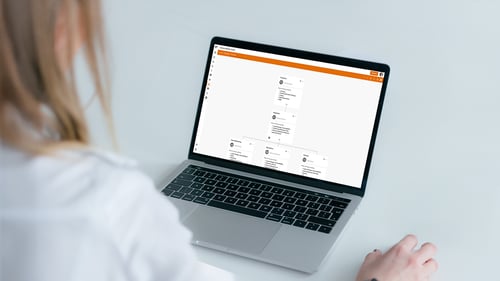
These habits matter, but they only hold if you have a place to reinforce them. Using tools like Ninety can help leadership teams stay focused, aligned, and accountable in one place every day all quarter long.
.png?width=7085&height=4500&name=Rocks_Screen%20(1).png)
Will this be your best year yet?
If you’re already feeling behind, you’re not broken. You’re just trying to lead without a structure that supports you. The good news? That’s solvable and there’s still time to set yourself up for success this year.
If you're already feeling stretched, or if you can tell your team isn’t going to stick to the plan, start smaller. Pick one commitment you're going to keep. Not a resolution, but something real. Something that matters to the business, that you’ll reinforce, and that your team can rally around.
You don't need a full reset to make progress. Just take the first few steps that help your team get and begin again:
- Take a Clarity Break™ this week. Step away and refocus.
- Revisit your Vision/Traction Organizer® together. Make sure it's still your true north.
- Confirm your People Analyzer™ results and reset your L10 Meetings. Get the right people aligned and your pulse back in place.
Then ask: “What needs to be true for this to be a winning quarter, no matter what?”
Answer that honestly. Write it down and protect the habits that will help you keep it.
You don’t need a better calendar to have a better year. You need a system that helps your team focus, align, and follow through.
That’s what Ninety is built for. Try it free and see how real structure helps real teams stick to what matters. Start your free trial.
Want More Practical Insights Like This?
Follow Kris Snyder and Ninety on LinkedIn for tools, prompts, and habits that help you run better every week.
Be sure to subscribe to our for more actionable insights that help leadership teams gain traction all year long. Sign up for the newsletter.