
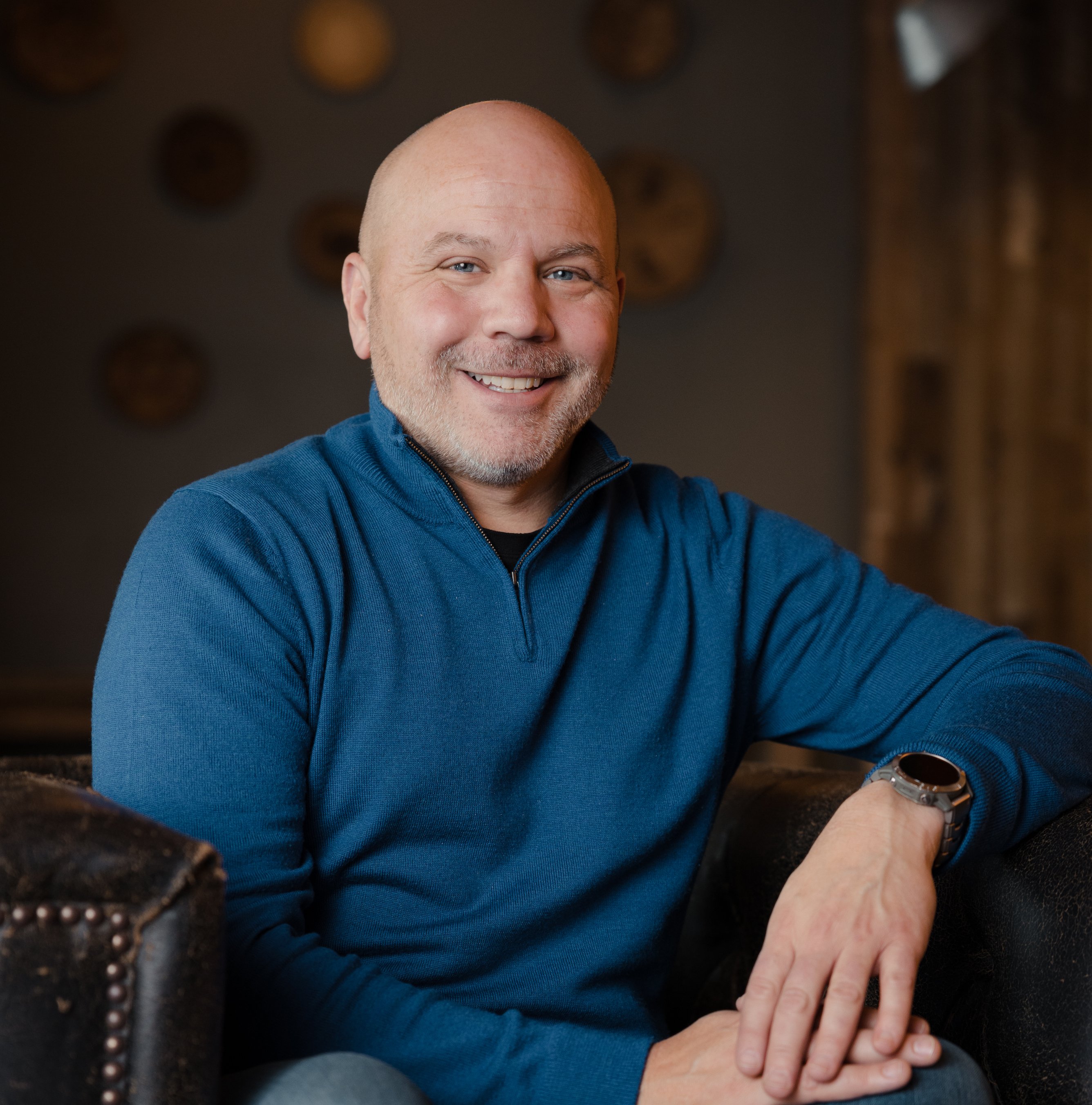
When CEO T.J. Gliha sat down with a longtime client early in Journey Wealth’s story, it should have been one of those “we did it” meetings. The client had done everything the business world says you’re supposed to do. As T.J. recalls, “He had just finished his third private equity transaction. He had, you know, just amassed enough money that he'll never have to worry about money again.”
But the conversation went in a very different direction. Instead of celebrating this pinnacle moment in his client’s life, the meeting centered on how hard his life actually felt: his health was suffering, his wife was dealing with depression, his daughters weren’t speaking to him. There was a huge gap between financial success and his reality.
T.J. walked out of that meeting and went straight to his partners. “We need to do more for our clients… We need to think about additional services that we can do to surround our clients to help them live their best life,” he said in episode 5 of the Impact Moments Podcast.
From there, Journey Wealth didn’t just tune their investment approach. They adjusted and restructured the business around a larger purpose: “I just wanted to build a firm that I wanted to be a client of… That's ultimately what we set forth to do.”
Moments like that force a choice. You can keep building a business that only optimizes the numbers, or you can redefine what winning actually means for you, your team, and your clients. If you want your company to build real Traction®, you have to be willing to adjust the game you’re playing, not just push harder on the old one.
What Does Winning Look Like For You?
Most entrepreneurs know that nagging fear: You do what the business world says you’re supposed to do, hit the numbers you were chasing, and still don’t like the impact it’s having on your life.
For some, that shows up as a business that looks successful but leaves you exhausted most weeks. For others, it’s a set of financial wins that haven’t translated into more time with your family, stronger health, or a team you’re proud to lead. The scoreboard says you’re ahead, but your actual day-to-day doesn’t feel that way.
Many leadership teams unintentionally build organizations that are excellent at creating financial outcomes while treating health, family, culture, and long-term fulfillment as things that will sort themselves out later. The engine keeps pushing toward growth, deals, and valuation, even when the people inside it are carrying a cost they don’t want to keep paying.
The value of moments like the one T.J. described is that they force a different kind of honesty. They push you to ask: What is this business actually designed to produce for me, my team, and my Ideal Stakeholders? And, am I willing to adjust if I don’t like the answer?
If any of this feels uncomfortably familiar, use it as a prompt to pause and get specific. Take an honest look at what you actually want your business to produce for you and your Ideal Stakeholders. Then compare that picture to how things are running today. Any gap you see there is where your next set of adjustments needs to start.
How Can You Redefine the Game Your Business Is Playing?
If you see that you might be winning the wrong game, the next step isn’t to blow everything up. It’s to clearly define what you actually want your business to produce for you, your team, and your clients. Then, start aligning the model around that.
A practical way to start is to answer three questions with your leadership team:
-
Who are we really here for?
-
What outcomes do we want for them beyond the metrics we track today?
-
What promise are we willing to make and organize the business around?
For Journey Wealth, that conversation led to a concrete shift. They kept their core, wealth planning and asset management, but expanded the game they were playing. Instead of only focusing on portfolios and plans, they built support around the rest of a client’s life: “We went and hired an executive life coach on staff. We have strategic partnerships with precision healthcare and family counseling and addiction counseling, nutritionists, physical trainers.”
You don’t need a wellness division to apply the same thinking. In your world, redefining the game might look like:
-
A software company decides customer outcomes and adoption matter as much as licenses sold, so they build services, onboarding, and education around that.
-
A manufacturing firm chooses to optimize for safety, quality of life, and long-term partnerships with customers, not just volume and margin.
-
A professional services firm shifts from billable hours to measurable client results and builds offers that reflect that.
The key move is the same: Get honest about the outcomes you actually want to be responsible for, then start aligning your offerings, partnerships, and measures of success to that definition.
That’s where EOS® comes in. Once you make the decision to adjust, you need an operating system that helps you consistently make decisions, hire, prioritize, and execute in line with that new promise, not just chase the old metrics with a new story on top.
How Does EOS® Help You Win the Game You’re Playing?
Redefining what “winning” looks like is only the first adjustment. The next challenge is running the business in a way that matches that new definition every quarter, every week, and every day. That’s exactly what EOS is built to do.
T.J. and his partners felt the gap when they first tried to implement EOS on their own. As he puts it, “We kept falling off our bike… quarter after quarter.” They believed in the framework but weren’t using it with enough discipline to support the bigger promise they were making to clients.
The turning point was a mindset shift: “We finally said, let's commit to this. We're gonna follow the process… We're gonna humble ourselves, which is the biggest thing.” That’s the move every leadership team has to make if they want EOS to make an impact.
From there, EOS became the operating system that helped Journey Wealth stay aligned. In T.J.’s words, “When we implemented EOS and we got the right people in the right seats… it really has helped us become more efficient and helped deliver the value that we want to deliver to our clients.”
You can use EOS to align your team by:
-
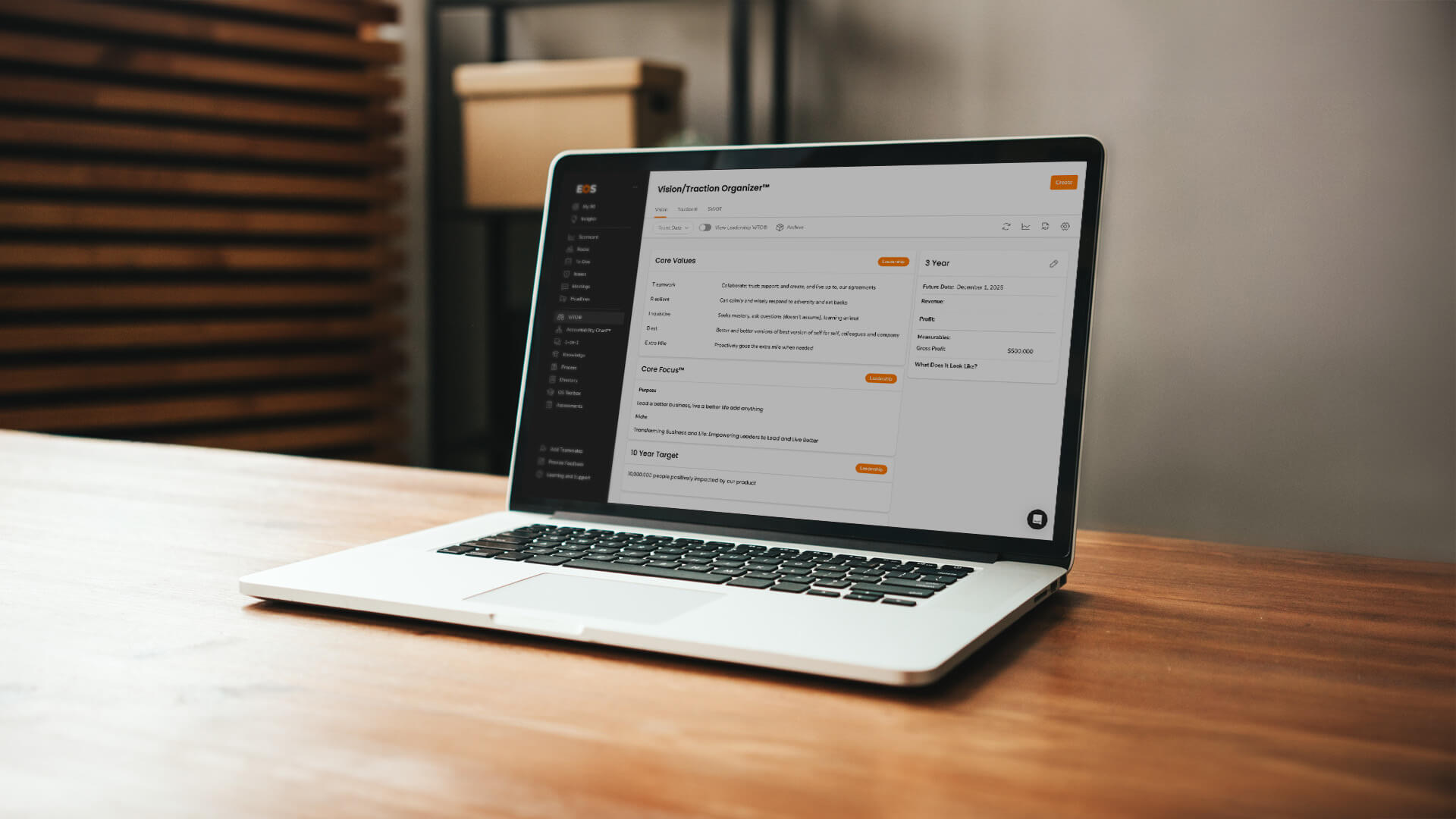
Clarifying the new game in your Vision/Traction Organizer®: Capture who you’re here for (your ICP), what “winning” means now, and where you’re going in 1, 3, and 10 years.
-
Build an Accountability Chart that matches that vision: Make sure the roles and Seats on the chart can actually deliver the outcomes you just committed to.
-
Set Rocks that move you toward the new definition of success: Don’t let the quarter fill up with legacy priorities that only support the old game.
-
Use Level 10 Meetings® to stay honest: Review your Scorecard, check Rocks, and IDS® the issues that are keeping you from living out the new promise.
Adjusting your game is a strategic decision. Running on EOS with real commitment is how you translate that decision into Traction instead of something you just talk about and then forget.
Tools like Ninety make that commitment easier to sustain by giving you one place to run your Level 10 Meetings®, update your Accountability Chart, track Rocks and Scorecards, and keep Issues visible as you work toward your new, adjusted goals.
.png?width=7085&height=4500&name=VTO_Screen%20(2).png)
How Can You Adjust and Advance in the Next 90 Days?
Over the next quarter, focus on making a few specific moves that change how you lead:
-
Have the hard conversations about what “winning” really is: In your upcoming quarterly, carve out time to ask: Are we happy with the kind of “wins” this business is producing for us, our team, and our clients? Capture the honest answers and update your Vision/Traction Organizer to reflect them.
-
Make one structural change that matches the new game: Don’t try to fix everything. Pick one obvious misalignment (a Seat, a team, or a client segment) and change it. That might mean shifting responsibilities on The Accountability Chart®, upgrading a role, or letting go of a wrong-fit client you’ve been hanging onto.
-
Commit to one Rock that proves you’re serious: Choose a single company Rock that clearly supports the adjusted strategy: a new client experience, a key hire, a new partnership, or a metric that reflects new or different outcomes. Put it on the V/TO, review it every week in your Level 10 Meeting®, and IDS® every issue until it’s done.
Adjust First, Then Build Traction
That one client conversation pushed Journey Wealth to admit they weren’t just managing portfolios. They were responsible for the kind of lives their clients were actually living, and they used EOS® to rebuild the business around that larger win.
You can do the same. Get clear on what your company is truly designed to produce, adjust the game you’re playing, and then use EOS tools to turn that decision into day-to-day discipline. To keep that work visible and consistent, use Ninety to hold your V/TO, Accountability Chart, Rocks, Scorecards, Issues, and Level 10 Meetings. That way, your team stays aligned, and you can finally build real Traction® you’re proud of.
Start a free trial of Ninety today and give your team the structure it needs to adjust with intention and build real Traction®.


.jpg?width=500&name=large_Your_Team_Isnt_Gaining_Traction_EOS_Blog_Header_1920_x_1080%20(1).jpg)
.jpg?width=500&name=large_Employee_Performance_Goals_EOS_Blog_Header_1920_x_1080%20(1).jpg)
.jpg?width=500&name=large_%20EOS%C2%AE_Scorecard_Helps_EOS_Blog_Header_1920_x_1080_v2%20(1).jpg)