
.jpg)

It’s a familiar moment: Your leadership team has set revenue and profit goals for the year. The vision is clear, and the numbers are on the V/TO®.
Then someone asks, “What weekly activities need to happen to actually hit these goals?”
And everyone goes quiet.
Knowing where you want to go is one thing, but knowing how you’ll actually get there is something else entirely.
You’re Guessing More Than You Realize
Most teams running on EOS® aren’t lacking discipline. They’re doing all the hard work, but they're guessing on the specifics of their financial future (and most are guessing more than they realize).
They look at the P&L, apply some assumptions, and try to connect the dots in their heads:
-
If we grow 18%, does profit follow?
-
Can we afford to hire right now?
-
What will happen if revenue dips?
Sound familiar? Without a clear and visual financial forecast, it’s just too hard to hold all the numbers in your head. Even if you’ve got a detailed, multi-tabbed spreadsheet, you’re left doing a bunch of math and predicting based on your gut intuition.
And that’s just too hard for most human beings who are also, well… you know… running a business.
The Cost of Staying in This Pattern
At first, nothing feels broken. In fact, things might even look like they’re working because revenue is growing, the team is busy, and progress is happening.
But underneath the surface, small misalignments start stacking up: Margins shrink, hiring happens a little earlier than the business can fully support, and pricing stays the same while costs creep up.
None of these issues feel especially alarming. In the moment, they can even look like a normal part of growth. But over time, they compound. And eventually, you end up in a frustrating place because you're hitting your revenue goal but missing your profit goal... again.
Not because your team didn’t execute, but because the plan itself wasn’t fully visible.
Why Forecasting Matters During IDS®
This issue usually comes into full focus during IDS®. A big decision hits the table. Maybe it’s hiring, increasing marketing spend, or making a bigger investment in growth. The team does what EOS® teaches them to do. They identify the issue and discuss. And then they try to solve it.
But here’s what’s often missing: a clear, dynamic financial picture that shows what will actually happen next.
Spreadsheets help, but only to a point. Why? Because they’re static, hard to adjust in real time, and most of the time, only one person in the room fully understands how they work.
So instead of answering, “What will happen if we do this?”, the team ends up answering, “What do we think will happen?” And that gap is where profit goals get missed.
What Actually Moves the Needle
The teams that start consistently hitting their profit goals don’t necessarily work harder. They just stop guessing. They shift from asking, “What should we do?” to asking, “What will happen if we do this?”
That shift sounds simple, but it requires something most teams don’t have: a clear, visual and dynamic forecast.
Not a static spreadsheet or relying on historical reporting. I'm talking about a living picture that connects revenue, costs, hiring decisions, and cash flow in a way the whole team can actually see and understand.
Because, once you can see how one decision affects everything else, the whole conversation changes.
Ninety helps you connect these moving pieces so your decisions are grounded in reality, not assumptions. Learn how Ninety can help your team plan with more clarity and confidence.
4 Reasons Teams Miss Their V/TO® Profit Goals
You don’t need to build a perfect forecast overnight. But you can start creating clarity right away. Let’s unpack four reasons teams miss their V/TO® profit goals when visibility is limited.
Even before you have a full forecast, you can start addressing some of these issues:
1. The goals aren’t built from reality.
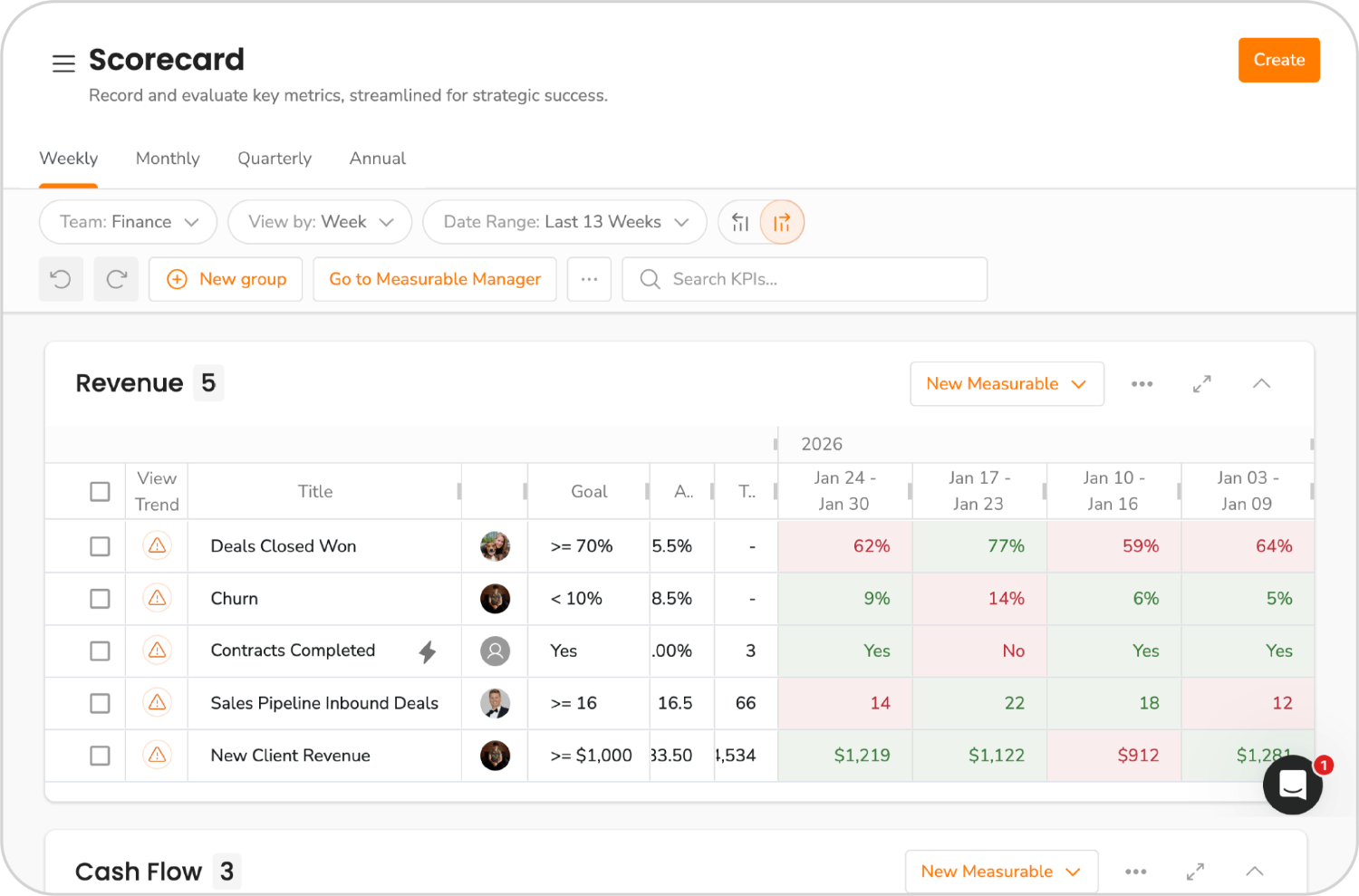
Most teams set goals top-down but aren’t totally sure how to connect them to the Scorecard activities that actually bring money into the business.
Fix: Pick one way your business makes money (sales calls, jobs completed, clients served). Then ask: How many of these do we need each week to hit our goal? You don’t need perfect math, just a rough picture. If it feels impossible with your current team, that’s your sign that something needs to change.
2. You’re following a plan that isn’t working.
Teams often stick to the plan even when the numbers say it’s off. Over time, “red” becomes normal and the whole team stops paying attention.
Fix: Look at one number that’s been off for a few weeks. Then ask a simple question: Are we missing the goal, or was the goal unrealistic to begin with? Adjust one thing this week, either how you’re doing the work or what “good” actually looks like. A good plan should flex as you learn.
3. The team feels stuck.
When people don’t understand how a number works or feel like they can’t control it, they disengage.
Fix: Take a confusing number (like revenue or profit) and break it into something more tangible. For example, instead of “increase revenue,” focus on “Have 10 more conversations this week.” Small, clear actions help your team feel like they can actually move the business forward.
4. The plan isn’t holistic.
Growth goals often ignore the resources it takes to support them, like hiring, tools, or time.
Fix: Ask your team: If we actually hit this goal, what would break? Would your team be overwhelmed? Would you need to hire? Spend more? Mapping this out ahead of time helps you avoid growing into a cash crunch or operational bottleneck.
A Simpler Way to Think About It
At Amplify, we simplify complex financial terms into visuals that actually help you make decisions. Every choice you make, from pricing to hiring to marketing, changes how cash flows through your business. When you can see that clearly, everything shifts.
That’s why we created Cash Flow Mountain, a simple way to visualize how money moves and where you can improve it. Because once you have a clear, visual model, you stop relying on gut feel for million-dollar decisions and your team aligns around one financial story.
And most importantly, you’re no longer guessing your way to your revenue and profit goals.
When your leadership team can connect revenue, hiring, costs, and profit in one place, better decisions get easier. Ninety helps teams turn EOS® into real visibility, stronger planning, and more confident execution. Connect with our team to see how Ninety can help you hit your profit goals with more clarity and less guesswork.
And if you’re working toward your V/TO goals and want more confidence in how your Scorecard is supporting that path, Ben and the Amplify team would be glad to listen and explore it with you. Feel free to reach out.



.jpg?width=500&name=large_Set_the_Right_Targets_EOS_Blog_Header_1920_x_1080%20(1).jpg)