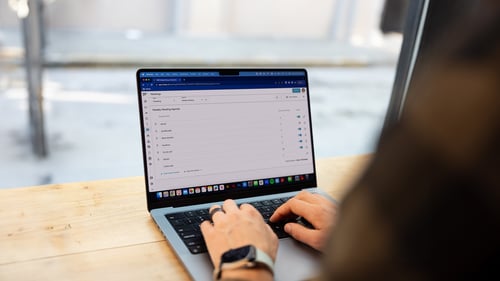


Before joining Ninety, I spent several years working in a fast-paced nonprofit where our small marketing team supported a huge amount of work. Every day was a blur of back-to-back meetings, each one about a completely different topic.
One hour we were reviewing sponsorship activations. The next hour we were planning volunteer schedules. Then I would jump into speaker prep or venue logistics. I rarely had time to breathe between conversations, let alone mentally shift into the next one. It was not that I was unprepared or unfocused. It was simply that I had no space to transition. I would walk into meetings flipping through my notebook, hoping I had the right page, and apologizing for being unprepared.
When you work that way for long enough, you start to believe that stress is part of the job. You get used to feeling behind and assume weekly meetings are supposed to feel heavy. And in January, especially when companies want to start the year strong, it is easy for the pace to increase before meeting preparedness catches up.
Teams running on EOS know how important weekly alignment is. But even with a weekly meeting cadence, it is still hard to show up prepared when your day never slows down.
Why Weekly Meetings Feel Overwhelming
Most people do not walk into weekly meetings feeling stressed because the meeting is too long or too demanding. They feel stressed because they bring too much unprocessed information into it. When you have no reliable place to track the issues that surface during the week or the follow-ups you owe someone, you carry all that cognitive weight into the meeting.
You start the conversation trying to remember what you committed to. You try to reconstruct your thinking from last week. You piece together updates while people are already talking. Over time, this slows decisions, compounds issues, and makes meetings less effective. The overwhelm becomes a tax on the entire team and takes energy away from meaningful work.
When teams stay in this cycle long enough, decision-making slows down, issues stack up, and meetings stop moving work forward. Overwhelm becomes a cost the whole organization pays.
Meetings Don’t have to Feel Chaotic
When I joined Ninety, I experienced my first Level 10 Meeting. I expected it to be intense or overly structured. What surprised me most was how calm it felt.
The “Level 10” name comes from the fact that teams rate the meeting on a scale of 1–10 at the end, so they can track their progress toward running truly great meetings. And in my experience, when people show up scattered or unprepared, that rating tends to get stuck around a 7 or below.
The difference for me had nothing to do with the meeting itself and everything to do with how I prepared for it.
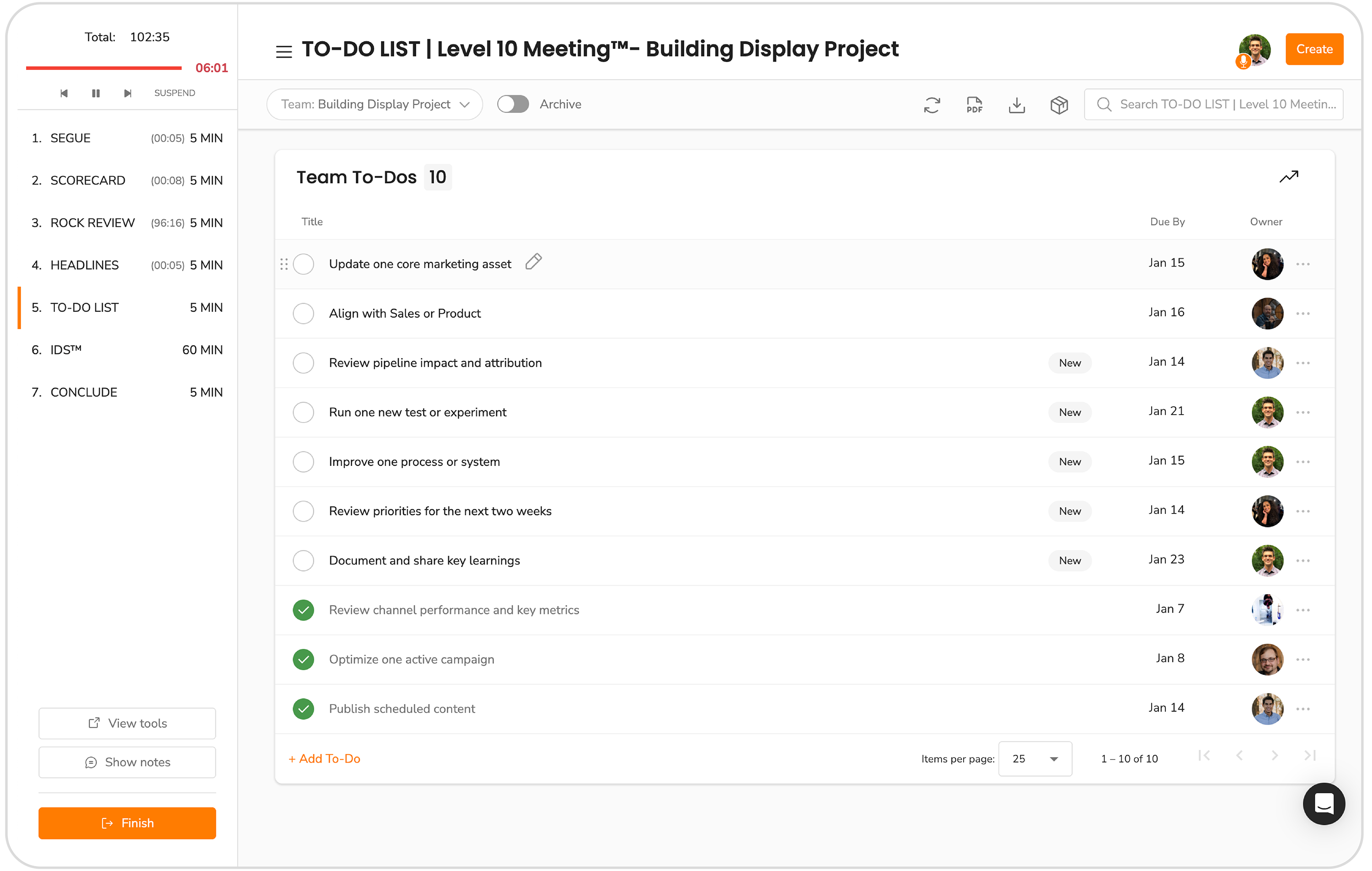
For the first time, I had a single place to capture issues throughout the week. If something came up, I added it to Ninety in my team's Issue List right away, so I did not have to rely on memory or flip through pages looking for vague notes. One of my surprises in the meeting structure was Headlines. A section of the meeting where you can share your team/company worthy news as well as customer updates. By the time the meeting arrived, all of the important details were waiting for me.
I also learned to appreciate the Segue. Those few minutes help me reset, slow down, and actually arrive in the conversation. After years of jumping from one meeting to the next without pause, that moment of transition makes a noticeable difference. I am more present, more clear, and more engaged.
I realized I did not need a more perfect meeting. I needed a weekly preparation approach that supported the way real people work.
.png?width=3000&height=1905&name=L10_EOS_Screens-01%20(1).png)
How To Prepare For a Level 10 Meeting
Preparation does not have to be complicated or time-consuming. It is not about creating a perfect update or rehearsing talking points. It is about giving yourself enough clarity to walk into the meeting feeling steady instead of scattered. Here are practical steps you can take to make weekly meetings feel more productive.
-
Capture issues as they happen. Throughout the week, anything that feels confusing, blocked, or worth discussing is recorded in Ninety. Instead of saving it for later or scribbling a note you might forget, you offload it immediately. This one habit keeps your mind from holding everything at once.
-
Review your To-Dos before the meeting. A quick To-Do review does two things. It refreshes your memory so you do not feel caught off guard when your name comes up, and it helps you see what still needs attention. This takes less than a minute, but it changes how confident you feel when it is your turn to share.
-
Identify what you need clarity on. Every week there are one or two things that would help you move forward faster. Sometimes that clarity comes from the Scorecard, especially if a number is off track or trending in the wrong direction. Other times, it might be feedback, a decision, or support from another team. Deciding this ahead of time helps you show up with purpose instead of trying to remember it in the moment.
-
Slow down before you join. Right before the meeting, I take a moment to shift out of task mode. I close my tabs, breathe, and glance at the agenda. That short pause gives my brain a chance to reset so I can be fully present instead of carrying everything from my previous task into the conversation.
These steps are simple, but together they lower the mental load of weekly meetings in a meaningful way. Instead of catching up, you are contributing. Instead of scrambling for details, you are already clear.
Whether your team runs Level 10 Meetings as part of EOS or uses another weekly meeting format, these preparation habits are universal. The clearer the information you bring into the conversation, the easier it is for the entire group to make progress.
How Ninety Supports This Process
The biggest shift for me was having one place to keep track of everything that matters. When your issues, priorities, follow-ups, and weekly commitments live in a single location, you are not relying on memory or scrambling to organize your thoughts. You walk in grounded.
If your team uses Ninety, another system, or even a shared spreadsheet, consistency is what makes preparation easier. When information is captured throughout the week and reviewed beforehand, weekly meetings become more effective and less stressful for everyone.
The Bottom Line
Meeting overwhelm is not a sign that your team is disorganized or incapable. It is usually a sign that the preparation process is unclear or nonexistent. A little structure before the meeting goes a long way. When you have a system that captures details as they arise and you give yourself a moment to transition, the whole experience changes.
You show up clear instead of scattered and contribute instead of catching up.
That’s the real benefit of preparing well for an L10 Meeting. It helps everyone show up ready and confident so the meeting can do what it’s designed to do: move the work forward and earn a 10.
Want More Practical Insights Like This?
Follow Ninety on LinkedIn for tools, prompts, and habits that help you run better every week.
Be sure to subscribe for more actionable insights that help leadership teams gain traction all year long.


.jpg?width=500&name=large_Walked_Out_EOS_Blog_Header_1920_x_1080%20(1).jpg)