
.jpg)

Every organization eventually reaches a point where annual planning can’t stay informal. What worked when a few people could get together and make decisions around a table doesn't work the same way as the organization gets bigger and more complex.
At that point, the leadership team needs a clear framework for making the big decisions about the year ahead. The two-day Annual Planning Meeting gives the team the time and structure to do that work, with the annual plan as the outcome.
An annual plan translates your long-term vision into the specific targets, priorities, budgets, and commitments your organization needs to achieve over the next 12 months. It gives the entire company a shared definition of where the business is going and what needs to happen next.
Creating that plan comes down to five key steps. While every organization will have its own planning rhythm, here’s how I guide my clients through those five steps during Annual Planning.
Key Takeaways
- Start annual planning by reviewing last year’s performance and your long-term vision.
- Set clear revenue, profit, and operating targets before building departmental plans.
- Give department leaders enough direction to create realistic goals and budgets.
- Reconcile company goals with departmental capacity before finalizing the plan.
- Turn the annual plan into Rocks, or 90-day goals, so the team knows where to focus first.
Step 1: Get Perspective on the Past, Present, and Future
Start by getting the leadership team aligned on where the organization has been, where it stands today, and where it’s headed next. That means taking a fresh look at the overall vision and asking questions like:
- How did we perform last year?
- Are we on track or off track for this year?
- How do we predict our performance will change in the next year?
The goal is to turn that perspective into agreement on the high-level numbers that will shape the year ahead, including revenue, profit, and other key targets. Those numbers give the leadership team a clear starting point for the rest of the annual planning process.
Outcome of Step 1: Alignment on where the business stands today and the high-level targets for the coming year.
Step 2: Set the Numbers
Once the leadership team agrees on the high-level targets, the next step is defining the numbers that will show whether the organization is on track. Ask:
- What outcomes do we need to achieve?
- What are our measurables?
- What are some of the activities that we’re going to do to reach these higher-level numbers?
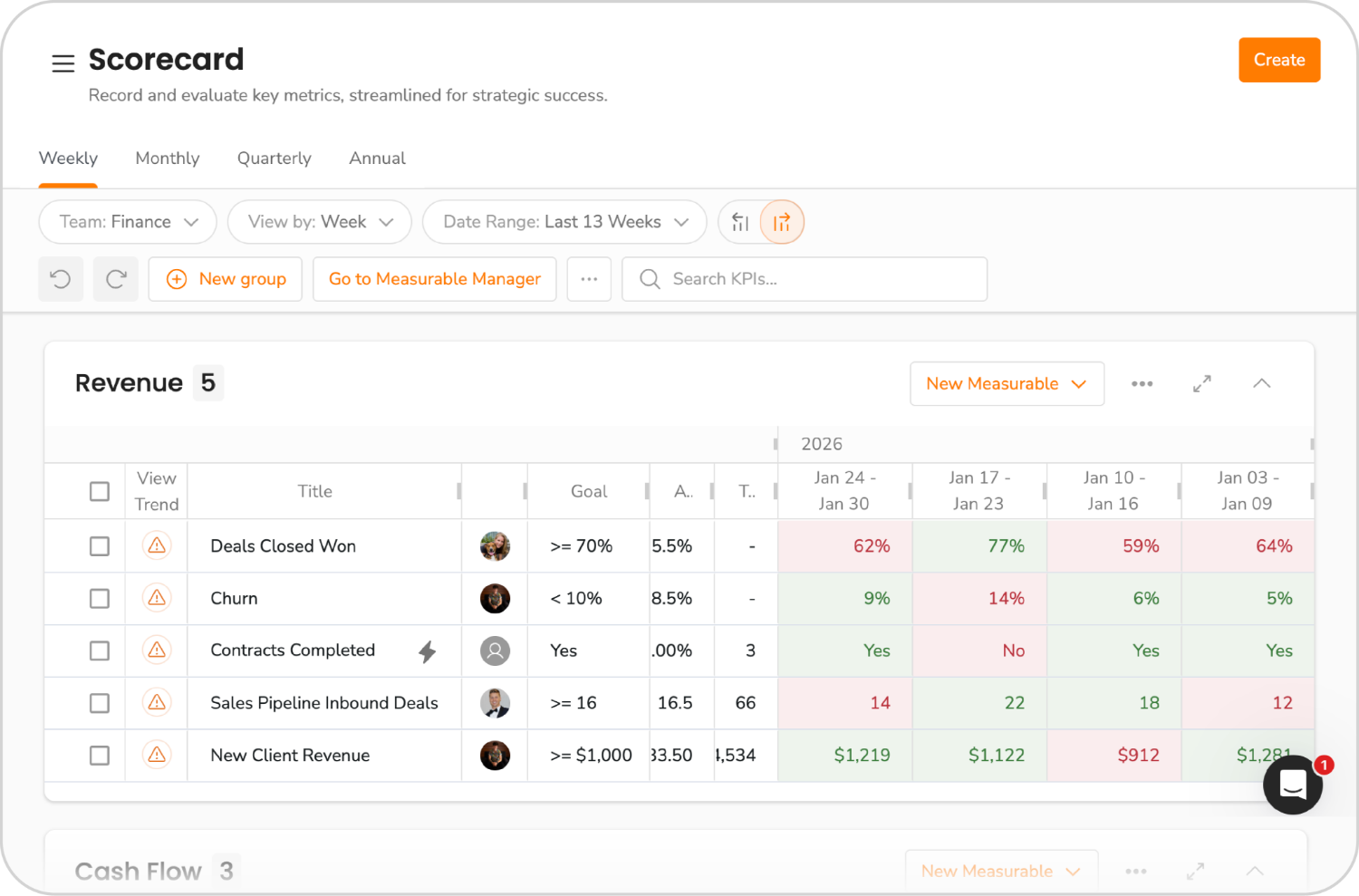
From there, those numbers start to break down across departments. If you’ve got a leadership team Scorecard in Ninety with 5–15 measurables, each department should be represented. That gives the leadership team a clear view of what’s on track and what’s off track, and those measurables can then be reviewed each week in the Level 10 Meeting® after Annual Planning to keep the team focused on execution.
Outcome of Step 2: Clear company-level measurables that define what “on track” looks like.
Step 3: Propose Goals
Once the leadership team has agreed on the measurables, the next step is deciding what the organization needs to accomplish to hit those numbers. That means looking ahead and asking:
- What are the most important outcomes we need to achieve this year?
- What has to be true by year-end for us to consider this plan a success?
- Which goals will have the greatest impact on our ability to hit our numbers?
After the leadership team agrees on revenue, profit, measurables, and company-wide goals, the next step is to bring those goals to department leaders so they can evaluate what their teams can realistically commit to, what resources they’ll need, and what may need to change before the plan is finalized.
Outcome of Step 3: Proposed annual goals that department leaders can pressure-test against their teams, resources, and capacity.
Step 4: Assess Budget and Feasibility on a Departmental Level
Finance should give each department a clear view of what it spent over the past year, including:
- External contractor wages
- Internal wages
- Third-party expenses such as hardware and software
- Other department-specific expenses
With that history in hand, department leaders can look ahead and determine what they realistically need to support next year’s goals. That budgeting work should happen alongside departmental annual planning so the goals and the resources required to achieve them are evaluated together.
The leadership and finance teams can provide guidance and guardrails, but department leaders should come back with a clear point of view on what they need, where they can operate within the plan, and where trade-offs may be required.
Outcome of Step 4: Realistic departmental budgets and commitments that support the company’s annual goals.
Step 5: Align and Finalize the Annual Plan
Once department leaders have worked through their goals, budgets, and resource needs, they need to come back together with finance and the leadership team to close the gaps and make the final decisions.
This is where the organization aligns on the final annual goals, departmental budgets, and the Rocks that will drive the first 90 days. Once those commitments are clear, owned, and realistic, the annual plan is ready to put into action.
Outcome of Step 5: An agreed-upon annual plan with clear goals, budgets, ownership, and first-quarter Rocks.
Why Run Your Annual Planning Meeting in Ninety?
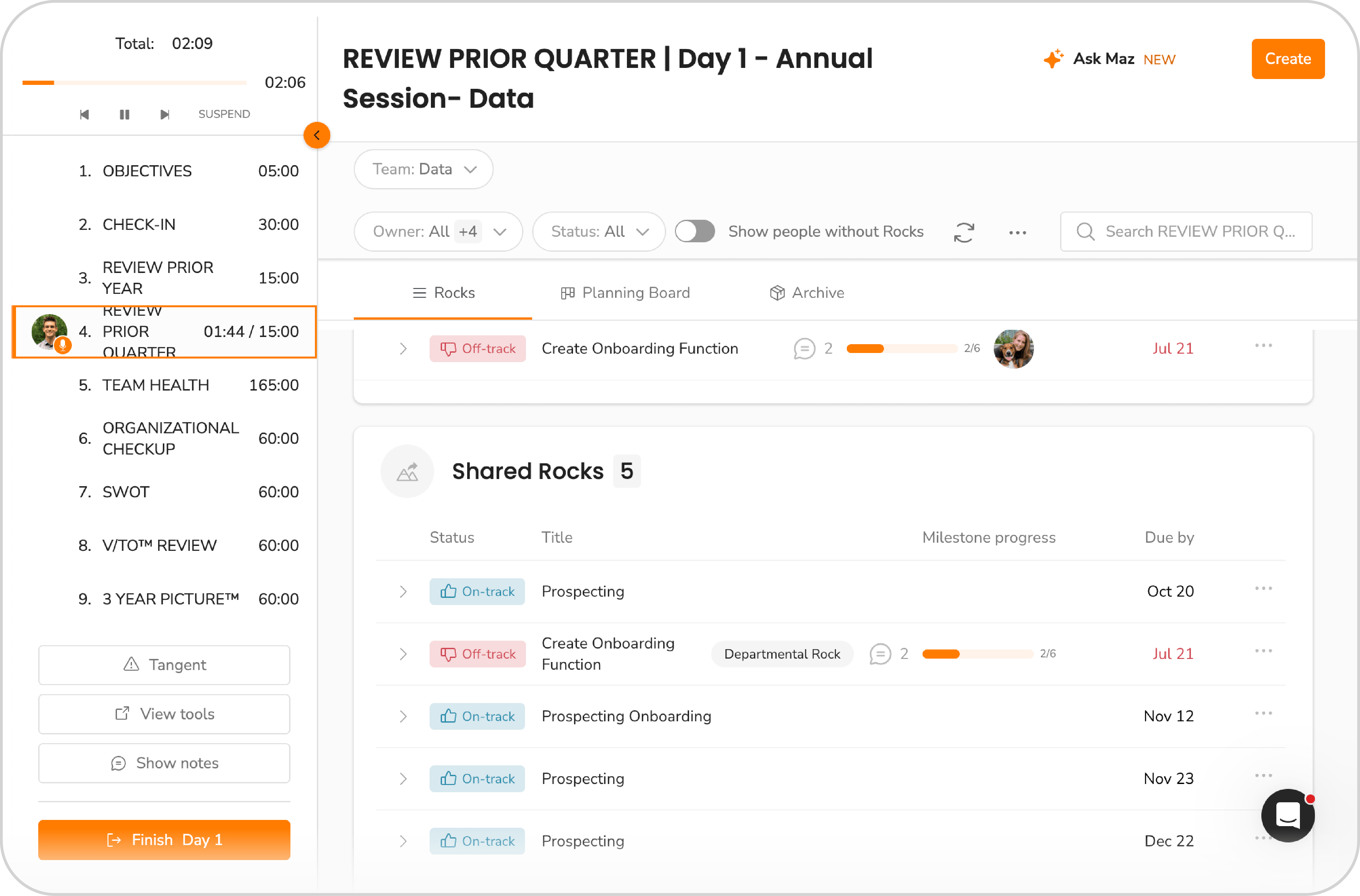
Annual Planning creates a lot of important decisions in a short amount of time. Ninety gives your leadership team one place to prepare for the meeting, work through the plan together, and capture the decisions as they happen.
Instead of relying on separate spreadsheets, notes, and follow-up documents, your team can keep goals, Rocks, measurables, issues, and next steps connected in one system. That makes it easier to leave the meeting with a plan that's clear, documented, and ready to execute.
The biggest advantage comes after the meeting. Because the plan already lives in Ninety, your team can carry it directly into weekly and quarterly execution. Priorities stay visible, progress is easier to review, and issues can be surfaced and solved before they derail the plan.
Annual Planning shouldn't end with a document that gets filed away. Ninety helps turn the decisions you make into the operating rhythm your team uses throughout the year.
Turn Your Annual Plan Into Traction®
An Annual Planning Meeting creates alignment around where the organization is going and where your team will focus in the year ahead. But alignment only matters if it turns into action.
The most challenging work starts after the meeting. Your goals need clear ownership, your Rocks need regular review, and your leadership team needs the discipline to keep priorities visible and solve issues as they come up.
A strong annual plan gives you direction. Consistent execution is what turns that direction into Traction®.
FAQ
What should an annual plan include? An annual plan should include your major company targets, annual goals, financial expectations, departmental commitments, required resources, and the priorities that need to happen first. For companies running on EOS®, those annual priorities should also connect to the Rocks the team will focus on over the next 90 days.
Who should be involved in annual planning? The Senior Leadership Team should lead the annual planning process because it owns the overall direction of the organization. Department leaders and finance should also be involved when goals, budgets, staffing, and departmental capacity are being evaluated.
How long should annual planning take? For teams running on EOS, Annual Planning is typically a two-day leadership session. Depending on the organization, departmental planning and budgeting may continue after that session before the final plan is fully agreed upon.
What is the difference between an annual plan and a budget? A budget defines how financial resources will be allocated. An annual plan is broader. It connects financial targets with the goals, priorities, activities, and resources the organization needs to move its vision forward.
How do Rocks fit into an annual plan? The annual plan establishes what the organization needs to accomplish over the coming year. Rocks narrow that focus to the most important priorities for the next 90 days. Breaking the annual plan into quarterly priorities helps teams maintain focus and gain Traction® throughout the year.




.jpg?width=500&name=large_The_Best_Annual%20Planning_Software_EOS_Blog_Header_1920_x_1080%20(1).jpg)