
Purpose Over Profit
Benaye Wadkins Chambers is the president and CEO of Crossroads Community Services, a food distribution and public health organization in Dallas that distributes through 148 partner organizations across the southern sector and runs two community markets, one of them a nutrition pharmacy where local clinics refer families who need food to support their health care. When she arrived five years ago there were 11 and a half employees. Today there are 30, and she has been self-implementing EOS® the entire time, starting with nothing more than the Level 10 meeting in an organization where people had never had a staff meeting before. In this conversation with Christine Watts and Kris Snyder, Benaye talks about the two and a half years it took to get real buy-in, how her team rewrote the language of EOS® for warehouse workers who do not sit at computers, and the IDS® session three days before Christmas that decided whether to open a third site in the middle of their busiest season. She also offers a reframe worth sitting with: we are in the business not for profit, which is not the same as being in the business of making no profit.
Key topics:
- Self-implementing EOS® in a nonprofit, starting with nothing but the Level 10 meeting
- Rewriting EOS® language and meeting structure for deskless warehouse teams
- Running board meetings as Level 10s, with the board in its own Accountability Chart®
- The IDS® session that opened a third site three days before Christmas
- GWC® and The People Analyzer® through a full reorg
About Benaye Wadkins Chambers:
Benaye Wadkins Chambers is the president and CEO of Crossroads Community Services in Dallas, a food distribution and public health organization focused on building nutrition-stable communities. Crossroads runs two community markets including a nutrition pharmacy, partners with UT Southwestern on food equity and access research, and distributes through 148 organizations via the North Texas Food Bank. Before Crossroads she was Chief Philanthropy Officer at St. Philip's School and Community Center in South Dallas, where she first encountered EOS®.
Learn more: CCS Dallas
Audio Only
Christine Watts
[0:00:00]
Welcome to Impact Moments powered by 90. Today, we are joined by Benaye Wadkins Chambers.
Kris Snyder
[0:00:06]
Benaye is the president and CEO of Crossroads Community Services, which is a food and distribution public health organization in Dallas. And when she arrived five years ago, there was 11 employees. Today, there are 30, and they've been self-implementing EOS the entire time. starting with nothing more than a level 10 meeting.
Christine Watts
[0:00:26]
I know you guys will love this episode because as a non-profit they have such an interesting perspective. I've actually already brought it up to multiple people even though the episode is not even out yet. But her and Chris talk a little bit about how you can use EOS to manage the board as well and the impact of allowing them to be a part of the 90 ecosystem, the EOS ecosystem, and bringing them in so that those board meetings can become true IDS sessions and collaboration time. So I hope you enjoy it.
Kris Snyder
[0:00:56]
Let's get into it.
Christine Watts
[0:01:03]
Well, hey, welcome to Impact Moments. I'm Christine.
Kris Snyder
[0:01:06]
I'm Chris.
Christine Watts
[0:01:06]
And today we're joined by Benaye. Thank you for joining us.
Benaye Wadkins Chambers
[0:01:09]
Absolutely. Thank you for having me.
Christine Watts
[0:01:11]
Yeah. So tell us a little bit about your story, getting to your company, joining EOS, finding EOS, I should say.
Benaye Wadkins Chambers
[0:01:18]
Well, I am currently the president and CEO of Crossroads Community Services, which is a food distribution and public health organization here in Dallas. Our focus is primarily building nutrition-stable communities. We have a community market. Matter of fact, we have two. Our second location is what we call a nutrition pharmacy, where we work with some local clinics to refer families in need of food to support their health care. And then we work with our food bank partner here, the North Texas Food Bank, to distribute to another 148 organizations throughout the southern sector. And then we partner with our leading research institute here in Dallas, UT Southwestern, to do food equity and access research, just to continue to determine the best pathway to providing food to families. And I have just now celebrated five years in this role.
Christine Watts
[0:02:17]
Thank you.
Benaye Wadkins Chambers
[0:02:18]
But prior to that, I was the Chief Philanthropy Officer at St. Philip School and Community Center, a school and community center, private school actually, in South Dallas, predominantly Black students. And we had a board member who was a trained coach for EOS and introduced the EOS system there. And we just really enjoyed it. We worked with him. Matter of fact, I think they're still working with him. But I brought it with me to Crossroads because I just really enjoyed the communication piece of it and the accountability. and the just ability to connect the organization at all levels through the process. So we've been using it for five years, and I think we have gotten everybody fully bought in now.
Christine Watts
[0:03:14]
It takes a little while. It takes a little while.
Benaye Wadkins Chambers
[0:03:17]
It takes a while, but we enjoy it.
Christine Watts
[0:03:19]
I am a fierce champion for its implementation within our organization. And so we continue to grow with you all as you continue to grow and change as well. So did you guys self-implement to start then?
Benaye Wadkins Chambers
[0:03:36]
We did. I felt like I'd had two years of implementation under a coaching leader and so I have really self-implemented in our space. We have done lots of trainings online whenever there's anything that I can send my leaders to and even sometimes our Mid-managers, we encourage that just to continue to reinforce the usage throughout the organization. It's part of our onboarding, so people have to go through the training, watch the videos, especially anyone who will be charged with leading a team. We do a little bit more intensive training with them to ensure that they are, one, understand what we're talking about. and two, are engaged completely within 90 days.
Kris Snyder
[0:04:28]
So what the heck is EOS? Is that what you're starting people off with? That is normally what...
Benaye Wadkins Chambers
[0:04:33]
Yes, that's what we start people off with. We also have the book Traction in our building. And so we have that available for people to rent out or to read on site because we really just want to make sure they're getting the full picture of how this all is supposed to work together for us.
Christine Watts
[0:04:51]
Yeah.
Kris Snyder
[0:04:51]
What about how to be a great boss for your leaders? Is that something you guys also utilize?
Christine Watts
[0:04:56]
Yes.
Benaye Wadkins Chambers
[0:04:56]
So we, we do. So we use how to be a great boss. We use the level 10 video. You have to watch that every week for the first six weeks that you're there. So you can really get it. Well, I mean, that's what we were taught, right, is that repetition creates habit. And that's kind of an interesting meeting because it's so very different than I think your average person coming into an organization, especially a not-for-profit, is expecting to experience. And so for almost everyone other than myself and another staff member who also came from St. Phillips, Many people have not heard of it, especially in this sector, but I've been introducing it to other agencies who I think are using it now because I think it really has good structure for how not-for-profits should be working as businesses and not as charities. So that's a whole nother conversation.
Kris Snyder
[0:05:48]
I also spend part of my time as an EOS implementer. I've implemented a variety of nonprofits. I've got one that I'm just getting ready to start. And part of that experience with them, even before we did the 90-minute meeting, which is everybody, leadership comes in, you hear, they're like, well, we're a nonprofit, we're not a business. I'm like, no, you're a business. It just has a different take on how to do what you do with profits. That's really all it is. But you're still doing the business. It's still a thing.
Benaye Wadkins Chambers
[0:06:13]
The IRS tax filing says we're a business. We are a business. I learned something some years back from a development officer I had. She said, you know, we are in the business not for profit. And that's really how we should refer to ourselves. Not non-profit, as that would suggest we desire to make no profit. That's not true. We just desire to make profit that is recapitalized year over year back into programs. And so we are for sure a business.
Kris Snyder
[0:06:43]
Yeah, no, it's great to hear your experience with EOS.
Benaye Wadkins Chambers
[0:06:45]
Thank you, thank you.
Christine Watts
[0:06:46]
So how long did it take you to roll EOS throughout the company?
Benaye Wadkins Chambers
[0:06:50]
So it was a slow roll, partly because when I arrived at Crossroads, we had a little over 11 and a half employees. Today, we're at about 30. We were going through quite a bit of transition, so I really just started with focusing on nailing down the level 10 meeting. you know, getting people to having consistency and having meetings. They had never had staff meetings. They were like, what is this, you know? And so I said, let's just get this meeting down. And then in year two, we started doing the annual meeting and then breaking into the quarterly meetings. And initially, I was doing that really at the leadership level. So our executive team, and there's four or five of us, depending on how many are still on board at the People like to move around and nonprofit. And so when I felt like our team was really solid, I would say it was probably two and a half years in when I felt like these leaders are going to be our leaders and they're all still with me today. And they were able to then help me implement it throughout the organization. Because we were self-implementing, there's also this Well, the CEO's saying it, we're only going to do it because they're saying it. I really want it to be bought in because it was coming from all of the leadership.
Kris Snyder
[0:08:11]
At 90, we probably have 50% of our customers are self-implementing, so it's about 9,000. And what we find is exactly what you're sharing right now. So those playing along at home that are self-implementing, A, it's not a sin to self-implement. If it works for you, it works. Just make it work, right? I mean, we find that those self-implementers, they do start with that level 10 because that's where value lives. out of the gates and then you can start to get the rest of the tools, whether it's the VTO or the accountability chart, but just start with the meetings and that works, you know, and it's different.
Benaye Wadkins Chambers
[0:08:42]
It worked for us, and I think it worked for us because we were so small. At St. Phillips, and we had an implementation leader, we were able to really start with more of the annual planning, the BTO, which we love, the BTO. At Crossroads, my board finally is like, we get it. We get what this is. Because you keep saying it, and we're like, we don't know what this means. But we actually look at that every month. We have monthly meetings with our entire staff now, and we are showing them the VTO, which is starting to really help people see where we are today, where we're trying to go, and how we're tracking things along the way.
Kris Snyder
[0:09:23]
One of my favorite things to do with nonprofits is actually to get the accountability chart for the board and get clarity to what their seats are. So, because often boards are large.
Benaye Wadkins Chambers
[0:09:33]
Do you put the board in the accountability chart?
Kris Snyder
[0:09:35]
Well, I create a separate one for them so they can all see their seats and what's expected of them and then use the software to run the board meeting as well. So we teach the boards how to run a great level 10 and just modify it for the board meeting. And it's so good. because now they're clear on what their one to three goals are in that seat. Because sometimes in boards, it depends how you organize them. I've been on the Arthritis Foundation for 10 plus years, and I was chairman for like three, and it helped us so much because we had like 20 board members, and we needed to organize them and be clear with them what the expectation was, whether they were fundraising, they were running an event, whatever it was. That would be my share is if you can actually get your board into an accountability chart built for them, and then just run that meeting, that board meeting. And rating the meeting was game-changing for us because we had never rated a board meeting before.
Christine Watts
[0:10:26]
Yeah, yeah.
Kris Snyder
[0:10:27]
And like we got there and it was like, hey team, 10 is high performing, it's not perfection. And our board member was like, it's a five. It's like, great, let's talk about it.
Christine Watts
[0:10:36]
Yeah.
Benaye Wadkins Chambers
[0:10:36]
Then it's like, I changed my mind. I don't want it to be a five. No, I had not thought about using it for the board, but that makes so much sense. A lot of nonprofits do, yeah. Really?
Christine Watts
[0:10:47]
Yeah.
Benaye Wadkins Chambers
[0:10:48]
Okay.
Christine Watts
[0:10:48]
I was going to ask you to talk more about it because I think a lot of people find success with it because it transitions it of, we're just going to present at you for however many hours to like, hey, let's invite a conversation and actually have some ideas as a part of that meeting.
Kris Snyder
[0:11:02]
You got to populate the issues list ahead of time and, and getting them to know, like, look, I would like you to read your board packet ahead of time, because this is what we're going to do. We're going to give you some, you know, whether you have a scorecard that you want to share from a performance perspective, leading indicators, right. Take them through kind of the, the, whatever the, the past, the rock review, however you want to set it up. But the majority of that board time is really IDS. And we, the power of the room is why they're there, where we ask them to be present for the perspective that they have. And we want them to help us like solve these issues.
Benaye Wadkins Chambers
[0:11:30]
This is going to turn into a whole different podcast. Do you lengthen the time of the meeting? Is it still the 90 minutes?
Kris Snyder
[0:11:40]
No, we lengthen it because typically, I mean, how long is your board meeting right now?
Benaye Wadkins Chambers
[0:11:43]
Our board meetings are about, they're like right at two hours.
Christine Watts
[0:11:47]
Yeah.
Kris Snyder
[0:11:48]
So just make it fit inside the two hours. And a conclude is a little bit different because typically we have to prove minutes at the end. So we just modify the meeting a little bit to make sure we can still have the compliance things that we need to do. Um, I love the segue because often board meetings just start with a cold start versus like, Hey team, we're going to talk about it and we're going to put the perspective of, you know, personal, professional best into the mission of the organization.
Benaye Wadkins Chambers
[0:12:10]
When we start the things we do.
Kris Snyder
[0:12:14]
Well, but you do it quickly. It's like, it's a minute to two and you just, and so don't do a personal, just do a professional best related to the mission of the organization because they should have a good story related to the mission because they're a board member, right? And if they don't, well, we should think about that.
Benaye Wadkins Chambers
[0:12:29]
Interesting. Well, you know, I started, we have a strategic planning committee that I have not done at every meeting with them, but every other meeting I've added a segue. And they're like, what is this? And I'm like, this is just a way for us not to go hard and fast into this planning time and for it to be more thoughtful. beyond just, hey, we're here to talk about what's next for Crossroads. I want you to be thinking about what's happening with you and why that matters to where the conversation is today. But I hadn't really thought to broaden that to the board meeting, but I love it.
Kris Snyder
[0:13:04]
Empathy triggers too. I mean, that's really what that segway is about, is that because we're all moving fast and the board members may not even really connect to each other that often. And if they can just hear a little bit of something that's personal connected to professional connected to the mission, they'll connect to each other better.
Benaye Wadkins Chambers
[0:13:20]
And then hopefully when things are hard, and they often are, in the IDS moment, they'll just remember that empathy to the other human, right?
Kris Snyder
[0:13:28]
To go, oh, also that person has this going on in their life and, you know, part of the mission, whatever it might be.
Benaye Wadkins Chambers
[0:13:32]
Yeah, that's my favorite part of our meetings is because you do, people just say things and you're like, I didn't even know that. Things you learn in that portion of the meeting about your colleagues, about your staff members, it's really game changing. Well, thank you for that.
Kris Snyder
[0:13:50]
I will definitely... My last share, and this was hard for some of our board members to grab a hold of, is When we have an IDS moment and we want people to give perspective, it's really, you probably heard this from your implementer, that we want TSP. We want it to be truthful. It's their truth, not mine, but they need to express it that way. But be specific with an example that I can relate to and understand where you're coming from. And the P is positive. Let's be positive into it because sometimes when there's challenges that are hard, we go negative and then the whole room goes with us and we want to coach them up to be positive. So that TSP moment, I had board members and just that was repetition. It was like, hey Bob, let's remember we're back to TSP here man. And that wasn't very positive when you called out that other member for blah, right?
Benaye Wadkins Chambers
[0:14:37]
So it's like, let's try again.
Christine Watts
[0:14:39]
Yeah.
Benaye Wadkins Chambers
[0:14:40]
No, that's great. I really, I love that. So thank you for sharing and I'll definitely be approaching. They've heard about it. They know that we use it. They now understand when we're talking about the VTO what it is and had a lot of questions when we introduced it.
Christine Watts
[0:14:55]
And so
Benaye Wadkins Chambers
[0:14:56]
Now they're used to seeing it, you know, we show it to them annually. And actually, they just recently said, can we be looking at this more quarterly? Can you just send to us any updates that are happening? I'm like, well, it doesn't really change that much, but I'll send it to you so that you can be reminded about what it is and how we are using it as a guide. I would say the other two things that really hit home for us are building rocks. And I love the, you know, milestone piece of that that seems to be really working. It helps people think through kind of how I'm actually going to accomplish this. And for my team, I'm always saying, listen, when you think about a rock for the year, You got to remember that you can do 10% in one quarter, 60% in another quarter. You can do 0% in a quarter, which probably isn't recommended, but it's up to you, as long as it's done by the end of the year. Because our end of year, and that was one big shift we had to make, was for us, our year is July 1, so we kind of run it on a fiscal year to June 30. So second quarter is holiday time. At holiday time, all we're thinking about is how much food. people need. And I'm like, make your rock smart for this period of time and realistic because you're not going to get an entire process completed in this 90 days when we've got 10,000 people who are going to come get food from us. So that's been really great. And the other is write people right seats. I probably say that every week.
Kris Snyder
[0:16:30]
Yeah, and you won't stop. That's a life journey there.
Christine Watts
[0:16:33]
Yeah.
Benaye Wadkins Chambers
[0:16:34]
GWC it. You know, I'm like, if they don't GWC it, I'm sorry. That's get it, want it, have the capacity to do it. Had to explain that over and over and over to our team. But that's usually my question. Do they GWC it? And they're like,
Kris Snyder
[0:16:53]
Well, especially as organizations grow like you have, what we find is that a person who was in the right seat and then you grow and the seat needs to change and the person, what you're really asking them, are they willing to change? And the want, the W part of that, and sometimes they're not. They're not. And they like what it used to be, but we're not in that situation anymore.
Benaye Wadkins Chambers
[0:17:13]
We just went through that, a hard transition for us. We had to do a reorg last summer, and literally it was doing a people analyzer for every single person on the team. And the hardest part for every person without question was, do they get it? Do they want it? Because a lot of times the capacity is there, or we are the capacity problem in terms of resources.
Kris Snyder
[0:17:38]
But there were so many folks that we had to just get real about that either didn't get it, or to your point, they didn't want that.
Benaye Wadkins Chambers
[0:17:46]
This is new.
Kris Snyder
[0:17:47]
This is different.
Benaye Wadkins Chambers
[0:17:48]
We've been doing it this way, which is my least favorite phrase of all time. We've been doing it this way forever.
Kris Snyder
[0:17:55]
Stop.
Benaye Wadkins Chambers
[0:17:58]
Well, back in the... Yeah, it's like, clearly that may not be working. But, yeah, it's a hard one to do, but it also makes it very subjective. I mean, objective. So, yeah, we just went through that last summer.
Christine Watts
[0:18:15]
Yeah. And so you guys did it at that moment in time to really have a reset. And then it sounds like you go back and do that quarterly conversation every single quarter with each employee and leader.
Benaye Wadkins Chambers
[0:18:24]
We do. And then we also do it with our performance evaluation. So it is a part of the performance evaluation. And we've just added a mid-year evaluation. And that has been really important for us as we're growing. And, you know, 30 people was not a ton of people, but I'm a firm believer whatever infrastructures we build now will get to grow with us as our agency grows. And we do project, you know, another 20 to 30 percent growth over this next five years of the strategic plan that we're building. So, matter of fact, one of our key objectives is to continue to shore up our infrastructure. and building in the protocols that are a part of that. You'll love this. This literally just happened last week. I got back from spring break and our director of business operations said, I'd like to put our onboarding process into 90. And I was like, I didn't even know that was possible. She had researched it. She put together a whole one-pager on why this was going to create more cohesiveness. Everybody's going to come on board. It's going to be easy for all the managers to track. We were like, This is awesome.
Christine Watts
[0:19:37]
You can turn it into a rock for the new employee to gag with that.
Benaye Wadkins Chambers
[0:19:40]
Yeah, I was like, she had it all laid out. We were like, so what have you been doing all spring break? She was like, what I'm tired of doing is everybody having all their own processes. And so when you start to see your directors sort of managing up with what we should be using, then you know you're making a good investment in a system. Well, and you're, and you're right. I mean, as goes the leadership team, so goes the rest of the organization.
Kris Snyder
[0:20:03]
So the habits you're building now as you grow, as you were 20, 30%, those habits will continue and the tools that you've put in place will scale with you.
Benaye Wadkins Chambers
[0:20:10]
Absolutely.
Kris Snyder
[0:20:12]
But you know, one of the interesting conversations I often have is people are like, well, when's the right time to start with EOS? I'm like, yesterday. I never have I ever met somebody who's been doing U.S. and they said, I wish I would have waited longer to start. That just doesn't happen.
Benaye Wadkins Chambers
[0:20:26]
No, it doesn't. And you know, in my previous employer, we were a school. So you've got teachers and administrators, which was always an interesting, because teachers are like, I have 30 kids or 20 kids. I do not care about this. Getting them to buy in was hard, very, very hard. But now my understanding is that, you know, again, it's part of the onboarding. We had made it part of our onboarding that you needed to spend a period of time. But now, of course, putting it into the system. But, you know, when you're working particularly in a not-for-profit environment where people are like, listen, we're just trying to do the mission. All of this business-y stuff is not for me.
Christine Watts
[0:21:08]
You don't want bureaucracy and that kind of thing. Yeah. Yeah.
Benaye Wadkins Chambers
[0:21:11]
Our warehouse guys are like, we don't. Now, what's interesting to say that is they were like, we don't get this. And we had to step back and go, This does not feel right for them. And so we actually did a call to say, how would you use this for a group of people who just aren't on the internet? They don't use a computer. This isn't how they track their progress. feel like it should matter to them. And so we did have to shift language a little bit because they were like, what does a segue mean? And not to say they're not educated, it just was, we literally started changing. Like, okay, we're just going to change the words, and we're just going to change the way we use it, and their meetings are actually going to be a little bit shorter so that we could adapt it, but still make it relevant so they weren't having a different meeting than everyone else. So I do think that as you're dealing with different populations, we found making some adjustments to it, which we like, is that you can. It's not so rigid that you can't adjust it to your environment.
Kris Snyder
[0:22:19]
Yeah, that's, that's again, back to like, find what works for you. And if it works, it works. And, and we, we know that as you go to the more of the deskless workers that, you know, sometimes they're daily standups and they don't have long meetings because it's like tactically they're, they're coming out at each day, but everyone needs an issues list.
Christine Watts
[0:22:36]
They just do. They like that list.
Kris Snyder
[0:22:40]
How do I communicate and capture?
Christine Watts
[0:22:42]
It's an issues list. Yes, yes, yes. They like that part. We're like, you also have to solve them. You do need to solve them at some point.
Benaye Wadkins Chambers
[0:22:50]
You don't just get to say all the issues and then not talk through, you know, basically IDS it. So, yeah, we've enjoyed the process and looking forward to how we can continue to implement some of the new features that are being introduced that seem daily.
Kris Snyder
[0:23:06]
That's quite a bit. With AI and coding, it's accelerating. We have a lot of conversations internally because for a while we were putting out features pretty, not daily, but quite frequently. And then we pulled it back to monthly because it wasn't about the production of the feature. It was about the opportunity for change.
Christine Watts
[0:23:25]
Yes.
Kris Snyder
[0:23:25]
And often the users and our folks like yourself, we got to have a way to educate. Like you're like, Hey, I didn't know I could do that. Well, that's the part of the problem is that there's so much there, so much goodness, but you still have to like inform and educate and help folks see that there's a different way.
Benaye Wadkins Chambers
[0:23:42]
Yeah, no, we've enjoyed it and like I said, you know, it's sometimes if we don't get those pop-ups, to your point, we don't know that some new feature is there. I was, I do have a question. There's a button, it's called, it's a little triangle and it... Tangent?
Christine Watts
[0:24:02]
Yes. And I am the button pusher at our, they're like, stop pushing. And so we're in the meeting and I kept clicking it while someone is talking, which is bad to say, but they were having a conversation and I was like, what does this do? And then it popped up. So what is that? It did work, but everybody freaked out.
Kris Snyder
[0:24:24]
Well, tangents really like we're, most of the time it happens either before you even get to IDS.
Benaye Wadkins Chambers
[0:24:30]
Okay.
Kris Snyder
[0:24:30]
And you're supposed to just like scorecard as an example, on track, off track. If it's off track and you want to talk about it, let's drop it on down.
Benaye Wadkins Chambers
[0:24:36]
Right.
Kris Snyder
[0:24:36]
Sometimes people, and you know, it's like, it's not bad to let them go for like a minute. But then they keep going. And you don't want to be overly rude to interrupt, so it's much easier to hit the tangent button to remind them, like, hey, we're probably, like, in this section, this is what we're supposed to do.
Christine Watts
[0:24:51]
Wrap it up and make it an issue.
Benaye Wadkins Chambers
[0:24:52]
Right.
Kris Snyder
[0:24:53]
Make an issue. And then when we're IDSing, sometimes, especially in the discuss part, You know, when, when I'm, I'm coaching the discuss, it's really just, I'd love to hear your facts and your experience. Anything else is probably a tangent.
Benaye Wadkins Chambers
[0:25:06]
Okay. Right.
Kris Snyder
[0:25:07]
And that's the discuss because we as humans would spend all of our time and discuss and we really want to get to the solve. That's where the actions end. And so often you'll see the tangent used when someone's just kind of going on and on. And we just need their, you know, a little bit more succinct. Your facts, your experience, that's a great discuss. Let's move on to solve. So it is, it's really when they're, again, as the name would say, tangenting. It's not the thing that we should be doing in the moment.
Christine Watts
[0:25:33]
Gotcha. I'm a button pusher to that.
Benaye Wadkins Chambers
[0:25:36]
I go for it. Without knowing what it is.
Christine Watts
[0:25:38]
Every teen needs one. You gotta test it.
Benaye Wadkins Chambers
[0:25:41]
My husband's like, you're going to eject yourself out of something they want to do.
Kris Snyder
[0:25:45]
It's a tattoo.
Christine Watts
[0:25:46]
Yeah.
Benaye Wadkins Chambers
[0:25:47]
Well, thank you for explaining that because that was last week too. They were like, what are you pushing?
Kris Snyder
[0:25:52]
Stop. Well, a new, a new feature that I actually just picked up when we were, cause we're mostly remote. So we had 90 up and we were doing the segue and there was like, I don't know, 12 people on, on the call. Um, and so you can actually push if there's, if they have their picture in there, you can actually know who the next, the speaker is. And then you hit the next button and it highlights who the next speaker is versus trying to figure out who's in the windows on your zoom or your teams or whatever.
Benaye Wadkins Chambers
[0:26:19]
And so you can just kind of make sure you've checked everybody, especially with larger teams. It's helpful to be able to do that. I like that.
Kris Snyder
[0:26:25]
That's in the segway section.
Christine Watts
[0:26:26]
Yeah.
Benaye Wadkins Chambers
[0:26:27]
Because we, we do do them virtually sometimes if everybody's not in the office or we just really literally can't get ourselves together to get to a conference room. And I know that sounds bad, but it's not bad.
Kris Snyder
[0:26:38]
It's reality.
Benaye Wadkins Chambers
[0:26:40]
We're in a 72,000 square foot warehouse, and sometimes it's like, I just need to stay down here on the floor, but I need to be a part of the meeting. All right, let's just do it virtually, even though we're all in the same building. So yeah, that's good to know. I did not know that.
Christine Watts
[0:26:53]
Well, I do want to talk about your impact moment. So the aha that you brought and you want to share with the group.
Benaye Wadkins Chambers
[0:26:59]
So about crossroads. Yeah, or anything.
Christine Watts
[0:27:02]
Yeah, I mean, anything you want, but yeah, Crossroads is fine too.
Benaye Wadkins Chambers
[0:27:04]
Yeah, so I think it was Crossroads EOS related, right? And so we have this opportunity to open a third site.
Kris Snyder
[0:27:17]
opportunity.
Benaye Wadkins Chambers
[0:27:18]
Yes, out of the blue, literally, in the middle of the busiest time. And I have my VP of operations is like, but hey, five people work here. And I'm like, it's not five people, but I get what you're saying. And I, she said, I think we need to put this on the issues list and we really need to dig into this. And I said, okay, then let's, let's do it. She put it on the issues list. And she's our integrator as well. So she really runs the meetings. And so this issue was really well laid out. I was like, I feel like this is advocacy, not an issue, but okay. And so we really sat down and went through it. I mean, she sort of laid out all the timing challenges. and, you know, just what it was going to take to open this site. And so in discussion, we really focused on getting down to the whys. We just went, why, why, why? And I just kept explaining why we would do this. And I said, listen, you know, we've got a short window to get it done, but we get to control it. And so we really IDS'd it. And probably the best IDS we've done in a while, because as you well know, sometimes It gets off track. And especially when you're a small executive team like us, there's basically five of us. And so we really worked through it and came to the solution that we did need to do this. It was the right thing for us to do, even though we had talked about it and they had quasi-agreed with me, this process of really going through IDS was really solidifying for us. And then coming up with the plan. You know, how are we going to go from the solution is we absolutely need to do it, but now what do we do? And how do we create a timeline for this? How do we put in rocks? How do we create milestones? How do we drive this down through the rest of the teams? So it was really a pivotal moment that happened recently around something that literally three days before Christmas, they were like, you all want to open a third site? We're like, and I'm like, yes. And the team was like, are you out of your mind?
Christine Watts
[0:29:33]
Yes.
Benaye Wadkins Chambers
[0:29:35]
Also yes. But we can do it. And we can do it. But let's, you know, it was getting them wrapped around it. It was getting the team in agreement. And for me to accept some realities too about its implementation, right? This is a yes and, not a just, you know, blanket yes. There were some things the board needed to do, we all needed to do. is one of the moments most recently that for us, you know, and just thinking about our future growth, but then how we continue to use the system to support our justification for getting things done, and then how we're going to be tracking it moving forward.
Christine Watts
[0:30:14]
And so was that in a level 10 meeting that you guys had that conversation? That's awesome because I feel like so many people will push things off to a quarterly and like, oh, it's going to be too disruptive. But if something's like that important and time sensitive, like not to really shy away from that conversation is big.
Benaye Wadkins Chambers
[0:30:32]
And we're really big on the same page meeting to like, this is big enough that we need to pull it out, have the same page and then come back. you know, to then finally call it solved. You know, we'll do that frequently on bigger issues. But we really do use our IDS time to solve big problems because for us to push it off is often not time available, right? And this was one of those things that we couldn't, it needed to go on the issues list. We needed to push it, you know, right then because it was going to be a couple of months before another quarterly meeting, and we wouldn't have time for that. And the other thing is, you know, for us and our team, and because we've embodied this so much, that is a regular conversation that needs to go on the issues list. And now we get to rate that. um you know first second third fourth fifth and that helps to us decide this one's going to be quick let's say it let's knock it out um but we will also take you know an entire 60 minutes or we'll short the rest of them so we have longer because we really need to talk about this today we need to walk out of here with a plan today um and that driver comes sometimes from me but from the rest of the team And that's why I say it's, to me, having the executive team really bought in really helps to solidify the implementation throughout and for it to be a regular conversation. That's why I say our director coming to us with how we needed to take a process and put it in 90, To me, I was like, I've done it.
Christine Watts
[0:32:10]
Success.
Benaye Wadkins Chambers
[0:32:11]
Success is here. It's happening. So yeah, that was the moment I wanted to share.
Christine Watts
[0:32:16]
Well, I know we got to get you out of here. So thank you so much for joining. If people want to reach out to you, learn more about you, how can they reach out?
Benaye Wadkins Chambers
[0:32:23]
Absolutely. So they can reach out to us through our website, ccsdallas.org. It's a lot of S's in there. At Crossroads Community Services, and there's a contact button at the bottom, and they can reach me or anyone else. And we've got a lot going on, and we just encourage volunteerism and support at whatever level works. So thank you all.
Christine Watts
[0:32:47]
Thank you so much. Yeah, it was great hearing about your journey. Thanks.
Benaye Wadkins Chambers
[0:32:50]
Yeah, thank you so much.
Christine Watts
[0:32:56]
Benaye's reframe of nonprofits, of we are in the business not for profit, not being the same thing of being in the business of making no profit, really mattered because it changes how they run the organization, how they think about resources and management and funds.
Kris Snyder
[0:33:13]
And so the other thing that really stuck out with me the most was the moment her director came to her unprompted and said, I want to put the onboarding processes into 90. not just because it's 90, but because the people in the organization, not just the CEO and top-down, actually saw the value of running on EOS, having shared systems, everyone being aligned and on the same page.
Christine Watts
[0:33:37]
And I think that kind of bottoms-up approach to seeing the value of a system like EOS and 90 really helps the business move forward faster.
Kris Snyder
[0:33:47]
I know at 90 we believe the tools should be simple enough that anyone can use them from the leadership team to the warehouse floor.
Christine Watts
[0:33:55]
So when they were talking about how their team really thinks about it, how their team IDSs across the entire business, I know when the system works, people start building on it and without being asked, they start getting more value.
Kris Snyder
[0:34:08]
So that was a really exciting part of the conversation for me. And if you did enjoy the conversation, I hope that you like, subscribe, share it with somebody that you know that will find it interesting as well.
Christine Watts
[0:34:18]
And we'll see you next time.
Recent Podcast Episodes
-
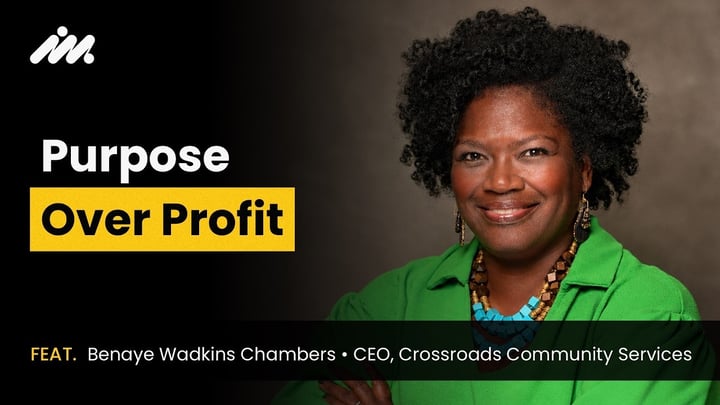
Episode 17 — Purpose Over Profit
Benaye Wadkins Chambers is the president and CEO of Crossroads Community Services, a food distribution and public health organization in Dallas that distributes through 148 ...
-
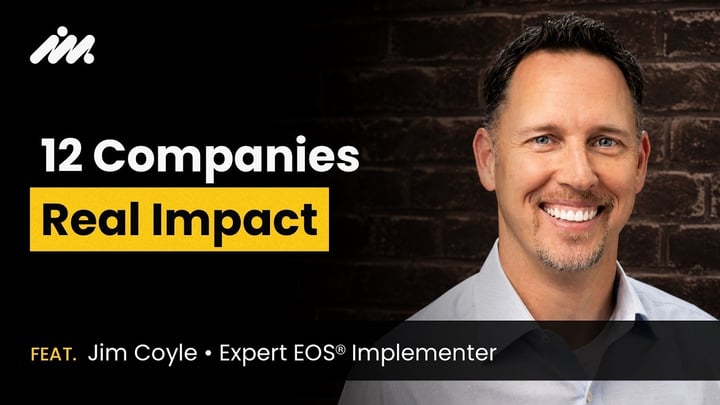
Episode 16 — 12 Companies, Real Impact
Jim Coyle ran 12 companies before he figured out what he was actually supposed to do. He sold candy bars to pay for a school trip to Italy, made beaded jewelry that put him ...
-
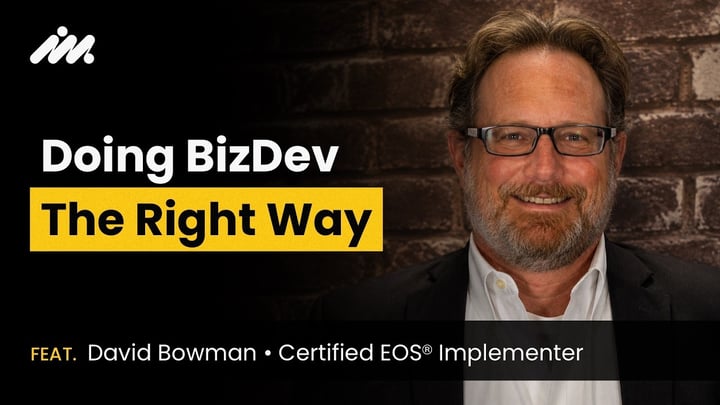
Episode 15 — Doing BizDev the Right Way
David Bowman spent 10 years in the Marine Corps as a helicopter crew chief before realizing he was never going to be the guy sitting behind a desk. After a career in ...