
I was in a quarterly session with a leadership team that had been running on EOS® for about eight months. It was a solid team filled with smart people. They'd built a clear Vision/Traction Organizer®, nailed their Core Values, and could recite their 10-Year Target without hesitation. So I asked the group a simple question: "Does everyone in your company know this vision?"
Every head nodded. Absolutely.
Then I asked a different question: "Does everyone know their specific role in making it happen?"
They got quiet.
That silence told me everything I needed to know. This team had only accomplished half of what "Shared by All" actually means, and honestly, that's where most EOS companies stop. They share the vision. But they haven't shared the work.
What "Shared by All" Actually Means
EOS defines "Shared by All" as one of the foundational requirements for a healthy organization. But in my experience implementing EOS across dozens of companies, I've seen it interpreted too narrowly. Most teams focus exclusively on making sure people know the vision. That part matters, but it's only the first half.
There are two distinct dimensions to truly living "Shared by All."
The first is what happens at your State of the Company meeting each quarter. This is where the leadership team stands up and shares the full picture: where you've been, where you are right now, and where you're going. It's honest, transparent, and connects every person in the company to something bigger than their individual job. When done well, people walk out of that meeting understanding why the work they do every day matters.
The second dimension is more personal and more demanding. It's not enough for people to know the vision. Every person in the company needs to understand their specific contribution to achieving it. Not in a vague "we're all in this together" way. In a concrete, measurable, accountable way.
The State of the Company Meeting: Where Vision Gets Shared
I've sat in State of the Company meetings that were transformational and others that were essentially a PowerPoint presentation nobody remembered by Tuesday. The difference isn't production value. It's honesty and connection.
When you share where the company has been, including the hard parts, people trust you. When you share where you are right now, including the gaps, people feel respected enough to be treated like adults. When you share where you're going, with clear priorities and measurable next steps, people get excited.
This meeting is your quarterly reset. It's where the company's vision gets transmitted from the leadership team to every level of the organization. Skip it and you'll spend the next 90 days managing a team that's rowing in different directions.
One of the most powerful shifts I've seen in client companies is when they stop treating the State of the Company as a formality and start treating it as a leadership responsibility. The vision doesn't spread on its own. Someone has to carry it to every corner of the organization, every quarter, without fail.
Everyone Owns a Piece
Here's where the second dimension kicks in (and where most teams leave significant performance on the table): Simply knowing the vision is passive. Owning a piece of it is active.
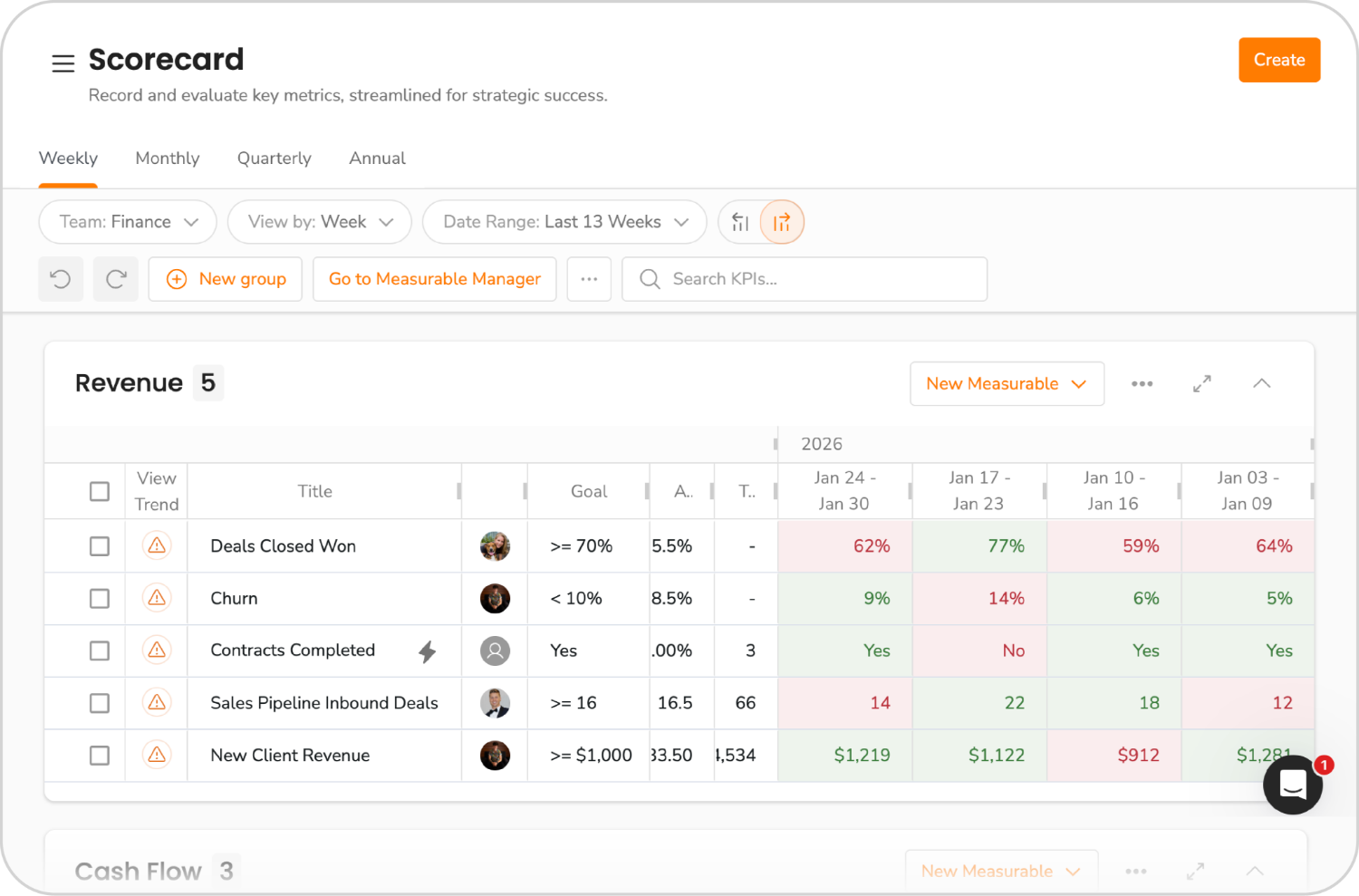
When I work with leadership teams, I push them to connect every role, and ideally every person, to a measurable number that reflects their contribution to the company's goals. That's where Ninety's Scorecard becomes essential. It's not just a reporting tool. It's a visibility tool. When every team member can see their number, they know if they're winning or losing. They don't have to guess whether their work is making a difference.
Think about what that does to a culture. Instead of waiting to hear at the next all-hands whether the company hit its goals, people can look at the Scorecard and know. They own it. They're invested in it. That's the difference between employees who show up and employees who drive results.
Accountability That Doesn't Feel Like Surveillance
One objection I hear regularly: "If I put numbers on everything, people feel like they're being watched."
That framing is wrong, and it’s worth addressing directly before people mistake clarity for control.
Scorecards aren't surveillance. They're a shared language. When used correctly in Ninety, they're a way for each person to see how their individual contribution connects to the company's Scorecard, which connects to the V/TO®. The chain of accountability runs from the company's 10-Year Target all the way down to what someone completes this week.
That's not pressure. That's clarity. And real clarity is one of the rarest things in any organization.
How to Implement "Shared by All" in Your Organization
If your team knows the vision but hasn't fully activated both dimensions of "Shared by All," here's where to start:
-
Commit to the quarterly State of the Company meeting: Put it on the calendar now. Make it a non-negotiable. Prepare it as seriously as you'd prepare for an investor presentation because your team deserves that level of respect.
-
Make it real: Share the wins. Share the struggles. Show the data. People don’t need a polished message. They need an honest one. Authentic communication builds the trust that makes vision actually land.
-
Build your company Scorecard in Ninety first: Before you can cascade accountability, the leadership team needs to own measurable numbers that reflect company-level priorities. Get those right.
-
Cascade the Scorecard down: Work with department heads to identify 1–3 numbers each person or role owns that directly feed the company Scorecard. Use Ninety to make those numbers visible, tracked, and reviewed in your Level 10 Meetings.
-
Review scorecards in every L10™: The Scorecard check-in isn't a formality. It's the moment where individual accountability connects to collective progress. If a number is off-track, it goes to issues. If it's green, it gets acknowledged.
-
Close the loop at the next State of the Company: When the team gathers again in 90 days, show them what moved. Reference their work. Make the connection explicit between what each person did and where the company now stands.
When Vision Is Shared, Accountability Follows
I've walked into too many companies with a beautifully framed Core Values statement on the lobby wall and a leadership team that can't tell you which metrics are behind. The vision is displayed, but it's not shared. Not really.
"Shared by All" isn't achieved the moment you post your V/TO in Ninety and send the link to the team. It's achieved when every person, from the leadership team to the front line, understands where the company is going, sees their specific role in getting there, and has the tools to measure their own progress.
That's what EOS is designed to create. And with Ninety's Scorecard, you finally have the infrastructure to make it real.
The State of the Company meeting shares the vision. The Scorecard shares the work. Both together is what "Shared by All" actually means.
Which half is your team missing?