
Why the Loudest Voice Stopped Winning feat. Bart McCollum
Bart McCollum has spent his career as the operator founders call when a business is ready to grow up. He started as an attorney, moved to a bank bond desk, helped build a health savings account startup into a national brand over 14 years, and four years ago joined Lime Media Group, the largest mobile experiential marketing company in the country, to help founder Heath Hill scale it. Lime builds custom vehicles, LED trucks, and brand experiences for the Super Bowl, Coachella, and South by Southwest, work with seven-figure budgets and deadlines that never move. In this conversation with Christine Watts and Kris Snyder, Bart explains what he calls corporate puberty, the awkward stage between startup and enterprise, and why a company built entirely of problem solvers had to learn to become problem preventers. He talks about running EOS® when the loudest person in the room used to win every argument, using AI to pressure-test quarterly goals, and a concept he calls wildebeesting: the way anxiety propagates through an organization and quietly makes everyone worse at their jobs. Key topics:
- Corporate puberty: the awkward stage between startup and enterprise
- Moving from problem solvers to problem preventers (the "self-cleaning oven")
- Why the highest-volume person used to win every debate, and how they fixed it
- Self-implementing EOS® vs. hiring an implementer, and when each makes sense
- Using AI to write better rocks, track milestones, and spot lost momentum
- Wildebeesting: how anxiety moves through an organization
About Bart McCollum: Bart McCollum is the President of Lime Media Group, the largest mobile experiential marketing company in the United States. He is co-author of You Before Me, a book on the behavioral science of leadership, and a Managing Partner at Adlerian Capital. Before Lime, he spent 14 years helping scale a health care benefits startup into a national brand. Learn more at lime-media.com. Mentioned in this episode:
- "The Anxious Organization: Why Smart Companies Do Dumb Things" by Jeffrey Miller
- "You Before Me" by Bart McCollum and Gerald Hannah
- Oak Hills Retreat
Audio Only
Christine Watts
[0:00:05]
Welcome to Impact Moments Powered by 90. Today we're joined by Bart McCollum. Bart is the COO of Lime Media Group, which is one of the largest mobile experiential marketing companies in the United States. They build custom vehicles, LED trucks, brand experiences for things like the Super Bowl, Coachella, some of the biggest brands around the world. So four years ago, founder Heath Hill brought Bart in to help scale the company from what Bart calls corporate puberty into a real enterprise. So in this conversation, Bart talks about what happens when a company full of problem solvers learn how to prevent problems instead of fight them. He also introduces a concept called wildebeesting, which describes how anxiety really moves through an organization and explains why the loudest person in the room stopped winning. So really interesting conversation talking about the evolution of the business that's happened. And so I'm excited for you guys to get into it. Welcome to Impact Moments. I'm Christine.
Kris Snyder
[0:01:13]
I'm Chris Snyder.
Christine Watts
[0:01:14]
Great. And today we're joined by Bart. Thank you for being here.
Bart McCollum
[0:01:17]
My pleasure.
Christine Watts
[0:01:18]
And we are in Dallas today. We90 has our quarterly planning meeting this week. And so we've got a new setup, a new vibe in the Virgin Hotel in Dallas. Lots of personality we were talking about earlier.
Kris Snyder
[0:01:29]
We've surrounded ourselves with some plants. We're making it happen.
Bart McCollum
[0:01:32]
Some real, some fake.
Kris Snyder
[0:01:34]
I don't want to conjecture.
Christine Watts
[0:01:36]
Awesome. Well, Bart, tell us a little bit about yourself, how you found Line Media and the EOS journey of the company.
Bart McCollum
[0:01:44]
Sure, sure. So I started my life as an attorney, which is probably not how a lot of people get to EOS. And then I was in a kind of a finance role. So I was on a bond desk at a large bank, ended up working on a health care project that became a health savings account, which was a thing that happened in the early 2000s, and ended up going to work for a company that was essentially kind of like a startup in that space. So kind of a health care benefits and payment space. and went in to essentially help a founder grow and scale a business. That's become kind of my MO from a career perspective.
Kris Snyder
[0:02:21]
A team member, how early were you in that journey?
Bart McCollum
[0:02:23]
We had probably at that time about 35 employees. It was regional, it was growing very quickly. Technologically, it was kind of on the frontier, but like a lot of startups, you know, a lot of problems, a lot of growing pains, those sorts of things. And over time, I learned how to lead, manage. When I got dropped into the business, I didn't know how to do either of those things. We ended up growing the company significantly, making it a national brand, and won multiple awards, and became kind of a national player over the course of about 14 years. And, um, I learned about EOS, uh, probably, I don't know, nine or 10 years into it. So 2016, 2017 ish. Um, and being the scrappy people that we were self-implemented EOS. And so that's kind of been a little bit of my journey. So, uh, Stayed with that business for quite a period of time. I was in a kind of a peer group with a bunch of founders, and I find myself in rooms with founders and entrepreneurs all the time, and I'm kind of like the operations and scaling guy. I'm kind of like the operator that you stick into a business regardless of what kind of business it is, and I'm the guy that helps you get to the next level. It's kind of what has ended up happening. And so a guy that I had made friends with, Heath Hill, has this wonderful business called My Media Group. And like a lot of founder-led businesses, had done some really incredible things, had a lot of growth, and got to a point where he had realized, well, if I really want to get to the next level and achieve what I really want to do, which I'm happy to go into detail about, I'm going to need to become a different kind of person than I've been before, and I'm going to have to bring some talent in. And so four years ago, he persuaded me to join the team. We built out a leadership team. And I would say we've kind of since that point gone through what I would call kind of corporate puberty, you know, very awkward stage going from kind of call it startup to much more of an enterprise. Heath found EOS, I think around 2020, started implementing it, had the wherewithal and the foresight to see that this is kind of what I need in order to be able to take the business where I want it to go. It also requires a lot of humility. And, um, so I came two years into that journey. And so one of the things that you hear with EOS is it takes a couple of years to really get it into a business. And, uh, what we found is we had kind of the base kind of install layer of it in the business by 2022, but really getting it cascaded up and down the organization. And then dealing with what happens to the people in the organization after you've implemented it and you continue to implement it is really a much longer journey. And so, so I came in 2022, we recruited really kind of what I would call our first real leadership team. You know, people that weren't wearing multiple hats, let's call it that. And so since then, the growth has continued, it's accelerated. And the overall vision of the business really is We're a for-profit business, obviously, and we're an experiential marketing company. We're the largest mobile experiential marketing company in the country now. And a lot of folks that do what we do get into that kind of a business because they're very passionate about building super cool things, or they like vehicles. We're vehicle-based, although we have lots of things that are not vehicle-based as well. Those are artists. They're artisans. There might be brand people or advertising or creatives We are much more about systems and processes and even our founders is that that way as well? He's about Solving problems and our company solves problems for people. That's really what we do. We have this thing called pace and peace and which is kind of our brand promise. At the end of the day, we are helping one of our clients, and our clients are brands. They're some of the biggest brands in the world, but they're also agencies that represent those brands. And at the end of the day, they're trying to do something, usually it's extremely visual, usually it's extremely public. Um, they needed to go extremely well and like there are lots of logistical things that are happening in order for that to be the case. And so it needs to be there on time. It needs to look amazing. The experience that they're trying to deliver with the brand, uh, with the people that they're trying to engage with needs to go extremely well. There's weather issues, there's physical issues, there's mechanical issues, there's people issues all the time. you're in the physical world. And being able to do that and do that at scale is something that's very difficult to do. We've managed to achieve that in, I would say, a significant part because of EOS and other things that we've been able to layer on top of it. So the ethos of the company was we solve problems. We deliver pace and peace. We are there on time. The deadline isn't moving. The deadline might be South by Southwest. It might be Coachella. It's the Super Bowl. We hit five things at the Super Bowl. Like that date isn't moving. And there's oftentimes seven figure budgets for these things. And so we've got to hit that date. And there's lots of creative elements that we're bringing together. The other side of our business is what we call out-of-home, so out-of-home advertising. And so a lot of people have seen kind of those mobile big LED trucks that drive around. They're like big billboards. They have giant screens on them. We have the largest fleet of those in the country. We have a national platform of mobile LED trucks and hundreds of assets on what we call the experiential marketing side of our business. So those are the vehicles that we customize for these big brand experiences. We're the only company that has a national platform for that. But at the end of the day, we're solving problems. And so the ethos of our founder, Heath Hill, and the folks at YMedia is we've got to solve a problem, we've got to solve it right now. It's running from one fire to the next. That's what happens. And so the big turn for us when I came on board and then the rest of our leadership team came on board was, how do we truly actually work in the business? You know, that's something that EOS preaches. And we were really good at that time, very diligent with our level 10 meetings. We have people come to our level 10 meetings. We openly allow people to come attend them because we're very much about evangelizing.
Kris Snyder
[0:08:23]
Outside parties.
Bart McCollum
[0:08:24]
Yeah, we let outside people come to our level 10 meetings. We track it. One of our, kind of our big vision is to help 10 million people essentially. The overall vision of the business is very missional. It's a very kingdom-oriented business. We're a for-profit entity. We work with secular brands all over the country. But at the end of the day, what we're trying to do is we're trying to fund the kingdom. And so we have a retreat center called Oak Hills. that a lot of the profits of the business go into this foundation that funds this retreat center, Oak Hills Retreat. There are inner city kids having retreats there, there's marriage counseling, there's executive off-sites. You guys should do an executive off-site there. It's this beautiful property. It's got a golf course. It has beautiful cabins. We're building a hotel on it. And at the end of the day, that's the overall goal of the business. Again, outside the business. It's the goal of the profit making part of the business. And so in order for Heath to be able to focus on those things, he needed to be able to scale it and not run from fire to fire to fire all day long every day. And when you've been doing something at that point, the company was founded, I think, 2005. And so he had probably done 20,000 experiential marketing projects and LED campaigns. You've seen everything at that point. And so you and a handful of people who have been with the company for a very long period of time become the experts. Well, that doesn't scale extremely well. And so being able to get to a point where, again, putting the framework in place and then not only building a leadership team, but building a management team behind them that can go and actually work on the business every single day, deal with all of the issues that happen and improve, um, along the way has been a big turn for us.
Christine Watts
[0:10:00]
What do you feel like was the biggest thing you had to focus on tool-wise when you first stepped in? Because they'd already been doing EOS, you said, for about two years. So when you got there, what did you feel like you really needed to lean into more in your role?
Bart McCollum
[0:10:15]
Yeah, it's a great question. So I kind of went into it very eyes open because I have kind of a model for kind of how I do things and I have policies and procedures and I know how EOS works and we have scorecards and we have rocks and all those sorts of things. It wasn't necessarily that those things needed to be implemented because they were already implemented, but Um, it was, what is the quality of those things? So, um, we were very good at getting quarterly goals in place, um, having milestones, having accountability. That was a, the culture was already extremely accountable. They'd already gone through the point where the folks that didn't want the accountability that EOS brings to an organization, a lot of them had already kind of turned over.
Kris Snyder
[0:10:56]
Um, but.
Bart McCollum
[0:10:59]
Again, the product that we sell, aside from curating a physical platform for digital content and digital insights, which is what we do, creating an incredible experience, the product that we sold was, we solve problems for people. That's our product, and that's the language that we used. And so it's hard to deliver the product. The kind of people that you have to deliver that product are people who are problem solvers. And so we were running EOS and diligently following the protocols and the rituals of EOS. We weren't focusing on rocks as much as we should have because there was always this problem right now, this brand right now, this major luxury brand right now that everybody has heard of that needs their problem solved right now. Everybody is focused on it. Um, and not necessarily very effectively because the organization had grown to a point where you have multiple stakeholders that are involved with things. And so I would say getting our leadership team to the point where we were actually working on the business.
Christine Watts
[0:11:53]
And so.
Bart McCollum
[0:11:54]
We would set rocks, we would set our scorecard metrics, we'd do milestones, do all those things, and then there'd be some problem, our focus would shift and we'd go to this project. This project is having problems, we've got to get it on the road, or we need to change this, this, and this on this. We're talking about materials, we're talking about colors. Brand colors are extremely expensive. Coca-Cola is very particular about their color of red. Red looks a certain way on different substrates. On vinyl, it looks a certain way. On leather, it looks a certain way. On wood and on metal and on a screen. Even if it's the same color, it looks different. So it's very easy to focus on all those little things that our customers are very focused on. And we'd get to the end of the quarter and, oh yeah, we had some rocks. How'd we do? And so I would say it's taken me and our leadership team probably a few years to really get the operating cadence of our company to be different from what is our product and who are we as people, we're problem solvers. We are problem preventers now. We are supposed to be kind of like a self-cleaning oven now. So the big thing that's happened is we've gotten very good, and again, this is a journey, of having a leadership team that's very focused on where are we going, and then having a management team that can go and deal with 95 to 99% of the day-to-day things that happen when we're delivering our products and services. Um, and I would say really in the last six months, that management team has done a fantastic job of doing that. And so now they're operating and doing things at or better than what the core Lime founding team would have done in that situation. And that's allowed us to really level up what we're doing from, well, you know, let's go look at everybody's rocks every week. And so people have, every department at Lime Media has rocks. We have a very, very specific criteria for what a good rock is. We have a smart methodology. We have a smart methodology with milestones and so people are using 90 and every rock has a milestone and the milestone has to be written Specifically and has to be outcome based. Yeah, and that took a long time and Everybody has to go in every week and update their milestones and their rocks so we can actually see that you make progress on it this week What obstacles are you running into? Like, did you not make progress on it? And the latest thing that we're doing is we're able to cascade AI through it and monitor and see, hey, it appears that this person has updated their milestones and their rocks the last few weeks, but it looks like really they've lost momentum. And sometimes you can't tell that by looking at the comments or even sitting in their level 10 meeting. And so that's the latest thing that we've done.
Christine Watts
[0:14:19]
I've been doing that for like myself personally of, okay, my, I use Claude. So like my system knows the rocks that I have and the milestones I need to hit, but it also is connected to all of these other systems, my calendar, the other meetings that I'm having, my email. So it knows, am I actually spending the amount of time that I should be spending in order to go get these like bigger commitments done? And so it's kind of a really nice like feedback loop for myself to stay on top of that.
Bart McCollum
[0:14:47]
I love that. I do the same thing. Like I, like we've got Claude GPT and Gemini and like Claude is my go-to right now for that reason. Like it is so good. We have skills in place now for interviewing talent using behavioral interviewing concepts and behavioral based competencies that are tied to our actual cultural media. Um, got a thing that goes and it can look at 90 data. I wish the integration was a little bit tighter, but like I can feed the data into it and I can have it make things so much better.
Kris Snyder
[0:15:14]
Maz, which is our AI agent, like I was playing with it this week because I was getting ready to coach a client, and I can just ask it for like, go through all the teams in the organization, who's struggling, and it looks at the scorecards, the rocks, and then it gives you output by team because it also can see how they're rating their own meetings. And so instead of going into our historical insights tool, which is good and graphical, now you just ask the AI agent for anything that's moving across the teams. I queried it to say, hey, that one rock was off track. How many times did the team IDS on that during the quarter? And it was once.
Bart McCollum
[0:15:49]
Yeah.
Kris Snyder
[0:15:49]
And when did it go off track? And it knew when it went off track and it was like six weeks ago, it went off track and the only IDS on it once. And it's not those moments. And for those at home are like, well, Chris, you're just going to start calling people out. No, I want to call them up.
Bart McCollum
[0:16:02]
Right.
Kris Snyder
[0:16:02]
Like we want to help them get better at what we're doing. And now with the ability to see the work and the progression of the work and go back and go, Hey team, we can do that better next time. Let's just talk about it.
Bart McCollum
[0:16:12]
Right.
Kris Snyder
[0:16:12]
And then figure out how to be better with all that information that we now have.
Christine Watts
[0:16:16]
So.
Bart McCollum
[0:16:17]
Yeah, it's been, it's been insane for us. We're, you know, what we're doing is we're building an experience in real life. And that's something that people are craving. It makes it, I think, in a way, easier for us to adopt AI tools within our organization. Because we're not a digital company that's worried about being disrupted from that perspective. And so this is the first, like, I'm very, I'm very, very particular about writing good goals. It's just one of my things. This last quarter, I really leaned in and I used Claude. I've been using GPT and some other things. And again, I'm really good at context. And so I have lots of context into it. It just was a different level. And it's really good at identifying you know, blocking issues and contingencies. And so we did our quarterly a couple of weeks ago. And so, you know, we always want to pre kind of decide what are the major themes for the quarter? Where's the business going? And so we walk in there with a lot of the goals already mostly baked. And then we want to spend the time arguing and debating and talking about what does this actually mean?
Christine Watts
[0:17:19]
And
Bart McCollum
[0:17:20]
What are the contingencies and blocking issues?" And so we're able to do that, you know, instead of just, okay, we IDS'd these long-term issues. This should be a rock, this should be a rock, this should be a rock. It was, okay, we already kind of know where we're going and what we need to be doing based on a larger plan. And, you know, what looks like this rock and this particular milestone and this rock are going to conflict with this other guy's rock and this milestone. And so let's talk about how we're going to deal with that. And again, we wouldn't have had the foresight to see any of that stuff. That's right. Now we do.
Kris Snyder
[0:17:48]
And, and I think there's a, inside the EOS community, there's, there's lots of big feelings on this topic with using technology pre, pre the meeting and kind of during the meeting and even post the meeting. But I think what we're doing is we're, we're removing the administration layer to the event, pre, during and post. And we're actually allowing for the creativity to be that much higher at the moment. And that's what we need because if I'm surprised at the minute and we've got all different shapes and sizes of people, we've got the extroverts, we've got the introverts, and they need different times to process information. And in that moment in your quarterly, you only have so much time. But if I can actually show up, especially for the introverts and had started processing the issue before I get there, then we're back, in my opinion, we're that much better off.
Bart McCollum
[0:18:32]
Absolutely.
Kris Snyder
[0:18:33]
Because we're getting to the cycle of what really matters versus discovering the thing in the moment and then trying to figure out how we're going to get through it.
Bart McCollum
[0:18:40]
Yeah.
Kris Snyder
[0:18:41]
We love the tangent button, by the way.
Christine Watts
[0:18:43]
Oh, nice.
Bart McCollum
[0:18:43]
It's helpful.
Kris Snyder
[0:18:44]
We really want to be able to go in there and customize what shows up because it has that like caution sign.
Bart McCollum
[0:18:48]
Like I want to put people's face on it or like make it a funny meme or something. Yes. Because that's the thing that happens is we'll get on one topic and we'll stay on it. And we won't have necessarily even properly identified what is the actual issue. It's a cluster of issues. Is it one issue? And then we'll, we'll look up and it's been 45 minutes of a day long session. And it's like, gosh, oh God, we got to get to this, this, this, this, and this. And you know.
Kris Snyder
[0:19:10]
I, yeah, my, my kind of go-to moment is always when we start with an issue, especially if I engage it as an implementer facilitating, it's like, all right, team, we're going to put 10 minutes on the clock and literally grab my phone and put 10 minutes on it and just let it beep. And that doesn't mean we're done. I got to check in with where we're at.
Bart McCollum
[0:19:25]
Cause often that's exactly what's happening.
Kris Snyder
[0:19:27]
They're just, they're going, you're going down that moment with lots of passion and pursuit, but it's not the thing that we're actually, you know, should be in pursuit of.
Bart McCollum
[0:19:34]
Yeah. Yeah.
Kris Snyder
[0:19:35]
So I've got like 10 questions.
Christine Watts
[0:19:36]
I don't know, Christine, I want to go back to what your comment on meetings. Um, Chris just wrote a book, meetings kind of suck and congratulations. Thank you. Cause they, they kind of do, but it's really interesting your perspective of bringing more people into them. I'm assuming that's during the level 10, like walk me through what your level 10 is and kind of the evolution you've had over time of more and more people in sure.
Bart McCollum
[0:20:02]
Well, so that's, we let guests attend our L10 meetings because we want to evangelize EOS for small companies. That's really what that is. They're not necessarily participating, although sometimes they do have something to say. We have customers sometimes sit in our level 10 meetings, and sometimes we're showing, sometimes we're fairly, not necessarily confidential stuff, but stuff that's very inside baseball. That's right. I will say, The thing that's really, I think, leveled us up, or maybe it's been a key thing, has been our best level 10 meeting, our leadership level 10 meeting every week is good. It's very good, and we're focused mostly on where is the business going, like what is the longer term vision, what are we investing in, what are the things that we're doing research and development on, the data side of the business, which is huge now. We have what we call the ops leaders L10, which is really, I would call the management teams L10. That is the most effective, problem-solving, day-to-day, in-the-business, experiential marketing, mobile out-of-home, you know, fabrication issue, creative issue, client issues, those sorts of things. Accounting, whatever, whatever the problem may be, that has become a super highly effective level 10 meeting. It's not the leadership team meeting. And we have a full fabrication shop at Line Media. So if you come to our office, which I would invite you guys to do, It's a really cool, it looks like an amusement park. We have all these beautiful vehicles and custom things that we've done there. And you can come and see it in case you want to build a brand experience for 90 or we have B2B companies doing this stuff now. Uh, because they all realize, well, I have a digital presence. I'm doing digital marketing. I have a website. Um, it's table stakes. Um, right. I need to build a deeper connection with my clients and the digital stuff. People are kind of fatigued from it. They need something in real life. I don't know if you guys, if you're in Dallas, I would encourage you to go to Netflix house while you're here. Netflix build an in-person experience at the Galleria Mall. And there's a couple of other TV shows. There's like this theme thing that you go through. It's an experiential thing. The reason they're doing that is because they're a digital company that sells a subscription service. And they need to build an emotional connection with their customers. And that happens in real life. And companies have been very focused kind of bottom of funnel on digital marketing because it's very measurable. And I love measuring stuff. I'm completely partial to that. But they've underinvested kind of at the top of the funnel. And that's where trust is built and brand recognition is built. And so now they're having to pivot and do that, which is kind of where our business comes in, because we're building an in-person experience. So a key part of what we're doing is we have an enormous fleet of all kinds of different vehicles and platforms. And we have a fabrication shop. And so we have people that come and they weld, and they build stuff, and they do AV stuff, and they paint, and they lay vinyl, and they do all kinds of cool, incredible things. They build scenic things. They have a Level 10 meeting every week. It's one of the best Level 10 meetings at Line Media. Like they solve problems. They're very like good at it. They understand it. Um, they're measuring a bunch of different things and they're going to the meeting with good issues. Like that department has done a fantastic job, like really embracing EOS in part because. you know, that part of the business is very, you, you know, when things are off track. Um, but they've done a better job than some other parts of our business where you would think people would be, you know, more likely to have embraced that, uh, more quickly. So it's been very interesting to see that.
Kris Snyder
[0:23:22]
I want to go back to something you said in the beginning, cause you know, 90% of the companies running on EOS are self-implementing. And I think that, yeah, it's 90% and it's, it's okay. Cause it's the beginning of the journey as companies start and then they grow and then they, you know, they hopefully get to that place where they are like, Hey, we're ready for the next, the next part of that venture to do it. So we're actually working. I think the next book that I'm going to work on is something like self-implementation is not a sin because there's so much out there in the community that, that, that, you know, tries to say it's the wrong thing to do, but I think it's the right thing to do at the right time.
Bart McCollum
[0:24:00]
Yeah.
Kris Snyder
[0:24:00]
So I want to drill a little bit into your self-implantation story and like when you were doing it, you know, what were some of the learnings and if you reflect back on it, you know, not just running to hire an implementer, but I don't know, what are some of the stories that you think about, like, hey, if I had to do it over again, if I was going to go self-implement, I might do these things a little bit differently as you got started.
Bart McCollum
[0:24:20]
Sure, sure. Well, and I might, you know, I might not give you the answer that you like on this. That's okay. That's cool. you know, I think the self-implementation wasn't necessarily like something that was particularly well thought through. I think it was, we need to get more organized. This framework looks like it's going to work really, really well. Obviously, the book's super easy to read. We need to just kind of like start iterating. Like, you know, the company at the time that I was running was Ameriflex. Again, software developments, payments, reconciliation processing, more of a SaaS company. Very scrappy and very good at building products. And so it's like, let's be scrappy and let's start iterating on this. We already were doing lean on the, you know, agile software development. And so very familiar with a product backlog and product poker, and then let's go do a sprint and let's go see what happens and let's get feedback. So already very adapted to like closed feedback loops. And so it was really just, let's be scrappy. And line media same thing I would say if I were going to self-implement again, I wouldn't I would I would hire an outside implementer Which is what we did at line media and as the kind of the integrator person You know you get half of it installed upside down with its head chopped off and you can start really, really making progress immediately. Like if you get a good weekly level 10 meeting and you really get good at issue processing and people get comfortable developing the muscle of healthy conflict, like that is huge. Like that is a huge win in and of itself. If you have red and green numbers on the board every single week and people are doing that stuff, you're going to get a lot of lift. Um, but to really get the maximum value out of it, like it's so much more helpful to go ahead and invest and have an implementer who can take you through that process. And in part, because if you make that investment, you're, you're obviously pot committed to it. And so it's not half-hearted. Um, we've done a number of things over the years where we're paying a consultant to help us with something that, you know, seems like it should be obvious. But it's not necessarily that they're bringing some magical new thing to us. It's that we're telling ourselves a story that we've committed to this. We're putting real money behind it. And then there's accountability. And when we're drifting, because we're in it and on it at the same time, the perspective gets lost and you start drifting. You have that person there to say, hey, guys, you're drifting. And that's what our outside implementer did a really good job of. Now, we had Leonard Linsky, who I can't endorse enough. He was our guy. He still is our guy. He's a great guy. We implemented with him. And then we probably had a six or seven year relationship with Leonard. And now we've done it enough where we don't use Leonard anymore. And so now I run the quarterlies and I run the offside. You know, it is a challenge to run that and also be in the business. AI is helping me tremendously with those tools. And so I'm not necessarily having to take like super detailed notes anymore. Like I'm recording the entire session and everybody knows that we're going to have a huge transcript that we're going to go through and analyze everything after the fact.
Christine Watts
[0:27:15]
And so.
Bart McCollum
[0:27:15]
So that's been a relatively, that's been, but again, like we've gotten to the point now where everybody's bought in, we've been doing it for years, like we are used to the cadence. And so like, it's much more, you know, it's a habit at this point. And so we don't necessarily need, no, probably would make sense for us maybe once a year to have somebody come in and be like, look, you guys are drifting. Or did you, did you see what just happened? Like y'all just went off into a corner and did this, this, and this, and you didn't even talk about this, which you said was the most important thing. probably would be good to have that kind of calibration built in. There probably needs to be some kind of a post-graduation model where somebody comes in and just audits you.
Kris Snyder
[0:27:49]
Well, there's, I probably have a handful of clients that I still do annuals for because they want that as the annual. I don't do their quarterlies, but because they're in 90, I can also still just catch up like that. If they have a moment, I get the phone call, the text, whatever it is, and you can pop in and say, Hey, blah, blah, blah. And then by the time I see them at the annual, still feels highly connected to it. Um, one of the things that, uh, just cause you mentioned AI and then session room, a hundred percent, what I'll also love is, is putting it like an owl for those playing along home. It's the recording device and you both get the audio and the video. And so I was doing a session two weeks ago and we had an amazing IDS and everyone's just kind of riffing and solving and we get there and the CEO of Visionary stops and he's like, who's taking the notes? And it's like, we got it all. We got the video, we got the audio, we're going to put it all in, we're going to clip out the video because he wanted to share it with the rest of the company. We clipped it to a three-minute shot, gave it to him. And so there's just such a different way to do it.
Bart McCollum
[0:28:47]
Yeah.
Kris Snyder
[0:28:48]
And by the, you know, I was with the...
Bart McCollum
[0:28:49]
It probably gets to the point where it can pick up on visual cues and body language.
Kris Snyder
[0:28:52]
Yeah, exactly.
Bart McCollum
[0:28:53]
And it gets to process a lot of data to do that, but that... Most communication isn't verbal. So like, if you don't know if somebody says something sarcastically or not, or what they don't say, and you see their face change, like it's another level of, you know.
Kris Snyder
[0:29:04]
And no, no promises, but our, our AI engineers believe that with 90, by the end of this year, it's like call it Q4, you're going to be able to talk. to the application and it will move with you. No hands on keyboard. It'll actually populate the issues. It'll pick it up. It'll drop the transcripts in. And if you actually are recording video, you can just tell it to go ahead and clip the last four minutes and drop it into the knowledge base. And then you can share that with the organization, whatever team you want to share it with. So it's coming, man. It's going to be wild because Now it gets back to our level of creativity in the moment in the room. We're not worried about note taking. We're not worried about that. You are really paying attention to the rest of the humans and you're managing the human energy.
Bart McCollum
[0:29:43]
Yeah.
Kris Snyder
[0:29:44]
So by the way, you're excited for whenever it drops.
Bart McCollum
[0:29:47]
Here's the guy doing the notes, right? At least in the leadership meeting, we have other people doing it. Yeah. And, and frankly, the funny thing is like, I'm kind of a control freak when it comes to that. So I still run our leadership L10s and I still take all the notes. Um, and the other department meetings, our directors are not doing that. They're like, they've got a person that's the note taker and they're the ones running through it and everything. I should probably should do that, but I don't know.
Kris Snyder
[0:30:07]
Well, it's coming. We'll get that taken care of soon. But I just want to go back to your self-implementation. You actually did give me the answer I was hoping for, because what we see, we have about 9,000 self-implementing companies right now inside 90. And we see the progression of usage of the tool, kind of an agnostic scenario. But what we do see the companies that are thriving and progressing are the ones that are just running great meetings. It's like when we meet a Neos implementer, like, hey, let's start with a focus day, VB1, VB2, vision building day one and day two. That's great if you have that, but otherwise, just get started running a great meeting. And that's a great place to start because that's where the action's at, which is the way you described it.
Bart McCollum
[0:30:46]
That's what I like too. I think you can get so much progress by starting with that. You don't have to necessarily start with the big vision casting thing. I mean, you have to do that, obviously, at some point.
Kris Snyder
[0:30:56]
You need to do it at some point.
Bart McCollum
[0:30:56]
But just to get into the daily rhythm of what this actually means and how it actually works, that's the hardest part. That takes the longest. You're constantly having to recalibrate it.
Christine Watts
[0:31:05]
And for teams to figure out what are the issues and then be vulnerable enough to bring those things up. And that's what I hear so much from teams.
Bart McCollum
[0:31:11]
It's very easy to have an elephant in a room and you're going to issue process some safe issues. And then there's some big elephant issue that nobody wants to talk about. You know, sometimes we'll, you know, we have big elephant issues and we're very, one thing about our culture at Line Media is we're very candid people. We have a behavior called clearest kind that we got from Brene Brown. It's one of our kind of, I would call it our anchor behaviors. We have like 21 behaviors, I think, that are, that roll up to our values and they're very intentional. We're a very direct, very candid culture, and most cultures that I've been a part of, generally people are conflict-averse and they're not that way. And that's a different kind of problem to solve. For us, we have the very direct, very candid culture. However, that does not mean that we're not human and we will avoid an issue and be very direct about something that is very low stakes and then completely lost in the weeds or ignoring the bigger issue. And so, sometimes we'll have to process some easy issues just to get to the rhythm of it, and then we'll, okay, let's go have, let's raise our heart rates for a minute, let's go talk about this tough one here. Yeah.
Kris Snyder
[0:32:15]
Yeah, my experience today, I think doctors call it the doorknob moment, was at the very end of the meeting, and for those who have ever been to a doctor at the very end, the doctor says, anything else you should tell me as they turn the doorknob to walk out.
Bart McCollum
[0:32:27]
And that's what the meeting actually happens.
Kris Snyder
[0:32:29]
And they actually say the thing. So I actually will, when I'm coaching in the moment, I'm like, hey teamwork, because the idea, so I'm like, which one is the doorknob moment that you haven't said yet? Let's just get it out there. Because our energy is high, it's not the highest at the end, it's highest in the beginning. So is there anything that you're really uncomfortable with that we really just need to get after?
Bart McCollum
[0:32:47]
Yeah, I love that. One thing I've found is whenever you're having a conversation or there's a meeting and then kind of the meeting is ending and it's like, You got anything else, like anything else we should talk about?" And a lot of times people will say, no, and then they'll just tell you five things. Right. But it always starts, no, but blah, blah, blah, blah, blah. Oh, okay. Well, here's what we actually should have talked about the entire time, you know. Yeah.
Kris Snyder
[0:33:09]
Very, very common. A hundred percent.
Christine Watts
[0:33:11]
Well, you came and you brought an impact moment, an aha that happened along the EOS journey. And so tell us a little bit about that.
Bart McCollum
[0:33:19]
Developing the management team has been a huge impact moment for us. Scaling a business that on paper looks like it's not scalable, but in real life is extremely scalable because it's extremely repeatable, has been another huge impact moment. Being able to, the number one thing has been being able to not do the firefighting thing, which is what we're paid to do, essentially. We're paid to build really cool stuff and have an amazing experience, but at the end of the day, solve problems. Not have that problem solving fighter fighter mindset every single day in the business has been the big impact moment for us for me personally When I came into the business again, I'm not the founder like I don't know anything about the business at least at the time And so, uh, our business is the business of like 10,000 details. Like everything is very high fit and finish. Everything's very cool. Like there's not a lot of businesses that do what we do. And so there's a lot of expertise and know-how deeply buried in the minds of the people in this business. And now we've got a lot of that documented, but at the same time, it's still very, very much like you have to have felt the pain in order to be able to develop the expertise.
Christine Watts
[0:34:25]
And so.
Bart McCollum
[0:34:26]
Very often the highest volume person was also the most credible person. That's a very common thing in businesses as they're growing. And when I first was in the business, I would always defer to the highest volume person and our leadership team would defer as well. So somebody would be very passionate about something. And it wasn't necessarily the founder. It wasn't necessarily Heath. It was frequently, but it might be a fabricator. It might be the project manager on the job. It might be the salesperson. And again, we would be faced with something that maybe it was behind schedule or maybe the client was upset and it was going to go into the field and we were really concerned about it. And we would see one thing and then we would just focus on that one thing. And one person would be like, this is the problem that we have to solve right now at the expense of the 15 other things that we need to address with this project that we're not seeing. I would say that theme has been a huge impact moment for us and then creating a process where that doesn't happen anymore, at least it largely doesn't happen anymore. So there is a fixed lean walk that we do every day at every single project. There is a board with lots of numbers on it and a burndown chart. There is a JIRA project with the entire scope of what we're doing broken down into individual chunks and who is doing what. And all those things are being tracked. And so if something looks like it's about to go off track, or there seems to be a miscommunication or misunderstanding about the scope of what we're delivering, because that happens sometimes. Somebody's paying you a million dollars for something. What's the level of fit and finish? Is this going to need to be on the road for three years? And does it need to look like you're walking into a luxury experience? Or does it need to go for four hours and we're curating an Instagram post on it? And it needs to look really, really cool. It doesn't need to last because it's not going to be on the road for two years. all that stuff now is systematized and so when somebody says I can see a pattern here and This is on fire and you guys don't even see it yet We can then socialize that into the project and say okay Let's go see if that's true or not true because sometimes it is and we had to address it. Sometimes it's not But then we can go back in and say okay now let's make sure we're not losing sight of all these other details of what we're doing because in the past when we see a pattern or we see something that's going wrong we all go 100 miles an hour in the direction of that problem, and we are great at solving that problem. Well, guess what? We took our eyes off the ball on these other things. It might be on that particular project or the 12 other projects that we're working on. And so one of the things that, you know, we like to say at Line Media, particularly, I would say years ago, not as much today is, The more difficult the project is for us, the higher the budget, the more public the brand, the better job we would do. But because we were laser-focused on that, and we might be doing some quote-unquote easy project, and that project may not be getting as much attention from us as this project, and so the easy thing would not go as well as it was supposed to go, or it might be some major problem. And it's because we were laser-focused on this thing and solving this problem because that was the biggest spotlight. So that's been a big thing for us. Yeah.
Kris Snyder
[0:37:23]
One of the things I think it's interesting as, as companies grow and there's, we, at 90, we talk about five stages of business building or business development. You know, you're kind of the first level is you got to, you got to start it right. And then you got to build it and you hit a growth phase and you hit a scale phase, then get to this last phase, which is more exit optionality. But what we find is the people that you have, especially in those first two stages, uh, Um, they love the firefight because that's what they're good at and they're broad skill-based. They're not specialized. And then you start to get into that third phase and now you're specializing. You mentioned kind of the leadership team kind of reshift, reshape.
Bart McCollum
[0:37:59]
And the people who are used to that, almost addicted to the adrenaline of the fight, feel like something's changed here. Right. That is us to a T. Yeah. And it's hard to coach through that. Yeah. Well, and so again, for, you know, entrepreneurs who have the wherewithal to say, no, no, I have something really special here. I want to make it bigger and I want to do more of it for whatever my ultimate legacy is to be. Recognizing that, you know, you're probably going to be the person that's going to be faced with that the most. To Heath's credit, the business that he sees today is somewhat unrecognizable to the business that he built and in a way that he intended. but his role has changed dramatically because he doesn't have line of sight to everything that we're doing anymore and He solves problems and problem that he's solving now is a much bigger more abstract problem That is helping 10 million people the least the lost and the lonely is funding a retreat center It is increasing the giving that he's already been doing by you know orders of magnitude That is a much thornier problem than it is We're building a step van for a brand that's going to be a target and we need to make sure that we can hand out These samples and the art looks good So it takes a certain kind of founder to be able to realize frequently that it's not harder, it's just a different kind of hard. And that's why you don't see a lot of people that are like founders of businesses that are CEOing a business that's, you know, a trillion dollar business. There's not a lot of Mark Zuckerberg's and Elon Musk's out there. Those are the exception. Most people at that point have long exited because what they're good at is bounded within this particular sort of altitude of where you're going. Um, I don't have that problem. I have a different problem, which is I'm going in and I'm trying to pour cold water on founders some of the time and, um, doing what they've hired me to do, which has kind of helped them build a legacy that's going to be more sustainable than what they've, what they've kind of put together so far as they're growing and scaling a business.
Christine Watts
[0:39:46]
What's your tactics as you go into those conversations where you feel like you're the wet blanket or you're pouring the cold water?
Bart McCollum
[0:39:52]
Yeah, you know, I don't have a good pithy answer for that other than, you know, I go into it with a lot of trust already built. So the people that I've worked with in my career, we already have a really good relationship. And so there's a lot of trust that's already kind of pre-existing. And, um, you know, reality bats last. And so, um, generally speaking, you know, we might take two steps forward and four steps back and then we'll take five steps forward. And so the results ultimately end up speaking for themselves. And again, it's a matter of, um, you know, having the emotional wherewithal to understand, you know, that we're having to make a big investment here and do these things. And it's going to feel a little uncomfortable and a little out of sorts. And ultimately, though, if you want to have control, you want to grow, you can't do both of those at the same time. There's a book that I love called The Anxious Organizations, not a very common business book that people use. In fact, I think it was written by a social worker. It's by a guy named Miller. It's a fantastic book, but it's about something that we like to call it Line Media, which is wildebeesting. where people, anxiety moves through an organization in a very particular way. And there are things that cause that anxiety to start to manifest itself. And then when that happens, everybody obviously makes your job less fun, but also becoming worse at doing what you're supposed to be doing. And so I would recommend that, by the way, to people. And it's used, the original framework for that context was not inside of an organization. I think it was actually used in therapy. But The Anxious Organization is about organizations and how anxiety propagates. So like you have to be the kind of have the kind of temperament where you bring the temperature of the room down Right, so I don't know that I have any particularly good tactics when it comes to those sorts of things I think it's just having the right personalities in the room and then again having a leap of faith that is made and then trust is built over time and Then having the wherewithal to go around and say okay I want everybody's perspective on this because I value that their perspective is different from my perspective And so I think it's really more on the founder than it is on somebody like me to be able to do something like that
Christine Watts
[0:41:56]
to really create that environment.
Bart McCollum
[0:41:57]
Yeah. Or at least allow it to propagate and not train wreck that environment, you know.
Kris Snyder
[0:42:02]
And there's probably a few organizations that aren't anxious right now. Well, they're always at some level, yeah. There's so much going on in the world, and I know that most of the time there is, it just seems that it's being highlighted a lot now between, we've been talking about AI, but We've got wars going on, we've got inflation, we've got all kinds of stuff. So it's good to recognize that the organization probably is anxious.
Bart McCollum
[0:42:23]
Absolutely. Absolutely. Yeah. And it's telling, the anxiety is telling you something. So you don't want to get rid of anxiety. It's like the smoke detector that's beeping, you know, like it's telling you something important, but there's healthy anxiety and there's unhealthy anxiety. And then there are ways to, to deal with it that are productive and ways to deal with it that are maladaptive. And, and so it's a confluence of things. Um, but trust is the kind of the foundation that everything is built on.
Christine Watts
[0:42:45]
Did you also come with a what was that screw up hardship moment that you had to build and work through?
Bart McCollum
[0:42:56]
I don't have as good an answer to that. You're gonna have to ask Heath. Heath has those. For me, it's much more iterative and it's much more about building a system over time and a culture. I've had major screw-ups in my life, in my personal life, in my investing life, and those sorts of things. But a lot of times I think when people are talking about those things, I think they're fitting those on the past really. It was a series of chance events, a series of variables, and a series of things that came together that allowed you to be the person that you are. Yeah. Sorry, I don't have a better answer to that question.
Kris Snyder
[0:43:27]
I think when we hear it mostly in the work we've been doing on the podcast, it's like there's one-way and two-way door decisions. The two-way is like I could walk through and I can easily walk back out. The ones we hear are the ones that you one-way doored it and you thought you had the best information at the time you had it. You got in there at the side of the door, you're like, oh no, that was not what I thought it was going to be. But hopefully there's learning there, right?
Bart McCollum
[0:43:50]
Absolutely, yeah. Yeah. And one of the nice things about EOS is, you know, you can do that Eisenhower matrix and you can, you know, most of the decisions that you make are, are reversible. Um, now some of them might be painfully reversible at great cost. Um, but, um, usually, usually things are fixable and usually there's lessons there that ultimately end up making the, you know, what you're building more valuable.
Christine Watts
[0:44:11]
Time gives you hindsight. And we even at the end of every quarter, we talk about, did we win or did we learn? And like, you're learning all of the time, constantly. But there's that concept of like, well, what's not working yet?
Kris Snyder
[0:44:22]
And so you're always looking to like have those moments of improvement.
Bart McCollum
[0:44:25]
Yeah. Yeah. We have them every day. We have, thanks to EOS and thanks to the way that we collect and process data and our daily standups and the things that we do at Line Media, every day we have learnings. We have things that go wrong all day long, every day. And, you know, we've gotten really good at learning and socializing those pretty quickly because we're having to move very quickly.
Christine Watts
[0:44:46]
Well, if people do want to get in contact with you or learn more about Lime Media, tell them where they should go.
Bart McCollum
[0:44:50]
Sure.
Christine Watts
[0:44:51]
You can go to our website, lime-media.com.
Bart McCollum
[0:44:54]
Follow us on Instagram. You can see a lot of the cool stuff that we're doing on Instagram. If, you know, you want to do your quarterly offsite at Oak Hills, I think it's oakhillsretreat.org. Incredible property just outside of DFW. If you want to know more about me, I've got a book called You Before Me that I co-wrote with a mentor of mine who's a behavioral psychologist. Mark Winters actually endorsed the book.
Christine Watts
[0:45:18]
Really, really nice.
Bart McCollum
[0:45:19]
And it's about leadership and management, but it's not a boring book about that. There's thousands of books on that topic, but I think we put a little bit of a different twist on it. So, um, so yeah, that's how you can find out more about me and more about line media.
Christine Watts
[0:45:31]
Awesome. Awesome.
Kris Snyder
[0:45:32]
Well, thank you so much for being here.
Christine Watts
[0:45:33]
We will need to talk more after this too about 90s style.
Bart McCollum
[0:45:36]
My pleasure. Thank you for having me. Yeah. Yeah.
Christine Watts
[0:45:38]
Thank you. Great.
Bart McCollum
[0:45:39]
Thanks.
Christine Watts
[0:45:46]
Thanks for listening.
Kris Snyder
[0:45:47]
Bart said something that really stuck with me.
Bart McCollum
[0:45:49]
If you want to have control and you want to grow, you can't do both at the same time.
Kris Snyder
[0:45:55]
And that's a trade that every founder has had to make eventually.
Christine Watts
[0:45:59]
What I keep coming back to, too, is the shift from problem solving to problem preventing. Lime Media was great at running into the fire.
Bart McCollum
[0:46:08]
Seven-figure budgets, immovable deadlines, thousands of details.
Christine Watts
[0:46:13]
But the company only leveled up when they stopped treating every day like a crisis and actually built the systems that could run without the founder's fingerprints on everything.
Kris Snyder
[0:46:23]
And I think that's a business evolution that happens and where the EOS framework can actually plug in and help you identify what the problems and what the issues actually are that are coming up so that you can work and be proactive about solving those things.
Christine Watts
[0:46:37]
So thank you again for listening.
Kris Snyder
[0:46:38]
If this episode resonated with you, please like, subscribe, share it with somebody that's building something too. And we'll see you next time.
Recent Podcast Episodes
-
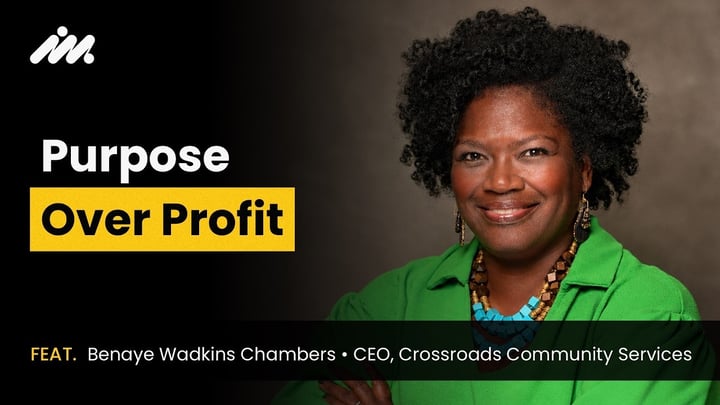
Episode 17 — Purpose Over Profit
Benaye Wadkins Chambers is the president and CEO of Crossroads Community Services, a food distribution and public health organization in Dallas that distributes through 148 ...
-
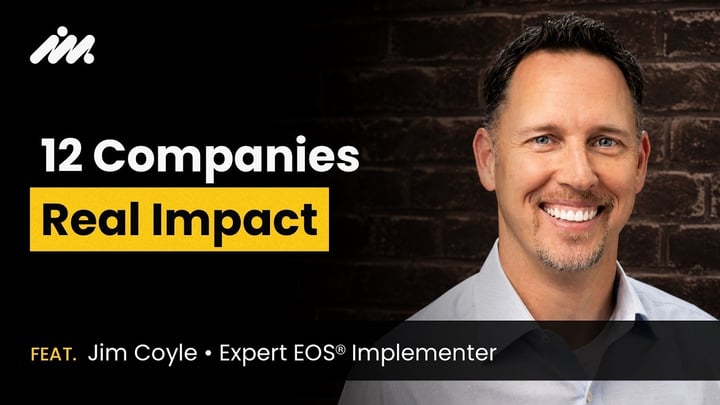
Episode 16 — 12 Companies, Real Impact
Jim Coyle ran 12 companies before he figured out what he was actually supposed to do. He sold candy bars to pay for a school trip to Italy, made beaded jewelry that put him ...
-
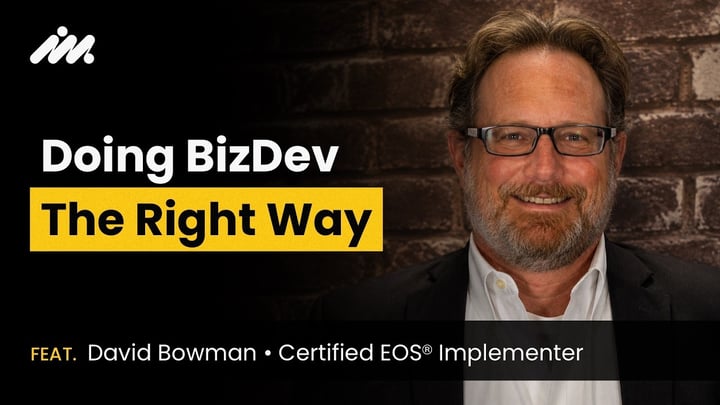
Episode 15 — Doing BizDev the Right Way
David Bowman spent 10 years in the Marine Corps as a helicopter crew chief before realizing he was never going to be the guy sitting behind a desk. After a career in ...