
1,500 Sessions Later, JBS Says EOS Isn't About the Tools feat. Jonathan B. Smith
Jonathan B. Smith, known as JBS, was one of Gino Wickman's first clients. He met Gino at an EO event before EOS® even had a name, and that early bet turned into an Inc. 500 business and a career as an EOS® implementer with more than 1,500 sessions. JBS also spent a decade training with Chris Voss, the former lead FBI hostage negotiator behind Never Split the Difference, and co-wrote Fight Less, Win More to bring tactical empathy into the leadership room. In this conversation with Christine Watts and Kris Snyder, JBS makes the case that team health, not the tools, is 70% of what makes EOS® work. He shares how he reads a room, when he goes off-script with what he calls EOS® freestyle, and the stories behind it: the bird-catching business he helped scale from two states to fifty, the family screaming match he defused by pretending the neighbors complained, and his 93/7 rule for knowing when a session can be saved and when it can't.
Key topics:
Why team health is 70% of making EOS® work, and the tools are the rest
-
EOS® freestyle: structured flexibility, 15% out of the box and 85% facilitation
-
Bringing Chris Voss's tactical empathy and hostage-negotiation skills into the session room
-
The bird-catching business that scaled from two states to fifty
-
Defusing a family screaming match, and the 93/7 rule for when EOS® works
About Jonathan B. Smith:
JBS is an EOS® implementer with more than 1,500 sessions and the co-author of Fight Less, Win More, a negotiation handbook built on the tactical empathy made famous by Chris Voss's Black Swan Group. He was one of Gino Wickman's earliest clients and trains leaders to handle high-stakes conversations in and out of the session room.
Connect with JBS: in/staycuriousjbs
Mentioned in this episode:
Audio Only
Christine Watts
[0:00:00]
Welcome to Impact Moments powered by 90. Today we're joined by JBS, Jonathan B. Smith. JBS was one of Gino Wickman's initial clients, I think his second client we talk about. And he met Gino at an EO event before EOS even had a name. So that really early bet turned into an Inc. 500 business and eventually a career as an EOS implementer. And now JBS has over 1,500 sessions. He's also spent a decade training with Chris Voss, that name you might recognize because he is the former lead FBI hostage negotiator and wrote Never Split the Difference. And now JBS has his book out, the companion book to that called Fight Less, Win More. So we talk a little bit about that and we also get into how he applies tactical empathy in the session room. He's got a lot of great stories about a bird catching business that went from two states to 50 states. He talks about a family screaming match and a really interesting way that he diffused that situation. So you'll really enjoy hearing from JBS. Let's get into it. Hey, welcome to Impact Moments powered by 90. I'm Christine.
Kris Snyder
[0:01:16]
I'm Kris Snyder.
Christine Watts
[0:01:17]
And today we're joined by JBS.
Jonathan B. Smith
[0:01:20]
Jonathan Smith.
Christine Watts
[0:01:22]
When I read your book, I realized why you go by JBS because your name is so generic and I never put that together. So I thought that was a fun little story.
Jonathan B. Smith
[0:01:29]
My parents were quite creative. John Smith doesn't work all that well. J-Lo can be J-Lo, so I'll be JBS.
Christine Watts
[0:01:36]
Perfect.
Kris Snyder
[0:01:37]
And you've worked it into your personal branding effort, right? I mean, I've seen some of that.
Jonathan B. Smith
[0:01:40]
A hundred percent. It's the only way for me to like distinguish myself with a last name Smith.
Christine Watts
[0:01:44]
Yeah.
Kris Snyder
[0:01:45]
Understood.
Christine Watts
[0:01:46]
So you're an EOS implementer, author. Tell us a little bit about how you got your start, how you found out about EOS and became an implementer.
Jonathan B. Smith
[0:01:55]
I was Gino's second client. So I met Gino before it was called EOS. I, uh, he was like bouncing around an EO event, trying to figure out what his next gig was after he sold his business with his dad. I was like, who's that guy with all the energy over there? I want to go talk to that guy. So he was like totally in sales mode. So we were. His second client, my brother, Tyler and I, and it was like $1,500 a session at the time. And we ended up in traction, ended up building an Inc 500 business. But my brother and I built different businesses. We, we sort of worked in that business and went apart and then. In 2013, my brother's like, I was in the Middle East in Abu Dhabi and he's like, I want to come home. And he's like, there's all these people doing EOS, doing really well. You have everything but the network domestically. Come home and become an EOS implementer. So that's when I became an EOS implementer.
Christine Watts
[0:02:51]
Wow. And when was that again?
Jonathan B. Smith
[0:02:52]
2013.
Christine Watts
[0:02:53]
13. Okay. Nice. So what do you think is the biggest difference between how you work with clients today versus what you did when you started? Anything?
Jonathan B. Smith
[0:03:02]
I have 1500 sessions at this point, so just having experience. And I believe that team health is 70% of making EOS work. And so early on, I was just trying to get through like the script of how to get through the day. And now I don't worry about the script at all. And I'm like, how do I manage the humans and get team health and build a high performance team? And if we can get a high performance team, everything else falls into place.
Kris Snyder
[0:03:30]
Right.
Christine Watts
[0:03:31]
So. Yeah. And you, so you're an EOS implementer and you also just wrote a book. So how did you come to that? Tell us about that journey.
Jonathan B. Smith
[0:03:41]
So Mark O'Donnell, who's the CEO and visionary at EOS was my client. He was my apprentice. I always have an apprentice EOS implementer. He was my EOS partner and he became visionary and he said to me, traction and what the heck is EOS sell one for one. So literally like on a go forward basis, they sell sort of an equal amount. So Chris Voss, who was the former lead hostage negotiator for the FBI and author of Never Split the Difference is a client of mine. I architected that business with Chris. And I said, Chris, I want to write a missing manual for Never Split the Difference. Never Split the Difference had sold, has sold 5 million copies to date. So I said, why don't we just build another book that's adjacent to Never Split the Difference? And then Chris will hold the two books up and say, you need to sell both of these books. You need to read both of these books. So that's how we, we got to Never Split the Difference and, uh, Fight Less, Win More. And I trained with Chris for the last 10 years because I didn't want to be on stage and not be able to use, use the hostage negotiation skills myself. So, and it helps in session all the time.
Kris Snyder
[0:04:55]
Yeah, that's, I mean, I can see it, right. From having, I just recently read your book, but having obviously read Never Split the Difference and then understanding how you're trying to facilitate the moment, right. That you're in and using tools.
Christine Watts
[0:05:09]
Yeah.
Jonathan B. Smith
[0:05:09]
And it's really calming. Like I'm just calm. I'm like, you're screaming and I'm like, okay, it's just another hostage negotiation.
Christine Watts
[0:05:17]
What are other things that you feel like it brings to the session room other than like level setting your energy?
Jonathan B. Smith
[0:05:23]
Oh, just infinite confidence that no one, no matter what happens, I can always lean back on my training. So we don't rise to the level of our expectations. We fall to the level of our training. That's Archilochus said that. And so the whole idea is because I've trained so much, it's not that I always get it right. It's just that I have confidence that when things go sideways and as Chris knows, things go sideways. I have confidence that somehow I'll figure out how to win the point.
Christine Watts
[0:05:57]
Well, speaking of things going sideways, we ask people to come to impact moments with a story, a moment where kind of everything changed for them. A decision was made, something happened, and you can really see the ripple effect of what happened after that. Does anything come to mind for you from either like from you being an entrepreneur or on the EOS implementer side? That's a good story related to that. Yeah.
Jonathan B. Smith
[0:06:20]
So one of my, my first clients. So when I started in EOS, one of the deals was you had to get five clients in order to get referrals from EOS. So I had to sort of fight my way to get five clients. And then because Geno knew me, um, I started getting referrals and I closed 10 deals in a row. And one of the deals was with a group down in Roanoke, Virginia. And they, um, catch birds at Walmart. That's what they do. Their business is literally, they solve the, um, nation's retailers, nuisance bird problem. And I'm in the session with, um, I like, it's almost like out of a reality TV show. And I am sitting with them and I just built their economic model on the, on the wall. So not necessarily in the EOS toolbox, but I'm like, if it were me, this is how I would build the business. And I have a master's degree in accounting and lots of entrepreneurial experience.
Christine Watts
[0:07:20]
And.
Jonathan B. Smith
[0:07:21]
We built this economic model. At that time we had two states. We have all 50 states at this point and are the leading bird catcher in the country. I even have my own shotgun that they bought me that they engraved with my nickname is the Herd Sire down there. So they engraved it with the Herd Sire. So when I go there, if I want to go hunting with them, I have my own shotgun.
Kris Snyder
[0:07:47]
I started to chuckle because of this, the way you were positioning what they do. And I'm always fascinated by these nuanced niche businesses, right? That somebody is going to do that. And that's cool.
Jonathan B. Smith
[0:07:59]
It's super cool. And the reality is I like to say that it's just a business. And like, I think of a business as an assembly line. We invest money in marketing. If we have a good core process, the marketing hands off a marketing qualified lead to sales. That's a sales qualified lead. Sales closes the deal, hands it off to operations. Operation goes and delivers it. hands it off to finance, they invoice it, we make some money, put some back in the bank, and then recycle the money. No matter what they're doing, that's what the business is.
Christine Watts
[0:08:30]
So was you kind of doing that and building that economic model for them live in the session room? That's like very different than typical work you would do facilitating. It seems like you were really comfortable with that, even though it was your third client.
Jonathan B. Smith
[0:08:45]
I'm an entrepreneur. So like, I think my belief is that you should work with an EOS implementer who's an entrepreneur. Cause they will understand the journey that you're walking through. I think there's a difference between an entrepreneur and a coach. That is my personal preference. I, uh, and, and, and not EOS's position, it's my position, but, um, We get into sessions and our job, I think purity, purity or the way EOS should be delivered is to deliver, get the client what they want from their business and do your best to follow the EOS process. But sometimes that includes building their economic model.
Kris Snyder
[0:09:22]
Especially if they're not going to get there. You couldn't have coached them there on a whiteboard if they don't have the background to actually derive the model.
Jonathan B. Smith
[0:09:30]
Yeah, they didn't have the background, but what they were, they were like four Eagle Scouts. So as soon as I showed them the map, they were off to the races.
Christine Watts
[0:09:40]
I love that analogy. Are there other moments that come to mind of like a going rogue scenario that ended up working out well?
Jonathan B. Smith
[0:09:47]
I call it EOS freestyle.
Christine Watts
[0:09:49]
I like that. Okay, nice.
Jonathan B. Smith
[0:09:51]
And I also say that I do, I believe in structured flexibility. So like we have to deliver 15% EOS, like out of the box. And then the rest, the last 85% is actually facilitation. How do you get the team to do what you're trying to, you want to get them to do? There are so many, so many moments in my EOS journey where one of the moments is, Chris will appreciate this. I had two family members screaming at each other, primal scream. And, um, I don't know how to stop them from doing that. So I go to the door, I open the door and I say, the neighbors said it's really loud in here. Can you stop screaming? Well, the neighbors weren't at the door. I just made it up. And then I was like, okay, so timeout. We have a choice. You guys can go walk around the block and figure it out. Or we can, we can end this session now because my theory is family first. I'm not going to destroy a family over a business. And like they fixed the family and now the business. So the really interesting thing is the business now, we got rid of like all the bad clients. I literally wrote their 20. They were working with GCs, 20 GCs. I'm like, do you make money with them? No. Do you make money with them? No. Do you make money with them? Yes. All right. So keep the six that we make money with. And then what happened was, so volumes came down, but then what happened is the people who are bidding on jobs that didn't make economic sense, went out of business and they had bonded projects. And those bonded projects then went to my client at full margin. So my client, they sent me a note. They're like, I'm coming to pick you up. in the Maserati because the Maserati was on the, on the, um, three year picture. So, um, yeah, that's the kind of work that we do.
Christine Watts
[0:11:52]
That's awesome.
Jonathan B. Smith
[0:11:53]
He took a picture literally with the Maserati at the store when he was getting it. Cause he wanted me to know.
Kris Snyder
[0:11:57]
Well, that's, and I think for those that haven't experienced it, that's the level of intimacy, the relationship that gets created by some of those moments, right? And the appreciation that happens with it as well.
Christine Watts
[0:12:07]
Yeah.
Jonathan B. Smith
[0:12:08]
And no one else is willing to have that conversation with them because the beauty is that we're independent.
Christine Watts
[0:12:14]
Yeah.
Jonathan B. Smith
[0:12:15]
And if they fire us. okay, I'm willing to take the risk. I think it's more important that you have your family than I have another session with you. And, and I know it's just really counterintuitive. I know that if I enter the danger and do the work, they're more likely to have another session with me than if I, you know, try to protect my wallet.
Christine Watts
[0:12:35]
Yeah.
Kris Snyder
[0:12:36]
That's been my experience as well. Like they, they're, they're paying you for it. They need you to do it right. To go into the danger. And I, I do, you know, I'll, I'll reflect back that it's hard when you first get started. Cause I just wanted to be in a session room.
Jonathan B. Smith
[0:12:48]
Of course. You just want to work.
Kris Snyder
[0:12:49]
It was, it wasn't, I mean, money's nice, but it was mostly about the reps. And so you're like, what if I, if I enter the danger and I don't get to keep the client, I get less sessions right now.
Christine Watts
[0:12:59]
Yeah.
Jonathan B. Smith
[0:12:59]
So like having the confidence to be able to have those moments is really powerful.
Christine Watts
[0:13:05]
What's the timeline that that happens in? Like that intense of a moment where they're screaming at each other, like they come back the next quarter, like, is it getting worse before it gets better in some of those scenarios?
Jonathan B. Smith
[0:13:19]
Now, so it's funny that in the book, 93% of the time we can use the hostages and negotiation skills to get someone out. 7% of the time you have to use SWAT. So the joke is like, it doesn't always, EOS doesn't always work.
Christine Watts
[0:13:35]
Yeah.
Jonathan B. Smith
[0:13:35]
So like there's 7% of the time where you're like, these people are cuckoo bananas. Either I'm not capable of handling them. Like Chris, you take the client versus me, maybe he can do a better job than me, or More often than not, the client's just cuckoo bananas and it's not going to work.
Kris Snyder
[0:13:51]
I think one of my leading indicators is when the, you know, visionary CEO can't let go. And they're fighting that they're fighting any of the delegation and now they've got 12, 12, 13 direct reports in the room. And you're like, this is not how this works. Like you're not, you're not seeing it. And then that's the moment where, you know, you go have the, I have to go have the conversation. Like we cannot have 13 direct reports in this room. It's not working.
Jonathan B. Smith
[0:14:15]
Yeah, I've had one time I'm in the room and there's two people fighting with each other. And I just go, this is not going to work. And the CEO says, you come with me and told the person he was fighting with that. So he went and sort of had this separate conversation and in the conversation, he fired her on the spot in the meeting.
Christine Watts
[0:14:38]
Wow.
Jonathan B. Smith
[0:14:39]
And she left and the meeting was over.
Christine Watts
[0:14:44]
What did you do in that scenario?
Jonathan B. Smith
[0:14:47]
What was I going to do?
Christine Watts
[0:14:48]
It was the 7%?
Jonathan B. Smith
[0:14:51]
Oh, the client stayed. It was just this person got fired because I was like, this is not going to work. Oh. How this is going. And the client just, that day the energy was broken. There was no way to recover the energy at that point. They needed to go figure out what they needed to do. That was just bizarre. Like they didn't tell us about that in bootcamp.
Kris Snyder
[0:15:12]
No, no. I was probably early on my sixth, seventh client, maybe, uh, we were doing accountability chart and you could tell that the CEO president and the COO did not trust each other. And we're three and a half hours into this accountability chart and we can't get, because they won't agree. And so I went there and I was just like, look, team, I'm just going to reflect for a moment. Here's what you said. And here's what you said. I think we have a trust issue. And then pause and I'm like, you know, do you trust him? The answer is no. I'm like, do you trust him? The answer is no. I'm like, well, then I know what we're going to do because this doesn't work. Right. Not the level that we have to get to. And so we, we went ahead and kept going. I'm like, we'll come back because let's still try and make progress. I got a call from the CEO the next day. He's like, I fired him. I was like, they've been together for a long time. Right. It's like, okay, that's, that's the right thing to do because we can't make forward progress.
Christine Watts
[0:16:04]
Are there certain things like those hard moments that happen in one quarter when you come back the following? Are there certain things that you do with the team in order to make sure like you can make progress in that day? Because you're only with them for that one day. It's not like you've been with them the entire time to kind of manage the situation forward.
Jonathan B. Smith
[0:16:23]
So there's different ways it happens. Sometimes it's like, I don't know, they're gone three months ago and we don't have to deal with it. I've had it where someone dies on the team and you're like, okay, the most important thing before we even check in is let's take a moment and, and just process that as a team. Cause we were doing all this important work together and it was pretty intimate. And then. That person's no longer there. So that's, that happens. And sometimes it's like, you just take the first hour and you go like, okay, we can look back for the first hour, but in order to make this work, we have to look forward after the first hour. And if usually they're done in the first hour and if they need two hours, then you do two hours, you sort of, situation drives tactics.
Kris Snyder
[0:17:12]
I had a heart attack during a session one time.
Christine Watts
[0:17:15]
You personally?
Kris Snyder
[0:17:15]
No, no, no, sorry.
Christine Watts
[0:17:16]
Oh, gosh.
Kris Snyder
[0:17:18]
The CFO had a heart attack during the session, which threw the session off quite a bit.
Christine Watts
[0:17:21]
Wow.
Kris Snyder
[0:17:22]
It was an annual, so we had the next day to try to fix what happened, but he ended up okay.
Christine Watts
[0:17:28]
Wow.
Kris Snyder
[0:17:28]
But it definitely threw the rhythm of the whole thing off, and rightfully so. But it was like, okay, so we were in team health at the time. So it's like, all right, I don't know if we're the cause of that, but let's, uh, see how we can repair the day and, and try to make progress even tomorrow. Things happen. I mean, it is, it's unpredictable.
Jonathan B. Smith
[0:17:47]
I had a client, we were at a construction client at the time I was working out of his office. They were very interesting characters with like all kinds of trucks, like more trucks than I've ever seen and machines and snowmobiles and four wheelers and. Someone in the yard was using a grinder without a guard on it and the grinder went up his arm. So someone runs into the office and says, um, he caught his arm and it's bleeding everywhere. I get a spurting out.
Christine Watts
[0:18:18]
Yeah.
Jonathan B. Smith
[0:18:19]
So the owner goes out, takes his belt off and tourniquets his arm. Ambulance comes and takes a guy to the hospital. They're like, they come back like an hour later and they're like, you know, if you didn't tourniquet his arm, he was going to die.
Christine Watts
[0:18:34]
Wow.
Jonathan B. Smith
[0:18:35]
And I'm like, after that happened, I'm like, would you guys like to stop today? I continued the day. I was like, that's wild. Oh my gosh. Like you couldn't make the story up. It's crazy.
Christine Watts
[0:18:50]
Well, I'm curious to switch gears for you to a failure moment. We like to ask our guests, like, you've kind of reflected on a lot of like the success that you've built and had, and what's a moment you look back on and say, man, this was a really big fuck up for me. And like, here's the lessons that I learned from this moment and what I would change.
Jonathan B. Smith
[0:19:08]
I'll tell you one that's like really simple. I called someone's wife in the room the wrong name.
Christine Watts
[0:19:15]
Oh no.
Jonathan B. Smith
[0:19:15]
And like, she didn't have like a sense of humor.
Christine Watts
[0:19:18]
Oh no.
Jonathan B. Smith
[0:19:19]
And so I was like, from then on, every time I have a session, I get everyone's name in the morning. I sit down for breakfast. I write it down so that, and then I try to put it in my head because like a lot of times if If I haven't worked with them enough, or if a new person comes on the team, I'll forget the new person's name. So I just don't want to be in a position where I never did that again after that. I'm super embarrassed, which just seems like a simple mistake, but it was, I was not happy with myself at that point.
Christine Watts
[0:19:52]
Have you had a moment like that before too?
Kris Snyder
[0:19:55]
It was at an annual and we had gotten to know each other really well, like the team and I, and I would say that we were very friendly. And so we were at dinner and I thought we were just having fun, but I was busting chops and I shouldn't have been. And I didn't realize that I offended her, but it wasn't like... I thought she was playing along. And there's just those lines sometimes that when you're not paying attention and you let your guard down, cause we're not supposed to be their friends. It's not, we're not there to entertain them at dinner. Right.
Jonathan B. Smith
[0:20:26]
That's.
Kris Snyder
[0:20:27]
And so it was just a, it was a moment. I got a call from the visionary the next day. It was like, Hey man, that wasn't that cool. And I'm like, no, you're a hundred percent right. Like I'll own it. I'll call her and apologize.
Christine Watts
[0:20:37]
Cause I just thought we were all. Sometimes people do that.
Kris Snyder
[0:20:41]
Right.
Christine Watts
[0:20:41]
Yeah. There was not the time to do it. It wasn't the place.
Jonathan B. Smith
[0:20:44]
I'll tell you another one, the, the bird guys, they're very Christian.
Christine Watts
[0:20:50]
So they don't swear. I was swearing in session. Cause I'm from New York. We consider that to be like, it's like, you know, salt and pepper. Yeah.
Jonathan B. Smith
[0:20:59]
So the guy takes me aside. He's like, look, we don't swear in session. I'm like, oh, okay. So I stopped swearing.
Christine Watts
[0:21:07]
Yeah.
Jonathan B. Smith
[0:21:08]
And then if I do swear, which I almost never do, they mark down the session and write it on the board. So then I told them that when I'm in New York, it's sanctuary and swearing doesn't count. So if I'm on the phone and I'm on the phone with them in New York, I tell them I'm in sanctuary and I'm like, and by the way, I bought the house next to your house so your kids could go to sanctuary. Like, so we have a whole thing that goes on with that. You know, they were very nice about it and it all worked out in the long run. It was just about communicating and understanding what the boundaries are.
Christine Watts
[0:21:40]
Yeah.
Jonathan B. Smith
[0:21:40]
Well, that's meet them where they're at moment. And that's what, you know, I still use the term sometimes I get to think about getting into character for the client and how, how they behave. Cause I don't want to affect their culture. It's their culture, not mine.
Christine Watts
[0:21:53]
Sure.
Kris Snyder
[0:21:54]
Right. And so how well can I meet them where they're at and how, how they behave. I have one client who's in construction. And they dress down, especially in the summertime. So I was getting ready to walk out. My wife's like, are you going to work? Like, yes, because that's how they're all going to look today. And that's what we're going to do.
Christine Watts
[0:22:12]
Yeah.
Kris Snyder
[0:22:12]
Because I don't want to show up in a suit if they're going to be in flip flops and short and a t-shirt like that.
Christine Watts
[0:22:17]
Yeah.
Kris Snyder
[0:22:18]
Doesn't doesn't feel quite right.
Christine Watts
[0:22:20]
Well, it's interesting you guys have both talked about like ways that you prepare for the session of like figuring out where they are. And I know you look at your list of words and figure out what's going to resonate with them and help move them forward. Or like you're like, I'm sitting with the names and I'm like really like thinking about this client ahead of time. Are there things that you would want leadership team members to do coming into the session to like prepare and get their mind right?
Jonathan B. Smith
[0:22:44]
Well, I always think that they should really like it's, we always do better if they think of what the rock should be for the quarter or what are the big issues. Cause you only, you only have like a hundred pennies of energy to deal with in the day. So every penny of energy or. you know, thought processing they'd need costs.
Christine Watts
[0:23:06]
Yeah.
Jonathan B. Smith
[0:23:06]
So to the extent, like my best team show up and they like, they have rocks that are maybe built.
Kris Snyder
[0:23:12]
Right.
Jonathan B. Smith
[0:23:12]
And then we polish them. Like I did, that's like, wow, that's beautiful.
Kris Snyder
[0:23:16]
It is beautiful. And it's, especially if they can take a clarity break, even revisit their VTO ahead of time, such that we're not looking at it for the first time since early in the, yeah.
Christine Watts
[0:23:27]
Yeah.
Kris Snyder
[0:23:27]
And then, and they have thoughts on it, right? So when we ask the questions about how well, or this is, is this activated in VTO? Someone's already started to formulate an opinion. Um, you know, the rock thing is awesome. I think department priorities, so not the visionary, not the integrator, but if the leaders can think about what their department priorities are for the next period, that should have a relationship to the rocks, but to be able to discuss that and say why they're choosing these rocks, because what are my department priorities? That's at a little bit larger company most of the time, but you know, it's just that preparation. thinking it through before we're sitting there trying to use all the rest of the pennies in the jar and get to the right answer.
Christine Watts
[0:24:03]
Do you guys like prompt your clients to do that work ahead or?
Jonathan B. Smith
[0:24:07]
I mean, we ask them, we ask all of them to do the same thing, and some do and some don't.
Christine Watts
[0:24:13]
Yeah.
Kris Snyder
[0:24:14]
So typically there's a call with the integrator, right, or visionary. Most of the time it's the integrator ahead of it. I try to do that like a week in advance so I can find out how's team health going, how are we doing on the numbers, the ROC percentage. And then two days in advance, I send out their very much standard prep email to remind them. I don't know what the percentage is, 50% of the time they don't read the email. They're still showing up.
Jonathan B. Smith
[0:24:36]
50% of the time they don't have the call.
Kris Snyder
[0:24:38]
Right.
Christine Watts
[0:24:38]
Yeah.
Jonathan B. Smith
[0:24:39]
And there's some that come in and they're super organized and there's some that come in and we just wing it.
Kris Snyder
[0:24:45]
The opportunity there is to reflect if they're not getting what they want out of the system is to reflect back on the work that is actually being done and how it's being done. Right. Because there's only so much you can get accomplished, you know, an eight hour a quarter if they're not doing the work.
Christine Watts
[0:24:58]
So what are you reading, watching, or listening to to help you grow personally or professionally right now?
Jonathan B. Smith
[0:25:06]
I usually pick something that I'm going to do for the year. Oh. And I pick one thing because I'm not that good at getting good at lots of things. So right now I'm working on keynote speaking. So I just hired a keynote coach.
Kris Snyder
[0:25:22]
Cool.
Jonathan B. Smith
[0:25:23]
And I'm just working on keynotes and storytelling. Um, so less reading and more. I'm an acting coach and I'm a keynote coach and I'm a story coach. And how do we go get this right? And I'm going to go get in front of a bunch of audiences and I'm going to get feedback. And 18 months from now, um, my hope is that I'm a good substitute for Chris Voss because he's the best in the world at what he does. And, uh, the only way to do it is go trade it and.
Kris Snyder
[0:25:49]
And you know. Rinse and repeat, right?
Jonathan B. Smith
[0:25:51]
Yeah, exactly. But that's sort of how I am every year. I go do something this year. Last year it was get the book done. The book needed to be five star. What was it going to take to get the book done? We're going to launch the book and do the personal brand this year, but there's a team that's working on that. So my personal effort is on this keynote.
Kris Snyder
[0:26:10]
Right.
Jonathan B. Smith
[0:26:11]
And how do I unlock? It's like voice and physicality and storytelling.
Christine Watts
[0:26:17]
It's really interesting. I love that elevated approach of like the annual goal for myself, and then that can direct kind of the content I'm consuming and what I'm really putting my time into. I know you like the concept of the personal VTO. Yeah. It's very similar.
Kris Snyder
[0:26:33]
Mine's, so I've been, the last year or two, I've been spending time on Phil Stutz's work. And everyone has this concept of flow, so it's not unique to Phil and how he does it, but he's got this other concept about lower channel time and higher channel time. And lower channel is, is where, you know, you're never going to find flow because it's, you know, it's your vices. You're spending time with your vices versus doing the things that you find energy and flow into. And so this, this year, my, uh, my theme is find flow. And so when I start to journal, I write that at the top and then I start to think about what am I doing? How am I being intentional? And then sometimes I just need to journal, like, like what's, what's processing in order to let that, that flow come.
Christine Watts
[0:27:15]
Yeah.
Jonathan B. Smith
[0:27:16]
And one of the things that in learning the, the hostage negotiation techniques or tactical empathy, I built a whole model for how do you learn these skills? Cause Chris went to Quantico. I'm just a business guy who happened to want to figure out how to use these skills in a session room.
Christine Watts
[0:27:36]
Yeah.
Jonathan B. Smith
[0:27:36]
So I did journal. I have a journal. There's actually a log book in the back of the, of this book. And the idea is you need to journal every single day, only one item. So with my quick start, I'd do eight in one day and then I would skip for the next eight days. So you have to actually journal every single day, one piece. And that actually makes a better habit.
Kris Snyder
[0:27:56]
Do you begin or end it? Do you begin your day with a journal or end it with a journal?
Jonathan B. Smith
[0:28:00]
I usually begin, cause I get up early.
Kris Snyder
[0:28:02]
Yeah, me too.
Jonathan B. Smith
[0:28:03]
And then I'm like, then I'm ready to roll. By the time the end of the day comes, I'd probably like just crash.
Christine Watts
[0:28:08]
Yeah. Very similar.
Kris Snyder
[0:28:10]
That's where my energy's highest and my head's clearest, right? So it's typically I'll get up and before I work out, I find I'm better off just getting a cup of coffee, sitting down and doing it. Tell me about, I'm interested in the, um, the keynote. Like, is that, is there a system that the coach has? Is it like just his experience or her experience?
Jonathan B. Smith
[0:28:33]
No, there's a whole system.
Christine Watts
[0:28:34]
Okay.
Jonathan B. Smith
[0:28:35]
And then like, it all goes back to acting.
Christine Watts
[0:28:38]
Okay.
Jonathan B. Smith
[0:28:38]
A lot of it goes back to acting. And then some of it goes back to like marketing and advertising and like, how do you structure a story?
Kris Snyder
[0:28:45]
Right.
Jonathan B. Smith
[0:28:46]
And I'm like, you have poetic license. I'll tell you the stories, you go structure it so it works and just tell me what to do and coach me and I'll go execute it and then I'll see how it works. And then from there I'll try to make it my own.
Kris Snyder
[0:28:59]
Very cool.
Jonathan B. Smith
[0:29:00]
But yeah, it's pretty interesting.
Kris Snyder
[0:29:02]
Well, good. I'm looking forward to it.
Christine Watts
[0:29:05]
Yeah. We were actually talking about the concept of a keynote earlier and how much harder it is because you are up there alone as opposed to like feeding off of like energy and questions in the room, like you might get in like a webinar or smaller setting.
Jonathan B. Smith
[0:29:17]
Very different from facilitation or workshop. And so I'm like, I don't know how to do it. When Chris learned it, he went through the National Speakers Association. They have like a course and he was super intense about doing it. And I could, I missed the course in New York, the date. So then I just hired a keynote coach.
Kris Snyder
[0:29:39]
I like extemporaneous.
Christine Watts
[0:29:40]
I like crowd work. I like workshop. Um, I respect the hell out of a performance because that takes the time to mastery and getting there. Yeah.
Jonathan B. Smith
[0:29:48]
And then, and then once you know how the keynote works and you watch a keynote speaker, you're like, oh, I know what that is.
Christine Watts
[0:29:56]
Yeah.
Jonathan B. Smith
[0:29:56]
As opposed to, um, oh, why is the person on stage so alive? And then when you talk to them, when they get off the stage, you're like. That's nice. That's the same person. I've had that happen to me with a keynote speaker.
Kris Snyder
[0:30:09]
I'm like, God, it's a totally different personality.
Christine Watts
[0:30:11]
Yeah.
Kris Snyder
[0:30:13]
Back to getting into character, right? Like that they're getting into character for the keynote.
Christine Watts
[0:30:17]
Well, that's all we had for you today. So thank you so much for joining. Really excited to hear about the book and how you're applying that in the session room. So thanks for all the insights.
Jonathan B. Smith
[0:30:26]
Thanks for having me. Certainly appreciate it. And go 90.
Christine Watts
[0:30:30]
Thanks for watching Impact Moments Powered by 90. We'll see you next time. I always love talking with JBS, and he's always got these interesting nuggets that stick with me. He said team health is 70 percent of making EOS work. The tools matter, but the humans in the room matter more. And the EOS tools are really about managing that human energy. And that lines up so well with really every guest that we hear on this show. The system gives you the structure. The breakthrough really comes from the people around the table actually trusting each other to really move forward, say what needs to be said, even when it's hard. So even when people might get fired up in the middle of a meeting, EOS and an implementer and all of those things allow you to build the trust to have those conversations and actually move the business forward. So I hope you guys enjoyed that conversation as much as I did. If you enjoyed listening, I hope that you like, subscribe, share with somebody that needs to hear it, and we'll see you next time.
Recent Podcast Episodes
-
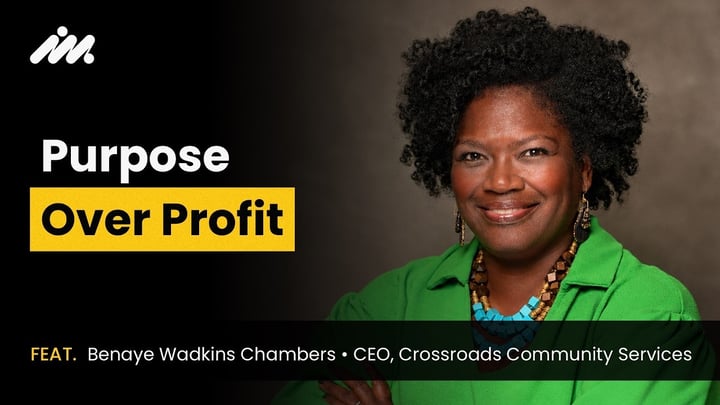
Episode 17 — Purpose Over Profit
Benaye Wadkins Chambers is the president and CEO of Crossroads Community Services, a food distribution and public health organization in Dallas that distributes through 148 ...
-
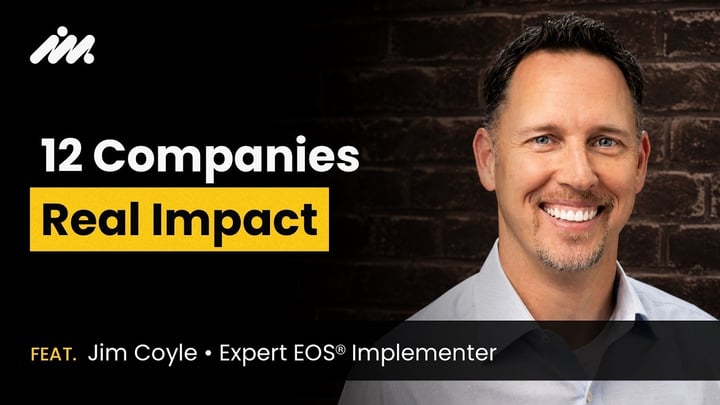
Episode 16 — 12 Companies, Real Impact
Jim Coyle ran 12 companies before he figured out what he was actually supposed to do. He sold candy bars to pay for a school trip to Italy, made beaded jewelry that put him ...
-
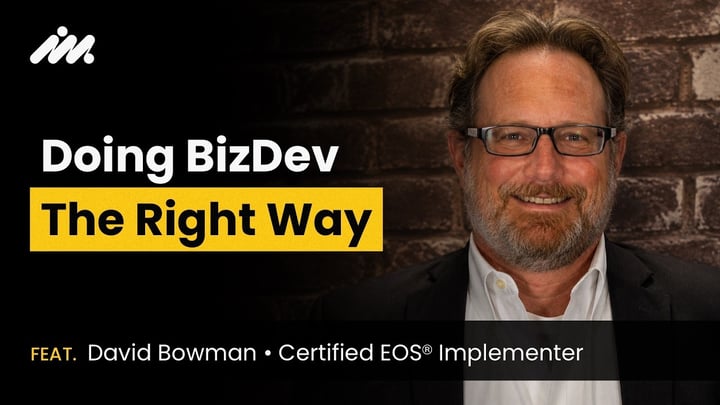
Episode 15 — Doing BizDev the Right Way
David Bowman spent 10 years in the Marine Corps as a helicopter crew chief before realizing he was never going to be the guy sitting behind a desk. After a career in ...