
Why Self-Implementing EOS Nearly Broke His Business feat. Jay Tankersley
- Why self-implementing EOS stalls most CEOs, and what finally made it work
- Entering the danger: the session-room silence that answered a trust question nobody wanted to ask
- Spotting an opportunity hiding in plain sight: the EOS investment fund thesis
- Why running on EOS is a risk-mitigation advantage in private investing
- Leading as a visionary vs. facilitating as an implementer
- Book: Visionary by Mark C. Winters
- Book: The Five Dysfunctions of a Team by Patrick Lencioni
- Podcast: The Mel Robbins Podcast
- Docu-series: Soul Power: The Legend of the American Basketball Association on Prime Video
Connect & Subscribe:
- Jay Tankersley: https://meritage.vc | LinkedIn: in/jaytankersley
Audio Only
Christine Watts
[0:00:01]
Welcome to Impact Moments, powered by 90. Today, we're joined by Jay Tankersley. Jay spent 18 months trying to self-implement EOS inside his own company, says it nearly broke him, and six months with a professional EOS implementer changed everything for him and for his business. That experience launched a 10-year career as an EOS implementer, the founder of Meritage, an investment fund built specifically for companies running on EOS. And in this conversation, Jay shares two impact moments. One from the session room where a 30 second silence answered a question that nobody really wanted to ask. And another recognizing an opportunity that was hiding in plain sight. We talked about facilitation and trust and how he works with his clients, the mistakes that every new EOS implementer makes. So it's a really good one. Let's get into it. Hey, welcome to Impact Moments powered by 90. I'm Christine.
Kris Snyder
[0:01:02]
I'm Chris Snyder.
Christine Watts
[0:01:03]
And very excited to be joined by Jay. Thanks for being here. Yeah.
Jay Tankersley
[0:01:06]
Thanks for having me. Excited to be here.
Christine Watts
[0:01:08]
Yeah. So tell us a little bit about yourself. You're a US implementer. How did you kind of find yourself in this world? What got you started?
Jay Tankersley
[0:01:15]
Yeah, right before becoming an EOS implementer, which was a little over 10 years ago now, I was running a business. It was actually a business that I did through entrepreneurship through acquisition. And so I've never been the visionary who has 20 ideas and be able to do that. But I always wanted to run my own business. So I ended up buying a business, uh, that was based in Omaha, Nebraska. I relocated it back to Denver. Things were going well, but I just felt like I was spending way too much of my time kind of on the nuts and the bolts of running the business. And that's when I read the book traction. Um, and like so many, I'm like, Oh, there's the missing link and I'm going to do it. There it is. And I tried foolishly to self-implement for 18 months and I failed miserably. And then finally kind of got wise enough, hired an implementer. We got more done in the next six than we had in the previous 18.
Christine Watts
[0:02:07]
Wow.
Jay Tankersley
[0:02:07]
And, um, that was kind of the start of my EOS journey. And, you know, part of that was I ended up getting exited with all due love and respect from my leadership team. They said, Jay, nope, you're not the right person to run the day to day, which they were correct.
Christine Watts
[0:02:21]
Right. Yeah.
Jay Tankersley
[0:02:22]
And so when they kicked me out, needed something to do with my time.
Kris Snyder
[0:02:25]
Nice.
Christine Watts
[0:02:26]
I'm always curious about that journey because I think it's common for the self-implementer to try EOS, it's tough, and then they either are going to quit EOS because they think that's wrong or they go the implementer route. What made you feel like EOS was still the right fit and to go get an implementer as opposed to saying like, this is the wrong system for us?
Jay Tankersley
[0:02:47]
Yeah, that's a great question. I think it was self-reflection on myself, realizing that I hadn't truly given it a fair shot. And I found that the real challenge for me was twofold. Number one was as the CEO, It wasn't a collaborative conversation and we were going through kind of the democratic process of EOS and I wasn't sitting shoulder to shoulder with my colleagues. I was, they were viewing it as a directive. And so if I'd ask a question, they'd view it as a statement. So I think just the opportunity to step out of that. And then I also found it really, really hard. to facilitate and participate at the same time. And so I think it was just looking back and self-reflection where I was like, before throwing the baby out with the bath water, I really need to give this a good, honest college try.
Kris Snyder
[0:03:40]
I think we see this in our numbers at 90. So they say in the market, 90% of the companies running on EOS are self-implementing EOS. 50% of our 18,000 are self-implementing.
Christine Watts
[0:03:53]
Yeah.
Kris Snyder
[0:03:54]
But what we can interpret for most of that data means that they're running a level 10 meeting.
Jay Tankersley
[0:03:58]
That's right.
Kris Snyder
[0:03:59]
And they put some stuff in the VTO. But it's not, you know, six key components, 80% strong. And I think that's, there's, there's probably been a few self-implementers I've met along the way where the Delta was somebody went deep to be the EOS champion and they had to almost go to the level of being an EOS implementer to make it work. Almost. And that's, that's the level of time commitment. It's just, it's hard if you're actually running that business.
Christine Watts
[0:04:25]
Yeah.
Jay Tankersley
[0:04:25]
And everybody, I mean, that makes sense. That jives with what we experienced. We were, you know. Sure, we were running L10 meetings and the L10s were, that didn't change very much. We had rocks, that didn't change very much. But as we're reading the book, accountability chart, you read that chapter, it's just, whew, it's hard. I'm not going to do that for a process.
Kris Snyder
[0:04:44]
That feels hard.
Jay Tankersley
[0:04:45]
I'm not going to do that. And so, so I think, you know, we were very much a victim of, you know, kind of, hey, here were the things that either resonated with us because they weren't going very well or, you know, kind of felt easy to implement. It was the hard stuff or the kind of stuff that really adds that, that depth and that importance that, that we avoided.
Christine Watts
[0:05:07]
So you exit your business and then do you go right into being an implementer?
Jay Tankersley
[0:05:12]
I did, I exited the business. I remained as executive chairman of that business. Um, and so I really wanted something to fill my time and needed something to fill my time. And I had just loved EOS, um, and what it had done for our organization. And so, um, I went out and, you know, spent a weekend with Gino and Peyton and drank some orange Kool-Aid and that was 10 years ago. So, so that was kind of how I got to the community.
Christine Watts
[0:05:40]
Yeah. And so that was, that was pretty early on then. You were in one of the first group of implementers then, if it was 10 years ago.
Jay Tankersley
[0:05:47]
I believe I was implementer 118 joining the community. And so at that time you could show up and give everybody a hug and you still had two hours left of the cocktail party.
Christine Watts
[0:06:01]
That's awesome. So what's been one of the biggest changes that you've seen with like working with your clients over the last 10 years, do you think?
Jay Tankersley
[0:06:09]
I think the thing that, you know, change with my clients, um, I actually think that the more that I've implemented and the more that I've gone through and the more opportunities, it's, it's almost like peeling back another layer of the onion. And so the depth and the richness of the tools and the understanding as you implement them and you see kind of how your clients are utilizing them and what they're doing. is I think when you start, and when I started my EOS journey, it was, you know, sure, these are great tools, but now the context and the connection of those tools to where it is in the depth of them, I think that's, that's been the biggest change for me is, you know, and I think that learning will continue to progress year after year.
Christine Watts
[0:06:54]
Like you're going deeper and you're helping your clients like go deeper faster. Yeah.
Jay Tankersley
[0:06:58]
We're going, I'm going deeper, but also my understanding of the tool is going deeper. And so the application of it is even more impactful.
Christine Watts
[0:07:07]
Have you found the same thing over time too with like how you've worked with clients?
Kris Snyder
[0:07:12]
I think it's, you can't sell or implement beyond your confidence. And with time and experience, you'll even enter the danger more when they go, I don't think we're going to do process yet. And you're like, well, we keep issue solving on it. So what do you want to do?
Jay Tankersley
[0:07:28]
That's right.
Christine Watts
[0:07:28]
Right.
Kris Snyder
[0:07:29]
Like you don't fix it or you don't. And it's that, it's that being comfortable and confident, even with other stories. Cause often this happens to me where they'll be like, well, I don't know that I believe you in that scenario. I'm like, okay, I have 10 more clients. You want to talk to them?
Christine Watts
[0:07:43]
Yeah.
Kris Snyder
[0:07:43]
Because you're just not where they're at. And if you just follow this process, you'll get the processes in and you'll get your relief.
Jay Tankersley
[0:07:50]
And I also think you become more authentic yourself when you have that, as you said, when you have that understanding and that depth and you know, kind of what's next and how to think about things. Now you can bring your own personality to every session and every story. So you're not saying, oh, well, how do I teach this? How do I do that? You're getting those consistent reminders, but it's like, okay, well, let me, Let me bring a story from my personal life. Let me bring a story from my past and here's how it applies and here's the mistakes I've made. And I think just being able to bring your authentic self really allows you, you are allowed to do that when you have that mastery and that depth within each of the tools.
Christine Watts
[0:08:35]
Yeah, that's such a good point. Cause it's like the, why somebody would hire you as opposed to somebody else. And like every company has a different culture and every employer has a different style. And so making sure those things mesh.
Jay Tankersley
[0:08:45]
That's right.
Christine Watts
[0:08:46]
Yeah. Well on this show, Impact Moments, we like our guests to bring that story or aha of a thing that happened where you could then go through it and see the ripple effect of what happened. Um, so what was the impact moment that you brought to share today?
Jay Tankersley
[0:09:02]
I'll talk about it for, you know, kind of two different impact moments. Cause you know, part of, you know, kind of the work that I do is not only EOS implementation, but, uh, we also have a, I also put together a, uh, a private investment fund that, that invests in EOS companies. And so I think I've, you know, kind of really two impact moments, one on each side of them, but I'll start with the, on the implementation side is I remember it was probably three or four years into my journey. Um, and I've been working with the team is actually the. third client that I ever worked with. And we were at a session and for a long time, they had struggled with an individual on the team. It was absolutely the right person, but they couldn't find a seat for them for a variety of reasons to be able to do that. And I think there was fatigue from the team. And this is, you talked about entering the danger. And, um, it was the opportunity where I had known for a couple of quarters that the team was losing trust in this team member. And, you know, because it was my third client, I loved them. I was early in my journey. We're always trying to protect a little bit and say, Ooh, do I do this? And then, you know, I think for me, it was, you know, the bravery just to say, well, let's pause here. And I asked the team, we went around the team and I said, does anyone trust this individual? And everyone stopped us quiet, which felt like for hours, but it's probably 30 seconds. And that person was in the room, they were in the room and you know, he knew the answer that was coming. I think everybody else knew the answer. And it was nobody in the room trusted him.
Christine Watts
[0:10:41]
Wow.
Jay Tankersley
[0:10:42]
And, you know, so then to be able to, you know, see that and have that, you know, opportunity and then an authentic conversation around it and tear filled and whatnot, but then him exiting the team on his own will with love and respect, it was the right outcome. And then that freed up the organization and that, you know, I had the good fortune to work with him for a number of years afterwards. But the punchline of that story is with that move as the catalyst, they were then, you know, in a few years able to acquire the largest competitor that they had and, you know, kind of really are on a trajectory to be pretty, pretty remarkable.
Kris Snyder
[0:11:26]
It's such a great story for one of the reasons we wanted to do this podcast is not just for the other implementers that will listen, but hopefully for some of those clients that are, because they, they think that they're uniquely them and they are just, their patterns are similar to the same. And there's, you know, that I've seen that myself, what a new, it's such a hard thing to do to get. to open that door and get them to walk through it because it often is the blocker.
Christine Watts
[0:11:53]
Right.
Jay Tankersley
[0:11:53]
But it's not only for myself as an implementer to overcome that, oh, are they going to hate me? What is this? But they have the comfort there. But for the team, Once they saw that it was a safe environment, that they could, you know, kind of really have that open, honest dialogue, their dynamics across the board changed dramatically. And they knew that they could now ask each other those questions. They could challenge each other and they as a team could enter the danger and go there. And so not only is it an unlock for an implementer, it's an unlock for every team that you go into once they feel that, Oh, this, this actually is going to benefit all of us.
Christine Watts
[0:12:32]
It's crazy because you're there for one day every quarter and you could see it over time, but they're living it day to day and they're still not having the conversation even though they're constantly dealing with it. Were there any certain like tools or things in that conversation that you felt like you leaned on to like help get the team to open up or get to the right place?
Jay Tankersley
[0:12:53]
Absolutely. I mean, you start to look at and look at the trust building exercises and, you know, kind of leveraging and leaning in on Lencioni's great work of the five dysfunctions of a team and being able to, you know, kind of facilitate and use that framework as a conversation rather than a personal attack. It was really, really helpful. And so, You know, I think the answer to every issue, right, is in the tools. And so how to really understand that and really building the trust and the confidence in the teams to look back to the tools. And so we're not talking about personalities. We're not talking about egos. It's just a really authentic conversation that's based on the brilliant framework of the EOS toolbox.
Christine Watts
[0:13:36]
Yeah, I like a lot of Lince Yoni's frameworks set up the, like, we're all trying to work on this one problem together. It's not about one person. It's like, what's the outcome that we're all trying to drive? So yeah, there's a lot of power there of taking yourself out of it.
Jay Tankersley
[0:13:49]
It just removes the emotion and the ego. And of course there's emotion, there's tears. We're human beings.
Christine Watts
[0:13:56]
Yeah.
Jay Tankersley
[0:13:57]
I'm not attacking you as an individual and who you are as a human being. We're trying to solve the problem in the interest of the greater good.
Christine Watts
[0:14:06]
So what was your second impact? Yeah.
Jay Tankersley
[0:14:08]
So the second, uh, on, on the investment side is interesting, you know, early in my career, I was, you know, kind of in the venture capital space and always kind of been a, you know, angel investor for as long as I can remember. Um, and so when I joined the community and we talked about, you know, 120, 150 people, Uh, it was really interesting is a lot of people you start to have these conversations, you learn about the wonderful diversity of backgrounds and people say, Oh, well, you've done some investing, you've been in venture capital. And so I was getting a lot of questions like, well, I'm working with this client and they're looking to raise money. I'm, you know. working with this other client that we're going to sell their business. Do you have a couple of bullet points that I could share with them? Um, I, you know, kind of just step back and say, well, I'm happy to help, but it's probably more than a couple of bullet points. And, and, and, and so I just, you for, for me, it was this thing, this connection that was right in front of my face and stopping and taking the time to say, you know what? There's a need within the EOS community for a professionally managed pool of capital. And there is, you know, probably really interesting opportunities in the EOS community for capital to be deployed. And so being able to step back. And see the connection and see where it was, I think was one of the real ahas for me. So I was able to put together, you know, kind of our, our, our EOS focused fund. And so, so, so for me, it's, and I try to teach all of my clients and teams that I work with is. You never know the opportunities, you know, that are right in front of your face. We're always trying to search and find and dig and say, well, what's the next big shiny penny, whatever it is. But if we just kind of pause and allow ourselves to see, you know, the trade winds blowing, we're going to see some really interesting things. And so I think the aha moment for me was just to say, you know what? Don't dismiss it because it feels hard or it's not obvious. Just kind of pause and see those connections. And I think when teams and entrepreneurs, you know, kind of do that, it's very easy for us to get caught in the day to day. It's very easy for us to focus on what it's going to be in 10 years. But if we just kind of pause and, you know, again, for me, it was before I really do this and was a disciple of taking a clarity break and that clarity break allows us to make those observations and to make those connections. And that can lead to something that's very powerful.
Kris Snyder
[0:16:40]
It's probably not well known outside of the EOS implementer community, but Freedom Forum is this really cool thing where you hit a certain dollar number and you're eligible to go. And part of that then is talking about financial freedom as well as the freedom of self.
Jay Tankersley
[0:16:57]
And I think when
Kris Snyder
[0:16:59]
When I first saw that and I financially understood that you're, most of these implementers are solopreneurs, right? They're by themselves, they're doing, doing great work, but there is no value created in that business. You can't really transfer your, your, your customers. I mean, you can do a little bit, right? But there's no real enterprise value being created. So it's a, if you do it well and do it right, it's got significant cashflow to it. But no enterprise value. So when the first time we talked about your fund, it was like, well, that makes more sense because not only do you have an intelligence to the, to the customers, the clients that you serve, they also do have these needs. And if they have these needs, who better than the implementers that are coaching them actively to come through and do something like that. And then the implementers obviously have. their value being created while they're not in a session room. Because so often that's the only value that they're, they're, they're creating.
Jay Tankersley
[0:17:49]
Yeah, it's true. And really the other thing that we, that I found is kind of going through as I saw this connection is as EOS implementers, We love companies running on EOS. And so as an investor, you know, I, I personally, I was like, I would never invest in a company that wasn't running on EOS. And I started out conversations with a lot of people in the community, like, oh yeah, if I'm going to ever invest in a company, they have to be running on EOS. And so what we really wanted to do is, well, could we provide a vehicle and access for the community to be able to, you know, invest in the companies that we love so much in the system that we love so much. So it was not only to, you know, kind of start to think about something that does have enterprise value, but it's like, can we offer something to the community as well?
Christine Watts
[0:18:33]
That's a really cool perspective. I know I'm working with a few private equity firms right now that are starting to think in that same way where it's like, oh, if I can see my portfolio and actually have access and also like a system that's really common across all of them, now I can make more informed decisions or know when to jump in. So I feel like there's a lot of power there and like having that as your baseline framework to understand performance too.
Jay Tankersley
[0:18:56]
Absolutely.
Kris Snyder
[0:18:56]
Especially if you're, you know, depending upon family office, private equity, VC size, a lot of them are looking for their own, you know, kind of what's the toolkit, what's the playbook, what's the, and, and why, why put your energy and effort into defining that when EOS is already here. Use that as a commonality of language and structure that you can, and if you're the C, CFO of the family office, you, when you've talked to the 10 different port codes that you're owners of or investors in, you have that structure's already there.
Christine Watts
[0:19:24]
Yeah. Yeah. So remind me, how long again was it that you set this up, first set it up?
Jay Tankersley
[0:19:31]
Uh, the fund, uh, was closed in the end of 2018.
Christine Watts
[0:19:36]
So you'll be 10 years in soon. Yeah.
Jay Tankersley
[0:19:40]
We're eight years in right now.
Christine Watts
[0:19:42]
Yeah. So how, what have you learned over that period of time? Like what did you do initially that you're not doing now or vice versa? Yeah.
Jay Tankersley
[0:19:50]
I think, you know, a couple of things, I think it's interesting, you know, the, the, the first, the going back to what I just said, the original premise of the first fund was, you know, twofold. Number one is we wanted to provide a vehicle that could offer private capital growth equity to the EOS community. So that was number one. We thought that there was, you know, kind of companies within the EOS ecosystem that could use and benefit from access to EOS friendly capital. So that was one. The second real thesis was we thought that the EOS community would like to have the opportunity to invest in EOS run companies. And so Both of those theses proved to be true because of the incredible success of EOS and the growth that it's experienced. And the regulations of the SEC, we can't do number two anymore because we can't offer an investment and have, you know, a large percentage of the community invest alongside a fund with us. Because when we did it, we had probably 35 to 40 percent of the community kind of join us, you know, kind of as investors in the fund. Well, 40 percent of the community today is, you know, over 350 implementers. And we can't, the SEC will not allow us to have more than 100 in a fund. And so I think that we've learned that there's got to be different avenues and different opportunities to be able to do that. And so we'll still, you know, kind of invest in companies running on EOS, but we'll do it through a different, different structure and not going to raise a fund. So I think that was thing one. I think thing two is what we really learned is the execution risk of companies running on EOS is significantly mitigated. And that is, uh, you know, that, that is a very powerful aspect. And so we, we, we want to continue to only invest in things. And so invest in companies that are running on EOS, uh, just because that execution risk.
Christine Watts
[0:21:59]
Right.
Jay Tankersley
[0:22:00]
And being able to mitigate that, most investors will take that execution risk and say, well, Hey, if I can do my due diligence on everything else about the business, the one risk they're unwillingly taking is execution risk. And if you sit there and say, we've got a silver bullet to say we can mitigate execution risk, that feels like a really powerful thesis.
Kris Snyder
[0:22:20]
Yeah, it's an unfair advantage, like in the investment world.
Jay Tankersley
[0:22:24]
We think so.
Kris Snyder
[0:22:25]
Yeah, I would, I would agree. Um, well, I think I can say this, but so I'm going to say it, but you, you guys actually set up a fund to invest in 90 as well.
Jay Tankersley
[0:22:34]
We did.
Christine Watts
[0:22:34]
Right.
Kris Snyder
[0:22:35]
With the EOS implementers, which we were grateful for. Um, but that, and I think that helps not only EOS run companies, but companies to help other companies run on EOS.
Christine Watts
[0:22:43]
Right. Right.
Jay Tankersley
[0:22:44]
We felt very, you know, fortunate to have the opportunity to, you know, kind of be part of that and also, you know, bring in so many of our colleagues into, you know, kind of a vehicle that could invest alongside, you know, kind of 90.
Christine Watts
[0:22:58]
Another thing we like to ask all of our guests, so obviously lots of hard work and toil to get you to this point of where you are, but always struggles along the way on the entrepreneurial journey. So what would you look back on and think, man, this is a really big fuck up for me and I wish I could go back and do it differently. What would that moment be for you and like kind of post your reflection on that?
Jay Tankersley
[0:23:22]
As an implementer or as an entrepreneur?
Christine Watts
[0:23:24]
Wherever the question guided you, either way.
Kris Snyder
[0:23:26]
I like the implementer one, but that's me.
Christine Watts
[0:23:29]
Do both.
Jay Tankersley
[0:23:30]
Do, do, do, do, do, do, do both. Um, yeah, so I think, and this is part of the journey and probably you'll hear this from so many people. For me, it was. actually not understanding that the teams that I was working with and the clients that I was working with didn't know EOS.
Christine Watts
[0:23:53]
Right.
Jay Tankersley
[0:23:54]
And so early in my journey, you know, there were several times where I missed a section of the day or didn't say something right and got through it. And I would always apologize. I would send a follow-up email. I remember, you know, kind of a specific, it was in one of my first vision building day two, second vision building day. And we got through it and I think it's going well. And we got to the end of it and it was great. We did, you know, kind of the one year plan and we did that. I forgot to set rocks. And so you sit there and you do this and I was spinning on it for so long and then kind of sent out an apologetic email and said, I'll do this and this. And, you know, candidly, they were so excited about the one-year plan that they wouldn't have known that we didn't set rocks and they would have gone and they would have, you know, kind of carried forward some of the things they would've gone through it. all this but I made this big deal and I'd be able to do that and so I think you know there are so many screw-ups at the beginning of the journey and you're trying to focus and you're trying to get the words right and you're trying to do this and you're just not you know kind of paying attention and so that was that was a big one from there.
Kris Snyder
[0:25:08]
I think it was Gene Roberts, who's a newest implementer in Cleveland, who told me that you're going to do a terrible job on your first five clients. Terrible. The best part is they're not going to know.
Jay Tankersley
[0:25:19]
That's right. No one gave me that advice, right? And so I was telling them that I was doing a bad job, which is even worse.
Kris Snyder
[0:25:26]
Yeah, but he was right. Because you do know it. It's like, oh, that's not, that was not in the guide.
Jay Tankersley
[0:25:34]
That wasn't in the video. I couldn't do it. Yeah, absolutely. And then, um, as an entrepreneur, um, I think for me, it was trying to lead the, it was before I found EOS, it was trying to lead the organization as a democracy. I thought that, you know, everybody needed to collaborate and we had to get there and be able to do this. And, you know, so we got stalled so many times and I knew in my heart of hearts that this was the wrong decision, but the rest of the team wanted to do that. And I didn't have the confidence to be able to do that because, well, if I tell them this way, maybe they'll leave. And I was operating for a long time as an entrepreneur before I found EOS in a space of fear. And I think any entrepreneur that is operating a space of fear, trying to appease the needs of a person or a customer or a client, we've all been there. And so I think, you know, my biggest, you know, in your words, fuck up as an entrepreneur was, you know, trying to protect everyone and everything around me and not ruffle any feathers. And, you know, as an entrepreneur, we have to be bold and we have to be brave and we have to have the opportunity and the toolkit to be able to do what we're trying to do. It's hard enough. And if we try to do something hard and appease everybody else, we're doomed to failure.
Kris Snyder
[0:27:05]
Yeah, one of my favorite isms and or sayings is that when you see that democracy thing happening, I'm like, hey, team, look, good news. We live in a democracy, but you do not work in one. This person's got to decide what we're doing today. Otherwise, we can't get from here to there.
Jay Tankersley
[0:27:21]
That's right. Well, I mean, that's why I love EOS, because it is a democratic process. But make no mistake, it's not a democracy. No.
Christine Watts
[0:27:29]
Right.
Kris Snyder
[0:27:29]
There's a decision that's going to get made.
Jay Tankersley
[0:27:32]
And that's, I think, what's so powerful. And I think so many people confuse a democratic process and a democracy. It's like, no, no, no, we can hear everybody and we can do this. But at the end of the day,
Christine Watts
[0:27:42]
There's an owner, there's a decider.
Jay Tankersley
[0:27:44]
There's an owner and we have to decide.
Christine Watts
[0:27:46]
Yeah.
Jay Tankersley
[0:27:46]
And we got to move forward.
Christine Watts
[0:27:47]
Do you feel like that's why that first 18 months of self-implementation failed? Was it attributed to like some of that trying to appease everyone?
Jay Tankersley
[0:27:56]
I think, I think a little bit. It was, you know, Yeah, it's an interesting point. I mean, yes, but I also think that a lot of people around the table, because of the hat I was wearing, didn't engage in the democratic process appropriately. So it was, it was, yeah, sure, a little bit, but I think more so it was, I would say, well, what do you guys think about this? And a lot of the team would say, that's a directive, not a question. You can have an implementer say, what about this? Or what about that? Who is independent and third party? Then they'd say, Okay, I could engage in a conversation and I could debate them. And so I think it was just, it was really that because of the hat I was wearing, we couldn't engage in the democratic process and the conversation and the conflict and everything we needed to.
Kris Snyder
[0:28:43]
And I, I think when I was the CEO leading a company, I didn't think I was facilitating a meeting. I thought I was leading the meeting.
Jay Tankersley
[0:28:50]
Always.
Kris Snyder
[0:28:51]
And that is a totally different flip the script moment when you go in to facilitation mode and you say, Hey Bob, just reading your body language. It doesn't look like that's sitting well with you unless that's indigestion.
Jay Tankersley
[0:29:02]
Bob laughs and he's like, okay, let's, let's talk about it.
Christine Watts
[0:29:05]
Right.
Kris Snyder
[0:29:06]
But I didn't do that as CEO. I was like you said, I was, I was putting out there and they were taking it the way they were taking it.
Jay Tankersley
[0:29:12]
That's right. Yeah, and you can't. I mean, like, it's too hard. Even if you say, I mean, I would try some tricks to say, hey, listen, I'm putting my facilitator hat on.
Christine Watts
[0:29:21]
Do you think it won't work no matter what because of who you are and the seat you're in in most scenarios?
Kris Snyder
[0:29:29]
think you're better off having somebody else, even on your team, facilitate the meeting.
Christine Watts
[0:29:33]
Oh, interesting. Yeah.
Kris Snyder
[0:29:34]
So they can still have more of that. They're not the CEO in that moment. Um, so I do, I do think back to the champion, you can find somebody to go invest the time and be a good champion of EOS that's not an EOS implementer. And quite honestly, you need one inside your company anyways, most of the time.
Christine Watts
[0:29:49]
Definitely.
Kris Snyder
[0:29:49]
But I do think it's just really hard for people to see if you're sitting in that seat, right? See it differently.
Jay Tankersley
[0:29:56]
Yeah, I think now at the, I agree wholeheartedly with you at the start of the journey, when you start an implementation and we're trying to get the tools in place, I do think you need, you know, whether it is an implementer or somebody, you know, kind of else, who's not the CEO to be the champion of that, to get it off and running. Now, when they've got the tools and built the muscles and the memory to be able to do that, can a CEO come in and facilitate? Absolutely. But that's because the team has been coached and understands how to engage in this manner.
Christine Watts
[0:30:32]
They know how to participate in the process.
Jay Tankersley
[0:30:34]
That's exactly right. That's exactly right. And so I think it's just a lot harder at the beginning because You're trying to shed bad habits and the way we've done things for so long and start this new system. But it's hard. Change is hard. It's hard for us to figure out our behaviors and to forget those. And you've got to move in that direction.
Kris Snyder
[0:30:55]
And I think we're lacking some language because we refer to companies that haven't had a professional implementer as self-implementing, right? And we use that for them in the continuum until they do have a professional implementer. But then post-graduation, if you, my experience has been if I, if I meet somebody who was professionally implemented, I'll say, do you run on EOS? We run on EOS. We are self-implementing. And it's like, ah. I think we're lacking language.
Jay Tankersley
[0:31:21]
You just run on EOS now. You just run on EOS.
Kris Snyder
[0:31:24]
But they're trying to make the distinction that they're not actively being coached in that moment.
Christine Watts
[0:31:29]
Yeah. Right.
Jay Tankersley
[0:31:31]
It's interesting. You know, I've heard that a couple of times. I wonder if it's just a defense mechanism to say, we've already, we've already done this. And so, you know, I don't need to hear the 90 or whatever it is.
Christine Watts
[0:31:44]
Yeah.
Kris Snyder
[0:31:45]
We could spend some more time on that. Do we need to?
Jay Tankersley
[0:31:47]
No, I agree.
Christine Watts
[0:31:49]
My last question for you is what are you reading, watching, listening to that's helping you grow, learn professionally or personally?
Jay Tankersley
[0:31:57]
On my nightstand right now is the new book Visionary by Mark Winters. And that is phenomenal. And so that's what I'm currently reading. I would encourage everybody out there, I mean, visionaries and integrators to read the book. I think it's really powerful. So that's on my nightstand right now. And then what I'm listening to is, um, I've actually, um, been listening a lot to, uh, the Mel Robbins podcast. Um, I think she's brilliant and I think, you know, sure, a lot of the lessons are there, but what her gift is, is the ability to tell stories and to bring, you know, kind of people to be able to do that. And, you know, I think ultimately at the end of the day. As entrepreneurs, our success is in direct correlation to our ability to tell stories. And I think she's brilliant to that. And then what am I watching? One of my good friends back in Colorado, he just released a docu-series, a short docu-series on Amazon about the American Basketball Association. And it is riveting and they, you know, found a bunch of old footage and all the old players from kind of the ABA are interviewed. And so it is, you know.
Christine Watts
[0:33:17]
Is it about like the history and where it came from and where it is today?
Jay Tankersley
[0:33:21]
It is. Well, you know, the ABA was gobbled up by the NBA. And so, you know, it was, it's just a very powerful kind of series that talks about, you know, kind of the power of the ABA, you know, kind of the history, some of the key players. I mean, some of the key players, you know, Julie Serving and, you know, kind of everyone was in there. It was really, really, really, really powerful. So I could not recommend him more strongly.
Kris Snyder
[0:33:44]
What's the actual name? Just, is it ABA?
Jay Tankersley
[0:33:47]
The ABA DocuSeries, I think it's called, uh, The Soul. I'll Google it. It's on Amazon. We'll put it in the show notes. It's on Amazon. It's kind of the ABA series. It's great.
Kris Snyder
[0:34:00]
Nice.
Christine Watts
[0:34:01]
I love a nice sports documentary. I feel like they're always so good, especially like when you talk about the storytelling and like what people went through. So yeah, that's cool. Yeah.
Jay Tankersley
[0:34:09]
It gives a little more context.
Christine Watts
[0:34:11]
Yeah, exactly. Awesome. Well, thank you for being here today with us. Really appreciated your perspective and your impact moments that you shared. Um, so thank you again. If people want to get in contact with you, how should they do that?
Jay Tankersley
[0:34:22]
Yeah, no, I appreciate it. Well, first of all, thank you. It was a pleasure. I really enjoyed the conversation. If people want to get in contact with me, best way to do it is just visit our website, which is Meritage, M-E-R-I-T-A-G-E.V-C.
Christine Watts
[0:34:38]
Cool.
Jay Tankersley
[0:34:38]
So Meritage.V-C is where you can find us.
Christine Watts
[0:34:40]
Awesome.
Jay Tankersley
[0:34:41]
Thanks guys.
Christine Watts
[0:34:48]
Jay's story is a reminder that the hardest conversations are often the most clarifying. That silence around the table wasn't the end of a relationship. It was the start of the company's next chapter and one that's rooted in trust and honesty. The same is true for the investment thesis that he has. Jay stopped chasing the next shiny penny and paid attention to what was already right in front of him. And that kind of clarity is what we work on every day at 90. So it really resonated with me how we work with business leaders and entrepreneurs and actually focusing on the next right thing based on the goals that they've set to run better meetings and build stronger teams. So if today's conversation resonated, I hope you like, subscribe, share with a friend, and we'll see you next time.
Recent Podcast Episodes
-
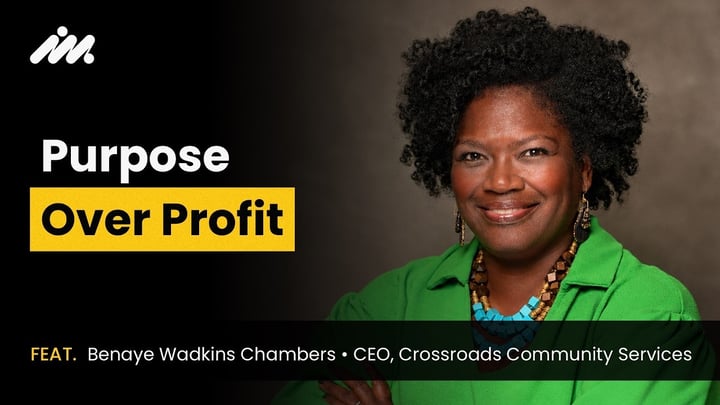
Episode 17 — Purpose Over Profit
Benaye Wadkins Chambers is the president and CEO of Crossroads Community Services, a food distribution and public health organization in Dallas that distributes through 148 ...
-
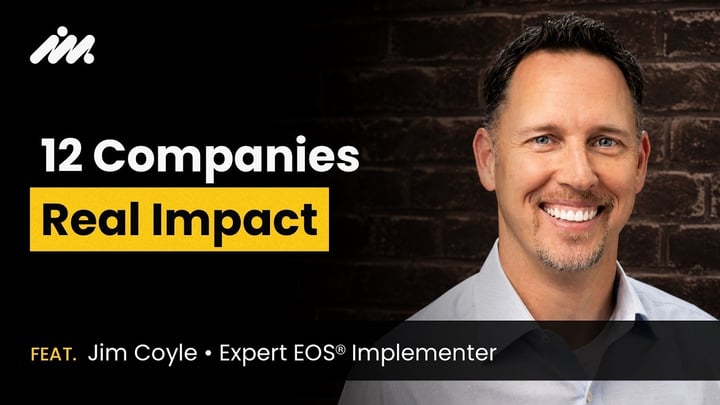
Episode 16 — 12 Companies, Real Impact
Jim Coyle ran 12 companies before he figured out what he was actually supposed to do. He sold candy bars to pay for a school trip to Italy, made beaded jewelry that put him ...
-
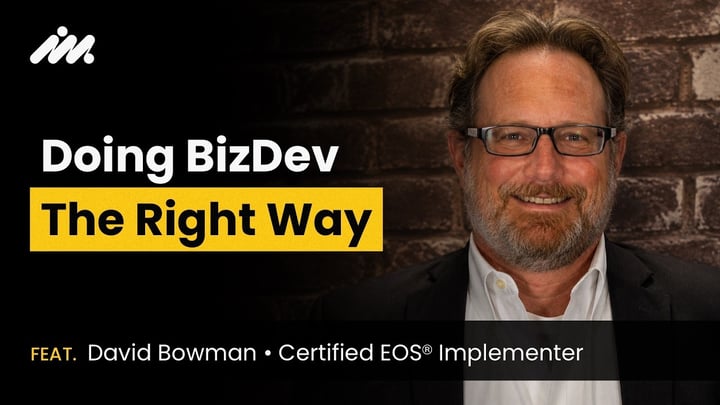
Episode 15 — Doing BizDev the Right Way
David Bowman spent 10 years in the Marine Corps as a helicopter crew chief before realizing he was never going to be the guy sitting behind a desk. After a career in ...