
Why 75% of Owners Regret Selling Their Business feat. Amy Morin
Amy Morin grew a construction company from $0 to $40 million and exited it after 22 years. Then she bought and turned around a fly fishing resort in Montana, exited that one too, went to graduate school, and became an EOS implementer. By every outside measure she had done it right. And yet, she will tell you she got the most important part wrong. In this conversation with Christine Watts and Kris Snyder, Amy walks through the exit-planning concept she ran headlong past the first time around: the three legs of the stool. She had business readiness in spades. She had no plan for financial readiness or personal readiness, and that gap reshaped what came next for her family. Amy now combines EOS implementation with work as a Certified Exit Planning Advisor, helping owners build companies that are valuable to sell and lives that are ready for what comes after.
Key topics:
-
The three legs of the exit-planning stool, and why business readiness alone is not enough
-
Why 75% of owners regret selling their business one year later
-
How identity loss shows up after an exit, especially for the founder who built the thing
-
Going to market through connectors with a real reason to connect, not just an intro
-
The cost of ego, and what Amy would tell her younger self
About Amy Morin:
Amy is an EOS implementer and Certified Exit Planning Advisor (CEPA). She previously built and exited a $40M construction company and ran a fly fishing resort in Montana. She also hosts the Exit Velocity podcast (formerly the Mastery Partners Podcast).
Connect with Amy: in/amymorin
Mentioned in this episode:
-
Author: Simon Sinek, Start With Why
-
Podcast hosted by Amy: Exit Velocity (formerly the Mastery Partners Podcast) — @exitvelocitypodcast
-
Podcaster mentioned: Codie Sanchez — @codiesanchezct
-
Framework: Value Acceleration Methodology by Christopher Snyder (referenced via Walking to Destiny)
Audio Only
Christine Watts
[0:00:00]
Welcome to Impact Moments powered by 90. Today we're joined by Amy Morin.
Amy Morin
[0:00:05]
Amy grew a construction company from zero to 40 million and exited that after 22 years. She bought and turned around a fly fishing resort in Montana and exited that too.
Christine Watts
[0:00:15]
She earned an MBA. She became an EOS implementer.
Amy Morin
[0:00:18]
She's also a certified exit planner. So she has a great depth of experience.
Christine Watts
[0:00:23]
And what's really cool is Amy gets vulnerable and tells you all of these things that seem like she did right. But one of the most important parts that she felt like she could have done better, and she built these businesses ready to sell, but she didn't build the personal or financial plan for what came after. So
Amy Morin
[0:00:40]
In this conversation, Amy shares that impact moment that reshapes her family's life, now drives the way that she works with her clients.
Kris Snyder
[0:00:47]
We get into ego, we get into identity, the parts of the exit that nobody warned her about.
Christine Watts
[0:00:52]
So can't wait for you to learn from her. Let's get into it. Hey, welcome to Impact Moments powered by 90. I'm Christine.
Kris Snyder
[0:01:05]
I'm Chris Snyder.
Christine Watts
[0:01:06]
And I'm really excited. We've got Amy Morin here today with us. Thank you for joining.
Amy Morin
[0:01:09]
Yeah, thank you. It's such a pleasure to be here. Yeah.
Christine Watts
[0:01:12]
So tell us a little bit about yourself. You're an EOS implementer. So how did you kind of get your start and land into the EOS space?
Amy Morin
[0:01:19]
Yeah, so I am an EOS implementer and also an exit planning advisor, so I'll kind of weave some of those stories together about how I got into this space. So, I owned a construction company, grew that from zero to 40 million, and then we had a beautiful exit of that after 22 years. and then took a little bit of time off, and I'll kind of weave that into a story later on as to the impact of that whole thing, but then purchased a fly fishing resort in Montana. So that was in need of a turnaround, turned that company around for nine years, and then had an exit from that as well. And so now you can start to see this natural transition of buying, selling, owning businesses, right? And needing some way to function them to increase the value in order to create an exit. And so not knowing any of that language during that whole process, it was a natural transition. You know, we were together, you know, a few days ago or whatever, talking with somebody about different phases of life and including different phases of our business journey. So having owned these businesses for years, right? I mean, if you do the math, I'm now at probably 35 years in business. It's like, what's the next phase? And the next phase for me wasn't, well, let me go buy another company and have 52 employees again. I didn't really want that.
Kris Snyder
[0:02:40]
No, thank you. Exactly. Exactly.
Amy Morin
[0:02:42]
So the next phase is I had also, when we sold our construction company, I went to graduate school and got my MBA. It was one of those things where our kids were going to college and I thought, hey, I missed a step. You know, I have a college degree, but I forgot about the graduate school thing. And so it was a great opportunity for me to go to school and get that.
Christine Watts
[0:03:04]
So
Amy Morin
[0:03:05]
Now I have my MBA, I've sold these couple of businesses that were successful, and I thought, you know, I'd really like to do some coaching or some consulting or whatever, and didn't have the exact framework that I thought I should bring to the marketplace. So my first consulting gig was for a construction company, right? Construction background, construction companies love you. And they were looking to grow and scale, which is what we had done. We had multiple offices in multiple states. And so they brought me in and said, hey, help us create all these processes so that we can use that to duplicate where we're going and how we're going to get there. They were running on EOS. That was my first entry point into, wow, there is a structured business operating system that works that you can duplicate throughout an organization and to use to grow and scale. And, uh, but they were self-implementing and were like, you know, had read the traction book where they were part of a peer group and, and, um, they thought that that was the end all of traction or of EOS, but yet weren't, wasn't, they weren't really gaining any traction. And so I said, let me go to an EOS conference, get some more information, and I think I can really help you. I just, we all need to know more here. And so at that EOS conference, I sat in all those breakout sessions and I thought, my whole entire life's journey has brought me to this exact moment in time to be an EOS implementer. Wow. So one of the owners of the company, the company was owned by three people, she also went along. To this the conference and so we get back and we're having a hey tell me your best nuggets You know, what were your biggest takeaways and stuff from the conference? And so I said, I'll be honest with you My biggest takeaway is I was I would I'm just like so enthralled with EOS and the power that it can be Bring to an organization. I feel like I need to go be an EOS implementer and And she said to me, I'm so glad you say that because I sat in all those same breakout sessions and thought Amy was born to be an EOS implementer. So I finished my contract with them and then became part of the franchise.
Christine Watts
[0:05:31]
That's so fascinating that they were running on EOS and brought you in without being an implementer first and just as like a business coach consultant. Is that right?
Amy Morin
[0:05:41]
Wow.
Kris Snyder
[0:05:42]
Process work is separate work, right? Like you were, and there are plenty of good companies out there doing process work for EOS companies.
Amy Morin
[0:05:48]
Yes.
Kris Snyder
[0:05:49]
Because as an EOS implementer, we'll talk about process and we'll talk about eight to 14 core, but that's, you were doing the work.
Amy Morin
[0:05:55]
Yes, exactly. Yeah.
Christine Watts
[0:05:58]
So what happened next? Did you jump right into it? You went to boot camp? You started your journey?
Amy Morin
[0:06:04]
I did. So it was the year that we all had to buy the franchise, right? So I was the first boot camp class. I hadn't been a boot camper before. I hadn't bought the, what is that?
Kris Snyder
[0:06:17]
It was a membership model before versus the franchise.
Amy Morin
[0:06:20]
Yeah, there you go. So I didn't know any of that. So, I mean, I'm green as green can be. However, I saw it run in a company, like I was part of a company that was running on EOS. So it was incredibly insightful. And I had all that business knowledge. Right. I mean, we had done EOS like stuff in our construction company. That was before traction. Right. And so I knew what it took to be successful. I just didn't have the same words of what Gina was doing. You know, I mean, we had our VTO. We just didn't call it a VTO. Right. We were answering the eight questions, maybe not exactly, but I saw the value of what it looked like to run on a business operating system because we created an incredible company. You don't get from zero to 40 million running blindsided. I mean, you just don't. Right.
Kris Snyder
[0:07:13]
You piece it together. That's the, I mean, most of the concepts that, and I'm not downplaying what Gino did, but most of these have been around forever, right? And he assembled them in a really simplistic way such that they could be, you know, absorbed by the entire company, not just the leaders.
Amy Morin
[0:07:30]
That's correct.
Kris Snyder
[0:07:31]
And that's what, you know, from my experience in those, whether it's a construction company, you know, manufacturer, if you can get everyone working as one on EOS, that's where you really feel that traction and that lift take off.
Amy Morin
[0:07:41]
That's exactly right, yeah.
Christine Watts
[0:07:43]
So you go to the conference, you become an implementer, you're getting your first clients and starting to do EOS as an implementer.
Amy Morin
[0:07:49]
Yes.
Christine Watts
[0:07:50]
Where do you find EPI? How does that start coming into the picture?
Amy Morin
[0:07:53]
So all this sounds incredibly successful, right? Yeah, I've grown these great companies and, you know, now you ride off into the sunset with a big bank account. However, I missed a few steps on the whole exit part too. You know, yes, we built a great company, but our exits really weren't as successful as they could have been. And so when we start working with an exit planning client, you talk about three legs of the stool. And those three legs are business readiness, financial readiness, and personal readiness. And so we had great business readiness. We'd created a business that was not key person dependent. We had a depth in our company. We had structure, scorecard. I mean, all of the great business readiness stuff. we forgot about the personal readiness and the financial readiness on the personal side. And I didn't even realize it was such a thing, to be totally honest with you. And so as I've now had the fallout of the financial readiness piece and the personal readiness piece, I go start looking for, you know, hey, what did I miss? And that's where EPI came in. And so the exit planning institute and so for me to become a certified exit planning advisor again was a natural. I've messed this whole thing up in my life. I don't want that to happen to anybody else. And I've got all this boots on the ground knowledge. Again, this is not theory. I've lived through this. So to say all that, EPI and the Exit Planning Institute really encourages a team, an exit team. And it's that team that I missed, right? I had the CPA who helped us do a business valuation. I had the attorney, all the things that you think you need in an exit. I had no financial planner at all. And so that matters because there's so much of the business, uh, the way that you live, you rely on the business. Great example, cell phones, right? I mean, I didn't pay for a cell phone. I didn't pay for health insurance. I didn't pay for any of that stuff when we were a business owner, right? I mean, how much do you pay up for that, Chris? Right. Right. And that's just natural part of owning a business. Well, you don't own a business anymore. It's like, oh shit, who pays for all that stuff? And we need to make sure that we planned on that. You know, I still had two kids going to college and I was in graduate school. You know, there's $100,000 worth of college debt every single year we didn't plan on. I mean, you're so excited about, hey, we're selling our business, we've created, a nest egg, something of value that somebody is willing to pay us for, that you forget about that side.
Kris Snyder
[0:10:39]
It's fascinating, because I've gotten to do a good amount of this work, is where that wealth gap, so people are quick to put a value gap on what the business is worth today to where the business needs to go. But they don't do what you're doing in that, which is their wealth gap. Because now how much do I, you're not, you're not done. You've got a lifestyle, you've got all this stuff. And it sounds simplistic, but they'll, you know, have one, one client that she was ready to sell her business. And I was helpful. So I got her to that place and then she was done and she regretted it. She came back cause she did her earn out. And she was like, I didn't sell my business for enough. I'm like, no, you sold your business for an appropriate amount. What you didn't think about in the moment was how much did you need?
Amy Morin
[0:11:23]
Right.
Kris Snyder
[0:11:23]
For the rest. And even more importantly, every existential like you, she didn't, she didn't know what she's going to do next.
Amy Morin
[0:11:29]
Yes. Yes.
Kris Snyder
[0:11:30]
So now you were founder, you built a business, you sold it. And I think that's where so much of the exit planning starts to come in on the personal side.
Amy Morin
[0:11:37]
It does.
Kris Snyder
[0:11:37]
And do the personal planning for what happens next.
Amy Morin
[0:11:40]
Absolutely. And that, I didn't feel that as much, Chris, as my husband did.
Kris Snyder
[0:11:45]
Oh, yeah.
Amy Morin
[0:11:46]
So, and it's because, right, I finished graduate school, like I had other things that I was, that I was being drawn to, right? I always tell my clients, what are you being drawn to versus pushed out of, right? Those are two very different thought processes and mindsets. So for my husband, our business was started in the same town we both grew up in. It was his initials on the side of the building. Right. And so now he's walking down Main Street and he does not have the identity of I'm a business owner anymore. And it took him years to recover. So on that personal side, that is something that's also often overlooked. And nobody talks to you about that. Nobody even puts that little bug in your ear of Hey, don't forget about this side. You know, what are you going to do next?
Kris Snyder
[0:12:35]
And it's easy, going back to the business owner that you mentioned, the statistic is 75% of business owners regret selling their business one year later.
Amy Morin
[0:12:46]
And it's because that one year is kind of like a honeymoon. You're like, oh, I'm going to play golf and I'm going to go fishing and I'm going to travel the world. And I'm not going to have to get up every day at a certain time. Right. Or my schedule is much lighter. And that feels good when you think about it initially. And then a year later, you think, well, my life sucks. It is not as fulfilling as it used to be. I've lost my purpose. Right. Now what? And that is real. That's real. Now, I don't help people on that side of the business other than to ask the questions. And then send them, you know, to somebody on my team who helps them with that. That's right.
Kris Snyder
[0:13:27]
There's other advisors that they specialize in that work, not the work that you do.
Amy Morin
[0:13:30]
Right. The point is, is that we have to talk about it. It's part of the exit planning process and it's one, again, that I've lived and so I'm incredibly passionate about. So for me, the passion lies in bringing EOS, right, getting this operating system up and running to get your business ready. And also the personal financial side, asking all the appropriate questions and the personal side about what are you going to do next, that really is going to fulfill your heart.
Kris Snyder
[0:13:59]
It took me a while. By the way, at night, we're big fans of EPI and all the great work and all the SIPAs. But it took me a while to understand value acceleration methodology, which is the other Chris Snyder's Walking to Destiny, his framework, that he really did create a framework such that EOS can slot in, if you choose that, right? Which we're excited when they do. Exactly. You choose that path because his, his approach isn't as detailed as what Gino wrote, right? It is a framework, not an operating system.
Amy Morin
[0:14:31]
Yeah.
Kris Snyder
[0:14:32]
And that, that delineation for me when it clicked was like, oh, now I get it now.
Amy Morin
[0:14:36]
Yes.
Kris Snyder
[0:14:36]
That's why there's a couple hundred EOSIs that are SIPAs now. I've lost track.
Amy Morin
[0:14:40]
Yeah.
Kris Snyder
[0:14:40]
There's so many because it is a community. It is an approach that's more holistic in the exit part of it than just the build and run part, which we do really well with EOS.
Amy Morin
[0:14:50]
Yeah, right, because one of the ways that we close that value gap is we strengthen the four intangible capitals, right? And those four intangible capitals are human capital, social capital, structural capital, customer capital. So what better way to do that than run your company on EOS? Because we speak to that in the six key components all day long.
Kris Snyder
[0:15:11]
Now I'm going to do a shameless plug on two fronts. The first front is that 90 actually can help you with those things as well. And a lot of people don't realize that if you want to do personal planning in our software, you can do that. You just make yourself an individual team, or if you wanted to be a company, you could do that as well. And then we configure the template, if you will, inside for doing personal planning, similar to like a personal VTO, right? And if you want to think of it that way. And then you can collaborate with your other partners if you want to, let them come and see that personal plan inside the software itself, such that you can have more of your advisors involved than just the one.
Amy Morin
[0:15:48]
Yeah. So can I ask a question about that? Sure. Is there a plan or is there already something in 90 where you can do a roadmap, create a roadmap for the future?
Kris Snyder
[0:15:59]
Tell me more about your roadmap.
Amy Morin
[0:16:01]
Well, so in exit planning, one of the greatest tools is to say, uh, take a look at where your value gap is right now. Right. And then help you create a roadmap for where you want to be in that three to five year timeframe.
Christine Watts
[0:16:13]
Definitely.
Kris Snyder
[0:16:14]
We have a, we have a new tool called planning board. Okay. And then the planning board, it's meant to do that. So you can think about it as if I was going to plan an annual goal and I want to chunk out at four quarters.
Amy Morin
[0:16:24]
Yeah.
Kris Snyder
[0:16:25]
You could do that. If you're five years out, you could just change the timeframe for the tiles and the planning board. Set the objectives, kind of like the getting what you want tool, to some degree, right?
Amy Morin
[0:16:34]
About the same.
Kris Snyder
[0:16:35]
You just start at the end in mind and go, okay, what are the things I need to do along the way? And the good news about this is that also can link to rocks and issues. There's multiple linking into the tool itself.
Christine Watts
[0:16:46]
Yeah, it's really nice because it's flexible enough where it's talking about what's now, what's next, what's later, what's in the future. You're not trying to time-bound everything, but you're showing how it links back to those one, three, five-year objectives that you have, so you can start to actually plan out what it's going to take to get those bigger things done.
Kris Snyder
[0:17:05]
It's actually, it's actually really interesting, Christine, because I don't think we've thought of that application for the exit planning side of it.
Amy Morin
[0:17:10]
Yeah. Right.
Kris Snyder
[0:17:10]
We've been thinking more for the longer term VTO type of stuff, whether it's the goals that you set annually or sometimes even the three-year picture. But I like your, your thought there on how to tie that in.
Amy Morin
[0:17:20]
Yeah, I think we should work on that together because I mean, it's just great to bring that to your clients for sure.
Christine Watts
[0:17:25]
Yeah, there's a lot of people getting excited about it, especially as they're going into like departmental teams where like marketing as an example, there's all of these little nitpicky things that have to happen and for them to be able to see it. laid out and have it be sequential and have it tie up. Like a lot of people are getting excited about that concept, so I like the idea of elevating that.
Amy Morin
[0:17:44]
Yeah, for sure. Yeah. Yeah, that's great.
Christine Watts
[0:17:47]
Well, you brought an impact moment today.
Amy Morin
[0:17:50]
Yeah.
Christine Watts
[0:17:50]
So I'd love for you to tell us that story and the ripple effect that happened.
Amy Morin
[0:17:53]
Yeah. So I think the impact moment kind of goes into what we've already been talking about, right? What happens when you are not fully prepared and in the life lessons that that teaches you, right? I mean, good, bad, and the ugly. And for us that, or for me, that impact moment was the financial readiness, right? I mean, what really has been the driver or the lack of financial readiness is really how I need to put that. And the driver of who I am today and what I'm passionate about and how I teach has to do with that whole financial readiness part. That's the dose of reality that hits you in the face that says you can't take this lesson and continue to be shameful over it. Because the initial thought is, I have a lot of shame around that. Again, people look at you and say, man, you sold a company that was worth $40 million. You must have done really, really well. A, why are you still working? Why are you still as passionate as you are? And so you don't want to share the, well, it's, I forgot a whole section. And again, going back to your top line revenue is 40 million, but people don't pay you on your top line revenue. I think that's the other part of this conversation that we must tell business owners is. You get paid on EBITDA or a multiple of EBITDA. And so, you know, and in the construction industry, you're really heavy on assets. Not that we didn't have good EBITDA, but you know, again, it sounds more glorious than it is. I just want to say that.
Kris Snyder
[0:19:36]
Well, and I think it's fair, cause there's, there's a lot of owner's envy that happens cause of lack of understanding. They're like, well, you must have, because look at the, look at the trucks that you own. But it is, it is the bottom line that, that it, the value of what the business has created and therefore sold on. And I don't think that translates really well to most, most people. Right, right.
Amy Morin
[0:19:56]
So a shameless plug for me, I do a lot of podcasts, right? I'm a podcast host, and so I always bring guests on who help to educate business owners about really how to calculate the value roughly. I mean, not to replace a business valuation expert, but know what all the dynamics are involved in order to sell your company or kind of create a worth around your company.
Kris Snyder
[0:20:20]
But going back to my impact moment. You haven't, you haven't actually plugged your podcast.
Amy Morin
[0:20:24]
You gotta tell us the name. It's called Exit Velocity. We're just changing the name. So it's, the new name will be Exit Velocity and that'll happen in the next couple of weeks, but it's been a Mastery Partners podcast.
Kris Snyder
[0:20:38]
Awesome.
Amy Morin
[0:20:39]
Yeah. So to get rid of the shame around, uh, you know, when you say who you are and what you've done, uh, that you missed a whole step. has really been a big impact moment in my life.
Christine Watts
[0:20:51]
Do you have a specific, like, client or story related to somebody that you had to kind of help get there? Like, they were struggling in the moment and, like, were there any specific tactics or things that you did to help kind of pull them through?
Amy Morin
[0:21:04]
You know, as an EOS implementer, I feel like we coach, challenge our clients a lot, almost in the space that they're in. And my impact story is not, uh, like clients don't come to me because they've got financial unpreparedness on their personal side, right? They come to me because they're having an issue in their company. They're hitting the ceiling. Their business isn't as valuable as they need it to be. Yes, that wealth gap, right? It all feeds in. Right. I mean, it's almost like when we talk to EOS clients about, oh, strengthen just the people component. I'm like, you can't. It's this, it's one holistic system. They all work together. Right. And the same thing in exit planning. I can't just strengthen, because I'm a great picture of that. I can't just strengthen my business readiness and forget about the other two legs of the stool. That's not going to happen because it's, it's all going to fail. Right. Where do I really, like, the biggest impact is I'll say, hey, exit planning as a team, I realize that I'm working with you to strengthen the business side, the operating side, but let me get you in contact with a financial advisor or a wealth advisor or, you know, a business valuation expert or somebody on the personal side who will help you also prepare. because I've done it wrong, right? And then I'll share all those stories, but nobody comes to me specifically for just the financial piece, right? Which was the biggest impact for me.
Kris Snyder
[0:22:31]
What I, and what I love about what you said inside the kind of the EOS implementer community, we talk about you go to market, not through cold calling and blasting, you go through connectors.
Amy Morin
[0:22:42]
Yes.
Kris Snyder
[0:22:42]
And what this universe of the community actually has is reasons to connect. Cause otherwise my experience with those connectors is like, well, just do an intro.
Amy Morin
[0:22:51]
It's like, well, what's that doing for them?
Kris Snyder
[0:22:53]
But if you actually have a reason to connect them, then it's a, they trust you. Well, then you're building the community of connectivity. through those introductions of value. And I think that's something that we miss, in my opinion, inside the EOS implementation world when we just talk about connectors. It's like, let's get to the reason for that connection, the value created in the connection. And then I think, you know, then you're going to have your financial planner do more connections for you, right? Because it's at the right time that the need is there versus just randomly, oh, You're a good person to be introduced.
Amy Morin
[0:23:23]
That's right. And to your point, I think in the EPI world, because EPI corporate is so focused on creating exit planning as a team sport, right? That they just naturally, when you become a certified exit planning advisor, you realize that connectors are so important. for the business owner, right? For you, but really for the business owner, like this whole thing. And we use exit a lot as a word, right? But it's just succession planning also. Like I've got a lot of U.S. clients who are nonprofits. And they need succession planning, I would say, almost as much, if not more, than a for-profit business that's going to go on the market for sale. Because if that nonprofit relies just solely on the executive director, what's going to happen when that executive director leaves? You suddenly have a nonprofit that has a great mission with nobody to run it. Right. Right. And so even if you're not thinking about exiting your company, just it's really good business strategy to put in play what we're talking about here this morning. Yeah.
Kris Snyder
[0:24:34]
And I always throw in the word optionality when I say exit, because it just softens it for people. It's like exit, optionality, that just means you have options.
Amy Morin
[0:24:42]
Yeah.
Kris Snyder
[0:24:43]
And one of those can be your succession planning, right? Like, are you ready? Is there readiness for you to not be here without the dependencies that often exist, especially for founders?
Amy Morin
[0:24:51]
Yeah.
Christine Watts
[0:24:51]
It's interesting too, I've been at 90 since day one and I remember early on, one of the founders came to me and this is like maybe more of a process story, but he was like, okay, tell me what happens if you get hit by a bus. And I was like, ah, I should probably write some things down. It's just like the whole frame up of like, there's a lot of things that could happen that like, you don't know if they will. And so I feel like that is a lot of what that exit planning motion is, is helping them think and plan for that kind of thing.
Kris Snyder
[0:25:20]
And the, the, some of our experience has been around this topic is that people think just like we think we're going to live forever in that example, that you have all the time in the world to build your business and they're not measuring it out and say, well, I'll get ready for it when I'm a year out. Well, then you're not ready for it a year out, right? If you start the conversation now, maybe it is five years, maybe it is 10 years, but at least now, you know what you're building and how you're building it.
Amy Morin
[0:25:44]
Right, yeah. And so, you know, the impact is much longer, right, in the work that we do as EOS implementers and combined with exit planning, right? As an EOS implementer, our impact is typically that two-year journey, right? And then you send them on their way. But exit planning, it can be much longer. And really, that impact is for their life. It's the legacy, right? You're creating family wealth. I mean, it's a much longer runway than just a moment in time, if that makes any sense. Yeah.
Christine Watts
[0:26:15]
Well, you talked a little bit about some of the things that you're classifying as like a failure or wish I did it differently when you were selling and like really thinking about the other legs of the stool.
Amy Morin
[0:26:24]
Yeah.
Christine Watts
[0:26:24]
But when you look back, are there any specific stories or moments where you feel like this was a fuck up and I wish I could go back and do it differently? Do you have any other examples or things that you would go back to in that instance?
Amy Morin
[0:26:37]
Oh, man. I always say, how much time do you have? I was going to say, where do I start, right?
Christine Watts
[0:26:43]
For me, I would say ego.
Amy Morin
[0:26:45]
I wish that I had lost some of my ego a long time ago.
Kris Snyder
[0:26:51]
That's a good one.
Amy Morin
[0:26:53]
You know, I guess as you're starting, This is a big birthday year for me. I won't tell you how many, but I love to think that I'm maturing well into these years, right, in terms of thoughts and actions. And if I could have even dropped that ego, you know, 10 years ago and been maybe a little bit more great, had a little more grace in my life, I probably would have made less bad choices.
Kris Snyder
[0:27:26]
I love the intentional word choice.
Amy Morin
[0:27:29]
Yeah, but then that's a tough one to do, right? Again, nobody really wants to admit that they've got this ego or
Kris Snyder
[0:27:36]
Yeah, and I think for me, I thought that the ego was part of my protection mechanism when I didn't realize that it wasn't protecting me.
Amy Morin
[0:27:48]
Right.
Kris Snyder
[0:27:48]
It was harming.
Amy Morin
[0:27:49]
That's right.
Kris Snyder
[0:27:50]
It doesn't do that, right?
Amy Morin
[0:27:51]
Finding your moments of grace, that does it.
Kris Snyder
[0:27:53]
There's ways in which you can find it, but it's going back to your younger self and going, all right.
Amy Morin
[0:27:59]
Right, exactly.
Kris Snyder
[0:28:00]
You should have.
Christine Watts
[0:28:01]
Well, it's interesting too, because you talked about a little bit earlier from a business owner's perspective, identity and like losing that identity when you sell the business. And I feel like some of that kind of gets into the ego play of like, you're making all of these emotional decisions and that's really hard.
Amy Morin
[0:28:16]
Yeah.
Christine Watts
[0:28:16]
So when you're wrapped up in it. So my last question is, what are you reading, listening to, watching that's helping you grow personally or professionally?
Amy Morin
[0:28:25]
Yeah. So one of the things I didn't talk about today that I love doing with teams as well as with exit planning clients, though, is I'm really passionate about creating other leaders.
Kris Snyder
[0:28:36]
Okay.
Amy Morin
[0:28:37]
And so I tend to read a lot of stuff about leadership and teach a lot about leadership. So my favorite book right now is The Multipliers by Liz Wiseman. And so that book is all about creating other leaders, right? And we think as a leader, and this is where my ego comes in from prior, right? Right. Is that a leader was like, I need to create a whole bunch of followers. I'm going to lead so great that everybody's going to follow. And that is so far from the truth, right? You cannot make people follow you, first of all. And it's really the leader's job to create other leaders. Yeah.
Kris Snyder
[0:29:15]
Are you Simon Sinek fan at all?
Amy Morin
[0:29:16]
I am.
Kris Snyder
[0:29:17]
Yeah, me too. So I love a lot of his work on very similar to that topic and that approach of it's not about the followers.
Amy Morin
[0:29:24]
Yes. And so now when I teach leadership courses, we start out first with the foundation of knowing who you are first. Because I'm a firm believer in you cannot lead others and or create other leaders unless you are so secure in who you are as a human being and how you want to lead. Like what do you want to be known as as a leader? And so we start there and we build from there and then typically our third session or so we move into how to create other leaders. What does that look like? So anyway, Liz Wiseman's book on the multipliers is all about that. And her, her, her tact in there also is that we think as a leader that we can't hold anybody accountable and that's the worst kind of leader, right? I mean, so, uh, she goes into a lot of that too, which is why I'm really liking that book. So, all right. So that's what I'm reading, uh, and things on that line. Um, but listening to, I, I love to geek out on health podcasts, you know, again, as you kind of get up there in age. You love to figure out what's longevity look like. And so I listen to a lot of health podcasts. I also listen to Cody Sanchez all about businesses. I mean, so, you know, I'm geeking out on health and business and leadership these days. Those are good geek outs.
Kris Snyder
[0:30:42]
Awesome.
Christine Watts
[0:30:43]
Well, thank you so much for being here today. I loved hearing about the merging of EPI and EOS and the work that you're doing there and hearing more about your background. So I really appreciate it.
Amy Morin
[0:30:52]
You're very welcome. It was a pleasure.
Kris Snyder
[0:30:53]
It was great fun.
Amy Morin
[0:30:54]
Yeah.
Kris Snyder
[0:30:55]
Awesome.
Christine Watts
[0:30:56]
Well, thanks so much for watching Impact Moments powered by a 90. We'll see you next time. Thanks for listening. Amy's story is a real reminder that business is really one aspect.
Kris Snyder
[0:31:11]
You can build a company that's valuable, structured, ready to sell, and still walk away unprepared of that life waiting for you on the other side.
Amy Morin
[0:31:20]
EOS gives you that clarity from a company perspective, and the exit planning work gives you clarity for what comes next.
Christine Watts
[0:31:27]
If today's conversation resonated, take Amy's lead.
Amy Morin
[0:31:30]
Look at those three legs of your own stool, business readiness, financial readiness, personal readiness, and ask which needs the most attention from you right now.
Christine Watts
[0:31:39]
Thanks for listening. If you like this episode, please subscribe. Please share it with a leader who's building with you, and we'll see you next time.
Recent Podcast Episodes
-
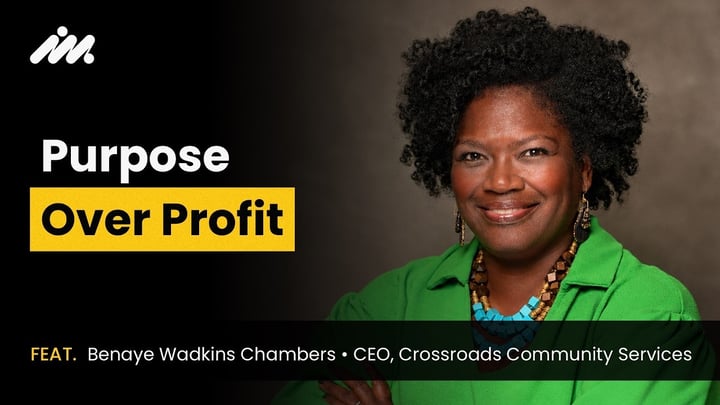
Episode 17 — Purpose Over Profit
Benaye Wadkins Chambers is the president and CEO of Crossroads Community Services, a food distribution and public health organization in Dallas that distributes through 148 ...
-
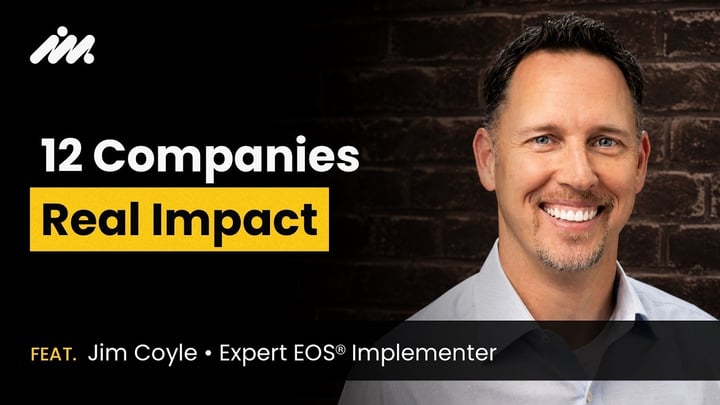
Episode 16 — 12 Companies, Real Impact
Jim Coyle ran 12 companies before he figured out what he was actually supposed to do. He sold candy bars to pay for a school trip to Italy, made beaded jewelry that put him ...
-
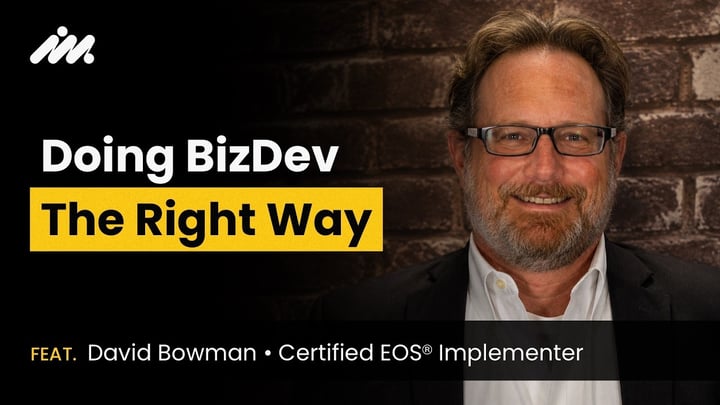
Episode 15 — Doing BizDev the Right Way
David Bowman spent 10 years in the Marine Corps as a helicopter crew chief before realizing he was never going to be the guy sitting behind a desk. After a career in ...