
Coaching the Person, Not the Problem feat. Jaime Munoz
- How fractional integrator work was born before anyone had a name for it
- The tension between EOS implementers and fractional integrators, and why there is room for both
- Transitioning from integrator to visionary and learning a completely different skill set
- Why things happen for you, not to you: bringing the human element back into structured meetings
- The termination that went wrong and what it taught her about due diligence
About Jamie Munoz:
Jamie is the founder of Catalyst Integrators, a fractional integrator firm that matches experienced integrators with visionaries running on EOS. Before founding Catalyst, she spent four years as a full-time integrator at AZPro in Phoenix, where she helped grow the company from 60 to 100 team members. She is also part of the Visionary Forum community.
Audio Only
Christine Watts
[0:00:08]
Great. Okay, cool. Hey, welcome to Impact Moments. I'm Christine.
Kris Snyder
[0:13:19]
I'm Kris.
Christine Watts
[0:14:18]
and Jamie. Thank you for joining us today. Excited to have you here.
Jamie Munoz
[0:00:18]
Thank you guys for having me. This is exciting.
Christine Watts
[0:00:20]
Yeah. I don't know if you remember, but we first met at the first EOS conference in Atlanta. Do you remember this?
Jamie Munoz
[0:00:27]
Oh, yeah.
Christine Watts
[0:00:28]
And you were working with AZ Pro, right?
Jamie Munoz
[0:00:30]
Yes. Oh, my gosh. Blast from the past.
Christine Watts
[0:00:32]
I love it. Yeah, it was 20, 18. 17.
Jamie Munoz
[0:00:37]
17 into 18.
Christine Watts
[0:00:38]
Yeah, yeah, yeah. So we go way back.
Jamie Munoz
[0:00:42]
And 90 was a different brand back then.
Christine Watts
[0:00:45]
Right?
Jamie Munoz
[0:00:45]
Track.
Christine Watts
[0:00:47]
Yeah. Yep.
Jamie Munoz
[0:00:48]
I remember I got my husband the hat that had, like, the little mountain logo.
Christine Watts
[0:00:52]
You have an OG hat?
Jamie Munoz
[0:00:53]
Have one, yes. We're waiting for the day where it'll bring a pretty penny on.
Christine Watts
[0:00:57]
Yeah, yeah. That's coveted.
Jamie Munoz
[0:00:59]
I feel like he had no idea what he was getting or what he was representing. And I kind of messed with him at first because he was wearing it all the time. And I was like, you know what that brand is, right? And he's like, wait, no, what is it? And I totally gave him a little bit of a panic moment.
Christine Watts
[0:01:14]
I was like, no.
Jamie Munoz
[0:01:15]
Totally trusted, totally appropriate company to represent.
Christine Watts
[0:01:18]
It just looked like an outdoor company, though, so it just kind of looked like activewear. I feel like it fit in
Jamie Munoz
[0:01:25]
rei, for sure.
Christine Watts
[0:01:26]
Yeah, of course. Yeah. Well, give us a little bit of background on you, how you kind of came into the role of integrator, because I think when I met you, you were integrator there.
Jamie Munoz
[0:01:35]
Yeah, yeah. So I was full time integrator at AZ Pro. It's a local company here in Phoenix that does large format printing. And I was helping that company for about four years before we found each EOS and hired our implementer. And, you know, we were just hitting a ceiling. Like, we knew things needed to change and we found eos. And I was like, thank God there's an easy book that I can hand to people and prove that, like, the things that we want to do are actually a thing. And so my visionary, I mean, he had found the book and told me to figure it out.
Christine Watts
[0:02:10]
Yeah.
Jamie Munoz
[0:02:11]
So, yeah, four years we had our EOS implementer and we were running it. We had grown the company when we found eos from about 60 team members up to 100. But in that time, we had a lot of turnover, so we were making sure that we had all the right people in the right seats. And honestly, again, 90 played a big Part for us in us having this incredible software and tool where even though we were all in one location, we had people going out in the field and stuff, but we could have like. I remember the days when I had to write, I had to write the agenda on the whiteboard every time and it took me so long and then manually capturing to do's and everything. So again, just having this simple easy system that could empower the team also to take accountability for getting things done. And the easy of us being able to roll out and share our VTO and our accountability chart and our updates and things, it just. Anyways, it was a godsend. So yeah, I was integrator there full time for those next four years and got us to a place where the leadership team was built out, it was running, things were humming. My visionary was finally like, what does life look like to potentially not be in the day to day anymore? And I could just, just be the visionary. And he actually became an EOS implementer. And I was like, well, what do I do? You know, do I become an implementer? Do I help other companies running on eos? Like, am I starting over? I also owned a boutique at the same time that I kind of like side hustled and I worked with special needs dogs. So I was like, how can I work from home, have my boutique and go there a few days a week, still be the integrator for this company? About a day a week is all they needed because I had replaced myself as operations. So that's really where fractional was kind of born for me in 2018 and took me to the next step of my journey which leads me into where I am now with Catalyst.
Christine Watts
[0:04:16]
Yeah, and I'm so curious because I feel like now there are a lot of fractional firms, but I don't think I knew of any beforehand. Had you seen that like in practice before you started yours?
Jamie Munoz
[0:04:27]
So no, it was very much like I remember going to lunch with my implementer and I was like, am I doing something illegal? Are the EOS police gonna come and arrest me? Because I'm like this charlatan just like a day a week with a few different companies. But I really remember again from every EOS conference, I feel like anytime Gino or Mark Winters got up and spoke, they really talked about the numbers of the lack of integrators per visionary out there. And there was like this, you know, this call to action almost that you couldn't ignore that was like they would say these numbers like for every four or five visionaries out There, there's one integrator and then you're like, oh my gosh, like there's an underserved like community here of all these entrepreneurs, visionaries. Then also when you really look at EOS and the integrator seat, it's not typically full time. You're usually also the head of operations. And if the company's not growing and scaling or reporting to a board or something like that, where it's like multiple locations or multi vertical, then a fractional integrator really can meet people where they're at. It can help them go and grow. So I really just feel like I fell into it on accident. One of my early mentors that I reached out to and found that was doing fractional work had been fractional for Mark Winters at one point. And so I kind of started getting that mentorship and learning what it truly meant to be fractional and how to uphold that and make sure that it's not just a self promoted thing of like, oh, I just read Rocketfield today and I decided I'm going to be a fractional integrator today. But it's really like a progression of the journey and a next step for full time integrators when they're ready for that next step in their career. So I feel like I got very lucky in that it wasn't really known what fractional integrators were. We used to have to really explain it to people.
Christine Watts
[0:06:28]
Yeah.
Jamie Munoz
[0:06:29]
And fast forward to today where again, the pendulum has swung a little bit to where there's less, lots of people in the space and lots of options and an integrator for everyone. Right. Like if you're a visionary, you can find an integrator of any size and type and background that you need to get you where you want to go.
Kris Snyder
[0:06:45]
I think we have about 150 in our partner program today. That doesn't mean there's not more, but just in general we've been watching that trend too and it's been interesting to talk to them and go, what do you do? Right. And I think there is this interesting moment when you said the EOS police. Right. Like there's this interesting moment where you got 870 US implementers out there and they too are trying to understand like what's that intersection and how do I refer you in to go do that work or do you compete with me?
Jamie Munoz
[0:07:18]
Yeah, right.
Kris Snyder
[0:07:19]
And there's, there's some healthy tension there because we've seen that in the community at times because you know, implementers are going to Notice just do the three session days that you do to implement it. Then they're going to do quarterly and annuals. Right. But a lot of fractional integrators are also doing quarters and annuals.
Christine Watts
[0:07:36]
Yeah.
Kris Snyder
[0:07:36]
And that becomes this really interesting demarcation of like how does that all work together.
Jamie Munoz
[0:07:41]
Yeah.
Kris Snyder
[0:07:42]
So I don't know if you've had any of that experience like working with the US implementers and figuring that out, but most of the time I think we take. Because at 90 we take a very abundance minded approach.
Christine Watts
[0:07:53]
Yeah.
Kris Snyder
[0:07:53]
Like there's something for everyone and so just go figure out what that is. But I think there's, you know, a little bit tension in the community.
Jamie Munoz
[0:08:01]
Yeah, there is. Right. And there that can come into place. Right. When you've got people maybe that are acting out of integrity or doing things that like can kind of distill, like distill a brand or distill an industry. Like in a way, you know, if we kind of even see fractional integrators as like, like some sort of an industry. The way that I see it and experienced it was like my implementer from day one was telling me, like, Jamie, you're gonna need to run this show. Like this is you as the integrator when I'm not here, when you're onboarding new people, when things are happening, like you are the champion for this. Like you need to know this the back of your hand. You know, I could call my implementer for questions and some guidance and things like that, but at the end of the day, I was there every single day making sure that EOS was running, the business was running. I had rocket fuel with my visionary. That was my responsibility and he wanted to empower me to be able to do that. So from day one he was encouraging me. Watch how I'm facilitating. You know, we debrief after the sessions. See how I did that, see how I led that, that session or those things. Because the goal was, and I think the goal still kind of is that you graduate from your implementer after two years.
Kris Snyder
[0:09:14]
That's right.
Jamie Munoz
[0:09:15]
Now you see value. Right. Like anytime I can show up and not run a meeting, for sure, as the integrator, like you are like, oh thank God, like I don't have to be the one also leading this thing. Like it is so wonderful to participate, but in that absence or graduation or no need to have that outside coach or facilitator, it lands with you. Especially in times of tough budgets or things like that, like companies kind of shrink in and say like, okay, what resources internally do we have that we can use, that can support us with where we want to go and not have to rely on external facilitation? It becomes. I mean, I could argue why it's a necessity, but it's also a luxury in a lot of ways. And in tough times, I feel like you have to make those decisions of, like, you know, what. What can we do if we can't afford to bring somebody else in? And it is our integrator's responsibility, kind of how I see it.
Kris Snyder
[0:10:12]
Yeah. Because there should be an independence moment. Right. Like, you now know how to do it, so go do it.
Christine Watts
[0:10:18]
Right.
Kris Snyder
[0:10:19]
You don't need that person anymore to coach you through it. Now if you need them for an annual, maybe.
Christine Watts
[0:10:24]
Right.
Kris Snyder
[0:10:24]
But otherwise, like, just run.
Jamie Munoz
[0:10:26]
Right?
Kris Snyder
[0:10:27]
That's what the whole investment was, to build the muscle memory, to build the skills. Right. Now you've got it.
Christine Watts
[0:10:33]
So, yeah, go do it.
Jamie Munoz
[0:10:34]
And I think a thing like predicting. Right.
Christine Watts
[0:10:38]
We're.
Jamie Munoz
[0:10:38]
I'm probably gonna misquote how old Eos is. Eos? Like 17 years old? I don't know, 20?
Kris Snyder
[0:10:45]
Yeah.
Jamie Munoz
[0:10:46]
Okay. So if you even think about that, if the goal was to graduate even after two years, you have integrators now who have probably run multiple companies for 20 years, like at this point on EOS. So they know it. They know the nuances, they know how to. To teach it, to train it, to make sure that the team is running on it effectively. So I think by those very numbers, integrators with experience have been bred over the past, we'll say even 15 years, that can do this work. Right. And that can support companies, multiple companies at a time, which is a cool thing that I think has happened is being a COO or being an integrator. I feel like for me in the past, and even looking at where my career, Career trajectory was going was like, well, where do you go once you've, like, been successful in it? Do you start over with another company? Do you. You continue to grow and grow and grow and like, maybe work in companies that you don't love that size or that complexity anymore because. Because what is your growth ceiling? You're usually not going to become the visionary. So, like, you kind of top out. So what a cool way to provide more impact and ripple effect out in the world, being able to help smaller companies meet them where they're at and get an infusion of an integrator that they otherwise couldn't afford.
Christine Watts
[0:12:11]
Well, I'm so curious to hear about your journey, because you did do that where you transitioned from integrator to visionary. Right. As you were creating Catalyst. So you got to be, like, really crazy.
Jamie Munoz
[0:12:27]
And then I did.
Christine Watts
[0:12:28]
Yeah. Yes.
Jamie Munoz
[0:12:29]
This turns into a therapy.
Christine Watts
[0:12:32]
What was. What was that time like? Like, how did you kind of discover new things about yourself and, like, push yourself past what you thought you could do? Like, what was that time like, when you were creating Catalysts?
Jamie Munoz
[0:12:43]
Still the time.
Christine Watts
[0:12:44]
Yeah.
Jamie Munoz
[0:12:44]
Every day still.
Christine Watts
[0:12:46]
Yeah.
Jamie Munoz
[0:12:48]
I would say that, like, having that aha moment to realize. Like, I. I always identified as an integrator. But then what was interesting was I had these moments and these things happen where I look back and I'm like, oh, I've got entrepreneurs, entrepreneurial spirit. Like, my dad is an entrepreneur. He works in the car business. Like, he's owned his own used car dealership, like, my whole life from being a kid and, like, having a jewelry business. When I was in college, I had a clothing line. I opened the boutique. So I always had these, like, safer side hustles because my integrator side comes out, and I'm like, not a risk taker. I'm not gonna, you know, put my house up as collateral to, like, build and grow some business when I'm like, you know, that's just not me. I'm not. If there was a visionary spectrum or Continuum or something that we could look at and see, like, I think there's extreme visionaries like the Gina Wickman's, the Bob Shenafelds, the Mark Abbott's that are on this side of the spectrum that are so visionary. I think there's some of us who are there and place it a little safer or just have a different flavor into how we are visionary in a different way. So when I say that I fell into this, like, I went solo fractional by myself my first couple of years. And I think what was wild to discover was my desire to help other people not feel alone. Whether they're visionaries who are feeling alone because they don't have an integrator or integrators who are feeling alone because they want community or they want to be fractional and help more people. I found this really unique spot that I fell into of being able to build catalyst, to be the catalyst for these integrators and for these visionaries and wild to wake up one day and realize, holy shit, okay, I'm the visionary of this.
Christine Watts
[0:14:51]
That's.
Jamie Munoz
[0:14:52]
It's wild because now I'm running this business and having the vision for this business. I'm not doing client delivery. I'M not doing service delivery. I don't, you know, I don't have clients anymore. I haven't taken clients in a few years. So it really just becomes like, what are your gifts, your unique abilities? What do you love to do? And then what are the gaps and growth and opportunity? And that's kind of where I'm at. Have been at for the past five years. Catalyst is about to turn five in 2026, and it's. It's amazing to watch how it's grown and taken shape and is so different than it was from inception to now and how different I am and how the things that I've gone through have shaped me to probably be a better visionary than I for sure was when I started this, because I wasn't ever focused on being a good visionary. I was a really good and strong integrator. So I've had to learn how to be a good visionary and put myself in environments where I can learn from amazing visionaries also.
Christine Watts
[0:15:57]
Yeah, that's such a good perspective. You have to, like, change or adjust a bit of your community to make sure that you're, like, hearing from different perspectives and those voices.
Jamie Munoz
[0:16:05]
Yeah, for sure. It's a cool place to be that. I feel like I can speak both languages now. Like, I feel like I'm like this whisperer that can, like, toggle between the two. And also is right now I'm sitting in the visionary and the integrator seat for Catalyst.
Christine Watts
[0:16:22]
Right.
Jamie Munoz
[0:16:22]
And I. My heart goes out to all these visionaries who are sitting in both seats. Like, what I can do, see and feel and put words to that. It's doing for me in my life. Like, the drop from 30,000 foot to ground level is real. And what that does to your body physically, mentally, like, it's a lot. So I need an integrator. I don't want to be the integrator anymore.
Christine Watts
[0:16:53]
Yeah. So we brought you here and asked you about an impact moment. Moment. And you've worked with so many clients. I'm sure you have so many stories, but what was the story that you chose to bring today?
Jamie Munoz
[0:17:05]
Okay, so I guess my question is then I go into my fact finder mode. Do you want a client story or do you want a Catalyst or me story?
Christine Watts
[0:17:15]
I think either one is totally fine.
Kris Snyder
[0:17:17]
Yeah.
Christine Watts
[0:17:17]
Yeah.
Kris Snyder
[0:17:18]
I think mostly people relate to your story. So, like, if you've got not something you sold saw, but something that you were part of to share that.
Christine Watts
[0:17:26]
Yeah.
Kris Snyder
[0:17:27]
However that lands.
Jamie Munoz
[0:17:28]
Okay. Only had to pick one that was hard. So I guess I'm at this, I'm at this place and I'm having these ahas which I recognize people listening or watching either have had this aha or will one day. In that you realize that everything is happening, whether it's life or business. To me it's, it's both. It's harmony of both is that things are happening for you, not to you. And when I like really truly embraced and embodied that, specifically this year with a lot of coaching and therapy and different things that I can see how things have happened in, in the growth of the business or my growth even, that equipped me to be stronger today, to be able to get through things differently today, to be able to support somebody else going through those things today. So it's hard when you're going truly through the suck of something. You know, things like it doesn't mean things don't just suck. Like sometimes things just suck. That's okay. I think it's when you can really reflect and go inward on how those things impact you and how you feel about them to. To not just try to move through them really fast. The big thing for me lately has been realizing that by the very nature of things like eos that we have where we have structure, right. Like we know there's a vision and there's goals and if there's an issue, we take to do's and you know, eventually, you know, could it be a rock or whatever, right? Like we have structure to things.
Christine Watts
[0:19:11]
Yeah.
Jamie Munoz
[0:19:12]
If we take like the human and emotion and energy element out of that and just power through it. We are all not really stepping into and harnessing our true energy or our true emotions that are happening. We're stifling it, we're pushing it down, we're ignoring it for the sake of the agenda. We're moving through it. We've got a timer, right. Running to make sure there's a pause button on that timer though to say like there might be a hot minute where we need to sit in the suck of something like that was hard or that hurt or that was a difficult thing. Or we could celebrate. Why aren't we celebrating more? Why aren't we talking more about all the awesome things that did happen and pull from that?
Christine Watts
[0:19:57]
So.
Jamie Munoz
[0:19:57]
So all that to say, I know it's not like an exact specific moment in time or story of something that happened. I mean, I could dig into all the things that have happened that are stories, but that to me has been like the big revelation and aha moments for me this year is that it's like it's okay to bring, like, the human and the element of emotion and human humanized with all this AI we've got got going on in everything too. Right. And feel those things. So that way we can be better leaders through it and not take those moments away from people.
Christine Watts
[0:20:33]
Yeah. I totally get what you're saying, and you're actually really good at this because I feel like I have that bias for keeping things going. We have things we need to get done. Efficiency over everything. And I'm like, well, let's just skip through. Like, we need to go faster in the check and we need to go faster and like the team altogether. We can't let everybody share whatever it is. And that's the bad, like, devil on your shoulder kind of thing. But you're really good about making us slow down and saying no, everybody is gonna go around and it is gonna take a little bit longer than we want. But it does ultimately make people feel more connected and more willing to share and let people, as you would say, step into the danger a little bit more.
Kris Snyder
[0:21:12]
Yeah. Thank you. But I'm still working on it. But one of the things I try to remind myself is that we coach the person, not the problem. And if you're coaching the person, then you have to let them enter into the problem. Right. Versus sometimes I get excited. I'm like, oh, I see the problem. We can get after this. Let's go right there. And they're like, no, they're not there yet. And I don't really know what the problem is. There's early indicators, so I'm just going to keep coaching the person. And we had this happen yet yesterday even.
Christine Watts
[0:21:42]
Yeah.
Kris Snyder
[0:21:42]
Where all of a sudden it's like, oh, that's not the problem. I thought it was like they didn't know themselves until we coached a little bit further. And then they tell us what the core issue is. You're like, oh, that's it. Now we got. Now we can talk about it.
Christine Watts
[0:21:55]
Right.
Kris Snyder
[0:21:55]
Because before we didn't really know, but now we know.
Christine Watts
[0:21:58]
Yeah.
Kris Snyder
[0:21:58]
And we're. I'm writing a book right now called Meanings kind of suck. Because it just do. Right. Like in most of the time, people don't look forward to. To meetings. But if you think about, like, Most of what EOS and 90 we do is we run better meetings.
Christine Watts
[0:22:14]
Yeah.
Kris Snyder
[0:22:14]
And. But they kind of suck. And we just. To your point of, like, you just got to enter into that place and go, yeah, it's hard. I get it. That was an 8. That wasn't a 10. Now, how do we do better tomorrow? Right? That's one of the things I love about. Christine's heard me say this. I love rating every meeting now, because that's how I know, right? Like you. We sat down, we're having a moment, we're having an expectation. At the end, we're like, let's rate this.
Christine Watts
[0:22:41]
It's too much.
Kris Snyder
[0:22:43]
And so I did six years of marital counseling. I love my wife. And I started rating the meetings, and the counselor did not find that fun. This was a seven. Like, we need to do better team.
Jamie Munoz
[0:22:58]
Kind of adapt that. Like, okay, if I didn't get value, then I don't have to pay you for this.
Christine Watts
[0:23:02]
Yeah, exactly.
Jamie Munoz
[0:23:02]
Yeah, she's not buying that either.
Christine Watts
[0:23:09]
So what really changed for you? Like, kind of getting to this point and, like, making a more intentional effort towards this mindset. Were there, like, significant changes with, like, you and the business and how you work with people? Like, what did you see happen?
Jamie Munoz
[0:23:22]
Yeah, I love that question. It's. Again, it kind of help comes from that reflection, right? Like, something happens or you have some aha moments or something kind of triggers you. And. And what I was feeling and sensing and. And seeing from my team at the time, this was about three years ago now, is that. I don't. I mean, you could use the term burnout. It becomes, like, when your personal and professional life are, like, in disharmony, right? And there's also, like, a disharmony within you of understanding where your energy comes from, how you recharge, you know, how you are handling things emotionally and. And making sure that you can create that resiliency, that mental toughness for yourself, not only in work, but, like, as a person, like, as a human. Like, that's super important. I was seeing that. That was in very much conflict with. With people on my team. I was starting to experience it myself. It kind of was becoming something that, like, I could not ignore any longer. Like, I. It was a feeling that I had. It was something that I was hearing and I was seeing. And within a span of about 6 months, I had several people on my team leave. They were, like, burning out. All of these things were happening, and I was just like, oh, my God, like, what? What can I do? How can I support, you know, what. What my team needs? You know, sometimes you look at it like your visionary is way more heads up, heads out, even maybe your VP of sales, right? They're way more out in the world. They're going to networking things, they're going to conferences, they're going to Their mastermind groups or whatever, right? And where visionaries, I think have the hardest time as they learn these tools or hear from this speaker, read this book or whatever, they get so excited about their experience with it and they bring it back and it falls short because they don't know how to bring it back and integrate it in or roll it in. That is a need for their team. If they've identified it's something their team needs, Their team sees it as another thing we gotta do or oh my gosh, we already have this big workload now you want us to focus on this other thing? It just becomes noise. And I think then visionaries get frustrated and don't bring it back. Right? They just get to where they're like, okay, well we'll keep them running and doing the things they're doing in the business and that's fine. Like I'll bring back what I can. The way that I saw it was like, how can I bridge that gap of going out in these environments with visionaries hearing what they need and what they have going on, bringing these tools, resources, speakers, concepts back to my team and I digestible way so that they can consume it and it can help them live better lives and find this harmony in their life. Because I mean, ultimately if they're happy, their families are happy, their clients are happy, you know, I'm happy that they're happy. You know, like, it's just a whole like love fest. And that's great. So I'm like, how can I help? How can I help curate that for my team? And so that's where I start, started really finding ways to bring those things in. I did a theme for the year, one year that was called Nourish to Flourish. And the whole theme for the year was like, how are we nourishing ourselves to flourish in our lives? And I brought in a couple different speakers I had met through, I'm part of the Visionary Forum and I had gone to some visionary summits. And I remember Mark spoke one one year there, which is phenomenal. How can I bring back this stuff and roll it in? I mean, most of the people on my team are not outwardly going and doing that for themselves, right? They're focused on client work. So how can I help lead the charge for them in that and bring those resources into them in a digestible, easy to understand manner. So I've created some of my own tools, I brought in other tools and other thought leadership around how to live your life in harmony and have self care. That's not Just facials and massages,
Christine Watts
[0:27:21]
but
Jamie Munoz
[0:27:21]
also things like positive intelligence. That was a huge one. I had done that with my coach and brought positive intelligence into the team. And now everyone that onboards with us goes through mental toughness training. And, yeah, that's kind of been the big thing for us. I don't know. What do you. What do you guys do?
Christine Watts
[0:27:39]
I guess that's a great question. We. We use a lot of different tools, I feel like, internally. And we. We talk a lot about, like, the who you are and how that matches up with, like, what you're doing right now. And I even remember at one point we did an exercise, and maybe this was a few years ago now, where we went around the table and we were talking about. It was an annual. And so we were talking about the big company vision, and we were all sharing, like, what our own vision was for ourselves personally. And, like, does our own personal vision fit inside? And the company vision needs to be big enough that it can support all of our own. Yeah. All of our own individual ones. And so I think, like, exercises like that and then just, like, getting a deeper understanding into, like, who we are and how we work together is a lot of what we lean into.
Kris Snyder
[0:28:28]
Yeah. And personally, I'm a big fan of Phil Stutz. I don't know if you know his work at all. Yeah. So he. There was a Netflix series probably two, three years ago, and he's got five books. But what I love about Phil's work, and he's a behavioral psychologist, is he starts with a very simple scenario that says that you have a life force to your resiliency. And your life force has three things in it, any one point in time. The first one is your relationship with your body and how you feel. Feel about it. Right. Like, so do you move your body? Like, it's not like you have to be a triathlete. Triathlete. But it's like, move your body. Like, figure that out. Then have a relationship with those that you love, and then have a relationship with yourself. And if you do those three things, then you can think about your life force. So part of, like, for me, the work I do when I journal in the mornings is I think about my life force and how that's coming. Coming together, because I think it goes to your resiliency moment. Right. Because it's hard. The work that we. The work that we do as entrepreneurs and leaders, and it takes a lot of energy. And then sometimes I wake up and I don't feel resilient. Like, I'm Tired. Right? Like, it happens. But then you go through. I go through the. My life force. I'm like, okay, so I do need to go for a hike. I do need to go have some time to, like, understand how my body's feeling today. Right. And I need to go call my mom, because that's my relationship with people that I love that I probably didn't make time for that. I need to.
Jamie Munoz
[0:29:58]
And you realize these are free things, right? It doesn't cost you any money. This isn't, like, for the elite people to, like, only have. It's, like, what that's doing for your. Your mind and your spirit and your soul and your body, when you, like, feel into those activities, is so rigid. Regenerative. Did I say that word? Regenerative?
Kris Snyder
[0:30:18]
Yeah.
Jamie Munoz
[0:30:19]
Yeah. It regenerates you.
Christine Watts
[0:30:20]
Yeah, yeah, it works. Yeah.
Jamie Munoz
[0:30:23]
Oh, that's great. My. I knew it was. I don't want to say bad, good or bad. I knew it was something when my doctor. I went and saw her, and she prescribed to me that every morning I need to go outside, be in the first morning sun, and put my feet in the grass and ground. And I was like, okay, it's my doctor.
Christine Watts
[0:30:41]
Oh, boy. That just happened.
Jamie Munoz
[0:30:43]
It's. Yeah, we're shifting. It's a big shift.
Christine Watts
[0:30:48]
Oh, yeah. Yeah. You can go fix it. I know
Jamie Munoz
[0:30:57]
these lights are cool.
Christine Watts
[0:30:59]
I know.
Jamie Munoz
[0:31:01]
I see these plants back here, and it makes me think of between two ferns.
Kris Snyder
[0:31:05]
Conversation.
Jamie Munoz
[0:31:05]
I'm kidding.
Kris Snyder
[0:31:10]
Because he's hilarious.
Christine Watts
[0:31:12]
Yeah.
Jamie Munoz
[0:31:13]
You're gonna ask me questions.
Christine Watts
[0:31:14]
Should we do the rest? Deadpan. Yeah, That's great. Oh, man. Now I can't remember what you were just saying, though.
Jamie Munoz
[0:31:24]
Where were we at? Where my doctor, like, yeah, you know,
Christine Watts
[0:31:27]
it's like, ground yourself.
Jamie Munoz
[0:31:28]
Simple things of, you know, that that cost you no money. I mean, yes, your time's money, and it costs you that. But just realizing that, like, you know, the slowing down and again, that's why I think, like a tool. We'll go back to tools. We'll go back to, like, what are the things that you have and you touched on it, where you're like, well, you know, I see the value, and I want. I want the meeting to run right. And we want that too. Right. Like, it's. And all of these things together. But having a tool that, like, my brain puts no thought or stress or energy into where my VTO lives. If it's currently updated, if the team can see it, what my TO dos are like, I can put so much more of my intentional energy and unique ability into other stuff, because I don't worry.
Kris Snyder
[0:32:16]
Like, it's just there.
Jamie Munoz
[0:32:18]
It's a tool that allows me to not have worry about those things. Is wonderful.
Christine Watts
[0:32:24]
Yeah. All organized. And I feel like earlier you talked about like the distributed accountability, which I feel like is a huge thing, because a lot of times, like the integrator is just like doing everything themselves and then keeping the to do list and then reminding everybody what to go do. And like when you have something like 90, where it's like everybody can like see and access and do what they need to do, like, it does take a lot of that stress off of the integrator, the person that's trying to do it.
Jamie Munoz
[0:32:47]
Because God forbid you're sick or something, you know, anybody can roll in and pop that open. And people that feel less confident about running a meeting, like, the agenda is there for you. It's so clickable and easy and intuitive. I am not a software technology person at all. So for me, I'm like, I can use it. It's easy for me. I can use this. This is simple and easy.
Christine Watts
[0:33:13]
And
Jamie Munoz
[0:33:15]
also the human element too, where like, anytime I need help or support or have a question, I can chat, I can. And I'm talking to a human and if I don't respond, I know I'm gonna get an email that's like, okay, so, but did you get the help you needed, Jamie? Like, did you solve that thing you needed help with? And I'm like, oh, yes, okay, thank you. Like, you followed up with me. That's great. So you get the support that you're looking for too. And also being virtual. So like, when I was at AZ Pro, we were all in one location, we were all in person. And yes, like, pulling that tool up so much easier than writing on the whiteboard. But anytime, you know, like, you went virtual, like, now I'm 100% virtual. We can easily run that with all of our clients, like, and all of our teams. It's so simple and so easy. So whether you're full time or in person, like, it's just such a benefit when people are like, oh, I'm using a Google sheet. I'm like, oh, God. You know, I don't want to like, make anyone feel bad or like, judge them or anything, but I'm like, it's. It pays for itself, like having the software and taking on that investment. It pays for itself, like, hands down, you guys know that.
Christine Watts
[0:34:29]
Well, I have one more question about you, and I want to hear about your biggest fuck up. What happened? What was the situation
Kris Snyder
[0:34:40]
between two friends.
Christine Watts
[0:34:41]
Between two friends. I should have said it more deadpan. I can't do it.
Jamie Munoz
[0:34:50]
My biggest fuck up.
Christine Watts
[0:34:52]
Oh, my God.
Jamie Munoz
[0:34:52]
Like, ever. Most recently.
Christine Watts
[0:34:54]
Oh, yeah, you can use recency bias, I guess.
Jamie Munoz
[0:34:58]
It's like always my first draft of the.
Christine Watts
[0:35:00]
This.
Jamie Munoz
[0:35:00]
This answer is like, well, we all mess up all the time and every day, right. And we have these big things that happen, but, like, we reflect on them, we learn from them, we put new things in place.
Christine Watts
[0:35:11]
Right.
Jamie Munoz
[0:35:12]
It's like, you know, as long as you're learning for it, from it, it doesn't feel like as long as you're learning from it, it doesn't feel like this massive thing because you. You used it to grow. But that doesn't directly answer your question. Biggest fuck up. Oh, my gosh.
Christine Watts
[0:35:31]
One of mine that always comes to mind when I think about this sort of thing is like, I know everybody has that feeling where it's like in the pit of their stomach and, like they're sweating and whatever. And I was working at this company and I was the only person in marketing and I was updating something and I completely took down the whole website. But the problem was the website wasn't just like, oh, people click here, here. It's like a small business loans company. And so people like can't get their loans and they can't apply for things and so everything is shut down. And so then I just like stayed there sitting at my desk like this for hours into the night because I'm like, I can't fix it, but, like, I have to be here and I have to stare at this screen. And that taught me a lot of things about going slower and I still go too fast sometimes. But I have not taken down a website site sense. Yeah. So thank God that you know. Yeah.
Jamie Munoz
[0:36:23]
And it's not going to happen again. Like, that's like a one and done situation and you're through it.
Christine Watts
[0:36:28]
Yeah. Okay.
Jamie Munoz
[0:36:29]
That's great.
Christine Watts
[0:36:30]
Lots of good lessons.
Jamie Munoz
[0:36:31]
All right, well, what's yours?
Kris Snyder
[0:36:35]
Oh, wow. Yeah, there's. I would say that I'm trying to think about a 91.
Christine Watts
[0:36:47]
I know I could have used a better example too, but the pit of my stomach is like, I can still have that feeling.
Jamie Munoz
[0:36:53]
It takes you right back to how you felt during that moment. I can imagine. Yeah.
Kris Snyder
[0:37:01]
I would say it was a personnel issue where we decided to hire a leader that I didn't believe we should hire, but we were in the seat of pain. And so it's that moment where nobody in the seat was not working so you were going with somebody and we had done an exhaustive search, so we did the hire and then within a couple months we're like, this totally just bad. It's bad hire, right? And so I then I had to go get our CFO involved too. I'm like, I think this is a bad hire. He's like, I think so too. And then when I got our chief product technology officer involved, I'm like, what do you think? He's like, yeah. So then we had to go to the CEO who was exhausted by like all we did and we let the guy go and he'd only been there for two months. And he's not a bad human. It was just the wrong hire, right? And I look back on that and I could have done it better. Like we should have just said no. Like we, we know it's not right.
Jamie Munoz
[0:38:04]
You ignored your gut because it sounded
Kris Snyder
[0:38:06]
like your gut was telling you already so many people. And we were exhausted and we were just ready to move. And like I, you know, the founder, Mark and I went for a walk and we're talking about it and I'm like, we'll make this work. Then you're like, oh, we can't make this work at all. Such a, such a.
Jamie Munoz
[0:38:30]
Okay, you helped me think of mine. I had to narrow it down to only one. That's why it was just so hard to choose biggest fuck up moment. I'll go back to when I was full time integrator. You know, I think as leaders sometimes we don't want our people to feel the pain, right? Like we want to absorb, we want to protect, we want to make sure that they don't, you know, have the bad experiences or have the things right? So we want to take away, we want to take that away from them sometimes. And I feel like, like those are the moments a lot of times that again shape us, right? Like you sitting in that suck of what happened to you with that thing, right? Like you're like, I remember that forever. I will never let. That will never happen again. You know, no one's who in to like take it away from you or like save you from that. Like you were kind of allowed to feel that way for yourself, right? I had a leader who wanted to terminate someone and I kind of trusted I didn't really do enough of my own due diligence. He had come to me and said like, I'm ready to exit this team member, you know, like, all these things are wrong. And I had been hearing about it for a while. So in my brain I'm like this, there's been coaching, there's been all these things, right? So he came to me and he's like, it's been hard though. Like things are going on in his personal life. Like I'm having a hard time. Like I don't, you know, can you come in and support me? Can you come in with me to the meeting and, and kind of help do the delivery? He's like, I just, it's not on my heart right now. Like I just can't do it. Like, okay, I went in kind of blindly trusting. I'm like, I'm sure he's, I'm sure he's done, done his due diligence. So I'm gonna come in and I'm gonna protect, right? Like I'm gonna make sure that like this is easy for him. We start delivering the termination and the employee looks like a deer in headlights. They're like, what? And I'm like, oh yeah, cuz, this and this and this. And he's like, excuse me, like, what? What's going on? And I'm like looking at my leader, my director. And I'm like, what? Well, but you. And it was the most fucking awkward, awful, like talk about just painful for everyone in that room. Because then I'm like, well, fuck, okay. I didn't do my due diligence to like really double check or look at anything. I trusted him. Which I'm not saying was a bad thing, but I'm like, I should have probably made sure ducks were in a row. He's looking at me like, oh yeah, I actually never did any of that stuff. And you know, and I'm like, oh shit, okay, so. So we're in this moment where I'm like, we can't be like, okay, never mind, you can stay. Yeah, just kidding, it's fine. But like leaning into it and really having to have that conversation of like not throwing my leader under the bus in front of it, like, what the hell man? But like, okay, how do you navigate through that? So big learning lessons there lots of coaching there lots of things where I'm like, I never in a million years want anyone to feel caught off guard if they're getting terminated.
Christine Watts
[0:41:32]
Right?
Jamie Munoz
[0:41:32]
That meeting should have been so smooth in terms of him being like, yep, didn't fix the thing. Yep, you're right, didn't do the things. Yep, not gonna fix it. Like you're right. Like this is better for all of us. Or they self deselect and find their own job elsewhere because They've been getting coach. So anyways, all that to say the way that felt in that meeting, that I couldn't believe that that team member felt so blindsided.
Christine Watts
[0:41:54]
Right.
Jamie Munoz
[0:41:54]
I just felt awful. And I never want anyone to feel that way.
Kris Snyder
[0:41:58]
And I think that's why the three strike rule works. Right. If you do it because they, they get it. It's like, okay, that's the first strike. We don't want a second one.
Christine Watts
[0:42:07]
Yeah.
Kris Snyder
[0:42:07]
But let's coach, let's work together. It's number two. And now the third one's the last day. And so if you've had the other two strikes, then they, they can say, I'm not surprised because you already had two. Today is my last day because clearly I can't figure this out. But there's so few companies that I have coached that actually really do it throughout.
Jamie Munoz
[0:42:27]
Yeah.
Kris Snyder
[0:42:27]
They're always like, we're gonna put them on a pip. I'm like, and what's that gonna do? And what, what's the consequence to them not changing the behavior? And do they know it's a strike? Because if they don't know, what are they gonna do differently? Right. Like, they're just gonna keep trying.
Christine Watts
[0:42:41]
Well, and it's so good for you to have that learning too, because, yes, one bad scenario for one person, but I feel like taking care of somebody out the door, like you talked about, like, and you probably being able to do that well after that point is really nice for people. Right.
Jamie Munoz
[0:42:56]
People remember how they leave. Right? Like, they very rarely remember how they came in or how they started. They remember how they leave.
Christine Watts
[0:43:02]
Yeah.
Jamie Munoz
[0:43:03]
So I think that that's important too, to. Even if it's not going to work out, like you said earlier, this person is awesome. Like, you can be a great person. That's awesome. You can be excellent somewhere else though. Like, that's okay. And that's the hardest thing too, especially if the other person really likes and wants to be there, you know, like, that's. It's hard. It doesn't make it any easier. But yeah.
Christine Watts
[0:43:26]
Well, thank you so much for being here. This was so fun. I was looking forward to the conversation. So appreciate watching your journey and thank you everybody for joining Impact moments. Go win the week. Cool.
Jamie Munoz
[0:43:39]
Thank you.
Christine Watts
[0:43:39]
Yeah, that was great. Yeah.
Recent Podcast Episodes
-
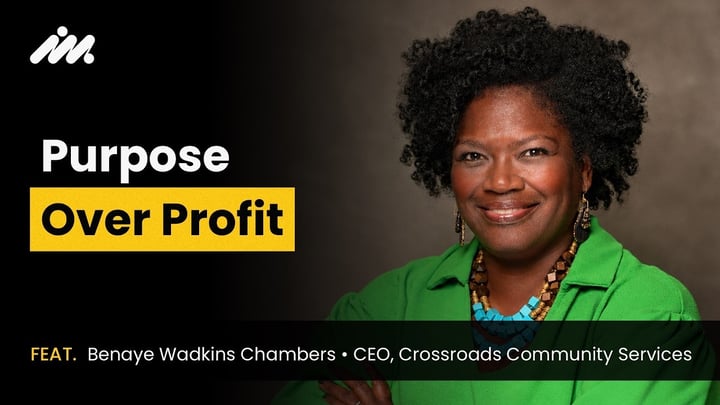
Episode 17 — Purpose Over Profit
Benaye Wadkins Chambers is the president and CEO of Crossroads Community Services, a food distribution and public health organization in Dallas that distributes through 148 ...
-
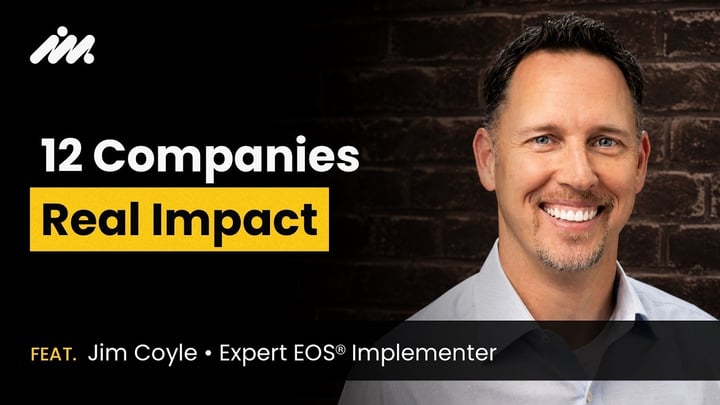
Episode 16 — 12 Companies, Real Impact
Jim Coyle ran 12 companies before he figured out what he was actually supposed to do. He sold candy bars to pay for a school trip to Italy, made beaded jewelry that put him ...
-
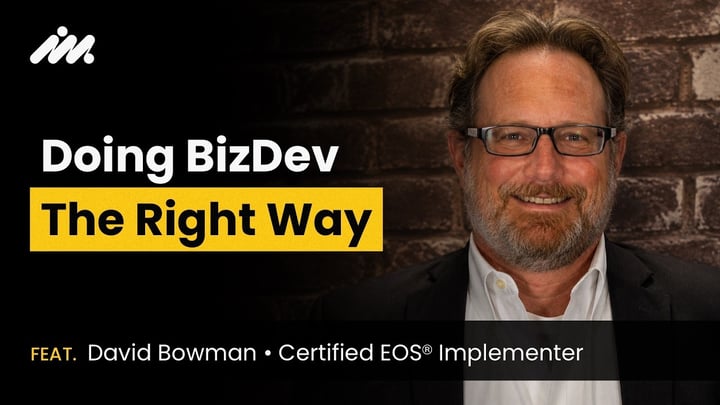
Episode 15 — Doing BizDev the Right Way
David Bowman spent 10 years in the Marine Corps as a helicopter crew chief before realizing he was never going to be the guy sitting behind a desk. After a career in ...