


Key Takeaways
-
What a Departmental Annual Planning Session is and how it supports the company’s Annual Plan
-
When departments should hold their planning sessions
-
What to include in a Departmental Annual Planning agenda
-
How departmental Rocks, Scorecards, and issues should connect to company goals
-
What teams should leave with so they can execute over the next 90 days
-
How Ninety helps connect Departmental Annual Planning to weekly and quarterly execution
If you’re only doing Annual Planning at the leadership team level, each of your departments still has to figure out how the company plan applies to them once the meeting is over. Some teams make that connection quickly, but others struggle.
I saw this when working with a high-growth services company recently. The Sales team was consistently hitting its targets but Operations was falling behind. Everyone on the team was capable, but they were constantly reacting to whatever was right in front of them instead of working from a clear set of priorities.
Sales had SMART Rocks in place, a Scorecard that tracked what was important, and a better connection between their day-to-day work and the company’s 1-Year Plan. Operations understood the company direction, but they hadn’t worked through what that meant for their department.
The Operations leader decided to start holding a Departmental Annual Planning Session after the leadership team completed its Annual Planning. Within six months, the team was working more proactively, setting clearer priorities, and doing a better job connecting the work to the company's bigger goals.
This is exactly what Departmental Annual Planning is meant to do. The leadership team sets the company direction, and department leaders work through what their teams own. Without that step, too much is left open to interpretation, and that's when the whole company can lose Traction®.
What Is a Departmental Annual Planning Session?
A Departmental Annual Planning Session gives a department dedicated time to work through what the company’s Annual Plan means for its team. The leadership team has already done the company-level work by reviewing the vision, setting priorities, working through major issues, and agreeing on the 1-Year Plan. The department then takes those decisions and determines how its own work needs to support them.
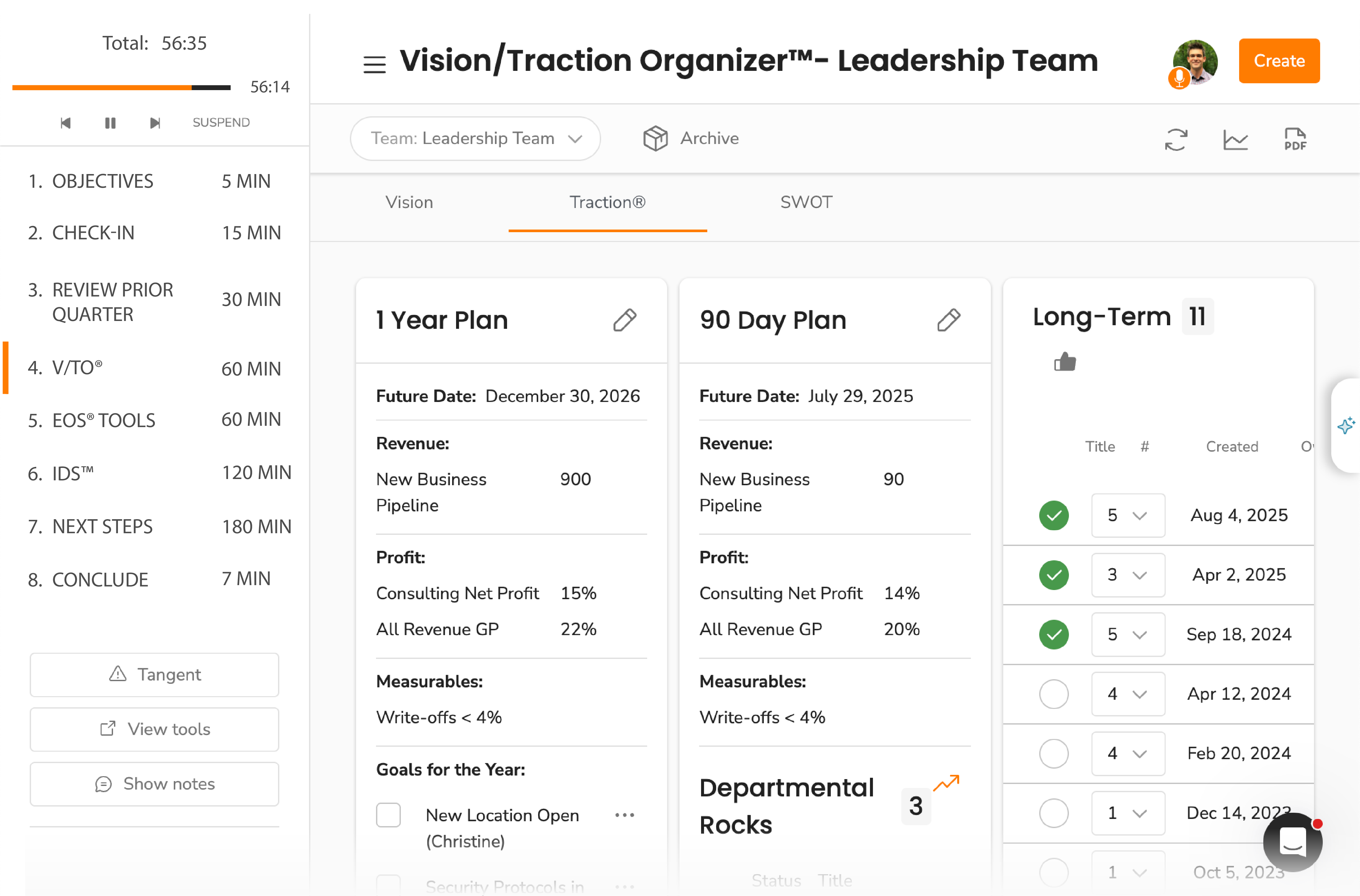
That usually means reviewing the company Rocks, looking at their own Rocks and Scorecard, identifying issues that could get in the way, and deciding where the team needs to focus over the next year and quarter. Some departments may also have their own V/TO®, depending on the size and complexity of the organization.
The department isn’t creating a separate strategy. It’s taking the company strategy and working through what that means for the team and how they can best execute it.
Why Do Departments Need Their Own Annual Planning Session?
A leadership team can spend two full days building a strong Annual Plan and still leave the rest of the organization with questions. That's because the people who were part of Annual Planning heard the discussions, helped make the decisions, and understand the thinking behind them. The rest of the company usually gets the summary.
That summary may be clear, but departments still have to determine how that applies to their day-to-day work. If the company sets a priority around customer retention, Sales may need to change how expectations are set during the sales process, Operations may need to improve delivery consistency, and Customer Success may need to update onboarding or account reviews. Each department has a different part to own.
Departmental Annual Planning creates the time to work through those details before the year gets moving. It helps department leaders determine what belongs on their team’s Rocks, which numbers belong on their Scorecard, which issues need to be solved first, and where ownership needs to be clearer.
Without that planning time, teams can spend the first few weeks of the quarter just trying to figure out what comes first instead of getting to work on the plan.
When Should Departments Hold Annual Planning?
I recommend holding Departmental Annual Planning shortly after the leadership team Annual Planning Session, ideally within the following week.
Before the department meets, the leader should be prepared to share the updated 1-Year Plan, company Rocks, relevant Scorecard measurables, and any leadership team decisions that affect the department. The team can then spend its time working through how those decisions affect its own priorities instead of trying to understand the company plan from scratch.
Once the departmental sessions are complete, a State of the Company meeting gives the broader organization another opportunity to hear where the company is headed and see how the work happening across departments connects back to the company plan.
What Should a Department Cover During Annual Planning?
A Departmental Annual Planning Session doesn’t need to copy the full two-day leadership team Annual Planning agenda. Most departments can get the work done in a few focused hours if they come prepared.
Here’s a sample agenda:
|
Time |
Agenda Item |
Description |
|
5 min |
Objectives |
Set the tone and outcomes for the day |
|
30 min |
Check-In |
Share personal/professional bests, what's working/not, expectations |
|
30 min |
Company Headlines |
Recap top takeaways from the leadership Annual Planning Session |
|
30 min |
Review Prior Quarter |
Rocks (Done/Not Done), Scorecard, wins, lessons learned |
|
30 min |
Review V/TO + Prior Year |
Revisit long-term vision and assess yearly progress |
|
30 min |
Update Dept. V/TO (optional) |
Adjust 2-Year Picture and 1-Year Plan if applicable |
|
60 min |
IDS® |
Solve top issues with Identify, Discuss, Solve |
|
15 min |
Conclude and Rate Meeting |
Rate the session, capture feedback and next steps |
The exact timing for each section can change based on the department. A smaller team may need less time, while a larger or more complex department may need more time for IDS® or a deeper review of its Scorecard and V/TO®.
What matters most is that the team leaves with decisions it can work from. A well-run session should create clarity around priorities, ownership, measurables, and the work that needs to happen over the next 90 days.
What Should Your Department Leave the Session With?
By the end of the session, the department should be clear on how its work supports the company’s 1-Year Plan, which Rocks deserve focus over the next 90 days, and which measurables belong on the Scorecard.
Ownership should also be clear. Each Rock, measurable, To-Do, and follow-up needs one person accountable for moving it forward. If an issue can’t be solved at the department level, it should move to the appropriate leadership team Issues List.
At the end, ask:
Can everyone on the team explain what they own and how it impacts the company plan?
That’s a good measure of whether the session did what you needed it to do.
Why Run Departmental Annual Planning in Ninety?
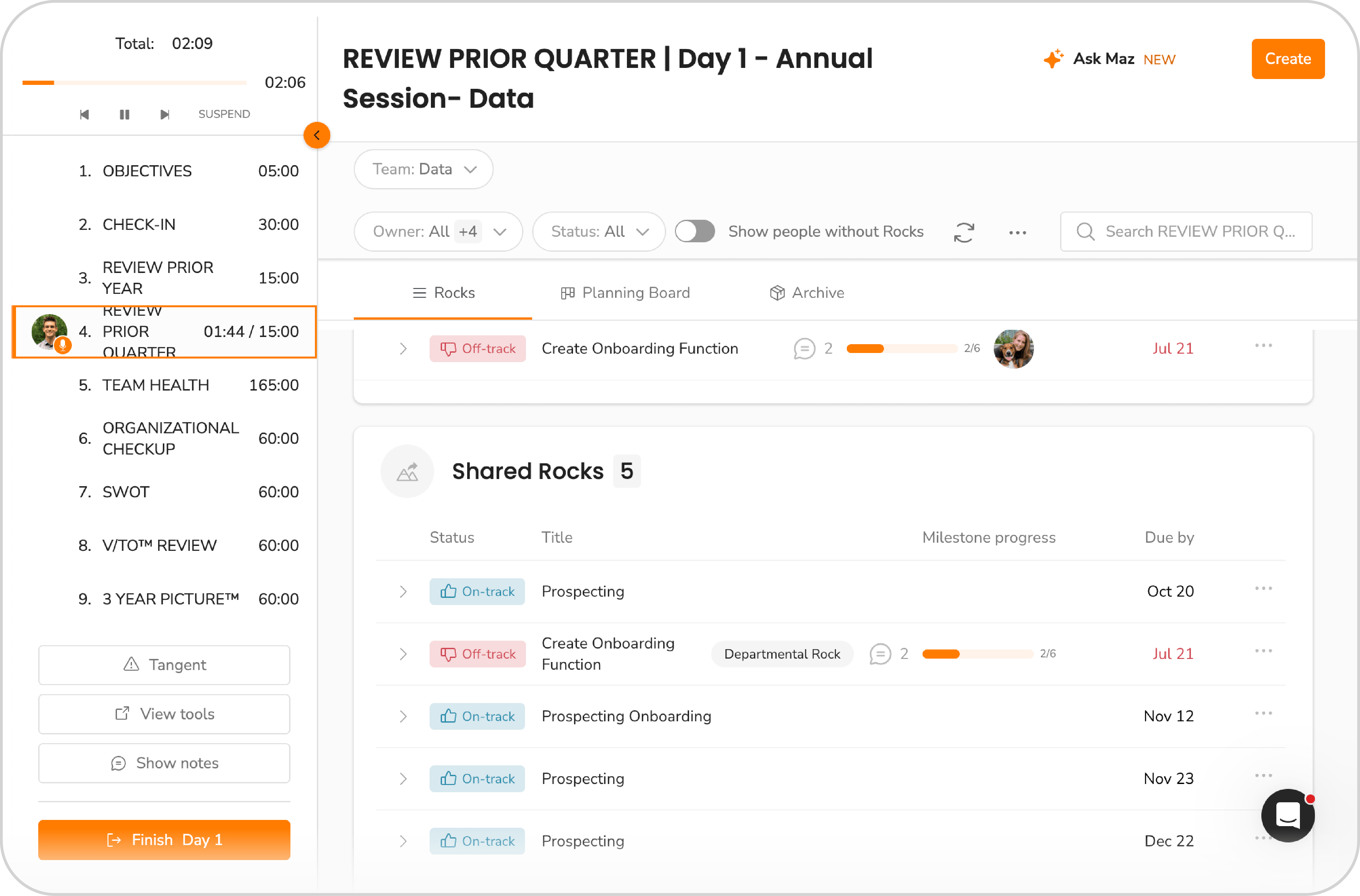
Departmental Annual Planning creates a lot of decisions in a short period of time, and those decisions are easier to execute when they already live in the system the team uses every day.
Ninety gives companies running on EOS® one place to connect their V/TO®, Rocks, Scorecards, issues, meetings, and accountability. When your whole team is on Ninety, every person can review company priorities, build their own Rocks, update measurables, capture issues, and keep ownership clear without relying on separate spreadsheets and follow-up documents.
And because the plan already lives in Ninety, your team can move straight from planning into the work.
Turn Departmental Planning Into Company Traction®
The Operations team I mentioned earlier got better results once they took the time to work through what the company plan meant for their department.
That’s what Departmental Annual Planning gives you. The leadership team sets the direction, and each department works out what it owns and where it needs to focus. When everyone is clear on that, the team can spend less time sorting out priorities and more time executing on them.
FAQ
Does every department need an Annual Planning Session? Departments that own meaningful priorities, people, measurables, or company outcomes will benefit from dedicated planning time after the leadership team Annual Planning Session.
How long should a Departmental Annual Planning Session take? Many departments can complete the work in 3–5 focused hours. Larger or more complex departments may need more time.
Who should attend Departmental Annual Planning? Include the department leader and the people who need to help make decisions, own Rocks, solve issues, and execute the plan. Ideally, everyone in the department can attend.
Does every department need its own V/TO? No. Some departments benefit from having their own V/TO, while others can work effectively from the company V/TO.
How should departmental Rocks connect to company Rocks? Departmental Rocks should define the specific work the department owns in support of the company’s priorities.


.jpg?width=500&name=large_Annual_Plan_in_5_Steps_90_Blog_Header_1920_x_1080%20(1).jpg)
.jpg?width=500&name=large_The_Best_Annual%20Planning_Software_EOS_Blog_Header_1920_x_1080%20(1).jpg)