
The Year When Everything Broke feat. Mark Abbott, Ninety CEO
Mark Abbott is the founder and CEO of Ninety, the platform powering this podcast. He was EOS Implementer number 33 back when there were only a handful of coaches in the community. He has spent decades obsessing over vision, culture, and what it takes to build companies that last. So when he looked around his own company last year and realized the culture had drifted, it hit hard.
In this episode, Mark opens up about one of the most difficult years in Ninety’s history. The company had grown fast, maybe too fast. Leaders were over-indexing on taking care of their teams instead of doing what was right for the company. People were quietly sitting on work they did not need to do and not escalating it. And when it came time to make hard decisions, the first attempt did not go the way Mark would have done it. He let it happen anyway. And he has regretted it ever since.
We dig into:
→How Mark discovered EOS in 2010 and became implementer number 33
→Why vision and culture are the foundation of everything else
→The two co-founders in Naples who were ready to break up until one conversation changed everything
→Leadership changes on the ones and threes, and why good people still end up in the wrong seats
→The three levels that matter for senior leadership: ego development, time span capacity, and levels of thinking
→What “succeed or escalate” means and why it became a mantra at Ninety
→The difference between the first reduction in force and the second, and why founder mode matters
→His three biggest mistakes: the first RIF, the Paddle/Stripe decision, and the new commercial model
Mark also shares the moment he told Christine, vulnerably, that he was not happy with the culture of his own company. For someone who has built his career around helping others get culture right, that admission carries weight.
Audio Only
Christine Watts
[0:00:01]
Hey, there. Welcome to Impact moments, powered by 90. Today we have a really special guest, Mark Abbott, CEO and founder of 90 Krisand I know him very well, and yes, that is the 90 that powers this entire podcast. I'm excited for you guys to hear from Mark and hear his backstory about how he found EOS when it was only a handful of implementers and how he's really spent his entire career obsessing over culture and values. And so we get to hear some really vulnerable stories from Mark about how he found himself in places he didn't expect, how he had to dig in and really take his hands and take the reins on the culture side. And so stick around, listen, and let's get into it.
Christine Watts
[0:00:48]
Well, Mark, welcome to Impact Moments. Glad to have you here.
Mark Abbott
[0:00:53]
Excited to be here. Thanks for having me.
Christine Watts
[0:00:56]
Well, we already know you pretty well, but I feel like we need to let the audience get a chance to know you. And so, Chris, I know you've got questions prepped to ask Mark. I feel like mine, one that I wanted to start off with is, what is your favorite 90 moment? Not work related.
Mark Abbott
[0:01:19]
Favorite 90 moment? Not work related. Well, I'm not going to say it's. If I. If I really thought about it, I may have a better one, but. But one memory I will never forget Is our second annual summit was we did it at the top. We did it at Sundance. And the main dinner was up the gondola at the restaurant there. That's on top of the mountain. And I personally think the views are extraordinary. And. And so I got up there and. And as people were getting off the gondola, you know, they're looking around and. And I'm just. My heart was just. I was so, you know, happy to be able to share that with them and to see, you know, everybody just loving the moment, being together, being up on top of a mountain, looking out at, you know, what this awesome universe has given us. And. Yeah. And then, you know, everybody, you know, we. You remember, we kind of forgot almost to take the picture. And so we all rushed out because the sun was setting. We got a amazing shot of the whole company, you know, and so, you know, that whole getting, you know, that whole moment, that whole night was just spectacular.
Kris Snyder
[0:02:57]
That wasn't Sundance, though.
Mark Abbott
[0:02:59]
It was Snowbird.
Kris Snyder
[0:03:00]
It was Snowbird. Right. Like, I don't mean to be correct, if I was tracking through. Well, because that, I mean, Sundance was also great. Right, but that was more.
Christine Watts
[0:03:11]
I loved Sundance. Yeah, yeah.
Kris Snyder
[0:03:13]
But. But Snowbird, I mean, that. You're right. That gondola up, right? And then some people actually got to ride on top of the gondola. And I felt cheated.
Christine Watts
[0:03:22]
What do you mean?
Kris Snyder
[0:03:24]
You remember that?
Mark Abbott
[0:03:25]
I tried to br.
Kris Snyder
[0:03:27]
Oh, you weren't there.
Christine Watts
[0:03:28]
I wasn't there.
Mark Abbott
[0:03:30]
Oh, no.
Christine Watts
[0:03:31]
I tried to bribe baby.
Mark Abbott
[0:03:32]
Yeah.
Kris Snyder
[0:03:33]
Oh, sorry, yeah. No, there was, there was the option to ride on top of the gondola. And this is, this is my personality coming out. And I was like, I'm on top of the gondola. And I tried to bribe my way into it for the team. Like, I were like. And they shut me down, Christine. And so we went to the top and then it was like Meg and another, like, group of people as they came up there on top of the gondola. It was like, son of a gun. I fail at that because that would have been cool to ride all the way up, but, yeah, it was beautiful.
Christine Watts
[0:03:59]
Well, Chris, I'll let you go. I. I feel like we need to do a quick a couple, like, get to know you questions with Mark, because even though we know him really well, I want the audience to start to get to know him before we get into our impact moment. So I didn't know if you had a few questions prepped too. I've got some too.
Kris Snyder
[0:04:18]
I did. And my, my first question. Cause I think this is relevant because we're talking about eos, right, Mark, how did you find eos?
Mark Abbott
[0:04:27]
Yeah, so the short version is that one of my brothers started a business that I invested in and then it was clear they needed some adult supervision. So he brought me in as a sort of a fractional coo. And one of the business's clients actually was eos. And it was very early on. And because they knew Eos, they reached out and got an EOS implementer and they started implementing EOS. So I was introduced, you know, to EOS. I think this is circa 2010ish. And. And then, you know, I've shared the story a bunch, but, you know, I had my own thoughts about creating a business back in 2005 that was, you know, write a book and create software. And. And then, you know, was introduced to the EOS and read Traction and it was better than I was going to write. Mine would have been a little more, less. It wouldn't have been as simple in a good way as, you know, Traction is. And. And then I found out, you know, there was. There was this coaching community and I thought, hm, right. So maybe instead of me writing a book and doing software, I can just, you know, get introduced to the coaching community and do the software thing and, and then after with that thought, I went and met Gino and, and talked about it and, you know, the rest is history.
Kris Snyder
[0:06:07]
Well, and when you did it, I mean, how many EOS implementers were there when you joined?
Mark Abbott
[0:06:13]
I was 33, number 30.
Kris Snyder
[0:06:16]
So for those playing along at home, there's now 870. And there's a lot that have churned over time. That's natural. People retire, they go on to do other things. So that's a big change over time.
Mark Abbott
[0:06:30]
Yeah, and it's funny too, because, you know, where I was before that was I was recruited by a hedge fund to help it start up a new business. And I was actually employee number 33 at the hedge fund. So it's kind of like, interesting. Natty hedge fund now is, you know, I don't know, you know, tens and tens and tens of billions and, you know, I don't know if it's 890 employees or plus or minus, but I wouldn't be surprised. I mean, it's gotta be hundreds and hundreds.
Christine Watts
[0:07:01]
So how was it, how was it getting like, your first clients and everything? Like, since EOS wasn't as well known, was it, did you leverage, like, contacts or how long did that take?
Mark Abbott
[0:07:12]
I want to say that, you know, I, I, I was the first EOS implementer in Miami. I'm pretty sure that's true. There was one in Delray. Whole other story. Probably shouldn't get into it. I sponsored eo, the Southern, you know, the, the sort of the Southern Florida eo. And then somehow or another I got introduced to. Can't even remember how I met Johnny Mosley, but Johnny Mosley was one of my very early. Oh, he read one of my blogs and then he called me and then he was like, you're my guy. So very early on. And then he belonged to a peer group of construction, you know, companies. And so he brought me to that peer group and I got like seven clients out of that peer group and, you know, so the rest was history.
Christine Watts
[0:08:13]
Yeah. It's so funny you even saying a name like that. I'm like, well, I know Johnny Mosley because he was one of our first clients. And it's like, because all of our beta users were you and Chris White and Benj and all of them together. I'm like, I feel like I could name off, you know, jnc, you just had them on Founders Framework and call for pest control and like all of these people that I feel like I know now.
Mark Abbott
[0:08:35]
Yeah, yeah. And because I had, you know, for a long time, most of my clients would, you know, would keep me around. Right. I always said, you know, I'll never, unless you do something really bad, I will never fire a client. So it's. As long as you guys want me darkening your doorstep, so to speak, right? I'll be here for you. And JNC is probably 10 years old now. And yeah, so there's a bunch of. And Johnny's an investor in 90.
Kris Snyder
[0:09:03]
So I mean, I think this is a phrase you use often, but some things are equal. Some things are more equal than others. George Orwell or something like that. Right. Animal Farm. If you think about all the tools in eos, do you have a favorite? And if so, which one? 20 in the toolbox plus. Right.
Mark Abbott
[0:09:25]
Yeah. Well, you two know, I'm a huge culture guy, so. So if we're going to go tool, right. You know, the vision, the VTO is to me is, is, is, is essential. Right. Because, you know, without a, without a strong vision, without a strong culture, you can't attract and retain great people. Right. Without attracting, retaining great people, there's no reason to follow data. If there's no people, there's no reason to worry about your issues, you know. You know, if there's no people, there's no processes, then obviously there's no traction. So to me, I'm all about the vision and making sure that everybody's on the same page and, you know, that, that, you know, you're, you're really, you know, now more than ever. I know I'm going to get into conversation on this later with you because I sort of have a sense for things here. Pierce Drucker, Right. Culture eats strategy for breakfast. So to me, it's, it's all about vision and culture.
Christine Watts
[0:10:22]
Have you always felt that way or do you feel like there was a time where that, like, became more true for you as a leader?
Mark Abbott
[0:10:29]
Not to, you know, do the I'm an old man thing, but, you know, I started to lead people when I was 23 years old and started to sort of become fascinated with, you know, all things people related. But I would say that when Built To Last came out, which was late 80s, you know, there's a whole thing in there on vision and culture and clock making and, and for me, you know, that sort of solidified the framework and the importance in my head, that book was, you know, huge for me.
Christine Watts
[0:11:11]
So that was pretty early in your career then, it sounds like.
Mark Abbott
[0:11:14]
Yeah, I was in my 20s.
Christine Watts
[0:11:15]
Yeah.
Mark Abbott
[0:11:16]
Yeah.
Christine Watts
[0:11:17]
Was it like, I think A lot of people talk about culture now. Do you feel like that was a newer idea at the time or do you feel like a lot of, like, leaders were thinking about it in that way? I even think about the word like leader versus manager. And probably a lot of people in their 20s would like more think of themselves as managers than leaders. And like, what was that mentality like for you?
Mark Abbott
[0:11:41]
I think, you know, getting in the Wayback Machine. I, I, you know, I certainly know, you know, I started at a bank and I don't remember talking about culture at all, you know, period. End discussion. And, and I can tell you that, you know, my next job, you know, we didn't talk about culture, right? The commercial finance company didn't talk about culture. I did. And I, you know, I guess and good news here, right, you know, in hindsight, because the parent company didn't have a culture thing, I did built a culture. You know, I built the culture up in, in, in the, in the, in the commercial finance group, originally called corporate finance Group. So, you know, I put in, you know, I, I, I, I created the core values, sort of the, the straw man, and then I gave it to a team of about 10 people or eight people, and then they created a deck. Each core value had a sort of a full page on a, on, on the equivalent of a PowerPoint today. Right. And, and it was incorporated into, you know, our feedback and review system, our 360 system, et cetera. So, yeah, I started to lean into culture pretty, pretty heavily, you know, right around 29, 30 years old.
Christine Watts
[0:13:03]
That's awesome. So you were like using the VTO and like the version that you had created for yourself before you like, had a name for it that, you know,
Mark Abbott
[0:13:12]
you know, it's funny, Christine, I, you know, when we, when we moved to Florida, we bought a old house that hadn't been lived in for years and years, and we renovated it. And as a part of the renovation, the general contractor, we ended up firing and he ended up suing us because he wanted us to give him more money. And we ended up, you know, counter suing him because he didn't even earn the money that he, that we gave him. And he ultimately went bankrupt, kind of a thing, one of those stories. But, but he, he messed up the pool. And so when he rebuilt the pool, he had to put new concrete on it and he had to bring the, bring the, the landscaping up to it. And what that did was all of a sudden created a flood into the basement. So I came into the house after a rain and the basement was full of water and in there was all these documents that I had for my career. And, and one of them is the vision document that I wrote back in 1990. Who, 1990? I want to say 1996. And it was a 2020 vision, so. Right. And it was like 50 pages long and if you saw it, you'd be like, of course you'd laugh. It's me. I haven't changed at all of this stuff for 50 pages.
Christine Watts
[0:14:46]
Yeah, that's Mark.
Mark Abbott
[0:14:47]
Yeah. And it got into, you know, it was all vision and culture and how we structured the organization and how the organization was going to grow and what new divisions we were going to start. And, and yeah, I've been doing it for a while. And the cool thing is, you know, that, that, that, that biz, that division that I took over was performing really, really poorly. The bank wasn't bank, the commercial finance company was performing really, really poorly. And, and today that, you know, my, that business that I took over is, you know, probably $80 billion in assets and still one of the best in the business. So the, you know, it lived up to the vision.
Kris Snyder
[0:15:30]
So let's go to two part question mark. So you've had so many client moments, right? If you can find a client impact moment that stays with you, good or bad or, you know, there's something that sticks out. Think about a client moment and then think about a 90 moment. Like something that was happening, we were working on, struggling with. Maybe it's a moment of clarity, whatever it is, like so two part question, the client moment as an EOS implementer, coach, and then the other one is like as 90 as the founder. Find an impact there too.
Mark Abbott
[0:16:10]
You know, it's interesting and maybe revealing in maybe not a very, you know, healthy way. But you know, when I think of some of my impact moments with clients and I, you know, my main immediately goes to some of those really hard moments, right. And I have a, you know, I, I probably, I should know this number, Chris, but I don't know, maybe 60 clients, right? 60 or 70, you know, as an EOS implementer and I, you know, I am sure that I've sat in at least 20 to 30 sessions where something really goes, you know, wrong between humans. I've had to, I've had to let the team, you know, walk around the building.
Christine Watts
[0:17:00]
So literally the people in the room, like there's tension building.
Mark Abbott
[0:17:04]
Yeah, yeah, right. Where, you know, where, you know, crying, screaming. And so, you know, those moments, you know, I can, they flash before me right now, right because they're hard, right? And you know, you're, you know, you, as the implementer, you know, you try to figure out how to, you know, how to be as constructive and helpful as you possibly can, but sometimes it's buried and, you know, you're trying to help the teams and then it explodes. Right? And so, you know, I, I think about a lot of those different moments, as is very hard moments. Interestingly, you know, they, they, they all ended up for the better, right? They had to pass through those storms and become better.
Christine Watts
[0:17:59]
Like, is it like, like you said, you can take a lap around the building and then you can like finish the day and figure things out with team health or whatever it is, or do you feel like it's resolved over like a few quarters?
Mark Abbott
[0:18:11]
Well, you know, I think if I, if I had to sort of gut guess the percentage of time where by the end of the day things were pretty good and when the end of the day they were, they were still not good. And then whether or not, you know, within weeks, like the issue was dealt with because someone had to go, right? I, I'd say that, you know, the majority of the time by the end of the day, you know, everybody was like, yeah, we talked about it, we came back, we really got open and honest about it all. We cared about one another and it was worth fixing and working on and people appreciated having to pass through that moment because it was inevitable. And then you have the situations where, where, you know, ultimately it just revealed that that person was not appropriate for the team. And then the, you know, and then maybe 10% of the time, Christine, it gets fixed and then it comes up again and it gets.
Christine Watts
[0:19:18]
Well, that was going to be my next question. Like, what's often been like the root of those problems? Even if you had to like, think about a specific instance, is there like a strategy or a people thing or like what's happening before that, like comes to that, the head in the room,
Mark Abbott
[0:19:33]
it's, which reminds me of a really good moment too. But you know, it's, it's always a, it's a, it's a, A lot of times it's a, it's a conflict of style and, and traits. Right. So I'm going to bring Christine, you may remember, but I had a client in Naples that did high end remodeling and the two co founders, they, they had tried everything to figure out how to work together and, and so they reached out to me and I went, I drove to Naples from Miami and, and had lunch with them and and they were, you know, they just, they, they, they thought I'm their last straw, right? I'm either going to fix this or, or they're going to have to, you know, break up. And, and, and you know, the business, because they were very different people, the business would probably just die. So long story short, you know, in that situation, you know, I use Myers, you know, type coats, right, to help people understand, you know, sort of how they, how they communicate. And then I, you know, I use Colby. And, and these days I also, we also use a version of Enneagram. And so I did the Colby and I did the, the type coach with them. And, and, and then really helped him understand how different they were sort of personality wise. One was an ISTJ and one was an entp, right? And, and once they had language around why they sort of attacked and talked about things the way they did, all of a sudden, right? I mean, it was, it was, it was a miracle. These guys got along exceptionally well. They could, they understood why they had all the friction over the time and all of a sudden they got along. I mean, it was just incredible, right? So it was just personality. That's all it was. And it was. And so, you know, the entp, we, we have one with us right now. You know, he's very gregarious. He was a sales guy, right? He loved to go out there and he loved to explore different ideas. And the other guy just like, he's just like, heads down, I need to deliver on this project, stop screwing around, stop changing it, right? And, and the same thing for building the company. And so when once they got language that helped them, you know, sort of talk about detention in their styles, as I said, they got along brilliantly and they thanked me, you know, forever. So that's, that's an example of, you know, it being about personalities, you know, as Chris, I'm sure, knows, and Christine, you, you know, been around, you know, us and others long enough to know, you know, if one person wants to go 80 miles per hour and you know, and, and, and, and, and, and, and drive, you know, 12 hours a day and the other person wants to go 40 miles per hour and drive four hours a day, know that you just can't reconcile that, right? And so you get that on occasion, sometimes you get, and Chris, I know, can talk about this as well. Sometimes you get, you'll get, you know, so I talked about type coach, right? And the version of, you know, Myers Yung, you know, the Colby stuff comes in into play as well. So sometimes you'll get, you know, like a person who. They think they can do this really, really well, but they have no follow through, right? And everybody's like, you gotta, you know, you gotta do this and you gotta deliver on this. And they just don't. They just, they say it, but they don't do it. And so, you know, I've seen that. And then, you know, it's. It's funny because, you know, whether it's sort of a Myers Briggs type of conflict, whether it's a conflict between what the seat's asking for and what the human just generally eats. Know is great at doing, if you look at it through the lens of Colby, or even if you look at it through the lens of. Of Enneagram, right? Where, you know, someone is, you know, they want to be perfect, right? They. Everything's perfectly orderly and they're methodical and they're slow and they really want to take care of everybody. And then you got someone who's like, you know, like, the three of us, we're all competitive and we want to go faster. Right? And so sometimes you get tension. So it's. It tends to be about the. How the humans are wired and whether or not they can play well together, giving their wiring.
Kris Snyder
[0:24:19]
Yeah, but Mark, I. Obviously, we're big fans of the five stages of, you know, development of building a business. I talked to a previous client this last week, called me up, and one of his shares was like, hey, I had the leadership team when you were coaching us that I could afford. I now have a new leadership team because I can now afford a different scenario. Let's talk about that. And I think we see that when you're building the stages and sometimes because of loyalty, because they were in the trenches with you when you were doing something else. We carry leaders. We try to carry them as far as we can.
Mark Abbott
[0:25:00]
Yeah.
Kris Snyder
[0:25:00]
And it's hard to let go. I mean, do you have some of those moments when you were coaching a client where you could see it for them, but you're trying to figure out how to express it to them? Like, hey, that I get the fact that leader was there for the last two years, but they can't make that next evolution.
Mark Abbott
[0:25:13]
Well, and I understand it, you know, a lot better today, Chris, than I did, you know, seven. Seven years ago too. Right. It's like, you know, I look when Christine asked me about, you know, sort of those. Those moments where, you know, those impact moments in my mind went to some of these, you know, really tough, you know, moments amongst the team is, you know, I've talked to a fair bit on. On the Founders Framework channel. There are a lot of times where there's someone on the leadership team whose level of ego development. Right. Is not where you need it to be in order to be on the senior leadership team. You know, and more specifically, because I was literally thinking about one of my clients, the cfo. They. They kept asking her to create a financial projections model. And I even gave her like, you know, I can't remember if it's two days or five hours or eight hours of my time helping her to build a model. And. And she just couldn't or wouldn't do it. And so we got into. They got into a pretty heated conversation about it, and she started screaming, right? And, you know, she, at that moment was very level three, right? Which is, you know, I know I want what I want, and I'm going to, you know, just very much asserting control very aggressively and saying things that you just can't recover from, right? And so, you know, you know, when you think about the, you know, the, the concept that you're talking about, we. We talk about leadership changes on the ones in the threes, right? One, you know, right? One person, three person, 10 person, 30 person, 100, 300, 1,000, 3,000, et cetera. And, you know, as the organization gets more developed and gets larger and you start putting in, you know, the structure and the layering, you know, you know, you really. There's. There's. There's kind of three dimensions that are really important to understand. One is level of ego. So I deeply believe that once you get to the senior leadership team level, you know, you shouldn't be a leader if you're not at least at level five. Right? Level five is, you know, I want to achieve. I'm going to think for myself. I want to become better and better. What I'm working on, level six is, you know, empathy, and level seven is you move beyond empathy to making sure that we. We're aligning people culturally, competencies, et cetera, right? So, you know, you really want to get your team up to a level 7, best you possibly can in senior leadership. But a lot of people, you know, a lot of people get stuck at four or five and they're just. And they don't want to do the developmental work. So that's one thing, right? Second thing is, you know, time span, you know, capacity, right? The ability to. Once you get to a senior leadership team level, you need to be able to sort of say, hey, this is where my apartment's going to be in a year or two years and then take that idea. First of all, you got to have an idea of where it's going to be and then you have to turn that into reality. Right? And so you have people who just don't have the time span capacity to sort of play at that level. So you got that going on and then you have just like what I like to refer to as levels of thinking, which is, you know, they're capable of, you know, Feynman has seven levels of thinking. They're capable of getting up into that sixth and seventh level, which is, you know, to understand, to pattern recognize, to see, you know, what's working, what's not working, obviously to work on the things that are not working and to do it competent and competent way. And so, you know, what happens is in that sort of, why EOS is so important is when you get to that stage three where you have department leaders, they need to be able to, you know, they need to be able to have a certain level of ego, they need to have a certain level of thinking, they need to have a certain level of time span capacity. And then of course they got to be culturally aligned and, and, and right. And they got to be figuring out how to work well with a bunch of different personalities. And so, and, and the truth is is, you know, some, some people can be really good at, you know, at that level two work, right. Which is, you know, 90 days to one year. Complicated but not complex. But, and, and, and then, you know, you, you, you, you know, you, you promote them and then you see that they're just, they're just struggling. And they're not just struggling, but they're kind of like, they don't, they're not willing to do the work that they gotta do to take it to the next level. And that's, you know, you see that a lot. And, and so yeah, the, as I said, leadership changes on the ones and threes. And, and it's hard, right, because they're, you know, you know, as I've said on a number of different occasions, you know, we probably hired guys, what do you think, 250 people since we started this company. And I, and I think plus or minus one person has been like a really crappy core values fit. But we hire really great people and sometimes, you know, they're great humans, but, and they, and culturally they're awesome, but they just don't have what it takes to, you know, competently and confidently discharge the duties of the seat.
Christine Watts
[0:30:49]
Yeah.
Kris Snyder
[0:30:50]
And yet the ones and threes I think are fair, but I think also we went through an accelerated growth period and you have to have humans that can grow with you at that pace. And we got good humans that some of those just didn't grow at the pace that we were growing.
Mark Abbott
[0:31:05]
Yeah.
Kris Snyder
[0:31:06]
And so I think we probably out accelerated their appetite for that or their ability to it. And the other thing we ended up.
Mark Abbott
[0:31:14]
Yeah, and this is it. You know, in, in the book I close to finishing, right. Of Founders field notes on Culture is that, you know, when I, when I, when I think about culture now, you know, we'll get into, you know, last year, but you know, I learned a lot last year and ultimately, you know, I love frameworks and I developed two frameworks to help understand culture. And one of them is the three core types of culture, which are agreements, relationship based, which is the oldest form of culture. Then agreements based, which is, you know, the culture that evolved in order to handle more complex situations that you typically get in harsher, harsher environments. And then the newest form of culture, which is principles based culture. So there's three core types of culture. And then you need to understand, you know, the nature of the environment that you're going to build a company in. And, and that's the marketplace. The marketplace actually drives a lot of what your culture has to look like. Right. If you're in the AI space, you know, you need to, you need to have a high paced, you know, organization, meaning people who are comfortable working pretty damn hard and they need to be comfortable with ambiguity. Right. Because a lot of the stuff's not figured out. And so, you know, sometimes what happens is, you know, the culture gets built for one environment and the environment changes dramatically. Right. You go from being sort of low levels of ambiguity, much higher levels of ambiguity. I think that's taking place right now in a lot of industries, especially where AI is genuinely coming in and changing the nature of the business model. And so, you know, sometimes it's just that, you know, people are, you know, they, they, they're this, they struggle with a significant increase in ambiguity within the business model. Right, right. They're like, why can't this just be the way it was? And, and we don't even want to get into, right. When you bring in people from other cultures and you don't have great language to help people understand culture, you know, they bring their, they, they bring what they think's a great culture with them and then they, they, they sort of, you know, think that's going to work really well here and they try to get, you know, they try to have their, their, their team do that culture when it's like, well, but that's not the company's culture. Right. And so they try to impose, you know, their culture. And back to what we were talking about earlier, you know, I still don't know what percentage of the companies out there are actually really, really good at culture, but my instincts are it's still a, a small percentage. Right. And so when people come from other organizations, they may not even appreciate how important culture really is in some companies like ours.
Christine Watts
[0:34:05]
Well, I feel like we're circling it a little bit, but I'm going back to Chris's original question of the two part, because we got your client impact moment of those hard moments in the session room or even, you know, you going to lunch with those two founders and like, having that let's talk about type coach and Colby moment and seeing what happened after that.
Mark Abbott
[0:34:24]
Yeah.
Christine Watts
[0:34:25]
From a 90 perspective, do you have like, a specific moment or event or thing that happened where you could see, see the, like, ripple effect of what happened after that?
Mark Abbott
[0:34:39]
What from an. You. So you're asking about some, something in the 90s story.
Christine Watts
[0:34:45]
Yeah, like, we're talking a lot about culture right now, I think, from like, a general perspective and like, how we've seen ourselves grow over time. So if you have a specific impact moment from really, like, any of those stages that we've gone through that you felt like was kind of one of those pivotal times for us.
Mark Abbott
[0:35:02]
Well, I think the, there's, there's, you know, I could go down a number of different, you know, sort of paths on this one. But, you know, last year was hard for us. You know, we, we grew very fast and we ended up. Christy, you probably remember this moment where I told you, you know, very vulnerably, I can't, you know, I'm not happy with the culture of this company right now. And I can't believe that, you know, that this has happened under my watch because I'm such a culture guy. So, you know, what happened. And so, you know, that's what, you know, led me down the path to really trying to go another layer, deeper, understanding the nine, you know, what I call the nine, you know, cultural. The nine environments that any company is going to find itself in. And then the. Than the three types of culture. And then, you know, where did I mess up? And, you know, I think I've shared this with a bunch of people. I think we, you know, we under indexed on resiliency and we under indexed on. Because That's a core value of ours. And we under index on inquisitiveness, right? And so, and then I also believed that, you know, we had certain leaders who over indexed on, on taking care of their team versus taking care of what's right for the company. Right? And, and it ultimately culminated in us, you know, going, wtf last year? And, and, you know, and, and having to make a really hard decision. Two, two decisions, right. Which is that, you know, because we weren't working as well as we should be able to work together, we ended up recognizing that we had tens of people we didn't need anymore. And we, you know, and when we peeled the onion back, right, the people were like, I literally had someone say to me, you know, I guess I should have told you that I didn't have much work to work on. And I'm like, yeah, I think you should have. Right? And so, you know, and we came up with the phrase last year, succeed or escalate, which meant, hey, guys, if something doesn't make sense, you got to let us know and you know, let's let your boss know. And if you're, you don't think your boss is listening, say, hey, I, I really think this is important and it's part of our culture. I need to bring this to the next level until it gets resolved. And so last year, you know, was a tough year. I felt going into the year that our culture wasn't the culture that we had, you know, several years earlier. And you know, and I, you know, I stopped interviewing everybody, I want to say around 24 guys, right? I mean, every single person up until 24 I interviewed. And then, so, yeah, so last year was tough. And, and, and I learned, you know, you know, you know, as I like to say, right. We're exactly, we're supposed to be learning the lessons we needed to learn. And, and you know, we, and we had to make changes twice. And I think the second time we did it a hell of a lot better than the first time. And so I, you know, I learned a lesson and I didn't, you know, I, I, I, you know, Founder Mode, right. My whole series on Founder Mode came out last year in part because the first series, right. I, I let, I let it, I, I let how we approached doing the, doing the reduction in force. I let it be done in a manner that didn't resonate with me. And in hindsight, I was really pissed at myself because I should have just said, no, this is how we're going to do it. This is who we are. And then the second time, you know, I would say it was 85% of what I would have done and 15% I kind of, you know, acquiesced to, you know, sort of the, some of the things the team wanted to do. But, but yeah, last year, a lot of lessons, lessons learned on, on, on culture and, and where, you know, as a founder, you just have to take responsibility. You know, I always take accountability. I think you guys know that. Right? But sometimes, you know, you say that you're, you know, you're not, you're, you're going to let someone else do it even if you think it's the wrong thing to do. You know, there are two way doors and one way doors, and if it's a two way door thing, fine. But if it's a one way door thing and letting go of people is a one way door thing, in my opinion, then, you know, you, you, you, you know, as a founder, I think, you know, you want to, you want to make sure that you feel that that action is cons.
Kris Snyder
[0:39:50]
Well, Mark, thank you for sharing and hopefully everyone understands like how hard it is to, to share the things. Like when I give, it's a reflection back. Right. Like, we could have been better. All the leaders in the business could have been better in that whole process. It's not just you as a CEO. We could have all done a little bit better along the way. So I'm going to lighten the mood if that's all right. I'm going to switch it up a little bit, have a little fun. Whether you call it merch or swag, 90 has had some stuff along the way. And we had a T shirt at one point in time that was, I think it said, what's your issue?
Mark Abbott
[0:40:24]
That's right.
Kris Snyder
[0:40:25]
And it was really well received. Like, I saw clients that asked for that silly T shirt. If you could do a T shirt today with a phrase that you think relates to 90 in the mode that we're in now, what would the phrase of the T shirt be?
Mark Abbott
[0:40:41]
Oh,
Kris Snyder
[0:40:45]
and Christine, you have to go after that.
Christine Watts
[0:40:47]
No, I want to give out my answer. What would it be?
Mark Abbott
[0:40:50]
Well, you know, it's funny, the. Christine, you may remember this. We had a T shirt that had something like. It was, play hard, have fun, play hard, work. I can't remember what it was, but it was three lines on it, right? And I was on a stair machine and this woman came up to me and she said she was a teacher. She says, do you mind if I take a picture of the back. I want to share this with my. My. My students. And I. I just. I just laugh so hard. Right.
Christine Watts
[0:41:23]
I think that was our T shirt for our 20,000 user mark.
Mark Abbott
[0:41:27]
Yes, that's right.
Christine Watts
[0:41:29]
Yeah. I think Michelle made them. But I'm. There's like a little 20k right here, and then it has like the big visual on the back. So I got that one in my drawer too.
Mark Abbott
[0:41:37]
Yeah. You know, go on, Kris.
Kris Snyder
[0:41:40]
And we're. We're now over 300,000 for those playing along at home.
Christine Watts
[0:41:43]
Yeah.
Kris Snyder
[0:41:44]
So 20,000. We celebrated like mad. Cause we were so proud. But we are over 300,000.
Mark Abbott
[0:41:49]
Yeah. Yeah. I. You know that as, you know, as a true. I, I and tj. Right. Someone who gots to think. Who has to think about something this significant. You know, there's. There's no. I don't have an immediate answer. Is. Is the truth. I. Something about, you know, it's hard. Right. So, you know, it's. It's. It's. Right now I feel like there's so much going on. The opportunity in front of us to, you know, and to sort of have an impact. Right. On. Not just 300,000, like Krissaid. I mean, you guys know, my goal is to be meaningfully helping, serving 10 million people by the end of 2030. So, you know, the opportunity to just sort of take things to the next level in a. And. And do it in, you know, in, like, be great, but love the game that you're playing. Right. And to just really lean into doing amazing work. Something along those lines. I, you know, I, I don't. But I don't have an exact one. One. Okay.
Kris Snyder
[0:43:08]
Yeah. I mean, there's probably. If you want to go back to your threes, you could do next level, be great, love the game. I don't know. I'm just trying to think through your thoughts. Right. Like, how would you set that up?
Mark Abbott
[0:43:20]
But yeah, I. I'm.
Christine Watts
[0:43:21]
You guys just had the. We were just talking about this yesterday. What was it? See it, fix it, solve it, or
Kris Snyder
[0:43:27]
see it issue it, solve it. That's where we were headed.
Christine Watts
[0:43:30]
Yeah. Yeah, that popped into my head also. All of the. The Shouldn't Suck series or whatever we're calling it, Work shouldn't suck meeting shouldn't suck, or meetings kind of suck. Like, all of those come to my mind of like, ooh, that would be a good T shirt meetings kind of suck. Like, that would. That's a good, you know, conversation starter too, I feel like. So that's a fun one.
Kris Snyder
[0:43:53]
Well.
Mark Abbott
[0:43:53]
And yeah, it's fun to suck less, right?
Kris Snyder
[0:43:59]
And, and, and I've done this in a presentation because, you know, I was. I think you guys know the story. I was in Ireland with my family at a pub, and this guy walks in and he has a T shirt on the back says Paris kind of sucks. I took a picture and I sent to Audra, maybe you, Christina. I remember, I'm like, that's what we're going to call our meetings kind of suck, right? Versus shouldn't suck. And I was like, all right, that's. That's the T shirt.
Christine Watts
[0:44:19]
Krisliterally texted me this picture. They're in a bar. And it's just like him zoomed in on, like, it wasn't the you on in the gym mark where Krisasked permission. He's just like, zooming in.
Mark Abbott
[0:44:31]
Well, it's, it's funny. I don't know if you guys know this, but is it James Clear? Atomic habits.
Kris Snyder
[0:44:40]
Yeah.
Mark Abbott
[0:44:41]
Yeah. So he's now has a book publishing company. And, and, and, and, and he. So. And he talks about, you know, what he's doing and his thoughts on books and, and, and titles is a big thing to him. And, and, you know, and so he, he, he. He kind of goes in the direction of, you know, the story behind the five dysfunctions, right? Which is no one wanted to read the book about, you know, the five great things you need to do to have five great things. You know, that great characteristics of a team, right? These are the dysfunctional characteristics of a shitty team. Right? And, and so, you know, you want to have a book title that. That kind of grabs you. And, and, and even better yet is, it's almost like, it's like if it could be the word sucks in there, but it's kind of contradictory. Like, it's got two, like, atomic habits, right? It's like atomic means, you know, it's a really tiny, tiny thing. And it's habits, which is a big thing, right. That's kind of how he frames why he thinks his title works well. But, you know, something. Something along the lines that kind of slaps you in the face a little bit and says, I don't want to be that.
Kris Snyder
[0:45:54]
Yeah. And my T shirt is not a book title by all, but I find myself with 90. But also when I'm coaching clients, just repeating this phrase all the time, which
Christine Watts
[0:46:05]
is, oh, wait, can I guess? Oh, let's talk about it. No, I wanted to guess. I was gonna guess a different one.
Kris Snyder
[0:46:10]
Sorry, which one did it again?
Mark Abbott
[0:46:13]
Guess to see what we're gonna get.
Christine Watts
[0:46:14]
Okay. There's two Plan your work. Work your plan.
Kris Snyder
[0:46:20]
Yep, that's true.
Christine Watts
[0:46:21]
Another one, the story I tell myself,
Mark Abbott
[0:46:25]
he's changed that now.
Kris Snyder
[0:46:27]
Well, it's my story, not yours, because the one got overused, apparently, so we had to change it. But.
Christine Watts
[0:46:34]
Okay, but say yours again, so I'm not talking over you.
Kris Snyder
[0:46:37]
Well, Mike, just let's talk about it, because so often there's a story in someone's head and you can feel the tension in the room, and they're not ready yet to do it. So open the door and just say, let's talk about it, whatever it is. Like, we could deal with anything. What we can't deal with is the thing that's not said. So if you can just get them to bring it up, unpack it, and then we can deal with it. Otherwise, we're having a story that I don't even know what's going on, and that's probably more with clients than even 90, because often with 90, we know what's going on. But often when you're only seeing somebody once a quarter, you enter the room and you're like, what the hell is. What is this? Yeah, I don't even know the story, but if I can just, like, open the door and then get them encouraged and feel brave enough to talk about it, then we can deal with it.
Mark Abbott
[0:47:23]
You know, back to eos, right? You could have a shirt that says what's working, what's not. Yeah.
Christine Watts
[0:47:29]
Yeah.
Kris Snyder
[0:47:30]
Well, and. And we. You know me, Mark, I keep saying yet it people. When you say working, not working, as long as you put on the yet it, they. They go there. Otherwise, they're always like, well, it's not really broken. It's like, yeah, it's just not right. So that's the yet part. We just got to get better at it. Well, and then it feels so definitive.
Mark Abbott
[0:47:49]
Yeah, the. The. The. The new, you know, short, you know, couple. Couple of words phrase that our coach Adam Weber has given us. Right. Is, you know, what are the growth opportunities? Right. Not what are the issues? Where. What are the growth opportunities? Where are the opportunities for growth?
Christine Watts
[0:48:12]
Well, we will keep talking forever, but we do try and keep these to 30 minutes. So I am going to wrap this up. But before I do that, I do have to ask my favorite question, and that is for you, Mark, of what is your biggest up? And when I told you I was going to ask you this, you said, wow, this is an easy one. So I'm so curious what you're gonna say.
Mark Abbott
[0:48:33]
I mean, you know, this reminds me of so when my youngest brother, When I got married, right, My youngest brother gave a toast that was horrible at the. And it was at the, with the, the. On the Friday, right? Was at the Groomsman's Day or whatever, right? And so, you know, it, it was just like, dude, right? So what I did for when he got married is it was payback time, right? And so it's like, okay, so it's my time as the best man to do the speech thing. And I pull out a piece of paper and then it drops to like, you know, six feet long. And I just stare at him, right? And I'm like, payback's a right. So the point is, I, I, like, of course I didn't. It wasn't full of stuff. It was just a, A gag, a sight gag. But, you know, I, I share that because it's a long list, Christine. A lot of ups, right? You know, that's why there's that expression, right? We're exactly. We're supposed to be learning what we're, you know, what we're supposed to learn. But, you know, I mean, as I said earlier, I, I, the, the first riff, quote, unquote, that we did last year, right, Was bullshit, right? And I should not have let it happen that way, right? It was one, you know, it was predominantly one department that was being shut down. And it was. And it was going to be shut down, you know, a month or so before, but for whatever reason, we got into our heads that we should do this all at once. And so we had this team that we were literally going to shut down. And, and I think there were 11 of them. And there was maybe room, there was maybe a place that made sense for one of them in the company. And so, you know, and then we crammed that with a list of people who, the leaders just hadn't, right? Been, you know, they, they were all people that were struggling. And, and so, you know, let's let go of the struggling people. Let's go of the team. And we smashed it all together. And that was just. There's just, Just wrong, right? So for me, that one to this day, right? It's like, that was just wrong. I have two other ones, right?
Christine Watts
[0:50:54]
Oh, keep going.
Kris Snyder
[0:50:54]
Sure.
Mark Abbott
[0:50:55]
Paddle, stripe. I mean, paddle. Paddle, stripe, Stripe. Paddle or stripe? Paddle, stripe. And then of course, you guys know my favorite from last year, right? Which was the new commercial model. So those three things, for me, you know, are the three big. God, we should have done those better. Yeah.
Christine Watts
[0:51:17]
And I guess for like, the context, too, for everyone listening, like I feel like those were very, like, backend heavy changes that we spent a lot of time on and infrastructure and all of these things that wasn't time spent, like, providing more value to the customer necessarily. And that's when I. What I primarily think about, when I think about those decisions we made and all of the work we had to dedicate that wasn't towards. Towards like, making an impact for people.
Mark Abbott
[0:51:46]
Yeah. Yeah.
Christine Watts
[0:51:49]
Well,
Mark Abbott
[0:51:52]
we.
Kris Snyder
[0:51:52]
We live and we learn.
Christine Watts
[0:51:54]
We're here. Great. Well, I'm gonna wrap us up then. Chris, do you have anything else before we sign off?
Kris Snyder
[0:52:03]
No, I'm just grateful. Thanks, Mark, for like, making the time, taking the time and sharing open, honest, vulnerable. We ask that often to folks and it's, you know, not. You don't always get it. So I do appreciate you. You're sharing today.
Mark Abbott
[0:52:15]
Yeah, well. And I want to thank both of you. I'm excited for, you know, this channel and in particular for, you know, your. Your episodes, your impact moments episodes. Looking forward to. To not just watching them, but also accumulating all the wisdom and seeing what we can do with that. And I'm also extraordinarily grateful for your partnership over the years. And so, you know what I'm going to say next. I love you too.
Kris Snyder
[0:52:49]
Generally speaking, we love you too.
Christine Watts
[0:52:52]
Yeah, exactly. All right, well, thank you, Mark. Thanks, Kris. We will see everyone next time. Thank you. Bye. Thank you.
Kris Snyder
[0:53:01]
Bye.
Christine Watts
[0:53:07]
Thank you so much to Mark for being here and being so open with us. I think anyone who has been in that scenario where they scaled and grew faster than they expected can see how people and culture and those sort of things really snowball and get to a place that you don't expect. So I appreciate him sharing those vulnerable moments with us. And one thing that I'm really taking away from this episode is that concept of succeeding or escalate, really pushing and being relentless and making sure that the right people hear your ideas and that you're not just giving up or letting things slide because you feel like you've gotten the answer of no or things are hard one time. So if you enjoyed this conversation, I really encourage you to subscribe. Don't miss our future conversations. And if Mark's story resonated with you, let us know. Reach out on Social. We'd love to hear your impact moments as well. And thanks for listening. We'll see you next time.
Recent Podcast Episodes
-
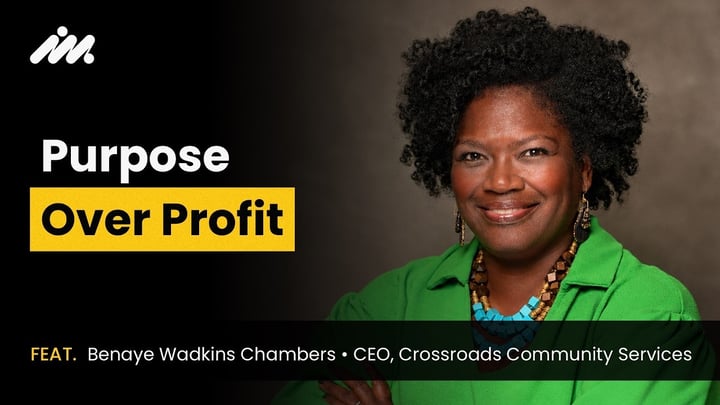
Episode 17 — Purpose Over Profit
Benaye Wadkins Chambers is the president and CEO of Crossroads Community Services, a food distribution and public health organization in Dallas that distributes through 148 ...
-
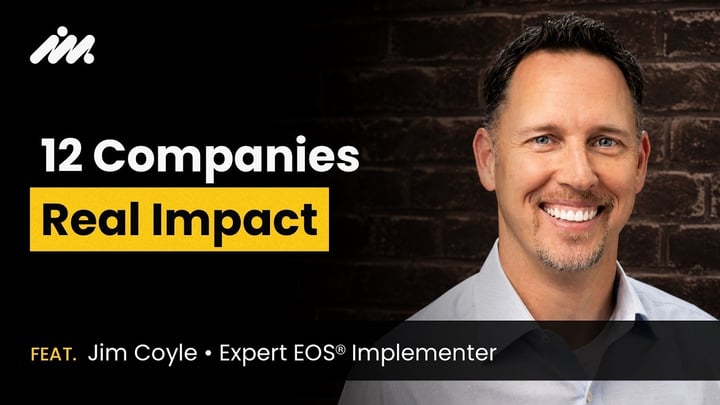
Episode 16 — 12 Companies, Real Impact
Jim Coyle ran 12 companies before he figured out what he was actually supposed to do. He sold candy bars to pay for a school trip to Italy, made beaded jewelry that put him ...
-
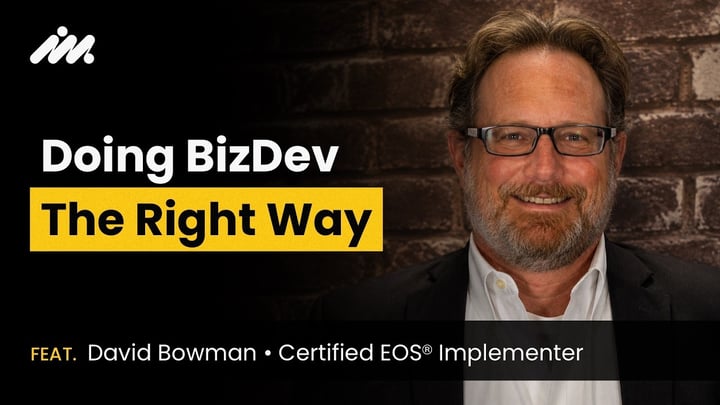
Episode 15 — Doing BizDev the Right Way
David Bowman spent 10 years in the Marine Corps as a helicopter crew chief before realizing he was never going to be the guy sitting behind a desk. After a career in ...