
When Good People End Up in the Wrong Seats feat. Mike Minard
Mike Minard spent 20 years bootstrapping Delta Media Group into a SaaS company serving 40,000 real estate professionals. Then he burned out and stepped away. What happened next almost cost him everything he built. In this episode, Mike shares the hard truth about founder burnout, what happens when you stop watching the metrics, and why he had to step back in and blow things up. He talks about firing an entire department for core value violations, halting sales for a year to fix internal issues, and why the company that doubled in revenue had actually lost its way. We dig into:
-
The real cost of stepping away without the right systems
-
Why metrics matter down to the seat level
-
The moment he knew something was one degree off
-
How his leadership team stepped into support roles overnight
-
Why AI adoption has to come from the top
If you've ever wondered what happens when you take your hands off the wheel, this one's a wake-up call. Connect with Mike on X (Twitter) - @MichaelMinard13
Audio Only
Christine Watts
[0:00:08]
Hey, welcome to Impact Moments. I am Christine Watts.
Kris Snyder
[0:00:12]
I'm Kris Snyder.
Christine Watts
[0:00:13]
Yep. And we are here with Mike. Very excited. Thank you so much for joining us.
Mike Minard
[0:00:18]
Yeah, this will be fun. I'm looking forward to it. Yeah.
Christine Watts
[0:00:20]
All right, well, I want to start off. Just give us a quick intro and who you are, your business.
Mike Minard
[0:00:24]
Yeah. So Mike Menard. Delta Media Group is the name of the business. So we're a SaaS company. So software as a service that serves the. Primarily the residential real estate vertical. So think of real estate firms, real estate companies, and those are the type of companies we serve. So we do CRM, digital marketing websites, everything you'd think of digitally related to a real estate firm.
Christine Watts
[0:00:49]
Great.
Kris Snyder
[0:00:49]
And Mike, like, how many, like actual real estate people? I don't know if you'd say brokerages, but people, however you want to think about it, like, how many do you serve right now?
Mike Minard
[0:00:58]
So active users. We serve 40,000 active users right now.
Kris Snyder
[0:01:01]
40,000.
Mike Minard
[0:01:02]
Wow. Yeah.
Christine Watts
[0:01:03]
That's a lot.
Kris Snyder
[0:01:03]
Yeah, Sounds like a lot.
Mike Minard
[0:01:04]
Yeah. And that's how I like to look at it, is active people. Because there's about 1.6 million in the industry, but how many are really active? And it's, it's probably about 20%, represents the majority of what's going on in real estate.
Christine Watts
[0:01:18]
And how long have you guys worked together? Because you're the.
Kris Snyder
[0:01:21]
For the business, like 2020. I don't know.
Mike Minard
[0:01:26]
Yeah, somebody asked me earlier and I couldn't get it. We were just talking about EOs and implementers and I think it was 2020. How did you get it?
Kris Snyder
[0:01:35]
That's a great question.
Mike Minard
[0:01:36]
No, I don't actually, I don't actually remember how we connected up, but through Vistage, I knew of eos and then I was, I think I'm self aware enough to say I don't want to self implement. And so I was interviewing people to do that.
Kris Snyder
[0:01:53]
I think I was probably the second or third implementer that you interviewed.
Mike Minard
[0:01:56]
Yes.
Kris Snyder
[0:01:56]
I remember coming into your office and you're like, so it was like the 90 minute meeting, which is really important. Everyone do the 90 minute meeting. But I walked in, I was like, the second or third. And you're like, we don't want to see another 90 minute meeting. And I was like, all right, team, what do you want to do? And I'm like, pick a tool, any tool you want to do. I'll do it on whiteboard right now. And you guys said, accountability chart.
Mike Minard
[0:02:18]
Yeah.
Kris Snyder
[0:02:18]
Do you remember this?
Mike Minard
[0:02:19]
I do actually.
Kris Snyder
[0:02:19]
I remember this very vividly. In that Office on the second floor.
Mike Minard
[0:02:22]
Yep.
Kris Snyder
[0:02:23]
And I did the accountability chart on whiteboard. We got done and I'm like, okay.
Christine Watts
[0:02:27]
You like did it for the business. Oh, yeah.
Kris Snyder
[0:02:29]
The whole.
Mike Minard
[0:02:30]
Yeah, we went through the.
Kris Snyder
[0:02:31]
How far can you see let's go. Because at that point. And again, this is not EOS pure. EOS implementers are being mad at me.
Christine Watts
[0:02:37]
Earmuffs.
Kris Snyder
[0:02:37]
But. But it was like you've seen it like two other times. Like what can I do for you that's different than like repeat the same thing you've seen. Yeah, but let's just like pick the tool you care about the most and let's just go off, off of schedule, off queue and just do it on a whiteboard. And we did.
Mike Minard
[0:02:51]
Yeah, I remember the meeting.
Kris Snyder
[0:02:53]
Yeah, yeah.
Christine Watts
[0:02:53]
What was impactful about that?
Mike Minard
[0:02:55]
What resonated with me personally? And I did. I didn't just make the decision, although I had my strong opinion. Kris knows that I have my opinions. But I trusted the team that was in the room as well. And a couple things resonated. The biggest is Kris understood our business and I think that there was for what we do. You know, SaaS can be so unique. I felt that was really important. But also I just. What resonated is the honesty. I'll just say this, a lot of implementers I think are afraid sometimes to be too blunt or offend and that's needed. You know, I think, you know, business leaders, leadership teams sometimes need to hear the truth, say the hard no matter how harsh it is or hey, here's this is the truth.
Kris Snyder
[0:03:44]
Yeah. It's funny because I said this yesterday to a workshop that Christina are part of. There's like this whole commission breath moment like they can't get away from the money. But as a leader, you don't want to be sold to. You do need to know the truth.
Mike Minard
[0:03:58]
Yeah.
Kris Snyder
[0:03:59]
And if you're brave enough as an EOS implementer, consultant, whoever is going to serve somebody, just be honest and it might mean that you're no longer here. That's okay. Like that just. You should be okay with it because if I gave you the truth to the moment, then that's your truth, not mine. You'll do it what you want to and go from there.
Christine Watts
[0:04:18]
Well, I feel like I've heard you tell stories of having that moment where the truth is said and like somebody like you could receive that, appreciate the level of honesty, but you've had people.
Kris Snyder
[0:04:29]
Walk out of the room 100%.
Christine Watts
[0:04:31]
Yeah.
Kris Snyder
[0:04:32]
You know, I've done plenty of like 90 minute meetings and we get to the end and I'm like, hey, team, is there something you should ask me? And they're like, what should you tell us that we haven't asked? I'm like, the moment you tell me what you want, now it's on me to help you get what you want. And I. I'm driven. And so if Mike says he wants to grow 30%, I am relentless to figure out how to help him grow 30%. And if he doesn't actually want to grow 30%, then don't hire me because I don't know anywhere else to do it. So when I say that teams are.
Mike Minard
[0:05:03]
Like, oh, we don't want to grow.
Kris Snyder
[0:05:04]
30%, it sounded fun when we said it, but I don't want to do that. I'm like, ok, then I'm not your person. Like, just. Just go do something else. Right?
Christine Watts
[0:05:12]
Yeah.
Kris Snyder
[0:05:12]
But I think that's the moment of honesty between an EOS implementer and, you know, the executive and executive team. To your point of, like, it's not just you, it's the team, because we show up for the team that moment and don't enter the danger if you don't want it, because it is dangerous.
Christine Watts
[0:05:27]
Right.
Kris Snyder
[0:05:28]
Like, if you do want it and you do want it, by the way, Mike, like, you, you're in, like, you're building a great company you're in every, every quarter, every year, like, you're building it, but that's not for everyone. Not everyone does that.
Christine Watts
[0:05:40]
Well, I'm curious about the impact moment that you want to share today. That aha, light bulb thing that happened, that really had a big ripple effect for you.
Mike Minard
[0:05:49]
I have a lot of them that I could share. I think there's two big ones that resonate with me right now, and I think the one I'm kind of going to go with here is kind of a story of where I'm at today. And I think a lot of entrepreneurs, especially if you've grown your own business. So I grew Delta. I bootstrapped, grew it, didn't get funding, not sure if I'd do it again, but that's how I did it. So that's a lot of hard work along the way. And anyone doing it, I mean, no matter what, it's hard work, but it's a lot of hours. And I probably. Let me rephrase that. I got burnt out, was pushing hard for years, and in hindsight, at the time, I'd argue that I wasn't. I'd argue I wasn't stressed, but I pretty much Walked away. So I was still the CEO, but had someone that was the president of the company and put in place and that person was doing a decent job through the growth. But the company grew quite a bit over about a two year period. More than doubled in revenue in two years. And me being, I'd stepped away and I think what dawned on me is when I was so fast forward to the two years when I made a decision to step back into the business and run it again. And I was sitting through a quarterly meeting and I'm hearing an excuse of why we weren't hit as a third quarter meeting or Q4 meeting and why we weren't meeting our annual goal for the year yet. And it was a really important one and it was just a disconnect. And I sensed a huge disconnect there. And so for me, stepping back in and seeing a disconnect and getting back in the business, I had to come back in and kind of blow it up again. And you know that Chris. You know, I stepped in, I blew it up. It had good people, but I think the company had outgrown them and had outpaced them. So. And really what I had done through that time is had people ended up in positions where they just, they were in over their head. They weren't, I would say at the size we were at, weren't qualified. Is that kind of a good assessment as you.
Kris Snyder
[0:07:55]
Yeah, but that happens all the time. By the way, Mike, it's not just you. It's not. You're just your company. Because a company scales and the people scale with the company. They don't. And when they don't, the company stops scaling.
Mike Minard
[0:08:06]
Yeah, right.
Kris Snyder
[0:08:07]
And then we have to go retool and, or you know, hiring new people because it has to scale again.
Christine Watts
[0:08:13]
Well, the needs of the business also change. Like you start off and you need all these people that are generalists, like they can just do anything because you only have, you know, so many people and then you need to start specializing. And so like to your point, like if you're either going to grow with the business and like continue to specialize and escalate or, or you don't want to.
Kris Snyder
[0:08:29]
Yeah, yeah, yeah.
Mike Minard
[0:08:30]
And I would say we were the typical. I see this a lot. I see it in my Vistage group. I mean different companies going through different phases. But a lot of times we end up promoting. As much as we fight against doing this, we end up promoting the best people in those positions to manage, to lead that team. And it's just, I've never seen it and well, it is, I just, it.
Kris Snyder
[0:08:46]
It, it does it. But we do it again. And by the way, you're, you're not alone at all. Like we've done this at 92. We're like, oh, they're so good at their job. Let's promote them. Yeah, they're, they're a team lead, they're a captain or whatever we call that. Next thing, you're like, they're not good at that. They're really great at that other thing they used to do. We promoted them. So.
Mike Minard
[0:09:04]
Yeah, and I would say too, it's, I'm now more than ever metrics driven and I think just a lot of leading indicators down in the weeds in the departments, you know, so just really focusing on those things that I know those little things that have to get done on a per seat basis. So we're getting to the point where we're getting metrics on a per seat basis internally.
Christine Watts
[0:09:24]
So you talked about you had to step back in more closely, kind of blow things up. When was that? Was that 2020 when you brought Kris on board?
Mike Minard
[0:09:31]
No, no, no, no. So this was at the, at the beginning of 24. So I'm now just over a year and a half into this.
Christine Watts
[0:09:38]
So what were some of like the first things that you did through that process of like becoming more engaged and involved?
Mike Minard
[0:09:45]
Oh boy. Diving back into where I felt the critical areas were that weren't operating correctly. So diving in, seeing what the operations were, in hindsight, I would have blown it up a little bit more. I feel that I should have. It took me a year and a half roughly to do everything that needed done and I would have done it probably in a six month window if I had to do it again.
Kris Snyder
[0:10:09]
And if I could say this for our audience as well, because we're in a SaaS company too. When you go off the rails, you start to chase revenue versus product. And the person that you had put in place, she was chasing pro, she was chasing revenue and didn't protect the product. Mike's a product guy.
Mike Minard
[0:10:25]
Yes.
Kris Snyder
[0:10:26]
And so she was chasing revenue and was doing lots of things for revenue's sake, but not the product's sake. But in a SaaS company that doesn't scale. No, you have too many one offs along the way and we can't support it. Even if you can build it, you can't support it. So it starts to fail. When it fails between onboarding or execution and you're in trouble. And I think that's when you step back in you're like, what is this? I have to fix this. We lost our way on product.
Mike Minard
[0:10:51]
Yeah, 100%. And I mean this sincerely. I've never been driven by money. I always feel if you build it, they'll come. Now you have to run your business, you have to manage it. You know, money just doesn't come. But the focus is on for me as a SaaS is the product that we're delivering, the experience the customers have. And not just once they're on the platform, but the onboarding. Prior to the past year and a half, we were known for our support in the industry, the best support in the industry. We'd gotten away from that. There's just a lot of things we had gotten away from that are, I think you take for granted as a founder or an owner. Things that seem common sense aren't so common. Yeah. So I think that's just really taking a step back and thinking through that aspect of the business. So that, yeah, it's been a, been a long year and a half, but actually fun, not fun and fun, you know, the, the mess isn't the fun part, but rebuilding it's the fun part, I think. And then seeing the, the light at the end of the tunnel is fun as well.
Kris Snyder
[0:11:52]
Yeah.
Christine Watts
[0:11:52]
Getting your hands on a little bit.
Mike Minard
[0:11:53]
Yeah. And I would add this. I mean, as a SaaS company, I halted sales. Which, that, and that was I, I knew it needed done. I still struggled with that decision, but took me about 24 hours. Like, yeah, we're not, you know, we're halting sales. So we halted sales. This is almost a year ago. Had halted sales. But we're finally back where we need to be. It's still not 100%, but we're on top of it now.
Christine Watts
[0:12:15]
Yeah. And so was that a refocus on ideal client to Chris's point and like who are we selling to and that.
Mike Minard
[0:12:23]
No, most of my issues were internal issues. Not so much who we were selling to, but it's, it's also, it's as a SaaS. And Chris, you know that as a SaaS, you'll get approached with a new idea here. You guys should do this. And SaaS, a well run SaaS. It's. Well, here's, here's the box of the software we have. Here's, here's the boundaries of it. How can we accomplish what you want to accomplish? Because most of the time you can. In a mature enough SaaS company. In an industry, you know, there has to be give and take with how people implement That's. So we got back. We're getting back to that approach as opposed to companies saying, hey, I want something completely different. Different interface. Just cause that's what I want. Which you can't scale that at all.
Kris Snyder
[0:13:09]
Can I share an impact moment? Is that okay?
Mike Minard
[0:13:11]
Yes.
Kris Snyder
[0:13:12]
So I don't remember the year, Mike, but it's, you know, before 2024 where we had a quarterly and because they cared so much about support. Because you cared so much about support. You had a support team issue and you looked at slack or teams. I don't remember what teams, whatever it was. And determined that the whole team had gone off. Off core values.
Mike Minard
[0:13:35]
Yeah.
Kris Snyder
[0:13:35]
Corrupt. Is that fair to say? Corrupt? I think maybe it's a strong word. But I don't know. But you. You guys decided and you fired everybody.
Mike Minard
[0:13:42]
The entire department.
Kris Snyder
[0:13:43]
The entire department.
Christine Watts
[0:13:44]
Wow.
Mike Minard
[0:13:44]
That was a tough one.
Kris Snyder
[0:13:45]
And then.
Mike Minard
[0:13:46]
But I knew it had to be done.
Kris Snyder
[0:13:47]
But like. Like that. Not like one person at a time. No, the department's wrong. And then you told the leadership team we are all going to step into that support function until we rehire it.
Christine Watts
[0:13:58]
Wow.
Kris Snyder
[0:13:59]
To get back on track.
Mike Minard
[0:14:00]
Yeah. That was.
Christine Watts
[0:14:01]
How did that go? You know, I can't believe it.
Mike Minard
[0:14:07]
Honestly. It went really well. Yeah. I think that. Well, I say that. Ask my team. No, no. In all seriousness. It was. We've all dealt with stuff like that. Typically it's one person in the business and you're like that was stupid. Why are they doing this? And you just have to let them go. This was an entire team that was doing that.
Christine Watts
[0:14:26]
Yeah.
Kris Snyder
[0:14:26]
And non core value actions.
Mike Minard
[0:14:28]
Like, I mean this was true core value. I know we're not talking Teddy. This was full violation. Full violation of multiple core values. And it's just. There was no other choice. And it was the hardest choice to make. In other words, it was the. Or it was the toughest option to take that we. That I had. But it was the right one. And the way I approached my leadership team with that was hey, here's what happened. Here's what I am doing. So it wasn't optional. It's. Here's what I'm doing. Can we step up? And thankfully I have a really good team. Operationally phenomenal team. And they stepped up. And it's just so for many of them. They've been with me for over 20 years at that point. About 20 years. And so they had done support. When you're a startup, everyone does. You're a software developer. Your support.
Christine Watts
[0:15:16]
Yeah.
Mike Minard
[0:15:17]
You do everything. But anyhow. So they stepped Up. But that was, that was a tough one. But yeah, sometimes when we make decisions like that, that. And it wasn't a rash decision either. It wasn't. I didn't just make a quick, quick decision there. I knew it was one of those, you know what the right thing is, but your gut turns over it and you still do it. So.
Kris Snyder
[0:15:37]
And I only bring it up because you, as you highlighted like one of the things that you as a, as a software company want to be known as for support. And when support broke down, as a CEO visionary, you weren't, you weren't gonna accept it. Like, you like stood in that moment, you let everyone go, you told the leadership team, we're gonna all sit in these seats until we hire more. Let's go do it right this next time. That's, I mean, that's entering the danger. That was great.
Mike Minard
[0:16:01]
Yeah. And can I add though too, it's. Metrics are so important in business. And now after, you know, a year and a half, stepping back in, what I had uncovered is we weren't paying attention to the metrics in that, in that department. And I, of course I have Chris, I have my spreadsheets, I have my data. I'm a data person. And you know, with me not running day to day operations, those metrics, I wasn't privy to them, so I didn't see them. But when I came back into run, I, I clearly saw it in the metrics where it was going wrong. And it was about six months prior to me doing that. You know, I could see that the metrics were wrong. So metrics are so important down to a per seat. You know, once you get a certain size, you just have to run with metrics.
Kris Snyder
[0:16:41]
So team, anyone playing along at home, That's a scorecard. We Love leading indicators. Five to 15, please, on your scorecard throughout the organization, all the way to one to three metrics per seat. That helps us like actually predict and manage the business.
Mike Minard
[0:16:54]
Yeah, 100% highly critical.
Christine Watts
[0:16:56]
So what was that process like as you rehired the team? Did you change core values or. Core values were fine and it was just needing to make sure you brought on the right cor.
Kris Snyder
[0:17:05]
Values have changed. Have they?
Mike Minard
[0:17:06]
So my core values, the company core values have not changed in all the years I've been doing this. But when we established them, we were honest with ourselves. They were our core values. They weren't aspirational, so they really true. They truly were core values. So we haven't changed our core values. Matter of fact, we just talked about them briefly. And even we still believe there are core values. And it makes decisions though, easy. I mean, if you don't hire and fire to your core values, they're not core values. And I think that's really where the test comes into play is when someone's violating core values, is it one time, is it an isolated incident or is it a pattern? And if there's a pattern, you have no choice. Or they're not your core values, you're not running by them.
Kris Snyder
[0:17:49]
Yeah.
Mike Minard
[0:17:49]
And but in putting that team back together, you know, we're definitely paying attention to the core values. We're back to being true to ourselves of what those seats are in the type of people to fill the seats. And so we're definitely on the best path that we've been with the tech support team, you know, and that one team in particular. And we're back to going down the road we need to be on. So it's. Yeah, really important.
Christine Watts
[0:18:15]
Well, it makes me think of the phrase it's not, it's. It's simple, not easy. And so that goes back to like your decision to like go through and clear the team and like a simple. They're not adhering to core values. But it's hard.
Mike Minard
[0:18:29]
Well, I'll be honest with you, I think I stressed out my management team with that one.
Christine Watts
[0:18:32]
I'm sure.
Mike Minard
[0:18:32]
I know I did.
Christine Watts
[0:18:33]
Yeah.
Mike Minard
[0:18:34]
It was that they all paused for a minute, but they knew it was the right decision. That's the thing.
Christine Watts
[0:18:38]
Yeah.
Kris Snyder
[0:18:39]
Well, in the quarterly pulsing, I'll say this. Cause we just did a quarterly last week together and we revisit every quarter. We hit the vision side again and we come through core values and we like say, how are they activated? And your head of finance, Michelle had a T shirt on with one of the core values. Right. Like whatever that core value was. I don't remember.
Mike Minard
[0:19:00]
Do you remember when she wears them all the time? So I don't know which one she had on that day.
Christine Watts
[0:19:03]
Oh, for each core value.
Kris Snyder
[0:19:05]
Oh, wow, that's cool. She had a T shirt on.
Christine Watts
[0:19:06]
Right.
Kris Snyder
[0:19:06]
Which is like, oh, that's awesome. Because we talk about core values in rituals, artifacts. Oh yeah, that was an artifact that she had. And then it opened up a conversation to how well are they activated across the organization. It's like, oh, we need posters. We haven't redone this in a while. That's why we do it every quarter. It's just to remind ourselves of the rituals and artifacts that we need to do because it's not a one time thing.
Mike Minard
[0:19:27]
Right.
Kris Snyder
[0:19:27]
And it's forever. Like we're in this work forever.
Mike Minard
[0:19:30]
And I would say this too. I mean, so I was 100% in office until Covid and we've been remote hybrid since then, and more remote than hybrid. And I think you have to be so much more intentional about your core values, about your communication when you're hybrid or remote. And that's something that, I'll say it here, I've kind of failed at. So that's something I'm focusing on starting this quarter. Just really being intentional because when you have an office that's sitting empty, you know, you don't get the posters printed up and you don't. Well, I'm getting them printed, you know, they're. They might be in actually, so that, you know, you just don't think through those things. But also it's funny how you're doing your weekly L10s, but how often are you focusing on a core value? So like this quarter, we're taking a core value a week or every two weeks. And the entire organization is going to have conversation around the core value and just about how they're exemplifying or how could they do it better or so just really having that. That's not a one time thing. It's something that you do all the time. So I think. Yeah, the shirts are. I was always big on the shirts and the. What?
Kris Snyder
[0:20:39]
Because people like them. They just do.
Mike Minard
[0:20:41]
Yeah.
Kris Snyder
[0:20:41]
Yeah.
Christine Watts
[0:20:42]
Well, I feel like we're getting a little bit into also like the ripple effect. You went through this big change in early 24. Like, what are other like ripple impact moments that are happening for you guys as you're going through this, like, big change in transition.
Mike Minard
[0:20:54]
So a few things. One of them is it's very evident you lose your good people when you go through tough things and you don't deal with them because they're going through it too.
Kris Snyder
[0:21:03]
Yeah.
Mike Minard
[0:21:05]
And if as a leader or a leadership team, if you're not addressing that, you lose good people. And that became clear with me, that me stepping back in and addressing this saved a lot of people from leaving because they were just restless in the organization. And these are good people. So that's one thing. The other thing too is it really causes you to really look at the business overall and really take, I guess, I don't know, think of where you're at and where you're truly going. And I just, it's. So I was just talking to one of my key people. It's been a year. When I came back In I'm tech driven, I'm a product person. I just, I like developing things and I'm huge into AI. Kris knows that and. But I halted a product launch which was an AI tool or tools that we had, because when I saw it, I'm like, this is an AI. And we embraced AI 12 months ago. So it's been a year internally. And it's funny if you would ask anyone on my team. So these are developers who developed our AI stuff that we didn't launch. And they in one of. I don't want to say, by the.
Kris Snyder
[0:22:17]
Way, developers, they don't like that. Well, but normally they don't like.
Mike Minard
[0:22:21]
He actually said, he said, he said, I didn't know AI. So here's someone that's developing AI tools that function, that did AI, I'll phrase it that way. But he's like, I had no clue what AI could do. So it's. And it's. So now he just, he looks. We look at AI today as something that's helping us do more work and it's helping us do the mundane that we don't want to do. And that's what he said as a developer lets him focus on the creative things, the stuff that, that takes thinking that AI can't do yet. So it's really caused us to really rethink a lot of things. And one of the things I did at that time was also stepping in saying, as an entire organization, we're adopting AI. Which I can tell you, a year ago it wasn't very popular. I mean, my team adopted it pretty well. But I made the statement and I've since revised. I made the statement a year ago that, hey, by 2030, I don't think you'll be employable if you don't know AI. And I since revised it to the end of 2025, you know, so. So we now, if someone doesn't have AI experience as a developer, depends on the role, we'll probably pass.
Christine Watts
[0:23:26]
Are you doing certain things like help people build the muscle of how they should be using it or exploring?
Mike Minard
[0:23:31]
Yeah. So we share the stories. We have kind. And I'll give you just, you know, just one. I won't get in the details of it because I'll get too techy constantly. So the teams themselves talk about how they're using it and share those stories. Cause I think that's really important, right. Is how it gets used. Because in an organization you'll have even tech people that say, OAI is not ready for prime time. Well, it can do 95% of it. That's prime time enough for me where I'll finish the 5% or I'll fix what it couldn't do. So they have to hear those success stories because unfortunately people are, you know, they. I guess we're used to our habits, and if you're not in the habit of it, of using it, or know what it truly can do. But I'll say this, it's changing every week in that regard. I mean, it's just.
Kris Snyder
[0:24:15]
Yeah.
Mike Minard
[0:24:16]
Rapidly evolving.
Kris Snyder
[0:24:17]
The innovation side of this. And, and I. I think we talked about this last time on our quarterly. If there's not one AI rock, I'm not sure what's going on. No, you got to have at least one, like one rock that is AI related. If you don't, then what.
Mike Minard
[0:24:32]
Are we doing a tech business or not? Yeah, that has nothing to do with it. Yeah, yeah.
Kris Snyder
[0:24:37]
The Kevin who was here before you, I mean, he's a land surveying company and he has an A AI rock every quarter. Like, they're still figuring it out. I mean, they. They do land surveying, and they should, because if you don't, you won't. And if you don't, then you won't, like in general.
Mike Minard
[0:24:51]
And I think that has to come. Personally, I think it has to come from the top. I think the leadership, the owner, the person running the company has to embrace AI for it to truly get adopted. And I know you can kind of argue a little bit against that, but if you don't have that culture of sharing the success. And I looked at it this way because the joke is, hey, is AI replacing everybody or is it. Well, I don't know. I. But I don't care because ultimately, let's say it does. Once you want to be one of those people that has adopted it and you know what you're doing and you still have the job, you know, so that's. That's kind of how I framed it with you. Hey, we're going to be the AI experts.
Christine Watts
[0:25:27]
I know internally we have this phrase of, like, you are the thought leader and AI is your thought partner. And I think that's like a healthy way to, like, view it as, like, this companion. And like. Yeah, what percentage of work can it get done for you so you can focus on, like, the more creative aspects of that on the back end when you're finishing something.
Mike Minard
[0:25:43]
Yeah, it's. It's huge. I mean, that's, yeah. Huge.
Kris Snyder
[0:25:46]
My personal experience on this is. And Christine knows this at 90 is our content team has a Snyder writer.
Christine Watts
[0:25:52]
Yes, the Snyder writer's great.
Kris Snyder
[0:25:53]
They've trained the a high to write like I do from all, like the podcast, all this stuff, and it's actually really good.
Christine Watts
[0:26:00]
Yeah.
Kris Snyder
[0:26:00]
Oh, yeah, it's really good. Like 98 come comes out. They're like, write this for Kris and I review it. I'm like, oh, that's really good.
Christine Watts
[0:26:07]
Yeah.
Mike Minard
[0:26:07]
Once you know how to use AI, that's great.
Kris Snyder
[0:26:10]
Let's do it.
Christine Watts
[0:26:10]
It's got all your little phrases.
Kris Snyder
[0:26:11]
Yeah, my phrases. It's like, it just does it and.
Mike Minard
[0:26:15]
It'S, it's undetectable as well. I mean, it's gotten that, that if you know how to really use it professionally, you can't detect.
Kris Snyder
[0:26:22]
You got to train it. Right. Like, and it can help you out because otherwise I had all these aspirations of things I would do and say, and I'm like, oh, I'm so busy. And now the team's like, here it is again. Let's do it. Yeah, that sounds great.
Christine Watts
[0:26:33]
All right, I want to go to our wrap up. I've got a few minutes here. So a few questions. My first one is you've been extremely vulnerable about things that are hard and difficult. And so we want to hear what is a big, big up for you. What is the thing that you're like, this was a mistake. I want to go back. Or what did you learn from that?
Mike Minard
[0:26:53]
Yeah, so me stepping completely away from the business, I own that. I can't point the finger at anyone else. You know, I was the one that completely walked away. So I think if you're, if you're. So pay attention if you're getting burnout and listen to those around you because you'll probably say you're not. You know, that's how we're wired. We, we. You know, for me, working 50 hours a week is like vacation time. You know, I'm just, I, I really.
Kris Snyder
[0:27:19]
Love work, but I, but you were decades in, Mike. You're like 20 years, right? Like at that point, maybe.
Mike Minard
[0:27:24]
Yeah, so, yeah, it was 20 years at that point. Yeah. And. And I just gone through a partner buyout that took a lot out of me to get that paid off in, in a short, short period of time. And, and that kind of took its. Everything at that point had caught up to me, I think. And I saw the company growing really well. We're well beyond great. The SaaS rule of 40. And yes, I thought, oh, it's on the right trajectory. And it's. And I'm kind of stepping away. So. So I kind of jumped off the deep end. So. So that was my biggest mistake. I should have stayed in. Looking at the metrics, I'd say this too, thinking back to some of the quarter, because I was at the quarterlies, I was at many of the weekly leadership L10s.
Christine Watts
[0:28:06]
Right.
Mike Minard
[0:28:07]
There were things in the previous 12 months before I actually stepped back in where I'm like, ah, this doesn't seem, it seems off. Something's off. And I didn't listen to that. And I think, as you know, especially at that. It's a 20 year business that I took 20 years building. I should have listened to that. And that was. I owned 100% of that.
Christine Watts
[0:28:26]
That instinct, that thing that was pulling you.
Mike Minard
[0:28:28]
Yeah, yeah. And you just, you know, when you're hearing things that are one degree off, whatever it is, it's just not right. And you don't want to step in.
Kris Snyder
[0:28:37]
Because if you step in, you're in.
Mike Minard
[0:28:38]
Then you're owning again.
Kris Snyder
[0:28:40]
You're back in again. Right.
Mike Minard
[0:28:42]
And where would I have been? I'm sitting in three seats right now that won't stay that way. But I would not be where I'm at had I done something at that time. So that's. I 100% own that.
Kris Snyder
[0:28:56]
And I would also say I'm going to hopefully be okay with this with you. But you had some people who you just outgrew.
Mike Minard
[0:29:03]
Yeah.
Kris Snyder
[0:29:04]
I mean, they were good people doing, you know, good work and then you outgrew them and they didn't know what to do and they didn't know how to tell you they're in the wrong seat.
Mike Minard
[0:29:12]
Yeah, yeah. If. Yes. I think they felt they failed, if you want to ask my opinion. And they didn't want to failed the company or me. And that's.
Christine Watts
[0:29:20]
Right.
Mike Minard
[0:29:20]
So it's. I'm not. Yeah. I'm not hanging that. That on them. So I think that's, you know, I think you really have to pay attention to that. Especially when you're growing so fast. You really pay attention to those things. And I had not.
Kris Snyder
[0:29:35]
We love to talk about like 30, 40% growth year over year, but that.
Mike Minard
[0:29:39]
Is so hard until you do it year after year.
Kris Snyder
[0:29:40]
It's so hard for any business and the people involved in that business and we celebrate it as shareholders. But when you think about leaders in a company growing that fast every year.
Christine Watts
[0:29:50]
Well, that individual person strain too. Like one of our partners, people, architects. I know Meg has the book coming out, the Gift of Being Fired because it's like people will put themselves in that position and then and it's like hard to get yourself out of it. Kind of like you said. And so you don't realize. Yeah.
Mike Minard
[0:30:05]
They can't see a path out of it. Yeah.
Christine Watts
[0:30:07]
But releasing yourself to do the next thing. Yeah.
Mike Minard
[0:30:09]
But I would say, I would add this though too. I think us only at that time sticking to the weekly cycle without having a daily standup. When I was running the company in high growth, I did a daily standup every morning. And we're back to that now. The team loves it. Things move so quick that, you know, can't wait a week. You know, 24 hours is like a week, you know, so you have to have that 24 hour cycle. So. But yeah, that was a big. That I owned all of that.
Christine Watts
[0:30:36]
So my last question is, what are you watching? Listening to reading for your own like personal professional growth right now? Anything stand out?
Mike Minard
[0:30:45]
Oh boy, I'm all over the place, so. Anything stand out? So I do read a lot. I go through phases where sometimes I'm reading a book a week. So the book I just ordered is the Federalist Papers. I've never read the Federalist Papers. Has nothing to do with work. But I thought, you know, I want to read this.
Kris Snyder
[0:31:04]
Yeah. Like, like obviously having seen Hamilton, I thought many times because we've seen as a family like four or five times, I lost track. But yeah, I, I'd love to read those.
Mike Minard
[0:31:13]
Yeah. So I'm, I'm heavy on the AI side. So anything going on with AI? I'm deep in the weeds on that.
Christine Watts
[0:31:20]
Is there a specific like outlet you go to for like your next news for AI stuff?
Mike Minard
[0:31:25]
Yes. So I'm on X Twitter, but I follow the developers, I don't follow the company owners. Follow the developers and the teams, the.
Christine Watts
[0:31:36]
Ones that are experimenting and testing well.
Mike Minard
[0:31:38]
Because they're talking and they want, they're telling you and they're normal people. So you can message, you know, you can talk back and forth with them, especially when they find out some of the things you're doing and they're not.
Kris Snyder
[0:31:48]
Trying to move a stock price, they're just trying to tell you what they're doing.
Mike Minard
[0:31:51]
They're tech people loving what they're doing.
Christine Watts
[0:31:53]
Yeah.
Mike Minard
[0:31:54]
So. So that's where I'm getting a lot of challenges, I guess is how phrase it on what can and can't be done. Because if you're seeing it, it's probably more marketing. Yeah. Than it is the real tech, the real AI that's going on right now. But we're on the verge of so many People have no idea.
Kris Snyder
[0:32:09]
No, no. It's, it's, it's what? We're on the verge of the tsunami that's coming right now on innovation and productivity. We. We just can't. We can't anticipate it yet.
Mike Minard
[0:32:17]
It's. I. I look at it this way, and I love the phrase, it's amazing how long it takes to have an overnight success. You know, I think that's where we're at with AI. It's been in the works for decades. Yeah. And it's just now maturing and we're starting to see the results of it, so.
Christine Watts
[0:32:33]
Yeah. Well, thank you so much for being here today. This was a really fun conversation and to learn more about you and your story and, like, those struggles you went through as you stepped away and came back into the business. So thank you so much. How can people reach out to you if they want to connect?
Mike Minard
[0:32:48]
Good question. Probably on Twitter. X. That's the best place at this point. I mean, I'm on other channels, but I'm just not really on there. So. Yeah, pretty much. X.
Kris Snyder
[0:32:58]
Awesome.
Christine Watts
[0:32:58]
Well, we'll link your information on there if people want to reach out. So thank you so much for joining. Impact moments powered by 90. We'll see you next time.
Recent Podcast Episodes
-
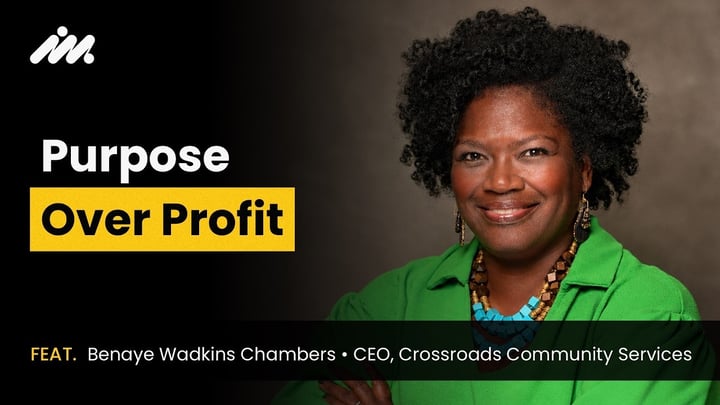
Episode 17 — Purpose Over Profit
Benaye Wadkins Chambers is the president and CEO of Crossroads Community Services, a food distribution and public health organization in Dallas that distributes through 148 ...
-
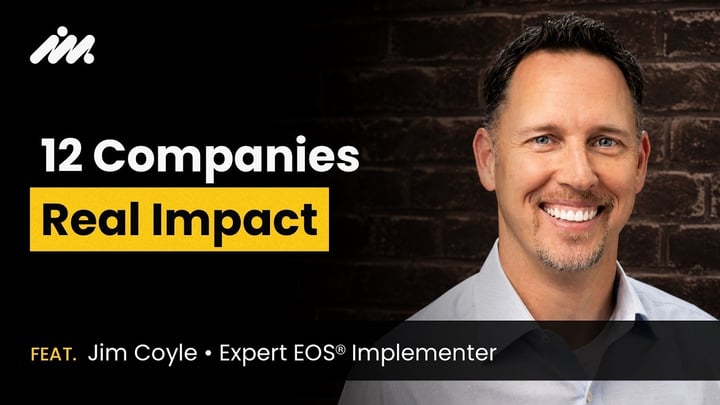
Episode 16 — 12 Companies, Real Impact
Jim Coyle ran 12 companies before he figured out what he was actually supposed to do. He sold candy bars to pay for a school trip to Italy, made beaded jewelry that put him ...
-
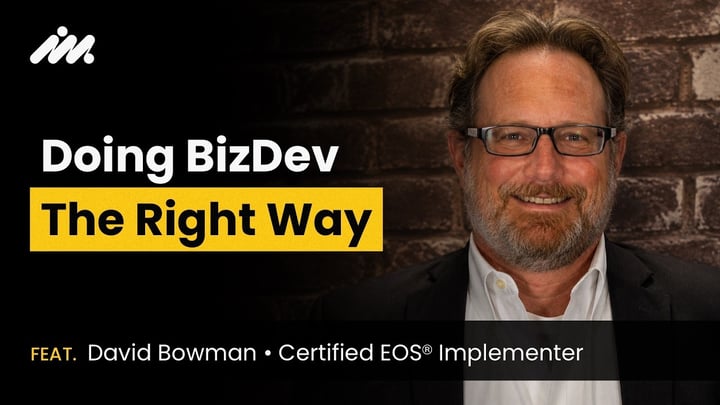
Episode 15 — Doing BizDev the Right Way
David Bowman spent 10 years in the Marine Corps as a helicopter crew chief before realizing he was never going to be the guy sitting behind a desk. After a career in ...