
The Power of Letting Go feat. Kevin Woeste
In this episode, the CEO of McSteen Land Surveyors shares the moment everything shifted: learning to let go. Kevin opens up about what it took to stop doing everything himself, trust his leadership team, and allow them to do it 10 times better than he ever could.
We dig into the power of core values, the discipline of delegation, and why sometimes the best thing a leader can do is get out of the way. Kevin also shares his biggest mistake (buying the company), how he optimizes for deep work, and why most leadership advice skips the basics: sleep, nutrition, and showing up well.
If you're a founder grinding in the weeds, wondering when it gets easier, this one's for you.
🔗 Connect with Kevin on LinkedIn - https://tinyurl.com/mr427yrz
Audio Only
Christine Watts
[0:00:09]
Well, hello, welcome to Impact moments powered by 90 where we're exploring the AHA's breakthrough stories that really make a difference in day to day business and help us get better. I'm Christine Watts.
Kris Snyder
[0:00:22]
I'm Kris Snyder.
Christine Watts
[0:00:23]
Yep. And we are joined with Kevin here today. Very excited to have you. Thank you for joining us.
Kevin Woeste
[0:00:27]
Thanks for having me. I'm really excited to be here with you guys.
Christine Watts
[0:00:29]
Yeah, go ahead and give us a quick intro who you are.
Kevin Woeste
[0:00:31]
Yeah. So I'm Kevin Woeste. I'm the CEO of Mix Teen Land Surveyors, also the CTO and co founder of 1mt Solutions, which is a software company for surveyors. Mix Teen Land Surveyors is a third generation family business. It's been in the family for about 55 years. We do survey properties in Ohio and just recently, last year opened up an office in Indianapolis. So yeah, we do survey properties for transfers of real estate in Ohio, Indiana and Kentucky. And, and then also some of the more complex surveys for commercial projects. And then we have a smaller division that does draw inspections for banks when they do new construction. So if you're building a house, there's a good chance the bank will contract us to go out and do progress inspections on the house as we go through. So. And then on the personal side, I'm married for 11 years and. Or come up 11 years and have three young kids, 8, 5 and 2. So we have a very busy household at our house. It's pretty chaotic and every night and yeah, we've been through a journey over the last several years of going through Scalerator and then going and being involved the Burton D. Morgan foundation and Edward Lowe foundation. And then after all those programs got involved in EOS and, and then through 90. So.
Christine Watts
[0:01:48]
Nice. Yeah. And. And you work with Kris as well as your EOS implementation?
Kevin Woeste
[0:01:51]
Yes, Kris. We're very fortunate that Kris took us on as a, as a company, as a project I should. To do the US Implementation. Yeah.
Christine Watts
[0:01:59]
So when did you guys meet?
Kris Snyder
[0:02:01]
Gosh, was I like six months ago, eight months ago? It's. I lost track, Kevin.
Kevin Woeste
[0:02:07]
Yeah, I think it was probably late 24, I believe. Yeah. Right. Is that correct? Maybe it was late, yeah. Late. What is this, 2025? Yeah, late 24, I think. Yeah, we met, I think late 24 through a mutual friend. I had heard about Kris and things David Payne, who's been a great mentor to me and helped, you know, sort of said he, you know, I always said if, you know, following David, I said if I'm in the right room, as he Is, you know, in the right place. I know I'm going the right direction. So he's like, you need to meet Kris and talk with Kris. He's. He was. I think you guys did their implementation. We did Tompkins a handful of years ago.
Kris Snyder
[0:02:42]
He's already agreed to be on the podcast, by the way.
Kevin Woeste
[0:02:45]
That's an interview looking forward to listening to. He's a great guy, and he's been a mentor for me for the last several years, so.
Christine Watts
[0:02:51]
Oh, nice. Has you worked with family businesses before?
Kris Snyder
[0:02:54]
Oh, Christine, so many. So many like, stories for days. And they're actually. Most people don't understand. They're like, well, in the US Implementation, you don't. You. You. You steer away from them. I steer towards them because I think they're some of the most interesting. Like, your wife's in the business, right?
Kevin Woeste
[0:03:10]
She is, yeah.
Kris Snyder
[0:03:11]
She runs sales.
Kevin Woeste
[0:03:12]
She runs sales and marketing. Yeah. She's the president of the company. She's our external facing. And we've been working together for about 11 years now in the company together. And people are like, how do you work with your wife? We work out every morning. We work together, we raise a family. Uh, it's so funny. We, you know, I couldn't imagine a work environment where we don't work together. And even people like, oh, don't you get tired? I said, actually, I don't really see her much during the week. You know, she's out in sales. She's in marketing. I said, we see each other on the leadership team on Tuesdays, and then, you know, we try to. And then at the end of the night, we'll be like, oh, did you hear about so and so? And did you have so and so? So it's a lot of fun to work with her and be part. And, you know, you can bring issues coming home at night. You're not just bringing issues to your spouse that they have no idea what you're talking about. You're able to have those conversations. So it's a lot of fun being able to work with her every day.
Kris Snyder
[0:03:55]
That's awesome.
Christine Watts
[0:03:56]
Well, I was just talking to Kris earlier today because we have worked together. I've worked pull 90 down throughout your company and joining those calls. You can just tell, like, you guys have a really great culture. Is there anything that you do to really, like, foster that very. I feel like, healthy, positive work environment. Everybody felt like it was shared camaraderie around solving the right problems and getting to the root of things.
Kevin Woeste
[0:04:18]
Yeah, you know, I think. I think that came from the generation before us. So my wife's parents were both in the business and her mom was a CEO I think for about 24 years or so. And really when we joined, joined in 2015 or so, she had this amazing culture where she was, she knew every employee's name, she knew all the kids, knew all the environments. And so when we joined the business, you know, we joined both at very entry level positions. So I was in the field doing surveys every day. I was going back to school to learn about surveying and I was able to watch that culture being and happen every single day. And so when we looked at like we both came from very large corporations. So we had lived in the UK for a while. We lived in Houston, Texas for a while working for big oil and gas companies. And so we knew we had a 30 and 90,000 company look like, right? It was like a lot of red tape and this culture that wasn't really there. So when we came and said, hey, we want to start a business, we said, we really want to pour into our employees, right? Like we're making an impact in their lives. And so when we start and when we purchase a company and we purchase into mixed team, we want to make sure that was a focus for us. It was like, we want to know the employees, we want it, we want to lead them, you know, put them in a good direction. So that's been a huge focus on us. And I will tell you, over the last 10 years, we've not gotten it right a lot of the time. But more recently, I think with eos and some and getting everybody on the same page, we can tell that culture has really shifted. I think it was a lot of key hires, of course, bringing in, you know, one of our hr, the, our director of people now has made a big impact too. So there's been a lot of good pieces that we put in place over the last couple of years that has sort of enforced, you know, that's what we're all about, the people, right? We're people first. You know, people make an organization. I don't make an organization. Right.
Christine Watts
[0:05:57]
Yeah, I mean, I can definitely feel that. I feel like when I'm on calls with you guys, it's like the care and attention and the people consideration was there. You talked about EOs and 90. Was there a specific like tool or aspect that you guys like really leaned into?
Kevin Woeste
[0:06:10]
Yeah, so we, you know, I think it was very interesting when we had gone through some Edward Lowe programs and had heard about eos and it was kind of like, okay, we should learn a little bit more about this. So my CEO and I went through a program, the Visionary Integrator program through Edward Lowe. And it was so funny. Everybody in the program that went through this thing there, you know, you rate yourself as you're going through this and Everybody's like a 57 and a 59 or something like that. We were like a 20 and an 80. Like we were the farthest apart in the whole entire group. And we're like, okay, we, we have some, we have some things to get on the same page on. We weren't having same page meetings. And so that's when we really noticed like, okay, let's just try EOS between the two of us. And so we used Notion. We kind of built our own sort of tracking platform to use. And then we just saw over a very short time period how much we came together. We did another evaluation about a few months later and was like 50 and 55 or something. Like we were even really close together over a short period of time. It's like, okay, this system works. We need to put this out to the whole entire leadership team. And so we were trying to do it ourselves. And you know, you try that, let's try to hack it together type of thing. You're a small business. And then quickly learn like, okay, you know, if we're going to be serious about this, we need to get into a platform. So when we, we met with Kris and did the implementation, you know, it's another software platform, 90. When everybody was a little bit hesitant of okay, we just got into Notion and everybody learning this, let's, you know, is 90 going to be one more thing? Exactly. I think as a team has gotten into 90. It's now like this incredible platform that they, everybody in the whole entire company can log into and see. And it's still being rolled out, I think, you know, multi company wide. But it's, it's really allowed. It's, you know, it's, it's just a platform that has allowed everybody to be in alignment and that's been a key part of our success so far.
Kris Snyder
[0:07:53]
So one of my impact moments and Kevin, I'm going to tell the story, you got to help me out here. But was with Molly and I think we were in the focus day, maybe vision building day one. We're talking about like running meetings and I'm like, now we're going to take from level 10 meeting and we're going to like push to the departments and she, she runs sales and she's like, Well, I have five people. I don't need a weekly meeting because I meet with all the five people all the time. And I'm like, what if you didn't.
Kevin Woeste
[0:08:20]
Right.
Kris Snyder
[0:08:21]
What if you had one meeting where you met with all your team, the five people, and you had the same information you gave one time versus meeting five times and try to disseminate the meeting across.
Christine Watts
[0:08:32]
Yeah.
Kris Snyder
[0:08:33]
And she pushed back initially and then she came back, right? I think this is true, right? She came back and she was like.
Kevin Woeste
[0:08:39]
Holy cow, it's better, right? Like I could. She was the first department to be in the eldu and Elton, by far our most successful, you know, Elton rollouts. I think people started modeling. The other departments are modeling after her department meeting.
Christine Watts
[0:08:52]
Oh, yeah. As I was going through, we were like working on a team. I was like, wait, let's go over to sales.
Kris Snyder
[0:08:58]
It was, it was one of those moments where like, yeah, you pushed back a little bit. But then she went. Embraced it. And she did embrace. And she came back. She's like, that's so much better. I'm like, yeah, because they want to learn from each other, right? It's not just what you disseminate to them. One person. How can they learn from each other in that moment in time? And I think that's what the weekly means, like, set up for.
Kevin Woeste
[0:09:14]
I think another impact thing that was talking about impact moment. I think sitting at session room and I forget which one it was, but, you know, we're all talking about clients and how we're going to sell. And I think Kris was like, well, it sounds like you guys need to have some type of a program involved with this. A program involved to meet with your clients on a volume or guarantee. And I think it came down to what is your guarantee and what is in the whole what we call PPP preferred partnership program is. And that then became not only a rock, but now it's becoming a core part of our business. Right. Our goal is to have these clients guarantee us a certain amount of volume per month and they get a discount pricing and there's a guarantee involved. So that was a huge light bulb moment. I think I walked away from that. I was like, wow, this is the greatest thing ever. Why didn't we think about this?
Kris Snyder
[0:10:02]
It was, it was literally on that. On the whiteboard, on the left hand side, right? And because we kept processing and I'm like, I don't understand again, team, tell me like, you bring donuts. You do what? Like, what's the differentiation? What's the unlock? And Then like, I think you and Molly are going back and forth at some point on time. I'm like, could we have a contract? Could we actually have a partnership agreement? You're like, I think we could, but nobody does it. I'm like, okay, let's design it right now. Right, do it. And you guys did it. And they're like, see you in a quarter later. And you're like, yeah, we got two clients.
Kevin Woeste
[0:10:31]
Yeah, two more now already signed up for the next quarter. We had a goal one by the end of the year and I think we're going to be, I think the team is now, you know, pushing three or four or five by the end of this year. And I think that the 30 by the. In the or a three year vision is probably going to be a next year vision type of thing. So it's, it's moments like that and it's like, oh my gosh. That's, it's, you know, I, I obviously give a lot of credit to Kris for that. And it's just bringing. Everybody's in the room was saying a lot of these things, but it's like, hey, having somebody facilitate that. And then on top of that, once you do that, then you put it into a plat that can track it. Right. That's the key piece of it. And rolling that out. So when we have an issue. So another, you know, we were in an L10 yesterday and it was like, hey, we want to roll us out another PPP program partnership. Like, do we even have the capacity to do that? You know, we're selling these things so fast. We have the capacity to, to support this additional volume. So it's, it's moments like that that it's, it gets really exciting and you can really like a light bulb moment came on for the government, the team for that.
Christine Watts
[0:11:31]
Yeah. Now you've got a great problem to solve.
Kevin Woeste
[0:11:33]
Yes, exactly. Right. Right now, now it's up to our CEO Marine, and say, hey, we need to. And we've made. It's. It's like, you know, it's, it's funny and talk a little bit about the, A little bit of history because, you know, coming into McStein, we were probably 30, I think Molly and I were 32 and 33 employees. And we think we had in the, in the previous generation. I just started to cover in all 88 counties. They had a big thing about covering all 88 counties in the state of Ohio. So we just covered Ohio and had employees across the state. And it was, we were working in the business so it was out in the field every day. It was drafting, you know, it was in the business. And now that, you know, we've slowly scaled the business and we've made a lot of mistakes on hiring people and you train them and then they quit and you try to this, you know, trying to slowly grow the business. And now it's funny, we're looking at the, the company and it's like, okay, we need to go hire 10 people tomorrow. And I don't worry about that. Like, I'm like, okay, we have, we have the team in place. We have the right people in place. We have the systems in place where they're just going to go out and start hiring people. And eventually, like, you know, you won't even know. You're just getting these notifications like, hey, so and so you boarding next week, you're like, that's awesome. So it's really incredible that, you know, as we grew the business and I think that's been a big realization for me. It's as I, as we've grown the business, it's letting go from being in the business and feeling like you have to do everything to letting that go and giving that power to the next. The, the, the, the people on. Under the business. And when we gave that power to them, how much they took and then excelled, and they did it 10 times better than we ever did. Right. Like, you know, we'd hire these people, we think they're great people, and then they leave and you're like, oh, what happened? Like, well, I'm at hiring people. I'm a terrible interviewer. Like, you know, I think our HR person's like, tell us the message. You want to be your voice to be heard in that meeting. But, like, don't actually interview anybody. You know, obviously there's, there's a part to that, but there's, you know, giving the power to the people to, to make the decision. And so giving that decision to a leadership team and allowing them to step up and then watching them step up and take it, and they've been able to do it 10 times better than.
Christine Watts
[0:13:29]
I want because you've got the foundation, we've got our core values where we're actually heading vision wise, the seat that we're hiring for all those things.
Kevin Woeste
[0:13:36]
100%. Yeah.
Kris Snyder
[0:13:37]
But let's talk about that for a minute, if you don't mind, Kev. Third generation core values. Let's talk about that for a minute. So the work we got to do together, they're always in the room. We Just sent. We like try to like make them more specific. We synthesize. Synthesize them. Right. So like how did that work go for you?
Kevin Woeste
[0:13:54]
You know, the core value conversation I think started about a year ago when we went through scalar radar because it's like, you know, we kind of had an idea, everybody has their own idea of what our core value was. And we brought it actually to a company meeting where everybody was in the whole entire company gave their ideas of what our core values was, which I think was overall not a bad ide. I think if you recommend that to some companies, it wouldn't go well because there's a thousand opinions of what your core values is. But in general we got a pretty consensus view of, you know, we had been in business for 55 years, a lot of people in the room had been with us for 20 or 30 years. So they kind of saw the previous generation and then the generation that we are in, in the direction we were heading. But it's been really cool to take sort of that rough outline and to put them into actionable words and meaningful words and then to go out and start hiring and firing people off that. Right? Like this is who we are. And if you were promoting off that, so we company stand ups once a month and we're celebrating people who are recognizing in those core values and they're, you know, winning gift cards or whatever the case is for people can nominate each other for following those core values. So I think that's really given us a foundation of hey, you know, I like you because of X and that's a core value because that's Kevin's core value. Just all of a sudden now, you know, oh, you owned it. You know, this is you, you're beyond the boundaries. You took a step and beyond who we are in highlighting those. And that's been a really cool experience to go through. And now it's feel like, okay, there's not 17 of them, there's, you know, and it's way easier to, you know, to memorize, way easier to promote off of. Way easier to recognize off of. For sure.
Kris Snyder
[0:15:22]
Yeah, your activation of them has, has been amazing because that's what we struggle with mostly because you can, you can show up to a business like second generation, third generation, whatever it is, and then you go to activation and they're like, no, we have 17 core values. You're like, do you or do you have five? And let's go get on the five that we can actually activate inside the business. We can hire, we can Reward, we can terminate if we need to through those core values. And you guys have done a great job, like, really leaning into the activation of the core values.
Kevin Woeste
[0:15:52]
I think when you look at it, like, fundamentally, I think we've in the past maybe have let things slip through, or you have an employee who didn't follow core value, but you still let them operate. And you maybe. And I remember distinctly there was one employee who was almost like cancer in an organization, but it was so productive, right? It's that just knocking out jobs every day. And it's like, man, they are. You know, we made exceptions, right? They were allowed to work from home, and they weren't allowed to train anybody. They weren't allowed to talk to anybody else. And after a while, you're like, this person just doesn't, you know, fit into who we are. And now it would be way easier in that conversation, right? Like, hey, you know, you know, you're not a team player. You're not. You don't own it. You know, where these cases are, having those conversations is a lot easier. So, yeah, it's been an eye opening. It's been an eye opening experience to now have a definitive list that we can go after and say, hey, when you're hired on, these are the things that we're looking for. So we don't always get it right when we're hiring, but I feel like now the, the. The odds of us getting it better as we're hiring, they're gonna, you know, at least we know when we're interviewing these people that they, they're fitting these categorization. When we're doing the interview, we're rating how well do we feel like they fit in these, you know, these core values.
Kris Snyder
[0:17:00]
Yeah, I think it was. Christine's heard the story, but, like, two, maybe three years ago, I put a LinkedIn post called the Brilliant Jerk. We had one of those quarterly conversations. It was very similar. Like, there was no. I mean, they made every exception for this person because he was really good at his job. He was in sales.
Christine Watts
[0:17:18]
Yeah.
Kris Snyder
[0:17:18]
And I was like, we can't do this team. Like, you can't do this anymore. So put up a LinkedIn post called the Brilliant Jerk and not called him up by name or the client. Right. Just said what it was.
Kevin Woeste
[0:17:28]
Right.
Kris Snyder
[0:17:28]
And I got so many people are like, you're talking about me. You're talking about me. And then I got a lawsuit.
Kevin Woeste
[0:17:35]
From.
Kris Snyder
[0:17:35]
Another client who's got fired. And they're like, like, you got to pull this down because he thinks you're talking about him. Like, no, it was very generic. It was like, literally just like, this is for everybody. Like, like, every company has a brilliant jerk where we make exceptions because they're so good at their job, but culturally, they're not good.
Kevin Woeste
[0:17:54]
Right.
Kris Snyder
[0:17:55]
They're just. They are cancer. And so we put them on the island. They just, please do what you do and don't affect the rest of us. But brilliant jerk. Yeah. I did pull it out on the LinkedIn post because I was gonna ask that.
Kevin Woeste
[0:18:07]
No, I did.
Kris Snyder
[0:18:07]
I'm like, I don't care that much.
Kevin Woeste
[0:18:09]
Right.
Christine Watts
[0:18:09]
I can't deal.
Kevin Woeste
[0:18:10]
Yeah, like, done. Let's move on. That's a really hard thing to do, especially when you're running a business. You're looking at your bottom line. You're looking at how much money you're making. You're like, man, this person is doing X better than anybody else is. It's a really hard decision. But now I feel like having core values in place. It's. For me, it would be. It would be done in tomorrow. Right.
Kris Snyder
[0:18:27]
They respect you so much more. Everyone.
Kevin Woeste
[0:18:30]
Everybody else around you is like, thank you for firing so and so. Like, they were not in the same team as we were. I get it. They were pretty productive. And we still don't have someone as most, you know, that was doing as many, you know, jobs per day as that person does. But we have a really great team now. That's way more important than. Than, you know, doing that extra few jobs.
Christine Watts
[0:18:45]
Definitely. Well, you've already shared more than a few impactful moments. Not hot things.
Kris Snyder
[0:18:50]
I think we have more.
Christine Watts
[0:18:52]
But there was one that you wanted to share today as the impact moment that you wanted to bring to the podcast. Is that right?
Kevin Woeste
[0:18:58]
Yeah, I mean, there. There's probably the. The. I mean, there's. There's probably two or three of them that I could think of. I think the biggest thing that has been the aha moment for me is sitting in the room with our leadership team. And, you know, we face these challenges now, whether it's a business challenge. Think previously, it kind of goes back to my previous point, but I think previously I would have said, what am I going to do? How am I going to fix this issue? Right. And I would have gone back and I would have worked on this issue, and I would have sort of taken it all in and I would have come up with a solution and then sort of pushed it down to the rest of the team. And I think the biggest moment is saying, you know, we have an incredible leadership team that I feel like now that I can go give a rock to, right? And I know that they're going to do that rock 10 times better than I ever have. Right? And that has been almost a life changing moment for me because it's like, no longer am I the person that needs to go out and do these tasks or Molly goes out and does these tasks and that's the only way they're going to get done. You can't scale a business when you're the only one doing the task. And so seeing the room and saying, hey, we have a really great, you know, person in the field, we have a really great drafting person, we have a really great director, people person, let's go give them these responsibilities and let's let them flourish, right? And I think previously, you know, as a leader, I feel like that has never been something I've considered or thought about before. And now that I look at it, I'm like, let's go give to the rest of the team, right? Like, let's push this down. Like, what else can we give down? The organ. There's people that want to grow, and we're just not giving them the power to do that. And so if we want to grow as a company, whether it's, you know, we grow more jobs or grow different states or we continue to grow as a company, it's my job now to step back and say, hey, I'm not going to do now I'm not saying I'm going to do anything, but, you know, I'm not going to. I'm not going to take on any of these tasks. I want to be supportive in allowing you to do these tasks. So I'm going to sit in a room and ask you, how can I make you, how can I make that task that you're assigned to do success successful, Right? Like, what roadblocks can I. You know, the nice thing is, as you see, you can, you can move roadblocks out of the way, right? Let's do this, let's do that to allow tasks to happen. And I think that's. That's a really impactful moment that me as a leader who's just, you know, recently learned, like, go give these people the power to do their job, to give them the rocks, give them the goals and step out of their way. They're going to do the job better than you're going to do it, Kevin. You know, go give them the power, give them responsibility and let them step up, up. And, and, and the second part about that is too Is I have to be okay with letting the fail, right? Because they're not going to do the way that I want to do it, and I have to be okay with that. And that's a really, really hard lesson because I want to do certain things a certain way. If you don't send an email a certain way, I'm not going to be happy. If you don't do it the way that I would do it, generally, I would have been unhappy. Right. I want you to do it the way I want to do it. And I have to say, no, Kevin, they're not going to grow. If you could step in and do the task they want you to do the way you know that you would do it, they need to go out and learn how to do it themselves and let them fail. And now there's probably criteria around that. I'm not gonna let them fail. I'm like, you know, shutting down the company or being a lawsuit. But I think there is a key to that that I need to even let go further and say, I'm gonna give you a task. I'm gonna help you, support you in that task, and I'm gonna allow you to make a mistake and fail. Right? And then you're gonna learn from that. Because the only way that I went from doing the basic field things to. To be in the seat that I am now is I failed a ton. And the thing is, is when I failed, it didn't really matter because I was, you know, part of the own the company. And so nobody said anything to me, me. But if somebody else fails, it's like, oh, you failed. You're going to make a mistake. And I think that's one of the big things that I have to be better at as a leader is promoting those things, right? Like allowing them fail, promoting that and letting them grow through that and then giving them those responsibilities, that's where they're going to grow as a leader. So I think that recognition that unlock of. Kevin, stop trying to take on everything yourself. You're not good at a lot of things. You're not good at most things. Really. Go give those responsibilities to the people on your team. Allow them to step up and take that. Allow them to be okay with them not doing the way that you're going to do it and allow them to fail on that. And if. If I can. If we can. If I can continue that and the team continue to do that, I feel like that's where we can continue to really grow and scale the business.
Christine Watts
[0:22:50]
What do you think? Your primary blocker was before, like, EEOS powered by 90 and your system's in place. Like, what was the blocker to, like, allowing you to delegate and give up more of that to the team?
Kevin Woeste
[0:23:02]
You know, I think it's probably a of several things. I think when I was pre, you know, 90 and pre platforms, it was. It was really like I would give somebody a task to do it, and I had no idea where the status of that task is. And to this day, I'm a huge believer whether it's, you know, whether you're doing eos, you're doing any type of system. I think one of the biggest powers of, you know, 90, besides the meetings and some of the other pieces, is just having that attractable, accountable actions in front of everybody. Right. It's just the visibility of what's going on in the organization. I am completely happy with, with another department handling issues that I know nothing about, because it's really easy for me to look and say, this department's dealing with these issues and they're handling it right. I don't need to go in there and be involved in that. So without a system like that, it's really hard to delegate, you know, to delegate tasks to. Because it's like, oh, I told you, you know, I gave you this task and you didn't do it. Where are we at in this thing? And it was just like this constant thing. It's like, you know what? I'm just going to take it on. I can do it myself. I can do it faster, I can do it better, I can do it the way I want to do it. And so when that didn't happen, now it's like, okay, go do this task. I can see that your name is on this task. There's a due date on this task. You have milestones under this task. Like, I know what's going on in the organization and allows me to step out and say, Kevin, you don't have to go do these things, right? Like, you go do the things that you like to do, which is I love to dream about. I love to bring ideas to the organization. I love to bring terrible ideas to the organization. Great ideas, organization. And it's up to the team to filter out what's good and what's bad. So without a system like that, it's really hard to delegate those tasks. And you end up, I think, reverting back to just doing yourselves, and then that's where you just get stunted in growth.
Kris Snyder
[0:24:34]
Well, Christine and I actually had a moment, I think it was yesterday where we're like doesn't somebody have a rock for that? That. And then we went into the system and we looked for the rock. We found the rock, it was our CEOs rock. And then we went through the milestones like okay, we're good.
Kevin Woeste
[0:24:47]
Yeah.
Kris Snyder
[0:24:47]
Like, because now we know.
Kevin Woeste
[0:24:49]
Right? Right.
Kris Snyder
[0:24:49]
But otherwise in that moment in time we're like, I think somebody said they were going to do that, but are they going to do it? And does it make sense to us? And then. And so you go from that, like I now need to inspect the work, but I don't need to know the work and if I can see the work, I'm good. Right. I just. Then we can walk away again. Otherwise that story runs in your head again and again and again. It takes energy and eff different to. You have to go do something different.
Kevin Woeste
[0:25:14]
Right.
Kris Snyder
[0:25:14]
And I think for my unlock is like moving in the business to on the business and you have like I've seen you move from in and all the time to being on it and that's a huge unlock and that's what the company needs you to do.
Kevin Woeste
[0:25:28]
Right. And I think that's ultimately what it goes back to. I think I was interviewed Britain D. Morgan. I said what is the greatest quote you've had? And really my mother in law said, you know the CEO of Mixing Debbie, she said, Kevin, you need to work, you need to learn. And this was very early on how to work on the business, not in the business. And at the time I was like, I don't really know what that means. I'm just going to go do survey work. I'm just going to go out the field. I'm going survey. Up next. Survey, let's go. And I think in the last year I've learned what that means. Right. Like I, I can now work on the business and know let the business grow and not necessarily be in the production. And generally when I get involved in the production, something goes wrong. Like. Right. Like I should. I cause more issues in the production of, of getting surveys out the door than I am helpful on. So just net training. And I think that goes down, you know, delegate, elevate criteria. If I'm delegating tasks down, I'm freeing up and I'm not working in the business per se. I'm allowing myself to go out and say hey, this is the next big thing. What can we bring in? And I think my CEO gets tired because I'm like we need to go do this. You know, like we, this is the Next big thing. Like, let's go do it. They're like, okay, you told me that. You told me that last week, too. Like, there was three different ideas. And I love it too. And she's way more, you know, detail focused. She's like, we have only so many employees. We have so much money. You can't just go chase after all these, you know, shiny objects, projects. I'll take these things, I'll note them down, and we'll go after one of these things over the next six months. And I have to be okay with that too, right? Like, I have to be say, like, okay, that's fine. Like, I understand. Like, not all my ideas are great. I think they're all great, which. I know they're not all great. I know they're not all going to happen. But just having that ability to say, hey, they're captured, you know, we're going to go after a few of these things. And that makes me happy for sure.
Christine Watts
[0:27:03]
Have you seen a ripple effect, like, from the employee perspective or like, clients or like, anything like that from this, like, increased level of delegation and trust?
Kevin Woeste
[0:27:13]
Definitely from the employees perspective, I think from the client perspective, you know, probably Molly's a better person to ask too, because we were just an event last week and everybody was just like, man, you guys have such a great organization, right? And they're from the outside. They don't get, you know, we have zero clients come to our office, right? We're. We're 100% going to their office and going out to events and, and putting on continual education courses for them. But there's nobody else in the industry doing that work, right? So it's like, you know, you have a surveyor coming to talk about surveys, and they're like, well, that's weird. Like, normally surveyors are out in the field and doing. And you see that a lot of our competitors, right, like the CEOs out in the field doing survey work and not working on and not going out and teaching courses. So I definitely feel like the employees are way more bought into the process, you know, with the help of your guys, the implementation process, they're excited to get on board, and we're creating new positions in the company where they're like, hey, you know, the accountability chart now, it's like, I can see where the next seat is for me, right? We post a new job and we had all these people internally apply to this job. So that's. That's where I want to be, and this is where I want to grow in this company.
Kris Snyder
[0:28:12]
Yeah.
Kevin Woeste
[0:28:12]
So it's really cool to see. So I definitely think internally and it'll be really fun. We have our annual with Kris and then we have our annual company meeting. And it will kind of be like that big aha moment for the company where we go out and say tell our vision, tell our story. And I'm really looking forward to that. I think you hear coming up in a few months.
Kris Snyder
[0:28:28]
It's one of those moments when we do the focus day and we're like, hey, team, can you see 3 months, 6 months, 12 months out? Let's build the accountability chart for that. And then I go, blow your mind. Minds. We're going to build an accountability chart for three years. And no one's like, no, we're not, we're not gonna do any of that right now. I'm like, I know we're not gonna do it today. I'm just saying that's to come, right? And you guys are in that moment, like at the annual. We're gonna like lean into that three year accountability chart because now we have it. We have the foundation of what we can do three, six, 12 months now we should go lean out to that three, three year scenario. Because that's how people see their, their, their path, right? And they want to see a path. They just do. You could say there are entry level positions, but they still want to see a path. They want to know where I, where do I go from here.
Kevin Woeste
[0:29:14]
It's funny too. I was at an Edward Lowe, which is a foundation up in Michigan. They have 4,000 acres and they have a retreat about nothing where you go up to this 4,000 acre property and you just, they give you nothing to do. It's like you just go out and there's no cell service there. So you just go out in the woods and you think, right, and they have all these different spots over the, over the land just to ponder and think about it. And so I do, I could, I wrote out like, what is our three year plan? I could write down how many employees, what's our re revenue like? All these different things. But until you actually bring that back, you know, it's one of those things where the CEO goes off and he comes back, it's like, okay, so we're going to do team, let's go do it. You know, but having the whole leadership team be bought into, like, hey, we actually need to go hire, you know, 20 more people in these different roles and these are the responsibilities that we need to have. So I'm really looking forward to you know, taking that next step and actually bringing that into an accountability chart aspect.
Christine Watts
[0:30:00]
All right, well, I'm going to wrap up and say I have time for maybe two lightning round questions. We'll see some more stories.
Kris Snyder
[0:30:07]
Yeah.
Christine Watts
[0:30:10]
I know. All right. Right. So my first one is I think obviously like with Mixtine, with everything, like you've created a great culture, very successful. I am curious about a your biggest fuck up. Like wasn't something that went wrong that was really hard. You didn't know if you were going to make your way out of it. Like any certain stories or things come to mind for that?
Kevin Woeste
[0:30:30]
Absolutely. It was buying the company.
Christine Watts
[0:30:33]
Oh yeah.
Kris Snyder
[0:30:34]
Really it was.
Kevin Woeste
[0:30:35]
So my background was in financial trading. So I worked for oil and gas company, worked on trading floor for the first seven or eight years of my career. Knew we wanted, wanted to leave big corporate and buy a business. So we, we looked around, looked some options and decided it was just in the process where my mother or my wife and her parents were selling their business. We're like, oh, this is a great opportunity to come in. Never heard, heard about land surveying. Yeah, free coming into the business. So did some research about what it is and it's like, okay, we're going to buy into this business. And then we started to get into it and we're like, okay. I was going back to school full time because you had to be a license as part of the owner of the business. So you know, the two previous own, her dad and her uncle were both licensed surveyors. So I had somebody had to be a licensed surveyor and to get hold of license for the company. So I had to go back to school and so I was going back to school. You know, we were working in the business a lot of hours and I hated it. And I was in, you know, it was like I was in the field and I wasn't very good at it. I mean I was, I mean I think I'm good at it, but I'm not nearly as good at what our field guys are. Right. And then I was doing drafting. I sort of worked the progression on it and I was not a very good drafter either. Like I could get the job done, but I'm just not detail oriented. Like our drafters run circles around me now. Like they'll give me a job and they're like, okay, you go do it and then I'll fix it when you're done with that. Yeah, nice try, nice try. I know, I know you see you.
Kris Snyder
[0:31:51]
But this is fair to say you're a visionary.
Kevin Woeste
[0:31:52]
Profit.
Kris Snyder
[0:31:53]
Is that fair?
Kevin Woeste
[0:31:54]
That's 100% fair. And I was trying to be, you know, you're trying to flex into these roles. And then I was sort of the survey manager of the department. And we had set this five year target on the calendar when we bought the company. So if we're not happy in five years, like we need, we're going to move on because, you know, our marriage and our family are worth way more than the happiness of it. And it was like four years and six months into the process, and I think that's when we sort of said, I thought I was going to come in and do sales and marketing and, you know, Molly was going to come in and do more operations. I think as you come into it, you figure out I was just in the wrong seat. It was like, the wrong seat, the wrong person. And so then I wanted to. We've kind of figured this thing out. Like, hey, you're actually more like a visionary role. You're not a detail oriented role and you're not in sales. That's when it took a turn. And since then has been like a massive. But I'd say we were within several months of being like, this is not going to work. We're just not happy and it's, it's the end of it. And McStein would, you know, I don't know what happened, but it's just, it's so funny to think, like, looking back, like, man, there was a lot of dark days before the light came. You know, it was, it was a lot of, like, I don't think we should do this anymore. We should, you know, get out. Like, it's, it was not fun for a long time.
Christine Watts
[0:33:01]
Yeah, four years. That's a long time.
Kevin Woeste
[0:33:03]
It was. And it was. And it wasn't say, like, it was all terrible time periods. Like, there was, there was a lot of learning, a lot of fun, a lot of interesting things we did and. But it was like in the day, like, is this it? Like, is this what we're supposed, supposed to do? Is this the end of the road? And. And I was like, I hope this is not like everything of. And then it's like, okay, Kevin, you're just in the wrong role like this. It's the wrong seat. And you're like, you put me in the right seat now I'm like, you know, you can ask my wife. She's like, you're the happiest I've ever seen you. You love your job. I was like, I do love my job. And it's it's allowed me to go do other things and, you know, really lean into that position. For sure.
Kris Snyder
[0:33:35]
Well, I think Eos and Dan Sullivan and their unique abilities, like find the seat. Right? That works for you. And then everything works.
Kevin Woeste
[0:33:42]
Right.
Kris Snyder
[0:33:43]
But until then, and we've had this somewhat even with me, Kevin. Like, I'm terrible at follow through. Like, I don't even apologize for it anymore. I'm like, yeah, didn't do it. I'm sorry, I'm sorry.
Kevin Woeste
[0:33:53]
Like, you shouldn't have rocks, right?
Kris Snyder
[0:33:55]
Do we have a better mechanism?
Kevin Woeste
[0:33:56]
Yeah. And.
Kris Snyder
[0:33:57]
And for those that follow along with Colby, I'm a 7, 3, 7, 3. And they say if you're that second number, that's your follow through number. You should have have like that take that number, divide it in half. That's how many rocks you should have. So I should have less than one rock.
Kevin Woeste
[0:34:14]
And I'm good with one rock. Give me one rock. I got that.
Kris Snyder
[0:34:17]
Like, but you give me two or three, I'm not gonna, like, it's just not gonna happen. I'm sorry.
Kevin Woeste
[0:34:21]
I'm in the same boat. Like last quarter, I think I had three rocks and the guy, one of them was successful and the other two were like, those are going into to dos. And then, you know, like, we'll eventually get them done. Kevin. Because I now have passed it off to somebody else. Like, this quarter, I got one rock and it's gonna get done. Like, I'm good. I can do. I can handle that in milestones.
Kris Snyder
[0:34:36]
Like, if I have milestones in Christine rock and she reminds me, I'm great. Don't give me more than those two rocks.
Christine Watts
[0:34:43]
All of the integrators at home are screaming.
Kris Snyder
[0:34:46]
I'm sure they are like, no.
Christine Watts
[0:34:50]
All right, well, my last question is, what are you watching, reading, listening to, to just like learn, grow personally, professionally. Like, what's your go to right now?
Kevin Woeste
[0:35:01]
I think I was interviewed and asked how many books I've read so far this year. And I think, you know, they say you're supposed to read like fiction and non fiction. And I'm like completely against that. I just read like the next Kris will tell you. Like, I go from the next thing, the next thing to the next thing. It's the next stress thing. And then I talked to my CEO. She's like, you just recommended the book last month to me about how I have to read this book. So I think I've read like 16 books so far this year. And they all been in the productivity, whether it's deep work With Newport.
Kris Snyder
[0:35:25]
Exactly.
Kevin Woeste
[0:35:26]
Time management, time management. Huge believer in sleep optimization, fitness sleep. You know, you have to show up to be your best person every day, especially if people are looking to you in the organization, right? You're not, you're not there to get your job done there to tell stories, just tell the vision. And so you can't show up to work being really tired, being really hungover, not feeling good. You know, there's, you need to show up in a really good version. So that's, you know, it's getting good amount of sleep and it's getting good deep sleep. And that's, and that's work. You know, getting your workouts in, you know, getting that feeling good. Your body has to feel good. So I think that's been a big improvement we've made this year. You know, started doing blood tests, vitamins and working out and sleeping and tracking all these things to try to optimize that aspect of it. And then another thing that I've really leaned into recently is really finding that flow state of work, right? So I've, I've hired an EA who's been fantastic and she's like, from now on, like you're, you have blocks of means and they're only going to be in the afternoon because we recognize that's when you are the least effective, right. Between like 1 to 4pm Like I am terrible at doing tasks, but between 8 to 1, we are going to give you sessions to just do deep work. And I'm going to block anybody from ever coming to your office, right? And so I'm going to block time. You're going to put your headphones on and that has really unlocked a significant amount. So, like finding where I can come in, no distractions. I will turn off all the notifications on my phone and my computer and just knock out some tasks. And so I think the sleep out and that sort of goes like if you slept well, you're eating well, you're working out, you're showing up to work well and then you're hitting deep sessions. That has been a huge unlock for me so far this year. And there's a ton of books, why we Sleep Deep work. I'm in the process of reading, I think how to scale up. I think as it is the book I'm reading, but it's like, you know, it's every new productivity book I've read. You know, atomic habits. Look down the lines, right? If there's a new book or if I hear a new book, I'm constantly writing them. Down and listening to them. So, yeah, yeah, I would say that I think most people in leadership don't talk about sleeping and eating and showing up to work correctly. They're talking about what kind of productivity hacks you can have. It's like you can't get to those hacks or those lessons unless you're showing up well rested, well fed, you know, the right nutrition, all those aspects. So I'm feeling better, I'm sleeping better, I'm working better and I'm focusing better, for sure.
Christine Watts
[0:37:46]
Yeah. Body feels good, mind feels good. Yeah. Get more done.
Kris Snyder
[0:37:49]
Yeah.
Kevin Woeste
[0:37:49]
Are probably the most things that I'm reading, learning about right now. But yeah, I'm constantly looking for that next, the next, the next book. And then I'm like, hey, you should go read this book tomorrow. People around me like, okay, you've read, you know, you've recommended 10 books. They all can't be amazing, right?
Kris Snyder
[0:38:05]
You're so excited to share. That is, let me tell you.
Kevin Woeste
[0:38:07]
Yeah, let me tell you. Let me tell you about this new book I just finished. You have to read it tomorrow. So, yeah, those are probably the biggest things I've been reading and listening to lately.
Christine Watts
[0:38:14]
Awesome. Well, thank you so much for joining us. This is a great conversation, so appreciate it. And I think that's going to wrap up our impact moments. Lots of aha. Shared.
Kris Snyder
[0:38:25]
Kevin, it's okay if people reach out to you?
Kevin Woeste
[0:38:27]
Absolutely. Yeah. I'm on LinkedIn. Pretty active there. You can email us as well to now that I have someone helping out with email management. But yeah, I'm on LinkedIn all the time posting different things for sure.
Christine Watts
[0:38:39]
Great. Yes. Touch base with Kevin and follow along on our socials to keep watching more.
Kevin Woeste
[0:38:44]
Sam.
Recent Podcast Episodes
-
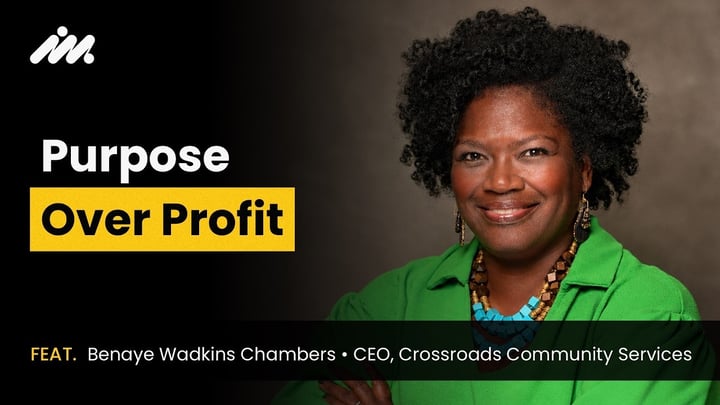
Episode 17 — Purpose Over Profit
Benaye Wadkins Chambers is the president and CEO of Crossroads Community Services, a food distribution and public health organization in Dallas that distributes through 148 ...
-
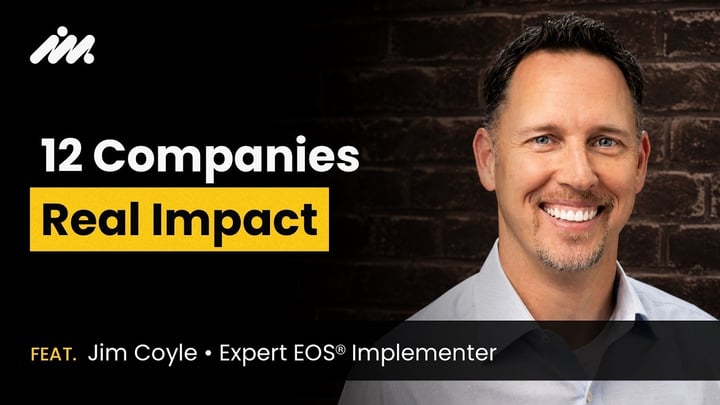
Episode 16 — 12 Companies, Real Impact
Jim Coyle ran 12 companies before he figured out what he was actually supposed to do. He sold candy bars to pay for a school trip to Italy, made beaded jewelry that put him ...
-
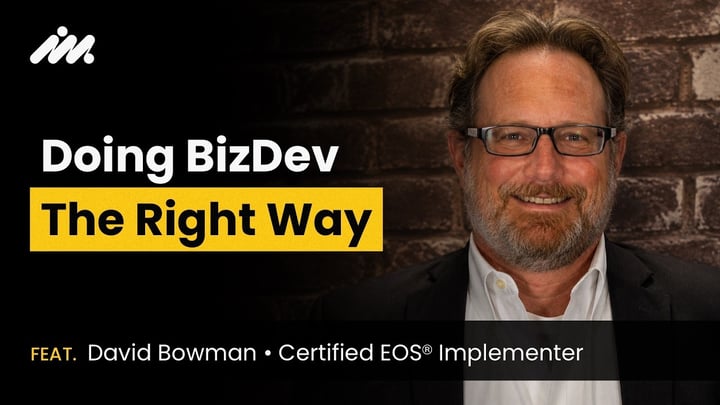
Episode 15 — Doing BizDev the Right Way
David Bowman spent 10 years in the Marine Corps as a helicopter crew chief before realizing he was never going to be the guy sitting behind a desk. After a career in ...