.jpg)
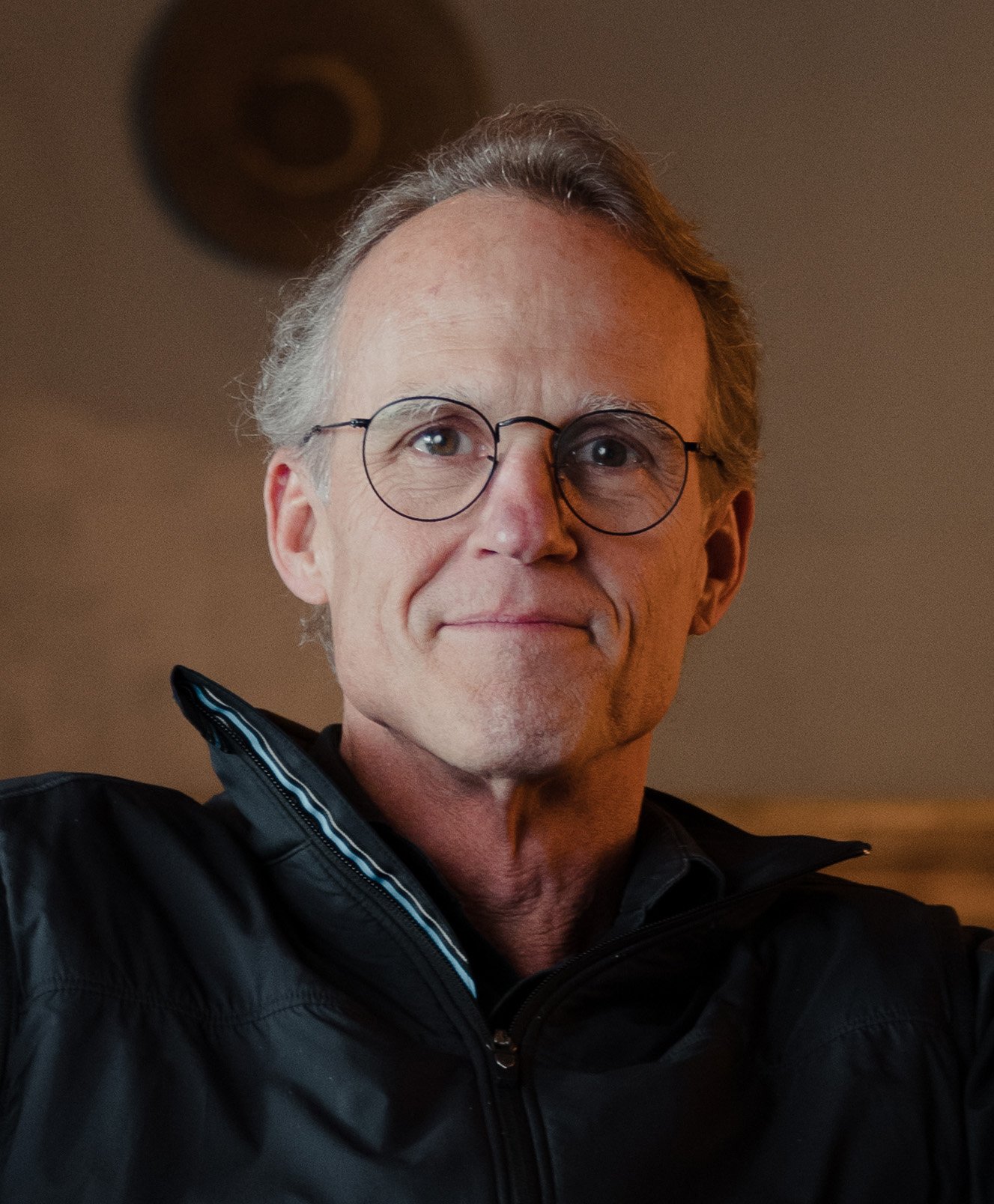
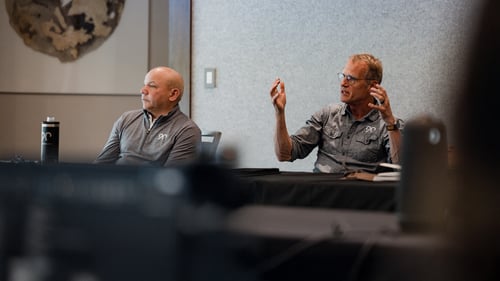
I recently sat down with Charles Lee, founder of Ideation and author of Design Your Good Life. Charles tells a story about being a kid in an immigrant household, standing in front of a foil tray dinner and learning, long before he had language for it, that he didn’t have to accept everything exactly as it was handed to him.
As founders, we face a similar reality. None of us start building from a blank page, but that doesn’t mean we have to let old assumptions define what we create either. We have the power to shape our company, the work, and the life we develop alongside it.
I’ve spent a lot of time with founders who are building companies they deeply care about. Some are early in the journey, still working through the idea. Some are deep into the grind, carrying more complexity than they ever imagined. Others have built real enterprise value and are asking bigger questions about legacy, stewardship, and what all this work is ultimately for.
At every Stage of Development, the questions change.
In the beginning, the question is often, “Can this idea become something useful?” Then it becomes, “Can this useful thing become a business?” If we stay with it long enough, the question becomes, “Can this business become a company that is productive, humane, and resilient?”
Eventually, the question gets even more personal. “Am I building a company that supports the kind of life I actually want to live?”
That’s a different kind of question. It’s about more than revenue, market share, valuation, or even growth. Those things matter, of course. But they’re not the whole story, and founders tend to know this better than anyone else. A good life isn’t something we design once and then execute forever. A good life is developed. So is a good company. The two are connected in ways that become more obvious the longer we stay on this journey.
That’s why we need to think not only about what we’re building, but also about who we’re becoming (and who we want to become) while we build it.
Founders Develop as They Build
Early on, it’s easy to think that building a company is mostly about getting the plan right. We imagine the product and/or service, design the path forward, and then assume the company will follow. I understand the appeal. It sounds clean and empowering. It also gives us the comforting belief that a solid plan will translate into clarity in the real world.
Unfortunately for (most of) us, that’s not how it works.
We build from who we are, what we’ve experienced, and what we’ve learned to value. We bring our histories into the companies we create. We bring our strengths, our insecurities, our assumptions, our families, our fears, and our ambitions.
A founder at 30 isn't the same person at 50. The 30-year-old founder is focused on achievement, proving something, pushing harder than they ever have, and building credibility. The 50-year-old founder may still care deeply about achievement, but the questions they ask become more nuanced:
-
What kind of company deserves the next decade of my life?
-
How do I create something that endures beyond my direct involvement?
-
Who will carry this when I step away?
That’s development.
We can’t just design our way through those questions. We have to grow into them. And we do that by testing our assumptions, hitting and breaking through ceilings, adjusting our worldview, and learning where reality is different from what we hoped.
Design can be useful when it means intentional thinking about a real problem. But if we treat life or company building as something we can fully design in advance, we miss one of the most important truths about being human: We develop as we go.
The founder who understands this gets better over time, not just at building a successful business, but at building a life worth living alongside it.

Instead of wondering when your next vacation is, maybe you should set up a life you don't need to escape from.

Great Founders Don’t Build Alone
If we develop with our companies, one of the most important things we can learn is where we’re genuinely strong and where we need others around us. That’s where the distinction between confidence and competence becomes so important.
There are people who are deeply confident but not yet competent. They can sell the idea, control the conversation, and make everything sound more certain than it is. That kind of confidence creates energy in the short term, but it creates real problems when it isn’t grounded in capability.
There are also people who are highly competent but not very confident. They know how to do the work, and they have useful instincts, deep skill, and strong judgment. But for one reason or another, they don’t fully trust their own value yet.
The power is in the combination.
Founders need confidence because building a company requires conviction. You’ll face too much uncertainty without it. But the best kind of confidence is earned through competence, feedback, repetition, and proof. Over time, we learn what we’re truly great at, what we’re not built to carry, and who we need around us to create deep and lasting value.
Value creation requires several kinds of contribution working together:
-
You need the Thinker, the person who sees possibilities and connects ideas.
-
You need the Feeler, the person who understands positioning, the story, people, and resonance.
-
You need the Doer, the person who turns the concept into real work in the world.
-
You need the Guardian, the person who protects quality, durability, and the long-term health of what’s being built.
Some of us naturally carry one or two of those archetypes. Very few carry all four at a high level. That’s why the idea of the single founder building a massive enterprise alone has always struck me as a little sad. Not because solo builders can’t accomplish impressive things, but because company building isn’t just an output game. It’s a human journey.
We’re social creatures. We do better work when we understand what we’re uniquely great at and surround ourselves with people who complement us, not people who simply agree with us. People who help us build something better than we could build on our own.
That’s how competence and confidence compound.
The Work Changes as Your Company Develops
Every company goes through Stages of Development, and every founder goes through a parallel journey. The two are connected, but they’re not identical. As your organization grows, you have to ask whether the work you’re doing still supports the life you want or whether you’re carrying work your company has outgrown.
In the early days, you can often compensate for almost everything. You can outwork the gaps. You can stay close to every customer, every decision, every hire, every dollar, and every issue. That works for a while because the company is still small enough for your direct effort to cover a lot of ground.
Then the company grows, and the work changes. Your job becomes less about touching everything and more about building a system that helps the right people do the right work in the right Seats. This is where a lot of founders start to feel the weight of what they’ve built. The company now requires a different level of leadership.
This is also where founders over-index on empathy. I get it. We want to be good humans, and we truly care about the people who helped us get here. We want to be loyal. We want to believe that if someone’s been with us for years, they can keep growing alongside us (and our company) forever.
Sometimes they can. Sometimes they can’t.
Eventually, we have to face a hard truth with both compassion and clarity: Not every good person is right for every Seat at every Stage of Development. That doesn’t make them a bad human. It means the work has changed, and the role now requires a different level of competency, commitment, or capacity.
When we avoid that reality, our company (and our team) pays for it. And so does the life we're building alongside it.
.png?width=2663&height=1488&name=Stages%20of%20Development_Bars%20(2).png)
The Questions That Help Founders Build Better
If you want your company to support the life you want, you have to keep checking in on whether it still reflects what you value, how you want to contribute, and where you still need (and want) to grow. Start with asking yourself these questions:
-
What am I uniquely great at? Your superpower may be so natural to you that you assume everyone can do it. They can’t. Name it, understand it, and build around it.
-
Where am I still acting like the company is smaller than it is? Every new Stage of Development asks something different of the founder. The habits that got you here may not be enough for the company you’re now building.
-
Who do I need around me to create deep and lasting value? Thinkers, Feelers, Doers, and Guardians all matter. If one archetype is missing, the work will eventually show it.
-
Am I building a company I actually want to keep building? Growth for its own sake won’t get you the life you want. What matters is whether the company you’re building still reflects what you value most.
-
What would make this journey feel worth it 10 years from now? We’re not just building companies. We’re building lives, relationships, reputations, and legacies.
Answering these questions requires time, honesty, and the humility to listen to people who can see parts of the journey you may be too close to see clearly. Your answers should shape the choices you make: what you say yes to, what you stop carrying, who you bring closer, which Seats need to change, and what kind of company you’re willing to keep building.
The Good Life Is Built Through Better Work
I deeply believe work can be fulfilling. Not all work, of course. Not the kind that drains people of meaning, agency, or connection. I’m talking about work that creates value, develops people, and contributes to something beyond ourselves. That kind of work is one of the great gifts of a well-lived life.
That’s one reason I’ve never been especially drawn to the traditional idea of retirement. I understand wanting more freedom, more space, and more control over time. But the idea that the goal is to stop using our brains, stop contributing, and stop being challenged by people who see the world differently than we do has never made much sense to me.
I’d much rather keep growing.
I deeply value being around younger people who challenge me, sharpen me, and show me where I’m wrong. That’s part of the journey. It keeps us open. It keeps us learning. It keeps us useful.
For founders, the real opportunity isn’t just to build a company that wins in the market. It’s to build a company that is exceptional in the deepest sense of the word. A company where people care about the work. A company where the standards are high and the humans are honored. A company that creates value for customers, team members, communities, and our own sense of purpose.
That kind of company doesn’t happen by accident.
That kind of company is built through the choices we make over and over again: who we bring in, what standards we hold, what we’re willing to confront, what we’re willing to let go of, and, just as importantly, whether we’re willing to keep developing as our company grows.
A good life isn’t perfect. It’s one where you’re proud of the work you’re doing, the people you’re doing it with, and the legacy you’re working to leave behind.
That's about more than building something that works. It’s also about building something worth continuing, with people you trust, in service of a vision you still believe in.
That’s when the work becomes more than work. It becomes part of a life you’re proud to keep building.
Want to go deeper on this conversation? Listen to the full episode of the Founder’s Framework Podcast for more on development, founder journeys, and what it means to build a good life through meaningful work.
Connect with Charles Lee on LinkedIn and learn more about Design Your Good Life.



%20(1).jpg?width=500&name=large_Rise_Solo_Founder_Founders_Blog_Header_1920_x_1080%20(1)%20(1).jpg)