.jpg)

A little over a year ago, we held a few client focus groups to talk about AI and where we were taking Ninety. What struck me wasn’t that people disagreed with where we were headed. It was that, generally speaking, they didn’t want to spend much time on it at all.
They wanted to talk about how the platform could get better as it already existed. It made sense because they were focused on the work that was in front of them.
As founders, we tend to live with one foot in today and one foot in a future most people can’t quite see yet. There’s no denying that the current version of a company is always easier to see than the next one. The hard part is learning how to translate what’s coming without yanking everyone away from what needs to be done right now.
That same tension between the present and future shows up inside leadership teams all the time. One leader is focused on solving for the current quarter. Another is thinking about the next two quarters. The founder may be thinking three, five, or ten years out.
We’re all trying to do the right thing, but we’re not always solving for the same time horizon. That’s where alignment can fall apart. A team may agree on the vision and still disagree (sometimes strongly) about what deserves attention right now.
At Ninety, we were already doing the work to understand what AI could make possible inside a business operating system. At the same time, a lot of conversations were still anchored in the current product, current workflows, and current expectations. Neither perspective was wrong. People were just operating from different time horizons.
When a company grows, a market shifts, new technology emerges, or customer expectations evolve, differences in perspective become easier to see. That’s the thing about alignment. It can look stronger than it is until reality puts pressure on it.
And if that resonates, don't worry. It doesn't mean your team is broken. It means your company is alive, and living systems require ongoing care. It's our job to keep bringing the leadership team back to a shared understanding of where the company is, where it’s going, and what deserves attention right now.
Let’s talk about why leadership teams lose alignment and how you can bring clarity back to the conversation.
Why Alignment Is Never Finished
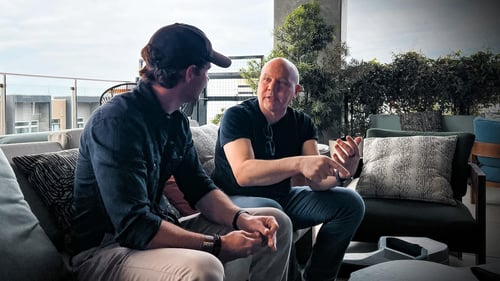
One of the most interesting observations from my recent conversation with David Meyer came from a simple exercise he’s used with leadership teams for nearly two decades. He asks everyone to answer the same question: What’s the single most important thing your company does?
The interesting part isn’t that people give bad answers. According to David, that almost never happens. It's that they give different answers.
After working with more than a hundred companies, he told me he’s never seen a leadership team give the same response across the board. At first, that sounds alarming. It certainly got my attention. But the more I thought about it, the less surprising it became.
Leadership teams are made up of people with different responsibilities, different experiences, and different perspectives. The Head of Sales sees the world differently than the Head of Product. The Head of Operations is paying attention to things the founder may barely notice. That’s healthy. In fact, it’s one of the reasons leadership teams exist in the first place.
The issue is that those differences can widen over time. Even strong leadership teams can find themselves operating from different assumptions about where the company is headed and what deserves the most attention.
That’s why alignment isn’t something a leadership team achieves once. It’s something they have to keep revisiting.
The founders who navigate change well don’t assume alignment exists just because nobody is arguing. They revisit it on purpose. They create space for healthy debate. They make sure people are talking about the same future before they start solving for it.
When the Old Story No Longer Matches Reality
Every company has a story about who they are, who they serve, and where they're going.
Most of the time, nobody questions that story. It becomes ingrained into how the leadership team makes decisions, sets priorities, and explains the business to customers, prospects, and team members.
Over time, though, the reality around the company keeps moving. Customer behavior may evolve, new technology may enter the picture, or the business may reach a new Stage of Development. What worked before may no longer fit the reality the company is operating in today.
One of the ideas David shared that stuck with me was what he calls a threshold of change. It's the point where a company starts realizing that the story that got them here may not be enough to get them where they're going next.
You may launch a new product or enter a new market. Maybe AI created possibilities that weren't available before. Whatever the catalyst, the leadership team starts feeling the tension between the way they've always seen the company and what it’s actually becoming.
This is where a lot of teams lose momentum. They keep adding tactics, launching new initiatives, and creating more projects. Everyone stays busy, but nobody steps back to ask a more fundamental question:
Does our old story still match reality?
I think that's one of the most valuable questions a leadership team can ask. Not because the company needs a complete reinvention. Most don't. But because great companies tend to evolve much more than they reinvent.
Strong leadership teams slow down to assess whether the priorities, positioning, language, and decisions that once served the company are still serving it now.
That's not always easy, especially for founders. We’re emotionally connected to the things that helped the business get off the ground. That's normal. We all have ideas, decisions, products, or strategies that feel personal because they represent years of effort and sacrifice.
But leadership teams create clarity when they're willing to separate what made the company successful yesterday from what will help it succeed tomorrow.
.png?width=1000&height=423&name=Illustration_Now_Next_Later_Never_V2%20(1).png)
Now, Next, Later, Never: A Framework for Bringing Clarity Back
When leadership teams are sorting through change, I’ve found that a lot of the tension comes down to timing. One person believes something deserves immediate attention, while someone else sees it as important but not urgent. Another person thinks it belongs on the Long-Term Issues List to revisit later.
More often than not, leadership teams aren't debating the issue itself. They're debating priority. That's where the Now, Next, Later, Never framework can help. Instead of forcing every issue into an immediate yes or no decision, the framework helps leaders sort opportunities according to timing.
-
Now: These are the priorities that deserve attention during the current 90-day cycle. They’re important, actionable, and aligned with what the company needs most in the present.
-
Next: These ideas matter, but they don’t belong in the current quarter. They may require additional thinking, research, planning, or resources before they become priorities.
-
Later: These opportunities are connected to the longer-term vision. They’re worth paying attention to, but they don’t require immediate action. They simply need to remain visible so the company can prepare for what’s coming.
-
Never: This may be the most overlooked category. Every company needs clarity around the opportunities, markets, products, and distractions that don’t fit who they are or where they’re going. A strong Never list helps create focus.
What I’ve found is that many leadership disagreements become much easier to resolve once people stop debating whether something is important and start discussing when it belongs.
Sometimes the answer isn’t “No.” It’s “Not yet.” That distinction creates space for better conversations. It allows leadership teams to stay open to new ideas without constantly shifting priorities. And it allows founders to think about the future without creating confusion about what the team should be doing today. Most importantly, it gives the leadership team a shared language for navigating change together.
.png?width=1014&height=215&name=Illustration_Now_Next_Later_Never_V1%20(1).png)
How to Bring Alignment Back to Your Leadership Team
The framework is simple. Applying it takes discipline.
When I think about the companies that work through major transitions well, they don’t wait until alignment becomes a problem. They create regular opportunities to revisit what's changed, challenge old thinking, and make sure everyone is solving for the same future.
One way to do that is to bring your leadership team together and work through a few straightforward questions:
-
What has changed since we last talked about our vision, priorities, or strategy?
-
Where does our old story no longer match reality?
-
What belongs on our Long-Term Issues List that we’re treating like an immediate priority?
-
What are we continuing to do simply because we’ve always done it that way?
-
Where are we spending time, energy, and resources that no longer support where we’re going?
You don’t need to create perfect agreement. Leadership teams are made up of smart people with different perspectives, and those perspectives are valuable. The goal is to create enough clarity that everyone understands what the company is solving for and why.
Founders spend a lot of time looking ahead. Leadership teams spend a lot of time executing. Alignment happens when those two stay connected.
When leadership teams make time to revisit what's changed, challenge old thinking, and clarify priorities, they’re far more likely to stay pointed in the same direction as the company evolves.
Alignment Is a Practice
Over the years, I’ve come to see alignment as a practice instead of a milestone. It isn’t something you achieve and then check off a list. No company stands still for very long. By the time a leadership team feels fully aligned, reality has usually given them something new to understand, decide, or explain.
As founders, we’re the ones who have to keep pulling the conversation back to what’s true. Where are we going? What’s changed? What deserves our attention now? What are we holding onto that no longer serves the company we’re becoming?
The best leadership teams don’t assume they’re aligned because everyone agreed six months ago. They revisit the conversation. They challenge old thinking. They make space for healthy debate. And they keep asking whether the story they’re telling themselves still matches reality.
That’s the work of alignment. It’s ongoing, practical, and deeply connected to the kind of company you’re trying to build.
The more consistently you do it, the more likely you are to build a productive, humane, and resilient company, the kind that leaves a lasting legacy.
If you’d like to hear the full conversation that inspired many of these ideas, listen to my discussion with David Meyer on the Founder’s Framework podcast.


.jpg?width=500&name=large_What_Great_Leadership_Teams_Do_Founders_Blog_Header_1920_x_1080%20(1).jpg)