.jpg)
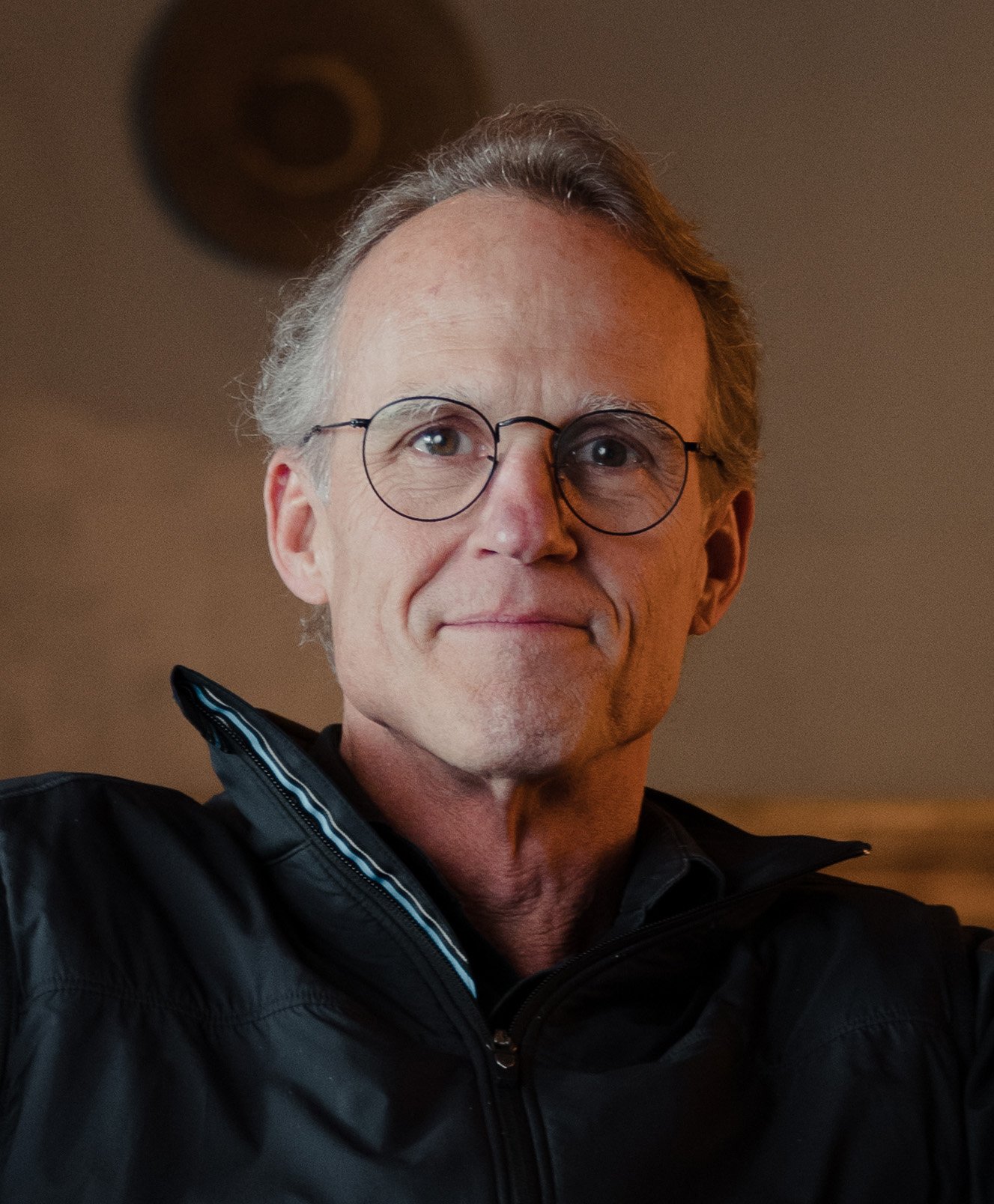
Ninety made the 2026 Inc. 5000, and that’s a big deal. But looking back on the last few years, I'm reminded that this journey hasn't been easy.
The first version of this article said I was proud of the growth and even more proud of how we’d grown. I stopped when I reread that second part and wrote something in the margin: I’m not.
It’s been hard. I’ve had months where I hated my company.
And no, the irony isn't lost on me. I've said for years that my mission is to help founders build companies they don't end up hating. I still mean it. But here's what I've come to learn the hard way: Virtually every founder has moments when they hate their own company.
Maybe you’re reading that and thinking, That’s not me. And maybe it isn’t right now. But most of us will eventually run into a version of it. Why? Because our company is an extension of us. It reveals our weaknesses. Most of us are conscientious and competitive by nature, and we hate feeling weak. I know I do.
That feeling usually gets edited out of articles celebrating accomplishments like this one, but it’s a reality I’m certain about.
What the Inc. 5000 Really Measures
To make the Inc. 5000, a company has to show strong revenue growth over three years, clear a revenue threshold, stay private and independent, and pass an editorial review. That's a high bar, and I'm glad we cleared it.
But let's be honest about what it really measures. Three years of growth measures that you didn't stop. It doesn't measure how it felt, what it cost, or how much of it you'd design the same way twice. I'll bet you that 95% of the companies on that list have a version of a story that sounds like there was a clear plan all along. In most cases, the plan is something we assembled afterward out of the parts that happened to work.
I'd rather share the version that speaks to the founders who are still in it.
Forget about Greatness
The original draft of this article had a line about what great founders understand. I crossed out "great."
Great is a word we should only hand out to whoever's still standing at the end. It's survivorship wearing a compliment. It tells you nothing you can act on, and if you're in a bad quarter, it actively lies to you because it implies the people who made it through had something you're lacking.
There are three words I'd put in its place: curious, earnest, and humble.
Curious, because the problems genuinely change. What demanded your attention two years ago is not what will demand it next quarter, and the founder who keeps applying last year's answer gets slower every month without noticing. Earnest, because the work of scaling is mostly unglamorous and redundant. The only thing that carries you through it is truly caring about the outcome. And humble, because every decent founder is constantly being handed lessons they didn't ask for and desperately needed. All three are available to you on a Tuesday when nothing's working. Greatness isn't.
That same thinking also applies to your company. There was another line in the original article I questioned: the idea that the companies that last can take all of this on and still perform at a high level. But they can't. We didn't.
Companies that last perform badly for stretches. Some of those stretches are long. Teams get confused about priorities, good people leave, a number you were sure you understood turns out to have been telling you something else entirely.
The difference between the companies that come out on the other side and the ones that don't isn't greatness. It’s how quickly someone is willing to say, “We have a problem,” and how quickly the company is willing to face it. That’s something you can actually work on.

You will either step forward into your growth or you will step back into safety.

What the Hard Months Are Showing You
Here's the part I'd want a founder who's in a hard month right now to hear: When you hate your company, the instinct is to make the feeling stop. You could reorganize, hire someone, buy a new tool, change the strategy on a Sunday night.
Don't do any of that first. That feeling is information, and it’s usually pointing to something legitimate. In my experience, it shows up when the company has grown enough to expose a weakness that your effort alone can no longer cover. Sometimes that weakness is in the business. But more often, it’s something in my own leadership that the company has finally grown large enough to reveal.
That’s an uncomfortable feeling to sit with, but the good thing is it tells you exactly where to look. Your company will only grow to the size of what you can hold. When it stops growing, or when running it starts to feel unbearable, the problem is usually more personal than a lot of founders realize.
The Hard Conversation Behind Growth
Companies don’t get harder gradually. They get harder in steps, and those steps tend to show up in roughly the same places: around 1, 3, 10, 30, 100, and 300 people. Every time you roughly triple, the way the company has to be led changes. What worked at 30 isn’t just insufficient at 100. It's the wrong way to lead.
A lot of our Stages of Development framework is about this, and I’ve written about it for years. What took me longer to understand was where the pressure actually shows up.
I assumed it would show up mostly in me. That growth would keep testing my own capacity to lead through greater complexity, and it does. But when I look honestly at the months I hated, that usually wasn’t the biggest issue. More often, the company had moved into a new stage and I hadn’t asked my leaders to move with it.
Because that’s the conversation nobody wants to have. Someone has been with you for years. They were exceptional at the last stage, but they’re struggling in this one and everyone can see it. So you start working around them. You take the meeting yourself. You rewrite the document. You pick up pieces of their role because it feels easier than addressing what’s really going on.
You tell yourself it’s loyalty. But more often, it’s avoidance. And you end up paying for that avoidance with your own time, which is one of the most valuable resources a founder has.
Eventually, you have to stop working around the problem and ask three difficult questions:
-
Can this person operate at the stage the company is in now?
-
Do they want to?
-
Does the role, as it exists today, still fit them?
Here’s the part I got wrong for years. I thought I was supposed to answer those questions on my own and then decide what to do. I wasn’t. Those are conversations you have with the person.
Some people grow into the new stage once someone sits down with them and clearly explains how the role has changed. Some decide they don’t want to, which is fair and worth knowing early. And some simply aren’t the right fit for what the role has become. It’s better for both of you to know sooner rather than later.
What I’ve learned is that these conversations are rarely just about the other person. They’re also about whether I’m ready to lead the company through what comes next. The founder's ceiling and the leader's ceiling usually turn out to be the same ceiling. Almost every time I couldn't get my company past something, I could trace it back to a conversation I'd been carrying around unspoken for a quarter or more. The company was waiting on me to address it.
What We're Building Toward
So what does a company you don’t end up hating actually look like?
It’s not a company that never produces that feeling. I don’t think that company exists, and I’ve stopped pretending it does.
It’s a company where you go from feeling something is wrong to understanding why much faster. Where a disappointing number surfaces in a week instead of a quarter. Where the problem everyone already knows about gets brought into the open and addressed. Where you understand what’s actually wrong early enough that fixing it is still a choice, not a rescue mission.
That kind of company doesn’t happen by accident. It comes from intentionally designing a shared way of running the business so your people are looking at the same priorities, the same numbers, and the same issues. That’s a big part of what a business operating system like Ninety is meant to provide. It won’t make the hard parts disappear, but it can help you see them sooner, understand them more clearly, and deal with them before they become much harder to turn around.
.png?width=1000&height=351&name=FF_Inc_5000%20(1).png)
The Part I'm Proud Of
I'm glad we made the Inc. 5000 list. I'm grateful to every person who did the work that put us on it, and I know exactly how much of that work I didn't do.
I'm not proud of how smoothly we grew, because we didn't grow smoothly. I'm proud that we kept looking at the hard things instead of around them. That we changed what wasn't working (even if it was later than we should have). And that after ten years, I still find our mission just as important as it ever was and that the problems we’re working on still make me want to keep going for the next ten.
I'm not going to stop saying I want to help founders build companies they don't end up hating. I just understand the sentence differently now. The hard months will come. The important part is learning what they’re telling you and knowing how to respond. And when you’re in one of those months, it helps to remember you’re not the only founder who’s been there. I certainly have been.



%20(1).jpg?width=500&name=large_%20Company_Growth_Is_Never_Smooth_Founders_Blog_Header_1920_x_1080%20(1)%20(1).jpg)