

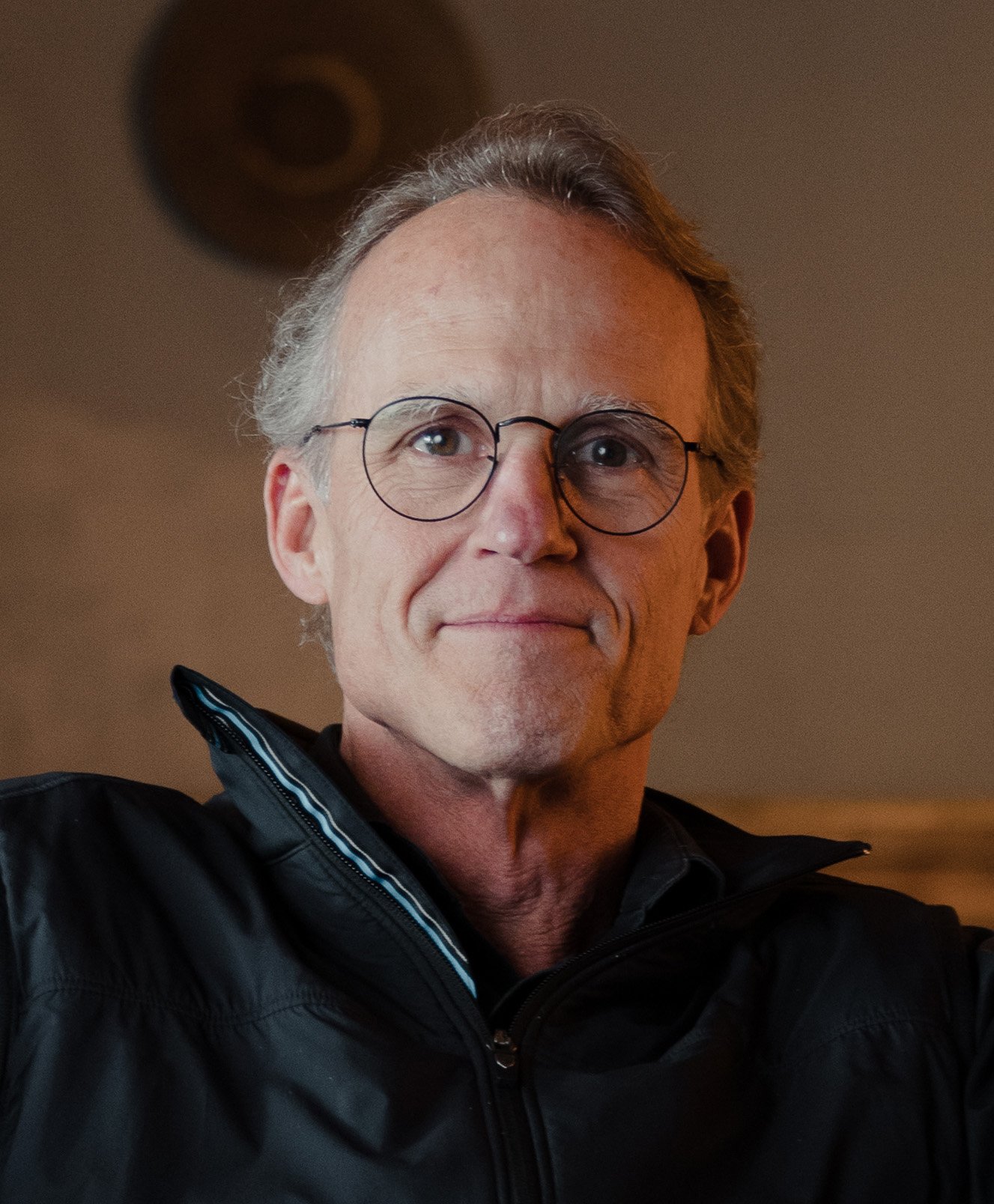
If you’ve followed Ninety for any length of time, you’ve probably heard us talk about Maz, our AI companion. I was recently asked why we named it Maz, and I realized the answer says a lot about how we think about work and human development as a company.
Maz is short for Maslow. That's the short answer. The longer answer goes back 14 years, to the idea that eventually became Maz and the standard it now represents for what we’re building at Ninety.
It Started as Jarrvis
In 2012, I built a 119-page Prezi (remember those?) trying to explain an idea I couldn't build yet. The idea was that companies would benefit from running on a cloud-based operating system. These systems would eventually stop merely tracking how companies operate and, with the help of AI, start enabling them to become better and better versions of their best selves. Somewhere in those slides, the intelligence at the center had a name: Jarrvis.
I liked it. I still do. I set it aside because I didn't think I could get away with taking a name that belonged to someone else’s universe (Marvel, for anyone who isn't familiar) with a slight spelling modification. In hindsight, I probably could have. But losing it turned out to be one of the luckier things that ever happened to our product.
If you know a bit about Marvel Studios and Iron Man, you’ll know Jarvis is a butler. A butler is competent, tireless, and deferential, and the arrangement is designed to leave you exactly as you are. The better the butler, the less you have to become. Everything gets easier and nothing about you changes.
That's a real product category, but it's not ours. Once I understood the metaphor I'd been reaching for, I could see it was pointed at convenience when the thing I actually cared about was development.
Why Maslow
Most people know Abraham Maslow for one image, and he never drew it. The pyramid was added by others after the fact, and it flattened him into a poster. What he actually wrote is stranger, more useful, and far more relevant to what we do.
 The Hierarchy of Needs first appeared in his 1943 paper “A Theory of Human Motivation” and was developed further in Motivation and Personality (1954), more than a decade later. But that's just the entry point. Toward a Psychology of Being (1962) is where he argues that psychology had built an entire science around dysfunction and had far less to say about what a healthy person looks like at full stretch. Religions, Values, and Peak-Experiences (1964) explores the experiences that can fundamentally change how a person sees themselves and the world. The Farther Reaches of Human Nature, published in 1971 after his death, is the one I return to most.
And then there's the book almost nobody reads: Eupsychian Management, published in 1965 and republished in 1998 as Maslow on Management. In the summer of 1962, at the height of his career, Maslow accepted an invitation from engineer and inventor Andrew Kay to spend the summer inside an electronics manufacturer in California called Non-Linear Systems. Not a clinic or a university. He sat inside a plant, watched people work, and kept a journal. That journal became the book.
Maslow had come to the conclusion that if self-actualization was going to happen for most people, it was not going to happen on a retreat. It was going to happen, or fail to happen, in the place they spend most of their waking hours: at work, under a manager, inside a system somebody else designed.
He believed the design of that system was a moral and psychological issue, not just an operational one. And he argued that developing the individual was not at odds with the performance of the enterprise. It was one of the ways the enterprise performed better.
The original title was a disaster, and the book sold terribly. But the idea at the center of it is the idea Ninety is built around. It's why we named our AI companion Maz. We didn't choose it simply because we admire Maslow’s work. We named it after the man who went to a factory to find out whether work could make people more fully themselves.
How We Got From Maslow to Maz
We landed on Maz around 2020. Maslow is a mouthful and a person’s surname, and we needed something that felt more natural to say in a meeting. Maz kept the meaning behind Maslow without sounding like we were citing a psychology textbook every time we said it.
Around that same time, we started putting the vision for Maz down on paper. That vision went through a serious rewrite in 2022 and has been revised many times since. But the core claim hasn't changed: A company is already an intelligence. It generates information constantly, holds knowledge in its people and its processes, and makes thousands of decisions a week. What most companies lack is coherence. All of the information is spread across tools, people, and conversations, which makes it harder to see the whole picture clearly. Maz is what assembles it all.
At the end of 2023, we raised a $35 million Series B, led by Blue Cloud Ventures with Catalyst Investors and our existing investor Insight Partners, specifically to build it. We'd been envisioning Maz for 11 years by then. Our vision never changed, but the technology finally caught up with it.
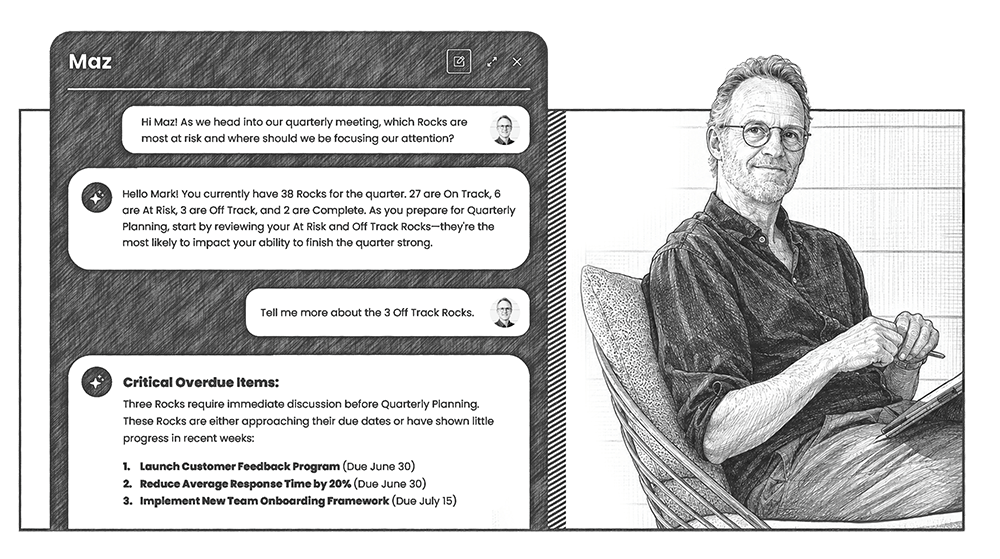
What the Name Means for Our Product
Maslow’s ideas about human development, work, and self-actualization have helped shape how we think about Maz’s role in people’s lives. Those ideas have become three standards we continue to come back to as we build it:
-
It should make people more capable, not more dependent: This idea sits at the center of everything we’re trying to build at Ninety. If Maz starts making judgments for people instead of helping them develop better judgment, then we’re moving in the wrong direction. We don’t measure success by how often someone comes back to Maz. We measure it by whether Maz helps someone think more clearly, make better decisions, and become more capable in their own work. If keeping someone engaged ever comes at the expense of helping them grow, we choose growth.
-
It's designed to step back when needed: Sometimes the best thing an AI tool can do is point someone back to their own judgment, a colleague, or a leader or mentor who can help them work through the issue. AI shouldn't become a place where people go for every answer. Part of helping someone grow is directing them toward the people and decisions that will help them develop further. That's not a weakness in our product. It's part of what tells us Maz is working the way it should.
-
What belongs to the person stays with the person: Maz needs access to company information to do its job well, including the company’s vision, goals, data, and shared knowledge. But that information is different from what Maz learns about the individual using it. What belongs to the person, including how they think, how they work, what they've struggled with, and how their judgment has developed, should stay with them. If someone thinks everything they type into Maz will go back to their boss, they’ll hold back, and Maz becomes less effective at helping them grow.
What Maz Stands For
From way before we laid down the first line of code, our goal was to build what we call a developmental operating system for any organization that genuinely cares about their people. Our purpose goes beyond helping growing companies. We also want to help every one of the people in those companies become better and better versions of the best versions of themselves so they can thrive wherever their work takes them.
Jarrvis might have have been a cooler name. But it would have told our team the wrong thing about what we're building and how we hope to make the world a better place.
Maz tells them the right thing. If we ever ship a version that makes a person less capable than it found them, we'll have misnamed it.


